- Published on
"Fort Bowman" is really a house. But it's an important one.
- Author
-
-
- Name
- Posts
- Posts
-


Hidden in the woods down a long, steep and rocky dirt road near the intersection of Interstate 66 and U.S. Route 11 is a very old Virginia house that seems out of place. If you have an eye for regional architecture, you will notice that it looks much more like a Pennsylvania Dutch farmhouse than a Virginia plantation house.
The house was built by George Bowman, a son-in-law of Jost Hite who led George and their extended family to the Shenandoah Valley from Pennsylvania in the 1730s. The house was long believed to have been built in the 1750s but may not be quite that old. The symmetrical features and chimney placements show concessions to dominant English architectural style of the time (Georgian).
This is the house Colonel Abraham Bowman grew up in. George was his father. It is a very important early example of Pennsylvania German architecture in the Shenandoah Valley. The Laurence Snapp House (note the central chimney), which is nearby at Toms Brook, is another. The house has been called “Harmony Hall” since before the Revolutionary War. It is sometimes, however, called “Fort Bowman” because according to tradition it was used as a fort during the French and Indian War. Depending on the house's actual age, that history may now be in question.
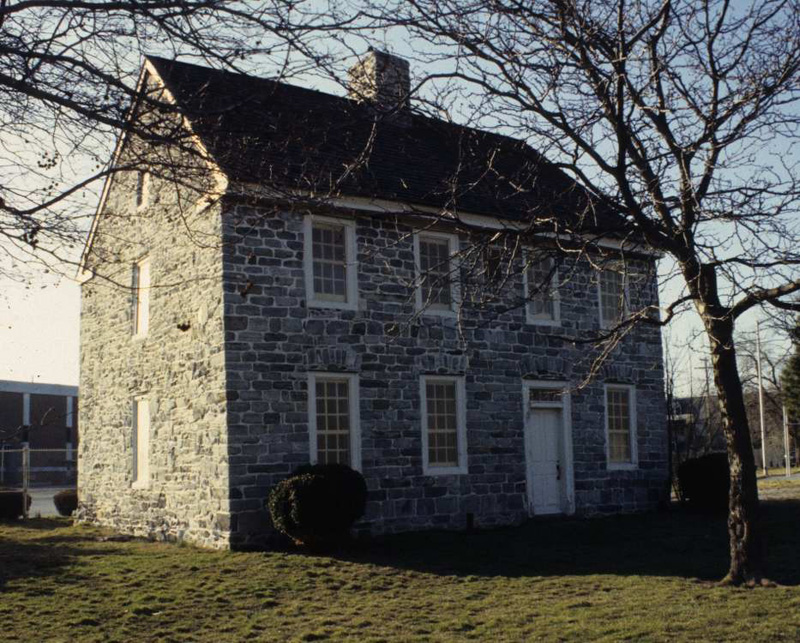
The house was built by George Bowman, a son-in-law of Jost Hite who led George and their extended family to the Shenandoah Valley from Pennsylvania in the 1730s. The house was long believed to have been built in the 1750s but may not be quite that old. The symmetrical features and chimney placements show concessions to dominant English architectural style of the time (Georgian).
This is the house Colonel Abraham Bowman grew up in. George was his father. It is a very important early example of Pennsylvania German architecture in the Shenandoah Valley. The Laurence Snapp House (note the central chimney), which is nearby at Toms Brook, is another. The house has been called “Harmony Hall” since before the Revolutionary War. It is sometimes, however, called “Fort Bowman” because according to tradition it was used as a fort during the French and Indian War. Depending on the house's actual age, that history may now be in question.

A nearby Virginia historical marker mentions Abraham's brother, Joseph, but does not mention Abraham. There were in fact four brothers who lived here who served in the Revolutionary War in various capacities. They all had reputations as excellent horsemen, for which reason the siblings were known as the "four centaurs of Cedar Creek" after the nearby stream.
In 2009, Maral Kalbian and Margaret Peters gave a presentation on the house’s history. Parts 1 through 3 cover the chain of property ownership. If you are not interested in that, you may want to start watching with part 4--which is embedded below. The house is now on property that is part of Cedar Creek & Belle Grove National Historical Park.
Two more of Abraham Bowman's homes survive. The log house he built after moving to Kentucky in 1779 survives and has been restored, and the much larger plantation house he built after prospering there is also still standing. That house, now known as Helm Place, was later the home of Abraham Lincoln's sister-in-Law (Mary Todd Lincoln's sister).
In 2009, Maral Kalbian and Margaret Peters gave a presentation on the house’s history. Parts 1 through 3 cover the chain of property ownership. If you are not interested in that, you may want to start watching with part 4--which is embedded below. The house is now on property that is part of Cedar Creek & Belle Grove National Historical Park.
Two more of Abraham Bowman's homes survive. The log house he built after moving to Kentucky in 1779 survives and has been restored, and the much larger plantation house he built after prospering there is also still standing. That house, now known as Helm Place, was later the home of Abraham Lincoln's sister-in-Law (Mary Todd Lincoln's sister).
(Updated August 20, 2020)
More from The 8th Virginia Regiment


CPL. US Army Ret, RLB
I come from Abraham Bowman who had John Bowman, then came his son Sylvester Bowman, his son was William Luther Bowman Sr. Then came William Luther Bowman Jr, then Gary Bowman, then my father Michael Bowman and now me, Adria Bowman.
Nice to meet you family !!!
Do you all use Facebook at all? I’d love to keep in contact
They throw reunions at the Belle Grove plantation that was Issac Hite Bowman’s home with President James Madison’s sister in Virignia
George Bowman --> Capt. Jacob Bowman (the eldest) -->Jacob H. Bowman --> John Jacob Bowman -- Daniel Bowman --> Catherine Bowman m. Daniel Edward Kirby (my great grandmother and father)
https://turkishclassified.com/page/buying-property-in-turkey
https://turkishclassified.com/category/turkey-property-for-sale
https://turkishclassified.com/category/turkey-property-for-sale/apartment
https://turkishclassified.com/category/turkey-property-for-sale/house