• Published on

    The Birth of the Longrifle: Martin Meylin's Gun Shop

    Picture

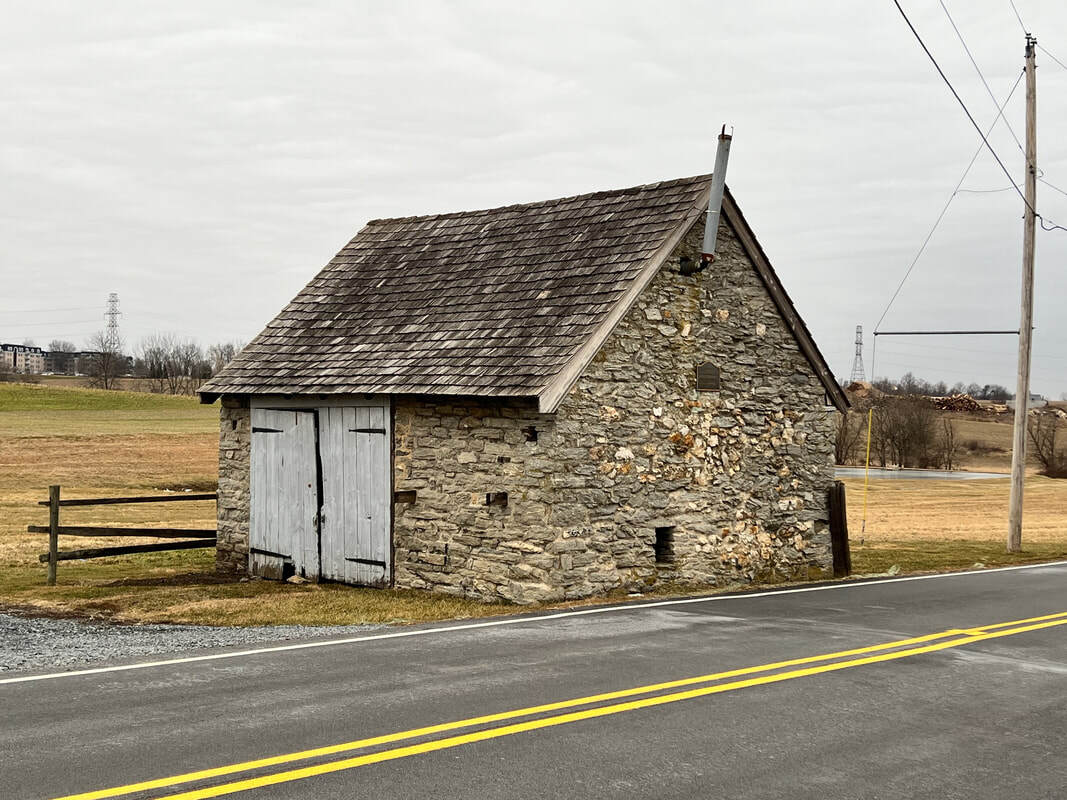
    Meylin's gun shop in West Lampeter, Lancaster County, was built about 1718.

    All or nearly all the 15 infantry regiments raised by the Old Dominion in 1775, 1776, and 1777 had two or more companies of riflemen. Their weapon is sometimes called the “Kentucky Rifle,” but because the long-barreled design originated in Pennsylvania, "Pennsylvania Rifle" is the better term. The Metropolitan Museum of Art in New York diplomatically calls it the "American Longrifle." It asserts in a display that the weapon was “the first distinctly American art form created by European settlers in North America.” Many of the guns are indeed works of art.
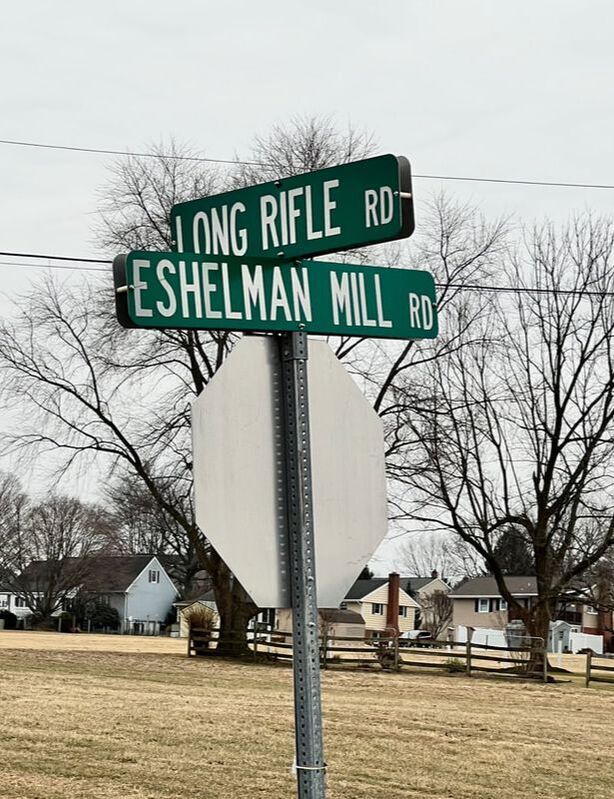
    Tradition, supported but not proved by documentary evidence, holds that Martin Meylin of Lancaster County, Pennsylvania, made the first longrifle. He was an immigrant from Switzerland and may have produced an early version of his design in Germantown, Pennsylvania, in 1705 before he built his gun shop or “boring mill” in West Lampeter Township in 1719. An 1844 history records matter-of-factly that Meylin was “the first gun-smith within the limits of Lancaster County; as early as 1719, he erected a boring-mill, on what is known as Meylin’s run.” The building still stands at the intersection of Eshelman Mill Road and Long Rifle Road. There is no archeological evidence to prove or disprove that rifles were made there, and skeptics suspect the site was merely a blacksmith shop. However, two early rifles with “MM” engraved by their maker seem to show, but again do not prove, that Meylin was the earliest creator of the familiar firearm. Even if entirely true, “inventor” might be too strong of a term for him. The longrifle evolved from German hunting guns, which made a separate leap over the Atlantic in 1776 in the hands of Hessian and Anspacher Jägers. The primary innovation was the long barrel, which made the weapons very accurate.
    Picture

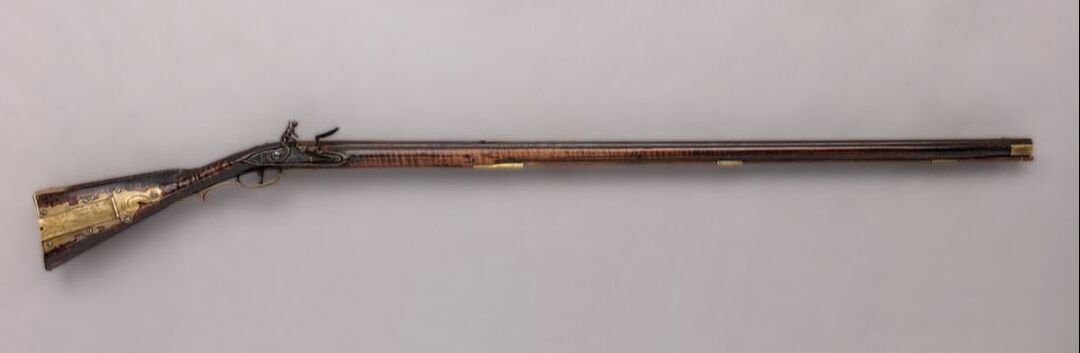
    An ornate Pennsylvania rifle probably made by George Schreyer Sr. (1739–1819) in York County, Pennsylvania ca. 1770. (Metropolitan Museum of Art)

    Though historians debate Meylin’s role, Lancaster County’s central place in the development of the longrifle is undisputed. It was the earliest and most prominent center of rifle production in colonial times. Adjacent York, Berks, and Lebanon counties also had many gunsmiths, and the craft followed settlement on the western and southern path on the Great Philadelphia Wagon Road. By the time of the Revolution, craftsmen made rifles in Shepherdstown, Winchester, Staunton, and other Shenandoah Valley towns. The unique styles of different counties and different artisans can still be discerned by knowledgeable observers. Rifles were essential on the frontier for self-defense, subsistence hunting, and for hunting expeditions supporting the robust transatlantic deerskin trade. By the 1770s, western men in Virginia, Maryland, and Pennsylvania had an established reputation for expert marksmanship.
    Pennsylvania rifles were used infrequently in the French and Indian War. They demonstrated their military value in Lord Dunmore’s War, the last colonial Indian war, fought in 1774. Virginia’s western militia bested a large Indian army on the banks of the Ohio River in a battle that only barely resembled European tactics. When the Revolution broke out, Virginia’s first contribution to the Continental Army was two companies of riflemen from Berkeley and Frederick counties, led by Hugh Stephenson and Daniel Morgan. When the Old Dominion began to form its own full-time regiments, it incorporated rifle companies in a way that mimicked British use of grenadier and light infantry companies. The rifle companies were recruited in the western counties to “act as light infantry” alongside musket companies from the east side of the Blue Ridge. ​
    Picture

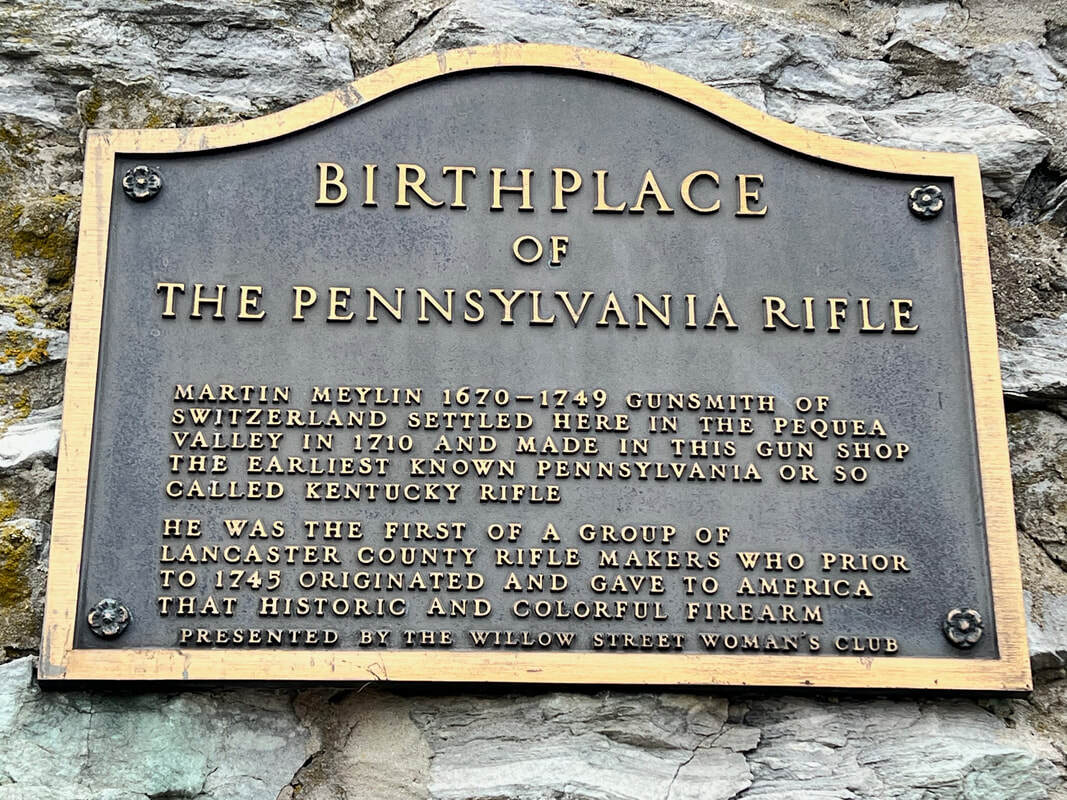
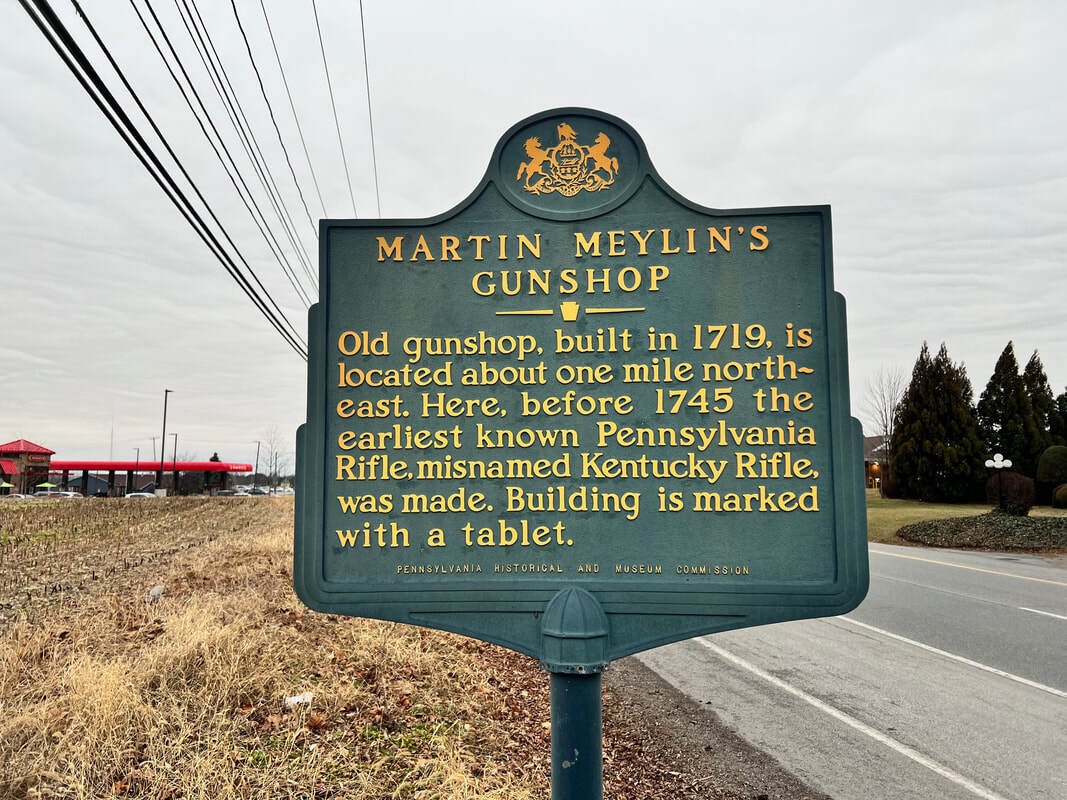
    Like the nearby state historical marker, a plaque on the building is prickly about the "so-called Kentucky Rifle." The longrifle was developed in Pennsylvania two or three decades before the earliest white settlement of Kentucky.

    Virginia’s regiments of “regulars” (full-time troops) began as provincial (or “state” after July 4, 1776) before joining the Continental Army. The 1st and 2nd regiments were created with two rifle companies each. The 3rd, 4th, 5th, 6th, and 7th each had three. The 9th, originally formed for service on Virginia’s eastern shore, had two. Virginia does not seem to have specifically ordered rifle companies for the six newest regiments, but the 11th, 12th, and 13th certainly included riflemen, and the 10th, 14th, and 15th may have as well. Uniquely, the 8th Virginia was raised entirely in the west and carried only rifles.
    Picture
    It took some time for American commanders to learn how to effectively incorporate rifles into their tactical playbooks. Slow-loading and unable to hold bayonets, they were suited only for skirmishing and harassing from a distance. In close combat they became little more than unwieldy clubs after firing one round. This was tragically illustrated in the opening minutes of the Battle of Princeton. In addition to the 1775 independent companies, Moses Rawlings, Abraham Kirkpatrick, and William Darke, led effective early rifle units in different capacities. Peter Muhlenberg, Colonel of the 8th Virginia, grew frustrated with the high-maintenance weapons and asked that his men be issued muskets. Daniel Morgan, on the other hand, paired himself with Henry Dearborn’s musket-carrying light infantry to form a very effective combined-arms force during the Saratoga campaign.
    Rifles played an important role in the Revolution and the conflicts that followed. They were centrally important in Andrew Jackson’s lopsided 1815 victory at the Battle of New Orleans. Many rifles for military use were churned out by gun shops with little ornamentation, but the best ones were custom-made personal possessions that were often highly ornate.
    Today, 18th century long rifles are high-prized collectors’ items. Notable collections can be viewed at the Metropolitan Museum of Art in New York, the Landis Valley Museum in Pennsylvania, and the Museum of Southern Decorative Arts in North Carolina. Like much that is important in early American history, the longrifle’s story began in Lancaster County, perhaps in Martin Meylin’s gun shop.
    Picture

    More from The 8th Virginia Regiment

  • Published on

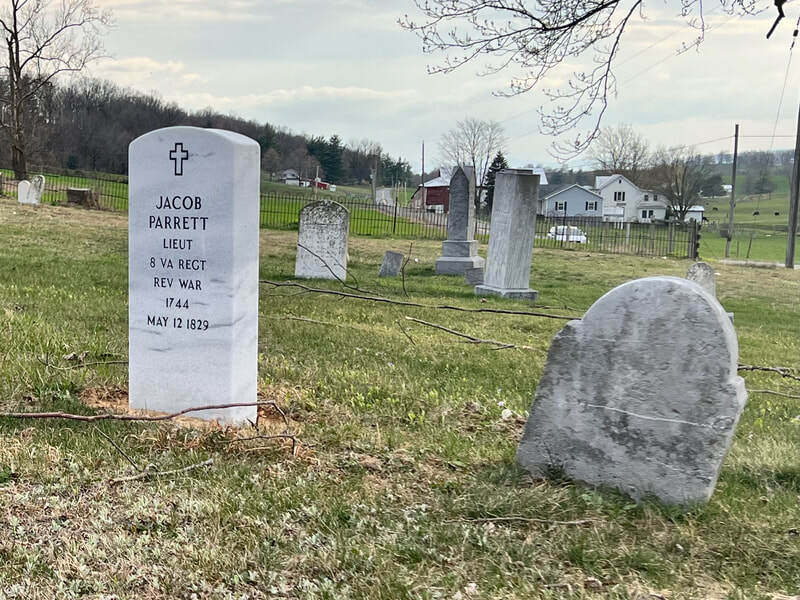
    A New Stone For An Old Soldier

    Picture
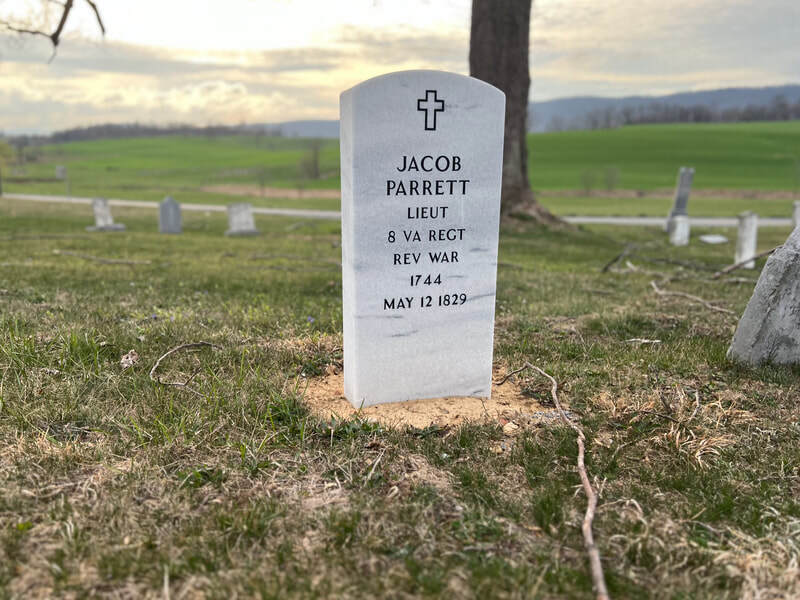
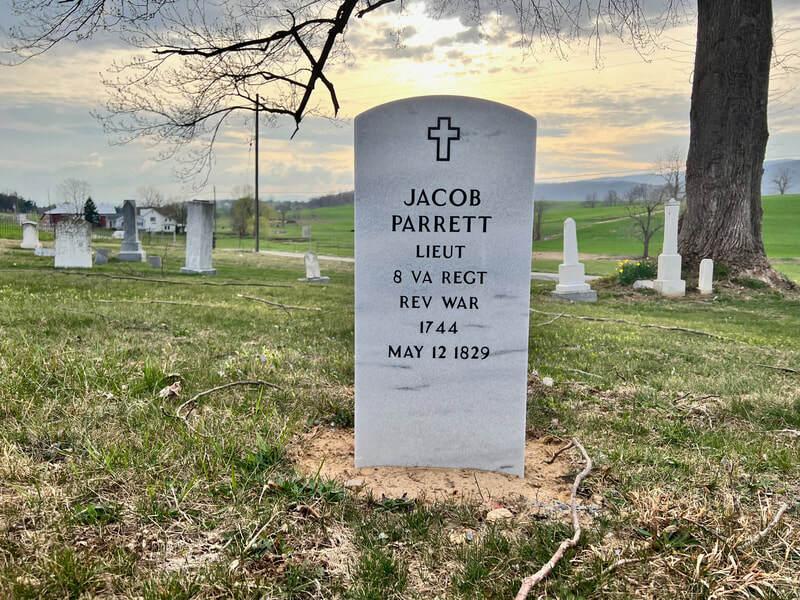
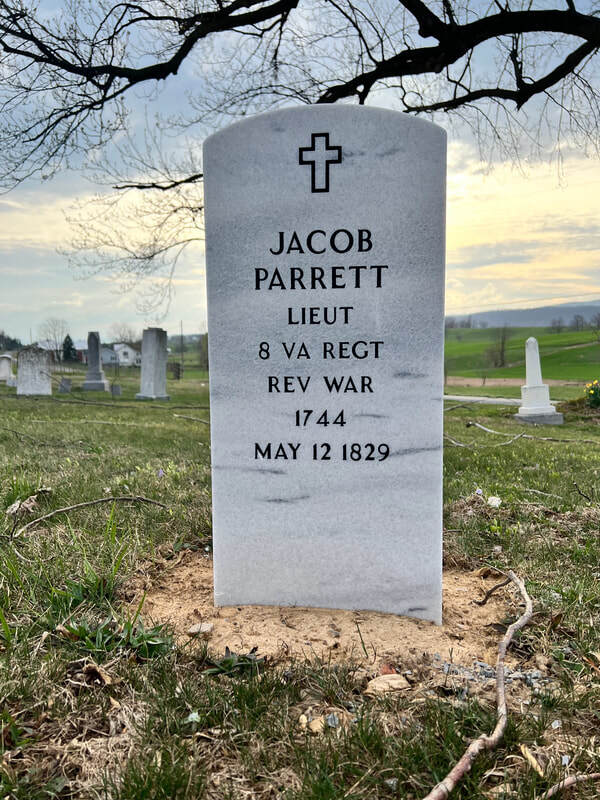
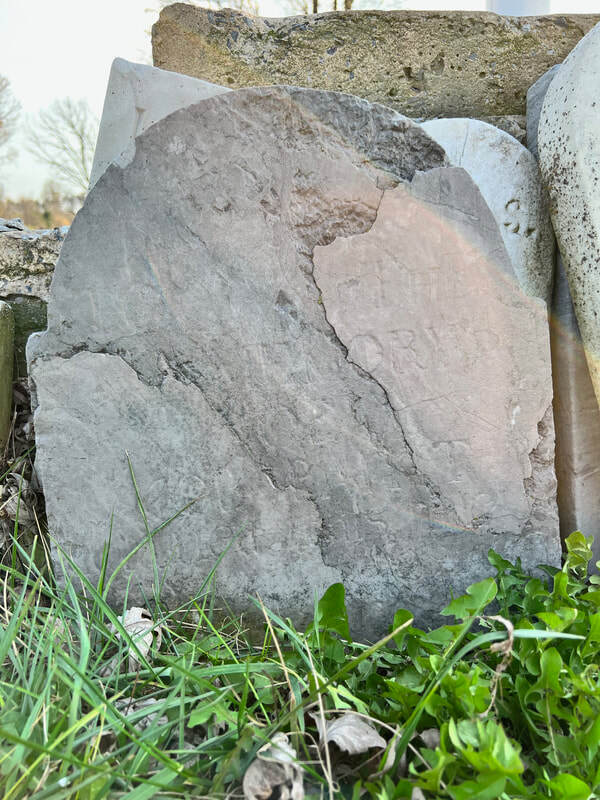
    ​Jacob Parrett got some help. A year ago, I wrote a post titled “A Little Help for Lt. Jacob Parrot” lamenting the state of his grave site near Harrisonburg, Virginia. The 8th Virginia officer, whose name was spelled various ways, was one of several Swiss-descended soldiers from the Shenandoah Valley. He and his wife are buried next to each other in a rural Lutheran cemetery with matching hand-etched fieldstone markers. Hers is intact, but Jacob’s was broken at the base and seemingly lost for some time. The marker is not lost, but it did need to be repaired or replaced. Indirect descendant Pat Kelly took the initiative. A new Department of Veterans Affairs stone now marks the grave, standing upright where the old stone was positioned for two centuries. Thanks, Pat! Thanks also to Hartman Memorials.

    To learn more about Lieutenant Parrett, make sure to read the post from last year.

    More from The 8th Virginia Regiment
  • Published on

    The Other 8th Virginia Regiments

    Image description
    The designation “8th Virginia Regiment” was used three times in two wars for non-militia units: twice in the Revolution and once in the Civil War. The existence of three regiments of the same name sometimes causes confusion for researchers and genealogists. This confusion is exacerbated by the fact that two of them were recruited in overlapping territory and the third was recruited nearby. This post is intended to make it easy to distinguish among them, and to provide a little bit of service history.

    In the French and Indian War, Virginia had one "Virginia Regiment," notably commanded for part of the war by George Washington. The was (briefly) a 2nd Virginia Regiment, as well. In the Revolution, the Old Dominion had 15 numbered regiments. In the Civil War it had 64.

    The Original 8th Virginia, 1776-1778

    Picture

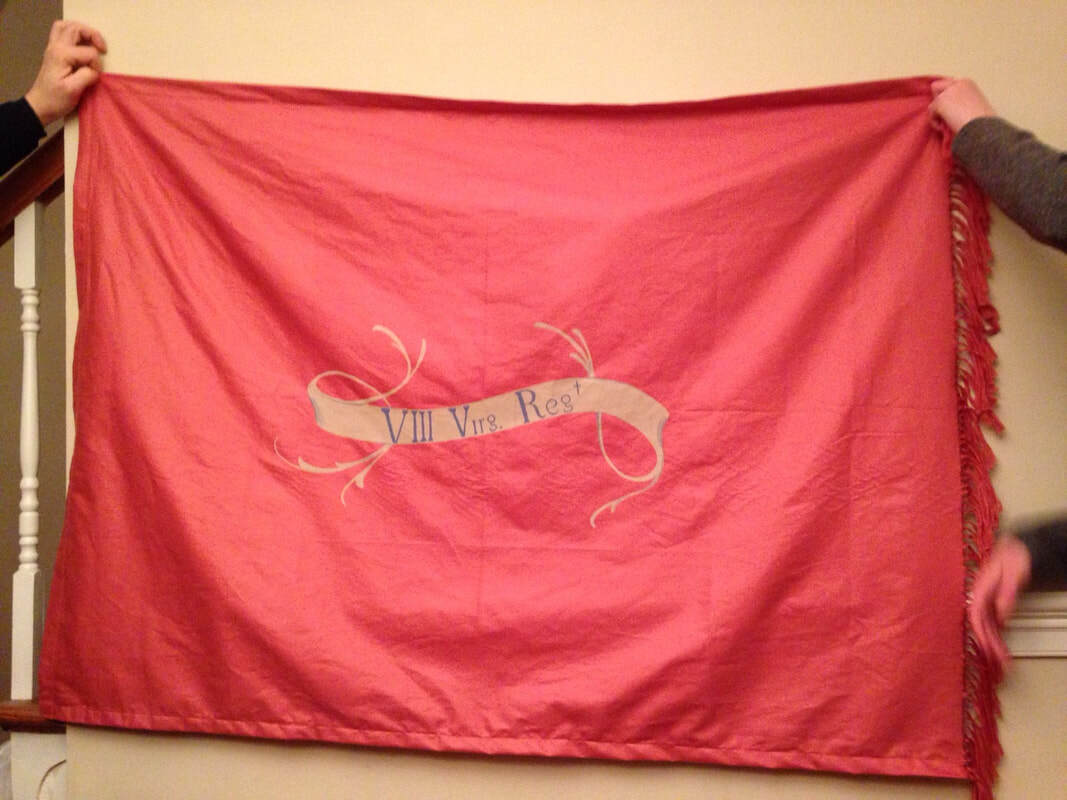
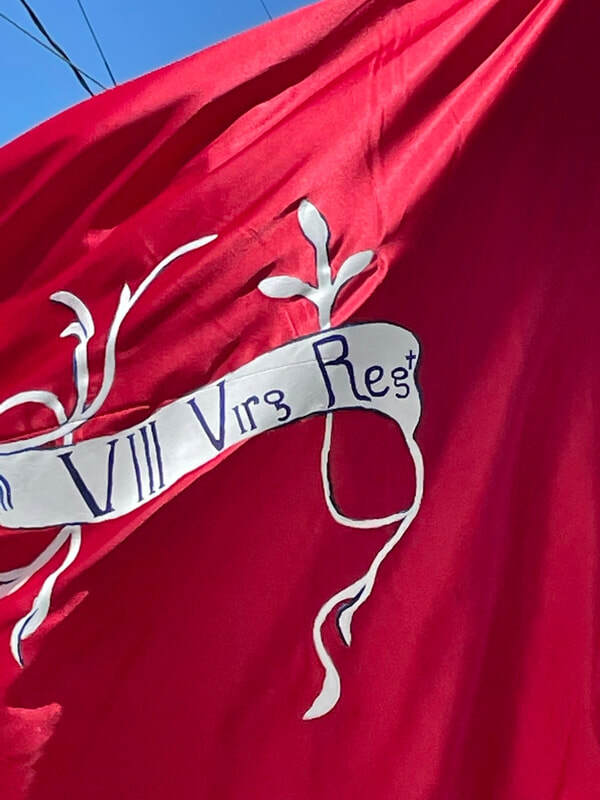
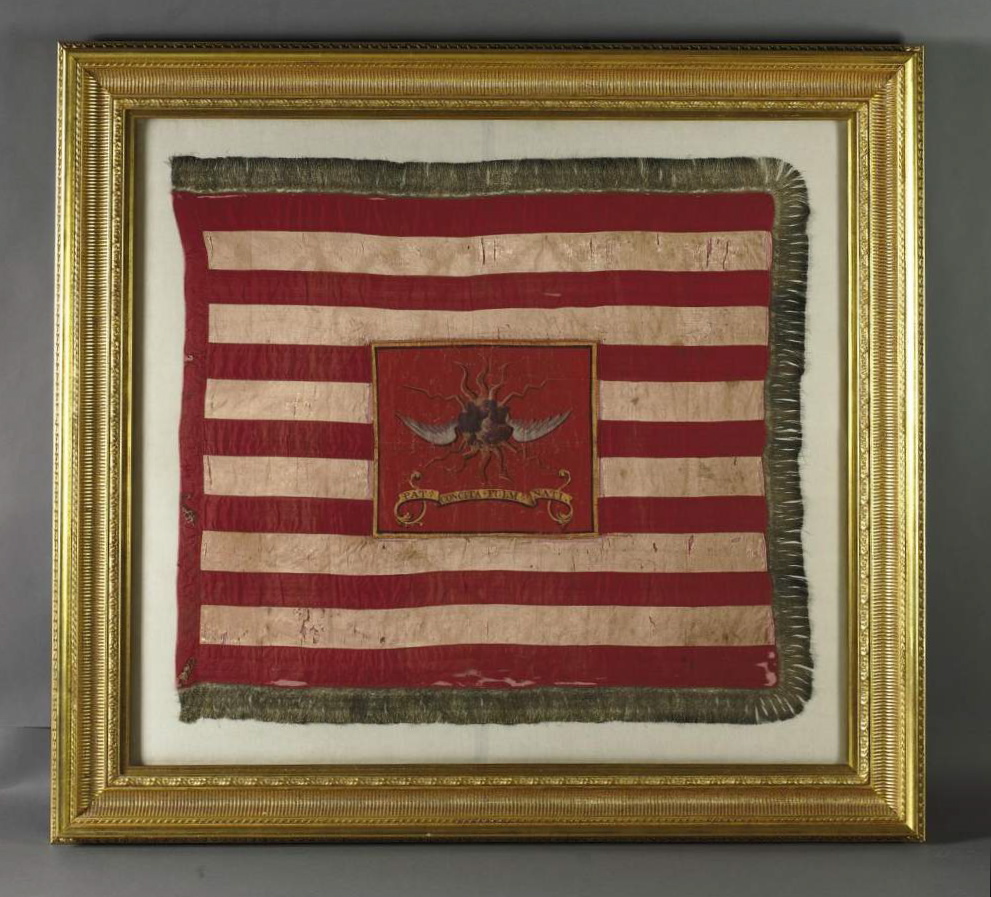
    A recreated "grand division banner" of the 8th Virginia. The original survives in a private collection. This was not the regimental banner, but rather one of a pair of flags used for tactical direction.

    This website is dedicated to the history of the original 8th Virginia Regiment. It was authorized in the Virginia Convention’s second authorization of troops in December of 1775, recruited over the winter, and took the field in March and April of 1776.  The 8th Virginia was commanded initially by Col. Peter Muhlenberg, Lt. Col. Abraham Bowman, and Maj. Peter Helphenstine. These field officers were from Woodstock, Strasburg, and Winchester, respectively. Bowman succeeded Muhlenberg as colonel when the latter became a general early in 1777.  The regiment originally had ten companies. For more, see the the "Soldiers" page on this website.
    Most of the men in the original regiment signed up for two-year enlistments that ended in the spring of 1778 at Valley Forge. That, combined with casualties and weak recruiting, left the regiment significantly understrength when it marched out of Valley Forge. At the Battle of Monmouth, it was provisionally combined with the 4th and 12th regiments, which were also understrength, as the “4th-8th-12th Virginia Regiment.” The 4th, the 8th, and the 12th had all served together in Charles Scott’s brigade since the spring of 1777.

    The “New” 8th Virginia of 1778-1779

    Picture

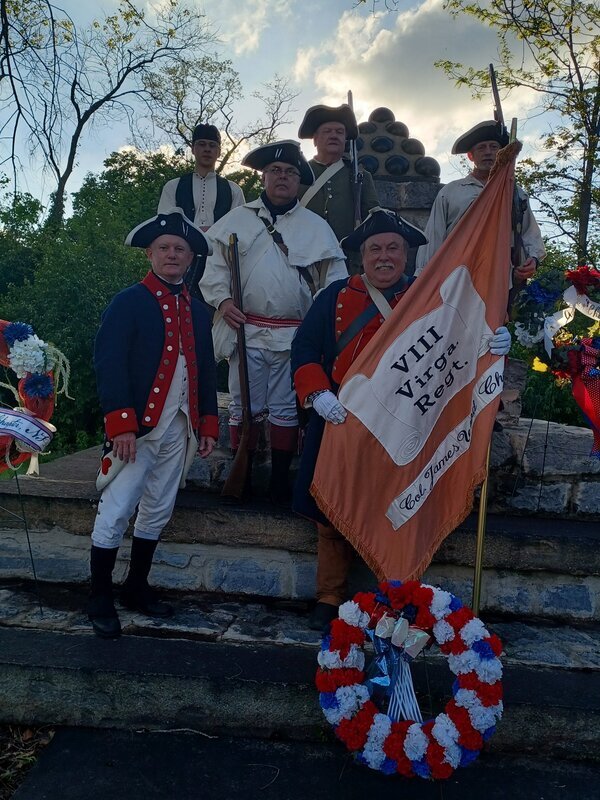
    Members of the James Wood II Chapter, Sons of the American Revolution, hold a modern flag honoring Col. Wood's leadership of the "new" 8th Virginia Regiment, originally the 12th Virginia Regiment. This photo was taken at the grave of Maj. Gen. Adam Stephen, who commanded both regiments in 1777.

    On September 14, 1778, the Virginia line was consolidated from 15 regiments down to 11. As part of this consolidation, Bowman’s 8th Virginia was folded into the 4th Virginia under Col. John Neville and Bowman was released as a supernumerary officer. The original 8th Virginia ceased to exist and the 12th Virginia was renumbered to be the “new” 8th Virginia.

    ​The 12th Virginia had been authorized by the three-month old Virginia General Assembly in October of 1776 and recruited over the coming months, in part by regimenting formerly independent frontier companies. The original field officers were Col. James Wood of Winchester, Lt. Col. John Neville of Frederick County and West Augusta, and Maj. Charles Simms of Prince William County and later Fairfax County. Its captains were Andrew Waggoner (Augusta County), Benjamin Casey (Hampshire County), Stephen Ashby (Hampshire County), Michael Bowyer (West Augusta District), Matthew Arbuckle (western Botetourt County), William McKee (Rockbridge County), Jonathan Langdon (Dunmore, later known as Shenandoah County), Joseph Mitchell, Rowland Madison, and Thomas Bowyer (Botetourt County). All of these counties except Botetourt had raised companies for the original 8th Virginia.
    In October of 1777, after Germantown but before the Valley Forge encampment, George Slaughter was promoted to become the new major of the 12th Virginia. He had, up until that time, been a captain in the original 8th Virginia. He resigned in November to deal with a family emergency. In January, he was succeeded by Jonathan Clark, who likewise had until that time been a captain in the original 8th Virginia.
     
    When the 12th was redesignated in September of 1778, it’s field officers were Col. John Neville, Lt. Col. Charles Fleming, and Maj. Jonathan Clark.  It continued in service until 1779 when the line was reorganized again.

    The Confederate 8th Virginia 

    Image description
    Another 8th Virginia Regiment was authorized by the Governor of Virginia in May of 1861 for service in the Confederate Army. It was led by Col. Eppa Hunton, Lt. Col. Charles Tebbs, and Maj. Norborne Berkeley. Major Berkeley was named in honor of Gov. Norborne Berkeley (1718-1770), a popular late-colonial governor. Berkeley, the regiment's best-remembered commander, was a graduate of VMI from Aldie, Loudoun County. Three of his brothers also served as officers in the regiment, leading it to sometimes be called the “Berkeley Regiment.” (It did not recruit in Berkeley County (named for the governor), as is sometimes assumed.) It was also called the “Bloody Eighth” because of its hard service.
    The Civil War 8th Virginia’s original companies and captains were Company A, the “Hillsboro Border Guards,” raised in Loudoun County and led by N.R. Heaton; Company B, the “Piedmont Rifles,” raised at Rectortown in Fauquier County and led by Richard Carter; Company C, the “Evergreen Guards,” raised in Prince William County and led by Edmund Berkeley; Company D, “Champe’s Rifles,” raised at Haymarket in Prince William County and led by William Berkeley; Company E, “Hampton’s Company,” raised at Philomont in Loudoun County and led by Mandley Hampton; Company F, the “Blue Mountain Boys,” raised at Bloomfield in Loudoun County and led by Alexander Grayson; G Company, “Thrift’s Company,” recruited at Dranesville in Fairfax County and led by James Thrift; H Company, the “Potomac Grays,” raised at Leesburg in Loudoun County and led by Capt. Morris Wampler; Company I, “Simpson’s Company,” raised at Mount Gilead and North Fork in Loudoun County and led by James Simpson, and Company K, “Scott’s Company,” raised in Fauquier County and led by Robert Scott.
    Picture

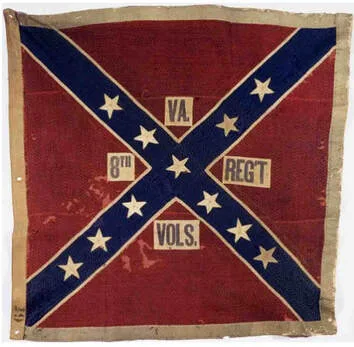
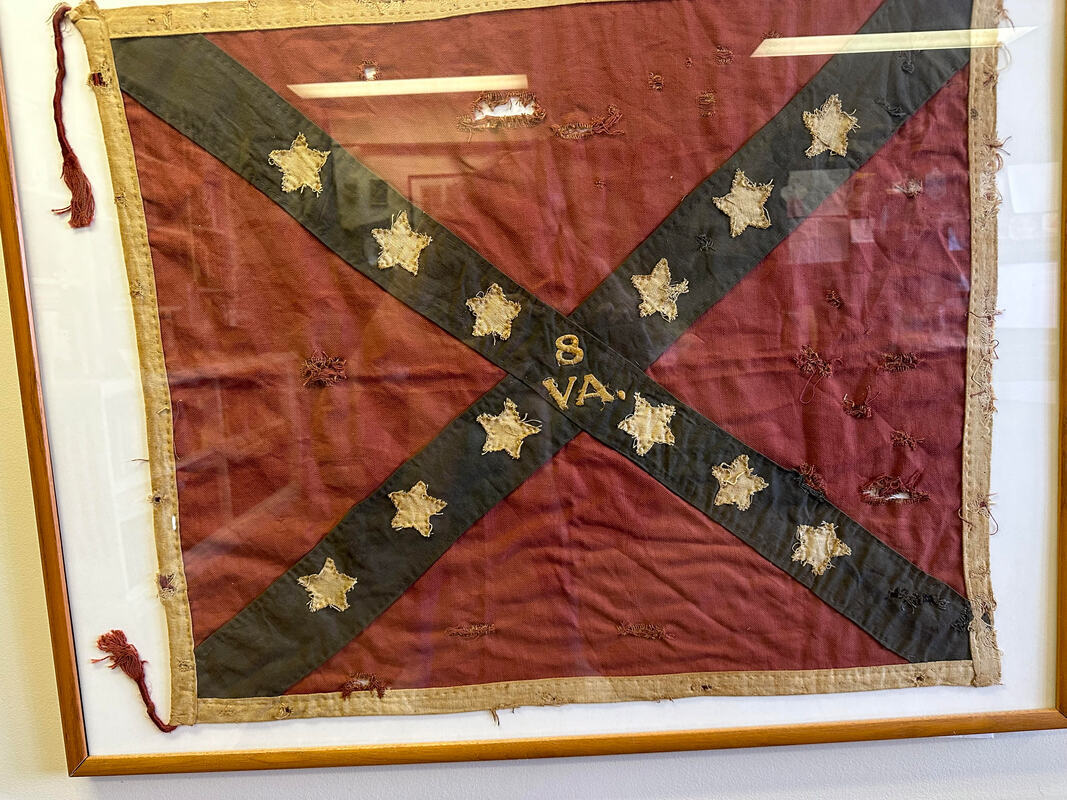
    The origin of this 8th Virginia flag has not be ascertained. It is visibly old, but may be a recreation. It is owned by a collector.

    The regiment fought at First Manassas, Ball’s Bluff, the Peninsula Campaign, Gaines’ Mill, and Second Manassas. It suffered a 70 or 80 percent casualties at Gettysburg. Hunton was promoted to general in August of 1863, after which the regiment was led by Col. Norborne Berkeley, Lt. Col. William Berkeley, and Maj. Charles Berkeley, leading to the “Berkeley Regiment” nickname. After Gettysburg it participated in the Overland Campaign, the Richmond-Petersburg Campaign, and the Appomattox Campaign. Most of the surviving men were either killed or surrendered at the Battle of Sailor's Creek, shortly before the surrender at Appomattox. A full service record can be found here.
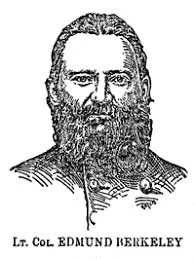
    In 1905, Edmund Berkeley wrote a poem to welcome Union veterans to a reunion at the Manassas Battlefield that is notable for the grace shown to men who had fired at him on that very field. It was published by the Society of the Army of the Potomac in the report on its fortieth reunion.

    O Lord of love, bless thou to-day
    This meeting of the Blue and Gray.
    Look down, from Heaven, upon these ones,
    Their country's tried and faithful sons.
    As brothers, side by side, they stand,
    Owning one country and one land.
    Here, half a century ago,
    Our brothers' blood with ours did flow;
    No scanty stream, no stinted tide,
    These fields it stained from side to side,
    And now to us is proved most plain,
    No single drop was shed in vain;
    But did its destined purpose fill
    Of carrying out our Master's will,
    Who did decree, troubles should cease
    And his chosen land have peace;
    And to achieve this glorious end
    We should four years in conflict spend;
    Which done the world would plainly see
    Both sides had won a victory.
    And then this reunited land
    In the first place would ever stand
    Of all the nations, far and near,
    Or East or Western hemisphere.
    Brothers, to-day in love we've met,
    Let us all bitterness forget,
    And with true love and friendship clasp
    Each worthy hand in fervent grasp
    And in remembrance of this day
    Let one and all devoutly pray:
    That when our earthly course is run
    And we, our final victory won,
    Together we'll pass to that blessed shore
    That ne'er has heard the cannon's roar;
    And where our angel comrades stand
    To welcome us to Heaven's bright strand.
  • Published on

    A Little Help for Lt. Jacob Parrot

    Picture

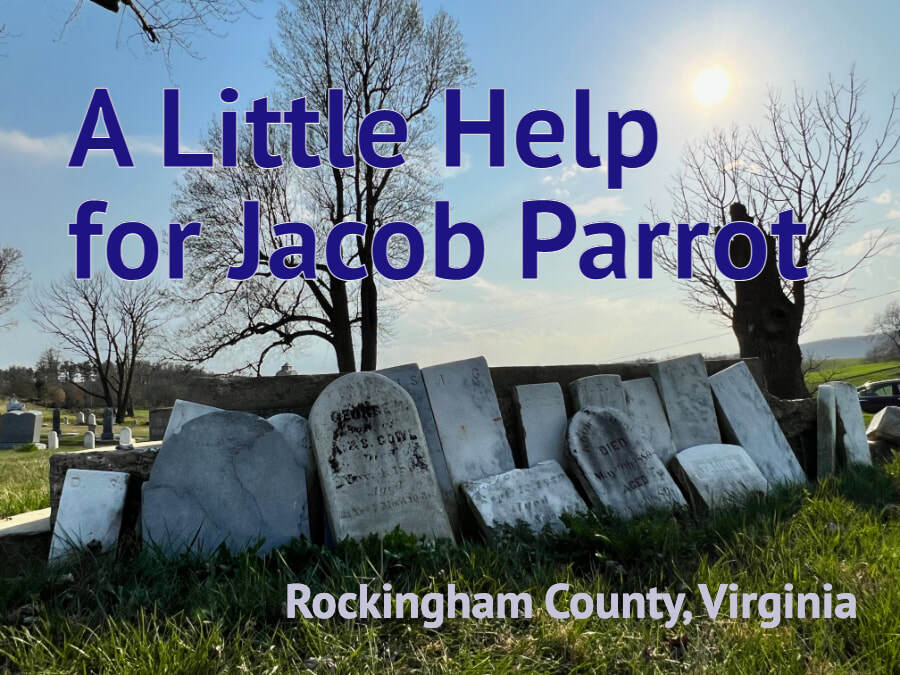
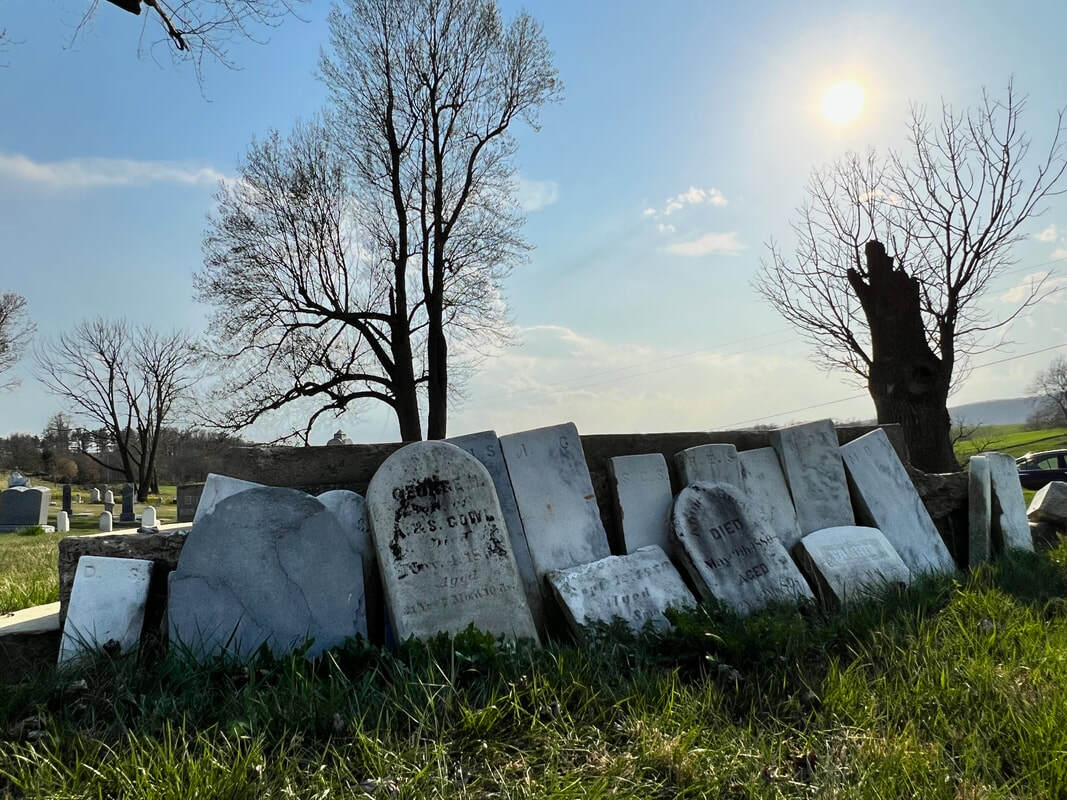
    Fallen gravestones in a Rockingham County cemetery.

    ​General Washington approved several judgements of a court martial at Morristown, New Jersey on May 7, 1777. Among the orders: Lt. Jacob Parrot of the 8th Virginia was “to be discharged from the service, and his pay stop’d from the time he left his detachment, until he did duty in his regiment again.” In modern terms, he had been AWOL and was fired for it. Today his broken gravestone sits off to the side of a Rockingham County, Virginia cemetery in a collection of about fifteen stones that have also succumbed to age.
    The Parrot family were, according to genealogies, among the earliest German-speaking settlers of the Shenandoah Valley in 1734. They are believed to have been Swiss, which would make Jacob and his brothers Joseph and George three of several Swiss-descended soldiers in the 8th Virginia, alongside Chaplain Christian Streit, Lt. Jacob Rinker, and private soldier Joachim Fetzer. The name was originally spelled "Parett" or possibly "Barrett."
    ​Jacob’s first Revolutionary service was in the Dunmore Independent Company of volunteers in 1775. In the period before open war, Virginia’s leaders were not yet ready to raise regular troops or engage the militia against the Crown. County committees of safety, however, were encouraged to organize volunteer companies to support the committees’ work and to enforce the Articles of Association. Dunmore County is now Shenandoah County and parts of Page and Warren counties. The Dunmore Independents were called out in April of 1775 to respond to Gov. Lord Dunmore’s seizure of gunpowder from the magazine in Williamsburg, but returned home when word was received of a peaceful resolution.

    ​When the 8th Virginia was formed early in 1776, Jacob earned a commission as an ensign in Jonathan Clark’s Company. His brother Joseph signed on as a sergeant. George Parrot enlisted as a private soldier. They traveled to Suffolk, Virginia where they countered efforts by slaves, servants, and Tories to aid and reenforce Lord Dunmore ‘floating city’ of soldiers and Tory refugees in Hampton Roads. They were then taken south to oppose the British attack on Sullivan’s Island and then a futile effort to attack St. Augustine, Florida. Malaria took many lives and resulted in the scattering of the 8th Virginia’s men as large numbers of sick men were left behind in various places. The survivors hobbled back to Virginia in the winter, marched to Philadelphia for smallpox inoculations, and then reunited in New Jersey in April and May.
    Picture

    The grave of Lt. Jacob Parrot has a broke base and has been removed from the ground. The 200-year-old marker appears to have been made by an amateur craftsman and is now barely legible.

    What Lieutenant Parrot did when he "left his detachment" is not clear, though the term "detachment" hints that it happened before the regiment was united in the spring of 1777. A fair guess is that he went home sick from the south without permission. After the ignominious end to his military service, he returned to the Shenandoah Valley and remained there until his death in 1829. He is buried next to his wife in a small cemetery northwest of Harrisonburg, several miles south of his old home in Shenandoah County. Though the stones match, it should be noted that one genealogy states that Jacob was never married.
    Picture

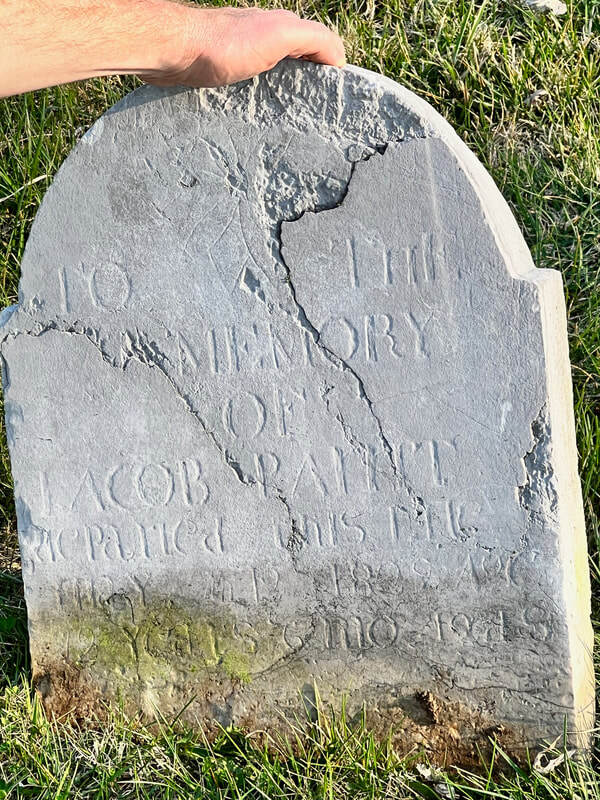
    Angled into the light of a low sun, the inscription on Parrot's headstone is legible.

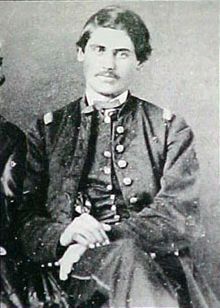
    The very first Civil War Medal of Honor recipient was Jacob's namesake and great-great nephew. The later Jacob Parrott (1843-1908) was the grandson of John Parrot, an elder brother of the 8th Virginia veteran. He enlisted as a private in the Union Army from Ohio in 1861 and volunteered to participate in the Great Locomotive Chase of 1862. He was captured but exchanged and awarded the Medal of Honor by Secretary of War Edwin Stanton on March 25, 1863. He was taken to meet President Abraham Lincoln and promoted from private to lieutenant. His exploits were the basis of Buster Keaton's most famous film, "The General," which is named for the train.
    Pat Kelly lives on the east side of the Blue Ridge in Albemarle County, about thirty miles south of Thomas Jefferson’s Monticello and more than an hour southeast of Jacob Parrot’s resting place. He descends from Jacob’s brother John, making him a 7th great-nephew. He grew up in East Tennessee (where his ancestor founded Parrottsville), but moved to Virginia in 1978 when he retired from the Navy. He has several Revolutionary War ancestors and has been researching Henry to see if he also fought in the war. Henry is listed in the Capt. John Tipton's company of  activated Dunmore County Militia during Lord Dunmore’s War (1774), but he was not in the 8th Virginia and further service has not yet been demonstrated.
    Pat traveled up to Singer’s Glen to look for Jacob’s grave and to see if he might find Henry’s there too. Neither could be found. Henry may or may not be buried there, but Jacob is definitely there and the absence of his marker was alarming. Of the more than 900 men who served at any time in the 8th Virginia, only 53 have identifiable marked graves. Of those, only twelve to fifteen still have their original headstones. Twelve or fifteen of 900 is a tiny fraction, but Jacob’s can be narrowed down to a category of just two. His and Capt. John Stephenson’s headstones both appear to be “home made” or "primitive" stones. A professionally-cut and engraved gravestone was beyond the economic reach of most veterans' families when they died and the majority of 8th Virginia men may have just had simple wooden crosses or planks to mark the spots where they were lowered into the ground. Though a few were given elegant and expensive markers, an unknown number were likely memorialized with hand-etched or scratched markers of varying quality. The marker put on Jacob Parrot’s grave appears to be a higher-end example of such a marker. Its disappearance would have been a terrible thing.
    Picture

    Jacob Parrot (1843-1908) was the first Civil War-era recipient of the Medal of Honor.

    Fortunately, a search of the cemetery found his marker leaning with more than a dozen others against a concrete riser off to the side of the cemetery and not visible from the other graves. It is severely eroded, but its inscription is intact. It is broken at its base and could not be placed back in the ground in its current state. The stone for Jacob’s wife, Rachel, is still in the ground and is of identical design.
     
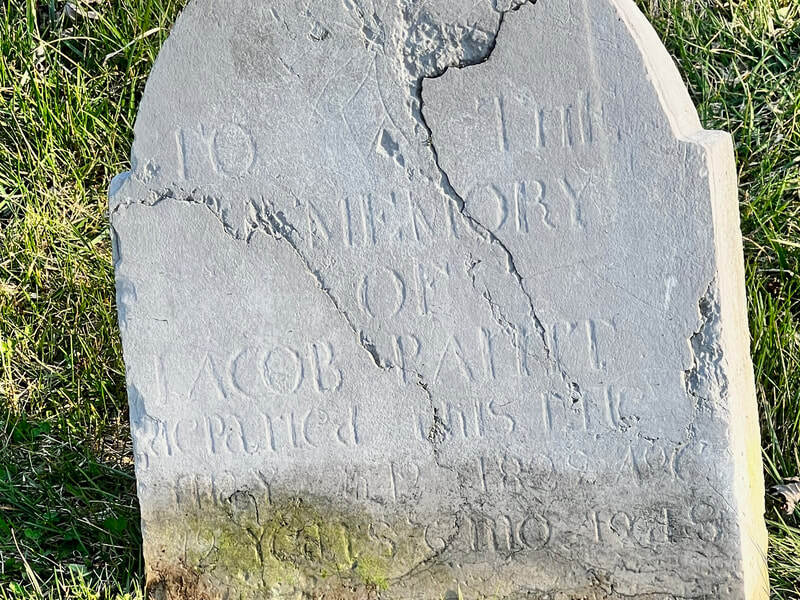
    Though intact, Jacob’s and Rachel’s inscriptions are too eroded to be easily legible. Only a few letters can be made out in photographs taken of them in 2013. Pouring water on Jacob’s stone made it only slightly more legible. The full inscription therefore seemed to be lost before a trick of nature revealed the full wording. Very carefully turning the stone to obliquely face the light of the late afternoon sun illuminated the edges of the letters and brought them back to almost full visibility.  It reads
    TO THE
    MEMORY
    OF
    JACOB PArrIT
    Departed this Life
    May th[e?] 12 1829 Age[d?]
    [7?]2 Years 6 mo 19 d[ays?]
    The letters are carefully and somewhat formally executed, the odd mix of capital letters, the variant spelling of "Parrit," the small capital “H” in the second word, and the off-center placement of the fourth and fifth lines indicate that the marker was not made by a professional stone carver. If anything, this makes the memorial even more valuable as a relic of Jacob Parrot’s life. Someone who dearly loved him and his wife appears to have worked the stones to honor them. What at first look like scratches near the top of Jacob’s marker seem on closer inspection to be a decoration of some kind, perhaps a flower.
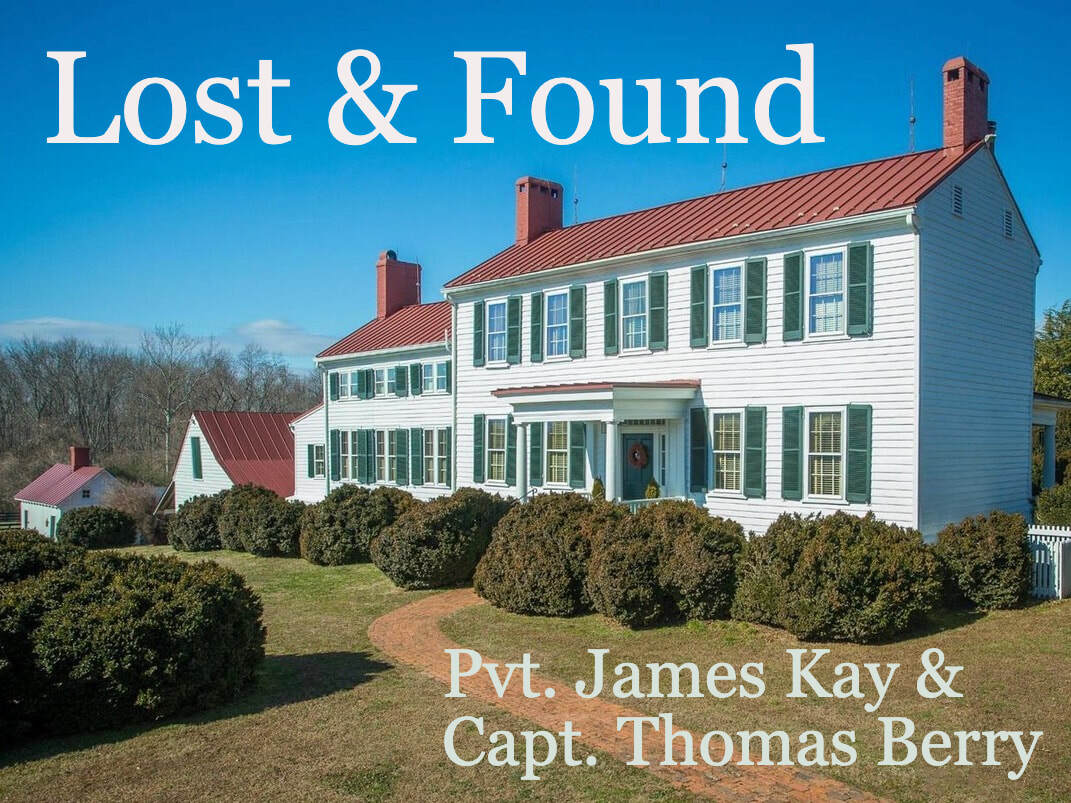
    Yet the stone is broken and removed from his actual grave. I made several recommendations for marking Revolutionary graves in a recent essay. Because they are free, almost all Revolutionary marker replacements are now of the modern, Arlington-style type issued by the Department of Veterans Affairs. I argued that original markers are in most cases the only tangible connection we have with the warriors in the ground, and should be left in place with new markers next to them. 8th Virginia veteran James Kay’s original marker, broken the same way Parrot’s is, was placed flat in the ground next to a new marker earlier this spring. I also argued that the pre-World War I type should be used if a government marker is to be acquired.
    Picture

    The grave of Rachel Parrot remains firmly placed in the ground.

    In Parrot’s case, it may be possible to craft a facsimile of the original stone. Then he and Rachel could continue to have matching stones as they have for two centuries. A repaired original could be reset upright at the correct angle to catch the rays of the late-day sun. Or it could be taken to the Harrisonburg-Rockingham Historical Society’s museum. At all costs, it should not disappear into someone’s garage.

    More from The 8th Virginia Regiment
  • Published on

    Grave Errors: Erroneous Burial Markings

    Picture

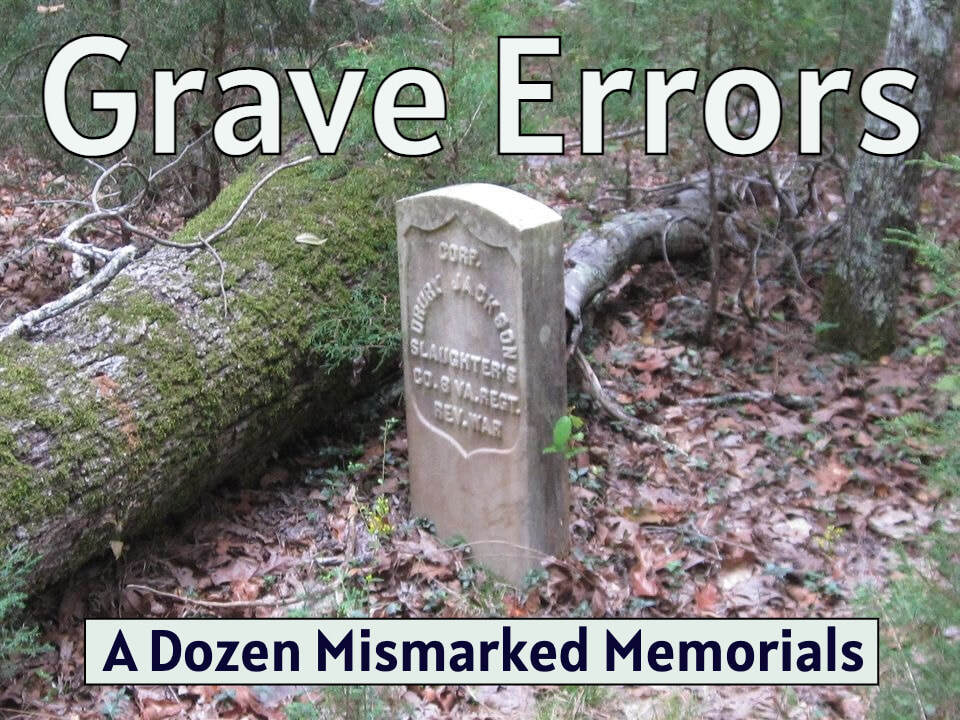
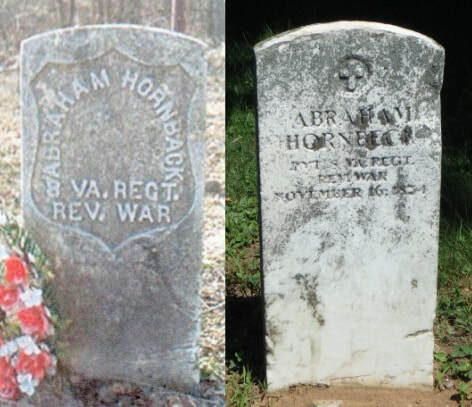
    Abraham Hornback was a marksman from Hampshire County picked from the 8th Virginia to serve in Morgan's Rifles. Gravestones have been installed for him in Indiana and Illinois, one of which is obviously in error. He isn't the only one.

    Of the roughly nine hundred men who served at some point in the 8th Virginia Regiment in the Revolutionary War, only fifty-two have identified graves. Several of them are marked with wrong information that needs to be corrected. In some cases, the information is dramatically wrong. Sadly, this review of fifty-two grave markers from just one regiment may indicate a significant amount of bad information carved into stone in cemeteries across the eastern half of the United States.

    Leonard Cooper had one leg and he didn’t like to tell people why. When he applied for a veteran’s pension in 1818, he more than bent the truth in saying that he was in “a skirmish” at Paramus Meeting House, New Jersey where he “was wounded and lost his leg.” The truth? He lost his leg in a duel with another officer at Pompton Plains in October 1779. 
    Cooper was the lieutenant commandant, or “captain lieutenant,” of Col. John Neville’s company of the 4th Virginia Regiment. This was a new rank for the Continental Army modeled on British practice that resulted from a cost-saving reduction in the number of officers. As the regiment’s senior lieutenant, Cooper led a company nominally under the direct command of the colonel. Perhaps Abraham Kirkpatrick, the man who shot him, thought Cooper was putting on airs.

    Whatever his reason, Kirkpatrick was clearly the aggressor. He attacked Cooper with a stick. Cooper apparently had a more peaceful temperament and showed no “disposition to demand satisfaction.” The era’s code of honor, however, required him to make the challenge. His peers could not abide Cooper’s reluctance to stand up for himself and told him that “unless he did, he must leave the Regiment, as they were Determined he should not rank as an Officer.” Cooper reluctantly complied. He and Kirkpatrick faced off with pistols and the hapless lieutenant took a ball of lead to his leg. The limb was amputated and he was transferred to the Corps of Invalids. He was one of the very last men discharged from the army at the end of the war.

    More from The 8th Virginia Regiment
  • Published on

    The “Grand Division Standard” of the 8th Va.

    Picture

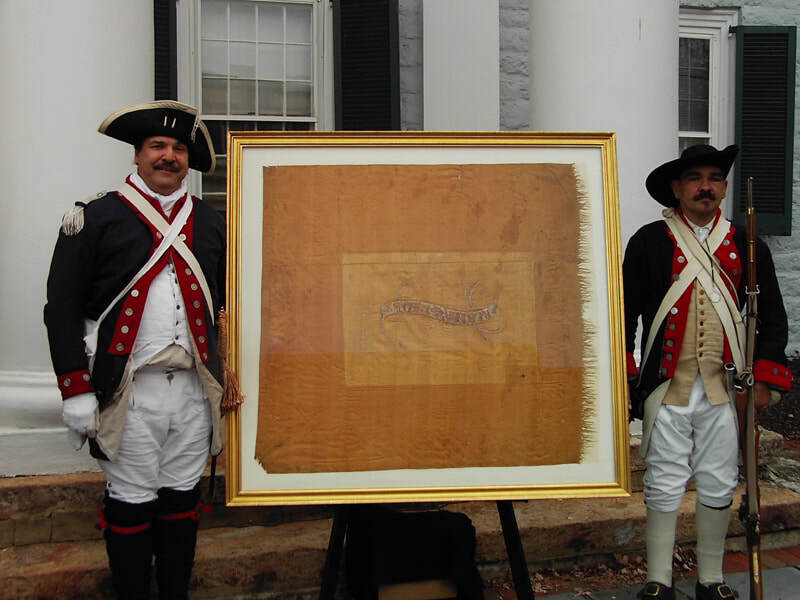
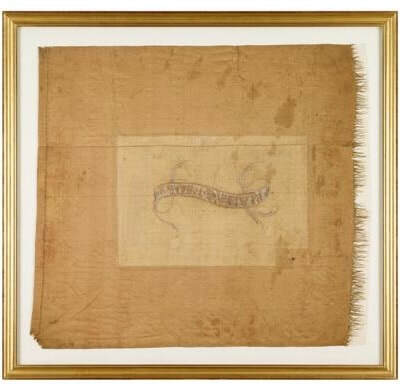
    Rob Andrews and Erik Dorman guard an 8th Virginia division standard in front of the Shenandoah County Courthouse in Woodstock, Virginia in 2012. (Courtesy of Rob Andrews)

    Authentic Revolutionary War-era flags are incredibly rare artifacts, and the ones that survive are sometimes misunderstood. A case in point is a flag associated with the 8th Virginia that is privately owned but currently on public display.
     
    Regimental flags were not just symbols—they were, like fifes and drums, used for command and control on the battlefield. Noise, confusion, and black-powder smoke could make it hard for individual soldiers to know what they were supposed to be doing. Failure to stay in formation could quickly lead to a loss on the battlefield. Large, waving, colorful flags helped prevent that from happening.
    While the Grand Union flag and the Stars and Stripes may have appeared on some battlefields, they were more likely to be seen on forts and ships. Virginia had no state flag until the Civil War. Every regiment, however, had a flag that served important symbolic and battlefield purposes. Regimental flags were unique works of art, often featuring symbols from antiquity or popular culture with mottos in English or Latin. The flags of the 1st Pennsylvania Regiment and Connecticut’s 2nd Continental Light Dragoons are among the very few that survive.

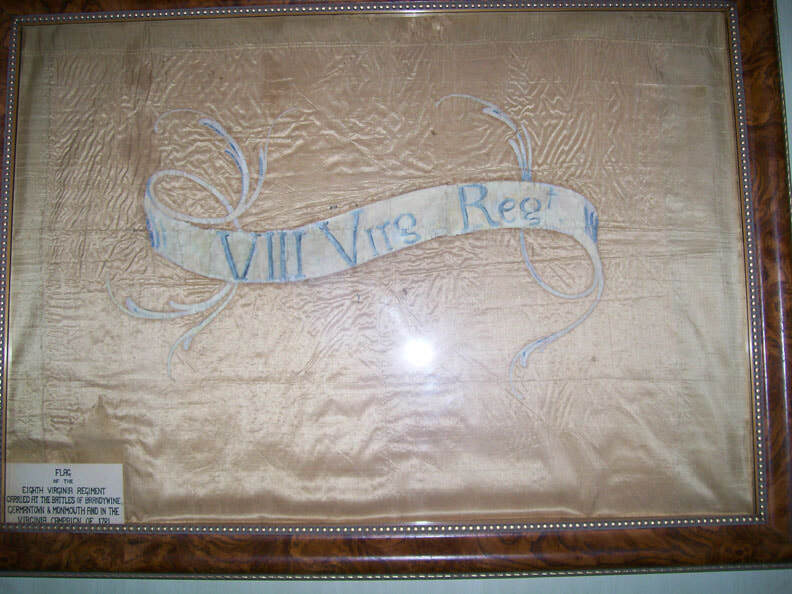
    ​There is, however, an 8th Virginia flag that still exists—but it is not the regimental banner. It is a “grand division standard,” one of two that were used to direct halves of the regiment on the battlefield. These were utilitarian devices with little ornamentation. The most important thing about them was their color. 
    The surviving 8th Virginia division standard was hidden from public view for 150 years. “The first time I heard of the 8th Virginia Standard was during an internet search on the 8th,” reported Rob Andrews, an SAR member and Revolutionary War reenactor with the 1st Virginia Regiment in 2015. What he found was an 1847 reference in the Richmond Whig.  The newspaper quoted Peter Muhlenberg’s great nephew saying, “The regimental color of this corps (8th Virginia Regiment of the Line) is still in the [my] possession.  It is made of plain salmon-colored silk, with a broad fringe of the same, having a simple white scroll in the centre, upon which are inscribed the words, ‘VIII Virga. Reg’t.’ The spear-head is brass, considerably ornamented.  The banner bears the traces of warm service, and is probably the only revolutionary flag in existence.”
    Picture

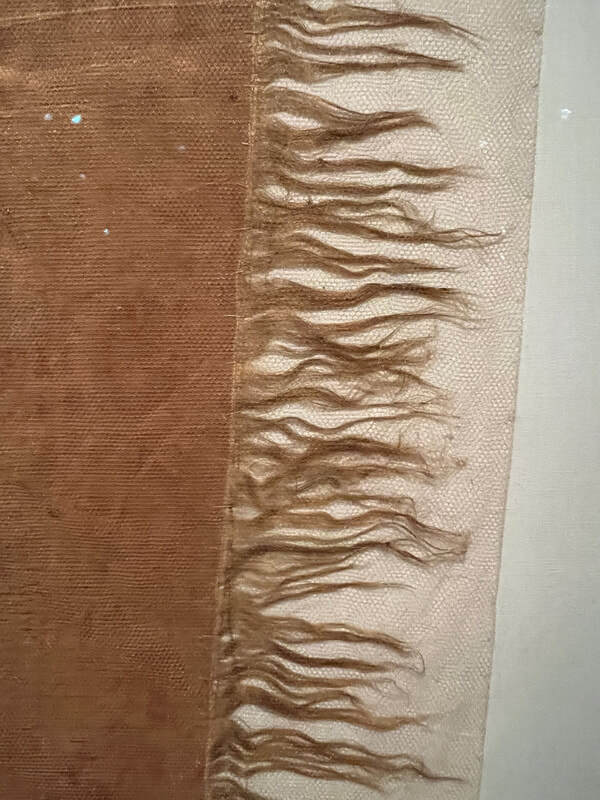
    A close-up of the flag's fringe also shows the netting that is used conserve the flag. (Author)

    Henry A. Muhlenberg was at that time preparing to publish a biography of his great uncle, the still-useful (but occasionally inaccurate) Life of Major-General Peter Muhlenberg of the Revolutionary Army. The younger Muhlenberg was a member of Congress and quite knowledgeable about his pedigree, but his description of the flag as “the regimental color” was wrong.
    Picture

    The repainted side of the flag as displayed before 2012. Exposure to light resulted in a rectangle of faded fabric in the center of both sides of the flag. (Courtesy of R. Andrews)

    Other than the 1847 reference, Rob could find no mention of the flag anywhere. “I emailed the folks at Valley Forge and the Trappe Foundation in Trappe PA, where the Muhlenberg family lived.  Emails bounced around and finally one person said he thought he knew who had it." Then, Rob said, an email "popped into my box with two pictures of the flag.  It was in a frame and had a card at the bottom stating its provenance." The owner of the flag at that time had purchased it at an auction in the 1960s. The flag had not been professionally conserved, had faded where it faced the glass, and was displayed with a card that claimed a service history that followed General Muhlenberg’s career, but not that of the 8th Virginia (which he led for just a year).
    "In 2012, the flag was sold at Freeman’s Auction in Philadelphia. Prior to the auction, Freeman’s brought it to Shenandoah County to be displayed.  I was lucky that I found out about it just a couple of days prior to the event.  I contacted my friend Erik [Dorman] who also was interested in writing about the 8th and we decided to show up in our uniforms.  We caused quite a stir when we walked around the corner of the Courthouse into the square.  We were immediately enlisted to "guard" the flag and unveil it during the event.”
    Rob also shared one important explanation about the flag’s appearance. “As someone in the past painted the flag so that 8th Virginia was visible” the opposite side of the flag is displayed “to show its original condition.  And its years in the frame have led to its faded rectangle appearance.” The flag was purchased anonymously and is once again owned by a private collector. It was briefly displayed again at the Winterthur Museum in Delaware and is presently on display again in Philadelphia.

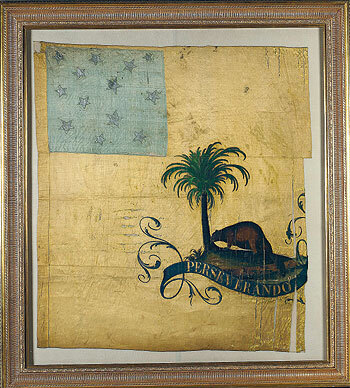
    ​The Muhlenburg flag resurfaced six years after another set of Virginia flags reappeared. The flag of the 3rd Virginia “detachment” was put up for auction in 2006 by a descendent of Banastre Tarlton. It is probably the only surviving Virginia regimental flag and is reportedly the oldest existing 13-star flag. It features a beaver (America) felling a tree (the empire) and the motto Perseverando (“By persevering”) in Latin.
    Picture

    The "3rd Virginia Detachment" banner captured by Banastre Tarlton in 1780.

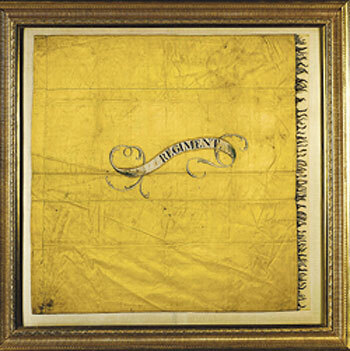
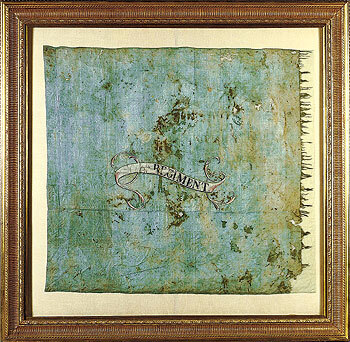
    With it were two smaller, plainer flags of identical design but different colors. The 3rd Detachment was an ad hoc unit cobbled together under Col. Abraham Buford in 1780 from new recruits and soldiers who had avoided capture at Charleston earlier that year. The flags were used at the Waxhaws in South Carolina on May 29 when Tarlton defeated Buford there. It is unlikely that the flags were made specifically for the detachment. The regimental flag is described in detail in a 1778 inventory of then-new flags known as the “Gostelowe Return.” The flags were probably, therefore, inherited from a regiment that was folded into Buford’s detachment. Buford had been colonel of the 11th Virginia, and a number of the men in his detachment were reportedly from the 2nd Virginia. The flag could have come from either of those, or from another.
    Picture
    Picture
    Picture
    The two “grand division” flags from the Buford detachment are almost identical, except for their colors, to the Muhlenberg flag. Buford’s maneuvering flags are blue and yellow. The Muhlenberg flag is a beige color today and was described as a “salmon” color in 1847. A fabric expert advises that the original color was red. The flag has faded considerably just from its time in the frame. It is not hard to imagine it having faded from red to a salmon color over the century or so before it put under glass.

    ​The scrolls on the blue and yellow flags contain only the word "regiment." The word is not centered in the scroll, suggesting that a space was retained to the left  on both flags to be filled in when they were assigned to a specific regiment. The writing in the 8th Virginia's scroll is illegible now. It was retouched on one side by Mr. Goetz or a previous owner to say "VIII Virg Regt." The 1847 account in the Richmond Whig says the scroll was styled a bit differently as "VIII Virga Regt."
    Picture

    The grand division standard as it likely appeared when new, recreated by 8th Virginia Regiment reenactor Nathan Gibson. (Courtesy of Nathan Gibson)
    A comparison of this flag to other Virginia standards could not be done until after it and the Buford flags had all resurfaced. Now that a comparison is possible, it is quite clear that the Muhlenberg flag was in fact one of two divisional standards. Though a maneuvering banner and not the regimental standard, the flag is still a treasure. It was on display at the Museum of the American Revolution in Philadelphia in 2022.

    More from The 8th Virginia Regiment