• Published on

    The Mighty Oaks of the Forest

    Picture
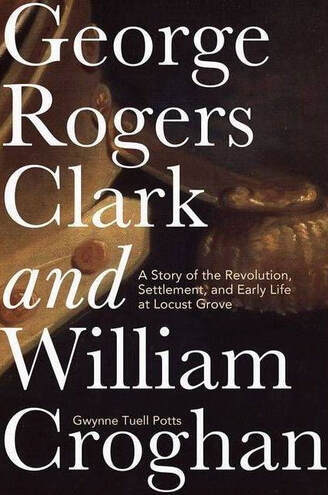
    George Rogers Clark & William Croghan by Gwynne Tuell Potts (Lexington: University Press of Kentucky, 2020)
    Picture
    “The phenomenon of fame confounds and fascinates, indiscriminately raising some to glory while consigning apparent equals to exile.” This is Gwynne Tuell Potts’s insight in her new book on George Rogers Clark and his brother-in-law, William Croghan. “In its most satirical form,” she continues, “fame dooms an occasional soul to both states.” Potts’s 300-page volume is an exploration of the vagaries of fame and fortune.

    George Rogers Clark was famous, once. He was a towering figure on the western front of the Revolutionary War. Potts quotes French Gen. Henri Victor Collot describing Clark as the person who had “gained from the natives almost the whole of that immense country which forms now the Western states.” Collot said Clark was “the rival, in short, of George Washington.” Clark’s reputation was diminished in his own lifetime and his fame has since waned. His story is not taught in most schools and his Virginia commission excludes him from the pantheon of well-known Continental generals.

    William Croghan has never been famous, but his life illustrates the aspirations and achievements of America’s early frontiersmen. He fought for national expansion and then played an important role in that expansion by moving to Kentucky and running the office that parceled out bounty land to veterans. This was a lucrative position. Croghan prospered and built a stately home, which he called Locust Grove.

    ...continue to The Journal of the American Revolution.

    More from The 8th Virginia Regiment
  • Published on

    Stolen Valor in Georgia

    Picture

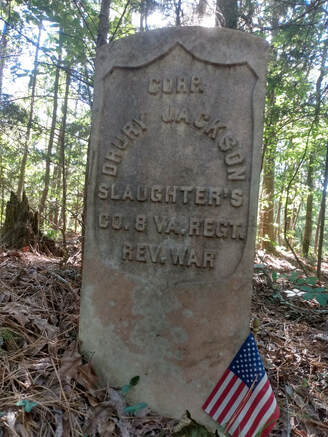
    Drury Jackson of the 8th Virginia probably never set foot in Georgia. So why is his gravestone there? (Dutch Henderson)

    Who is the man who lies buried in the ground of central Georgia?
    Thirty years ago, Dutch Henderson was “stomping through the woods” near Lake Sinclair in central Georgia when he stumbled upon an old gravestone. Some might have thought it an odd spot for a grave, but Dutch knew the history of the area and it made sense. In fact, the setting told him the man six feet under had played an important role in American history.
     
    The inscription on the marker read: “CORP. DRURY JACKSON, SLAUGHTER’S CO. 8 VA. REGT. REV. WAR.” Why was this headstone for a Revolutionary War soldier all alone in the woods near a lake?
     Time changes things. Neither the lake nor the woods were there when Drury Jackson died. Back then the grave was on cleared ground overlooking the Oconee River. Depressions in the soil still reveal to the trained eye that Drury was buried in proper cemetery. The river became a lake in 1953 when it was dammed up to create a 45,000-kilowatt hydroelectric generating station. When Dutch found the grave, the cemetery had been neglected and reclaimed by nature. Today it is in a copse of trees surrounded by vacation homes.

    ​Dutch spends his free time studying local history and conducting archeology. He has made some important finds, including a string of frontier forts along what was once the “far” side of the Oconee. He’s pretty sure that Drury’s burial in that spot is an important clue to his life in the years following the Revolutionary War. From there, however, things get complicated.

    More from The 8th Virginia Regiment
  • Published on

    Lost in the Fields: Lewis & Clark and the 8th Virginia

    Picture

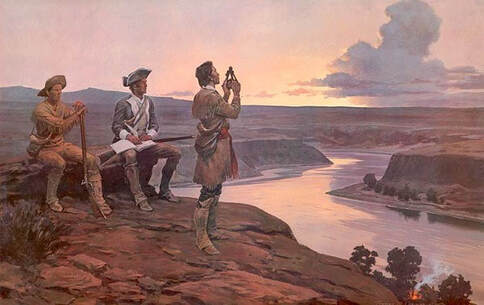
    Meriwether Lewis and William Clark depicted in "An Evening Reading," by Thomas Lorimer.

    One of the great adventures of early American national history is the Lewis & Clark Expedition, which began in 1803. There is a close tie between the Corps of Discovery and the 8th Virginia: William Clark was the youngest brother of Captain Jonathan Clark. Middle brother John Clark was a 2nd lieutenant in Robert Higgins’ company. (Another brother was Gen. George Rodgers Clark, famous for leading the Virginia’s Illinois Regiment in the Northwest.)
    There seems to be another connection, as well. Among the first recruits for the Corps of Discovery were privates Reuben and Joseph Field. They signed up in Kentucky (where the entire extended Clark family now lived) but were—according to various sources—born in Culpeper County, Virginia. Meriwether Lewis said the brothers were “two of the most active and enterprising young men who accompanied us. It was their peculiar fate to have been engaged in all the most dangerous and difficult scenes of the voyage, in which they uniformly acquited themselves with much honor.”
     
    Three decades earlier, five men with the same last name enlisted in Capt. George Slaughter’s Culpeper County company of the 8th Virginia: Abraham, Henry, William, Larkin, and Reuben. This Reuben Field cannot be the Reuben Field from the Corps of Discovery, but there is every reason to believe they were closely related—perhaps first cousins or an uncle and a nephew. Genealogies posted on the internet show a large extended family that frequently used certain given names—Abraham, William, Reuben, Henry, and others—in many generations and collateral lines. They are consequently difficult to navigate.
     
    Captain Slaughter was himself married to Mary Ann Field, the daughter of Culpeper County’s Col. John Field (who fought at Braddock’s Defeat and died at the Battle of Point Pleasant). Mary Ann’s mother mother is identified as Anna Rogers Clark, who has been erroneously identified as the sister of the regiment’s Jonathan and John. Another genealogy seems to indicate that she was the aunt of the Corps of Discovery’s Reuben and Joseph. Colonial Virginia was a small place, genealogically speaking. It is entirely possible that Mary Ann was related to the famous Clarks.
     
    The 8th Virginia's Reuben appears to be the son of William Feld and Hanna Roberts Field.  Genealogists state Reuben’s birth date as November 11, 1757 and the month of his death as April, 1815. This aligns with Virginia veterans records. This Reuben had a unique career in the war. He enlisted as a private early in 1776 but soon managed to get appointed as a cadet (an officer in training), still with the 8th Virginia. He was commissioned an ensign in March of 1777 and was a lieutenant by the Battle of Germantown, where he was captured. He was later exchanged, promoted to captain, and served nearly to the end of the war.
     
    Abraham Field was among the many 8th Virginia men to succumb to malaria during their southern campaign of 1776. He died on August 6 of that year. The same Virginia records indicate that he was Reuben’s elder brother. The 8th Virginia’s Henry Field, the original 1st lieutenant of Slaughter’s company, also contracted malaria. He went home on an extended furlough and died in 1778, probably from complications caused by malaria. He, however, does not appear to be our Reuben’s brother (though our Reuben had a brother of the same name). Almost certainly a cousin.
     
    This is all very confusing. Obvious errors in online genealogies confuse the matter further. I have made a point of avoiding genealogical investigations in this project, leaving that to the descendants of the men. Family relationships, however, were a major factor in the life of the 8th Virginia. Officers were given recruitment quotas in 1776 and looked first to those closest to them. Those who were not related before the war became related, in many instances, in the years after it.
     
    If anyone knows of an authoritative genealogy of the Fields family and can help connect the five soldiers of the 8th Virginia with the two brothers of the Corps of Discovery, I will be very grateful.

    Read More: "George Slaughter: Louisville's Forgotten Founder."

    More from The 8th Virginia Regiment
    Picture
    Picture
    Picture
  • Published on

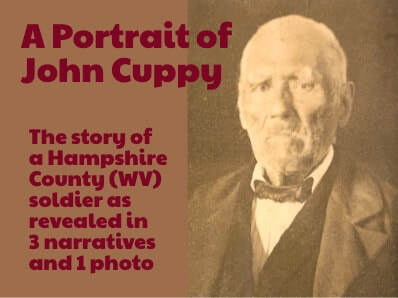
    A Portrait of John Cuppy

    Picture

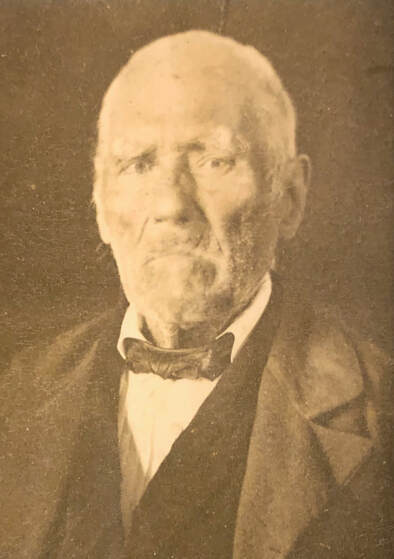
    Hampshire County's John Cuppy at the age of 99. (Museum of the American Revolution/Wisconsin Historical Society)

    The story behind the face in a very rare photograph of a Revolutionary War veteran.
    Most of the enlisted men of the Revolutionary War are faceless and forgotten—just names on lists. Biographies and painted portraits are honors that were reserved for officers. Even so, it is possible to trace the lives of some common soldiers using original sources. Many of them applied for pensions after 1818, which required them to provide (usually brief) narratives of their service. Some gave similar attestations when they applied for military bounty land. A small number left detailed accounts of their experiences in interviews, letters, or diaries. Finally, and very rarely, we have photographs taken in the last years of some veterans’ lives. Virginian John Cuppy may be the only Revolutionary War soldier to leave us an artifact in each of these categories.
    Cuppy was born near Morristown, New Jersey on March 11, 1761. While still an infant, he was brought to Hampshire County, Virginia by his German parents. Their new home was on the South Branch of the Potomac River near the town of Romney, which is now in West Virginia. About forty miles west of the Shenandoah Valley, this was the very edged of settled Virginia territory. John was just fourteen years old when the war began—too young to be a candidate for service when Hampshire was directed to raise a rifle company in July of 1775. He was still too young when Dutch-descended Capt. Abel Westfall recruited a company there that winter for Col. Peter Muhlenberg’s new 8thVirginia Regiment.

    More from The 8th Virginia Regiment

    Picture
    Picture
    Picture
  • Published on

    Three Germans: The Regiment's Field Officers

    Image description
    Why Germans? The 8th Virginia Regiment of Foot was authorized by the revolutionary Virginia Convention on December 13, 1775. It had no numeric designation yet, but was intended to be unique in two ways. It would be ethnically-based and all of its men would carry rifles. It was conceived as a “battalion” to “be composed of Germans, with German officers.”
     
    The concept may have originated with the Rev. Peter Muhlenberg and Jonathan Clark, both delegates from Dunmore County in the Shenandoah Valley. Dunmore (now called Shenandoah County) was the cultural hub of German life in the Valley. It is inconceivable that the resolution could have been drafted without the involvement of at least Muhlenberg and probably of Clark as well. Muhlenberg was the Rector of Beckford Parish, the geography of which was identical to that of Dunmore County. His church was at Woodstock, the county seat. He was, however, more than just the community’s pastor. He was the son of the patriarch or the Lutheran Church in America, whose church was in the village of Trappe near Philadelphia. Clark was the county’s deputy clerk, an important job, under Thomas Marshall (soon to be colonel of the 3rd Virginia Regiment and father of future Chief Justice John Marshall).

    The Shenandoah Valley’s Germans had nearly all come the way Muhlenberg had: down the Great Philadelphia Wagon Road to Virginia. The road passed through communities that remain heavily German to this day, such as Lancaster, Pennsylvania. Scotch-Irish immigrants followed the same route, but tended to settle farther south in the Valley, around Staunton and Augusta County. 

    Lutheran Germans like Muhlenberg were seen by the Virginia gentry as reasonably reliable and trustworthy. Their theology differed little from the Church of England. Muhlenberg had, in fact, gone to London to be ordained before taking his position in Woodstock. (King George III was himself of German descent and his great grandfather, George I, couldn’t speak English when he took the throne.) The Ulster Irish, however, were less trusted. They were theological dissenters and often politically radical. Their Calvinist faith differed in important ways from Anglicanism. They could, however, be counted on to fight
    The ordinance creating the 8th Virginia and the selection of field officers that followed it suggest that what the convention really meant by calling it “German” was that Germans would command it (and that the Irish would not). Muhlenberg was the perfect candidate for such a role. He and Clark both served as officers in the regiment, something that may well have been predetermined. Muhlenberg would be the top officer and Clark would command one of Dunmore County’s two companies (the German one).
    Picture

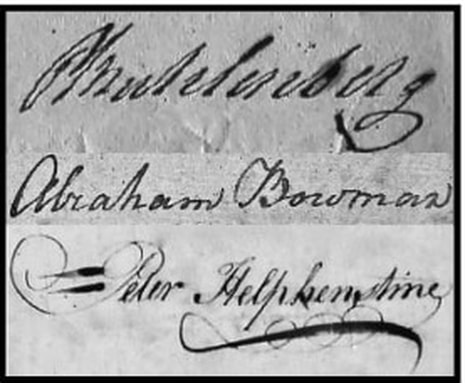
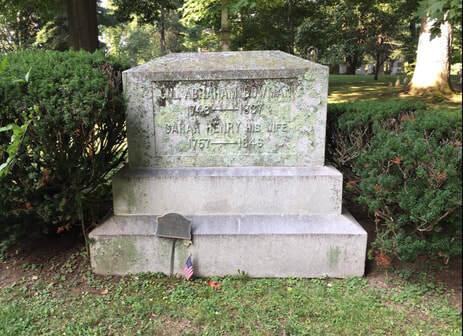
    The lichen-encrusted grave of Abraham Bowman in Lexington, Kentucky. No portraits of Bowman or Helphenstine survive. Though Helphenstine is known to be buried in the Lutheran section of Winchester's Mount Hebron Cemetery, there's no surviving marker. It may be that his destitute widow was not able to afford a stone memorial. (author)

    “And be it farther ordained,” read the resolution, “That of the six regiments to be levied as aforesaid, one of them shall be called a German regiment, to be made up of German and other officers and soldiers, as the committees of the several counties of Augusta, West Augusta, Berkeley, Culpeper, Dunmore, Fincastle, Frederick, and Hampshire (by which committees the several captains and subaltern officers of the said regiment are to be appointed) shall judge expedient.”
    Picture

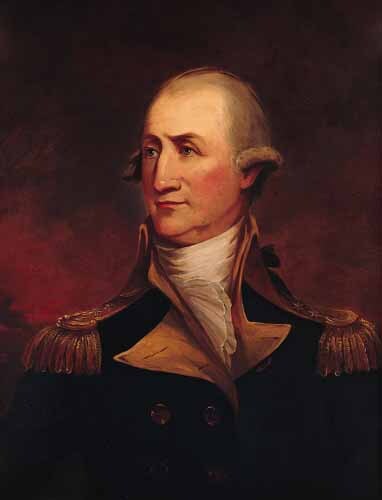
    Peter Muhlenberg portrayed at the end of the war as a brevet Major General.

    Muhlenberg and Bowman were both too young to have participated in the French and Indian War as most of Virginia’s other senior officers had. Muhlenberg had spent some time in a British military unit after dropping out of seminary in Germany years before. Bowman had experienced at least one dangerous encounter with Indians as a teenager. It is fairly clear that in choosing them the Convention prioritized their ability to rally and unite the Shenandoah Valley over their fairly meager military experience. Patrick Henry was the only other appointed colonel who had no real military experience.

    When they received their commissions Muhlenberg was twenty-nine years old and Bowman was twenty-six. The regiment’s major was Peter Helphenstine, a German from Winchester in Frederick County. He was about twice Bowman’s age, in his middle fifties. He had commanded a company in the governor’s division during Lord Dunmore’s War in 1774. He was a respected tradesman and an active Lutheran.
    Below them, the officers of the ten companies—captains, lieutenants and ensigns—were a diverse group. English, German, and Scotch-Irish were most common. Capt. Abel Westfall of Hampshire County was Dutch, though his family had been in America for generations. Lieut. Jacob Rinker was Swiss. Lieut. Isaac Israel was Jewish. Religiously, though it is hard to trace, they were mostly Anglican, Lutheran, German Reformed, Presbyterian, and probably Baptist. If there were no Methodists, some of them—including Capt. Westfall—would become Methodists soon.
    ​`
    The diversity of the officers reflected the diversity in the rank and file. The 8th Virginia was a microcosm of the Continental Army at large. It was America’s original “melting pot.” Originally divided by race and religion, their shared hardships would soon make them a band of brothers.

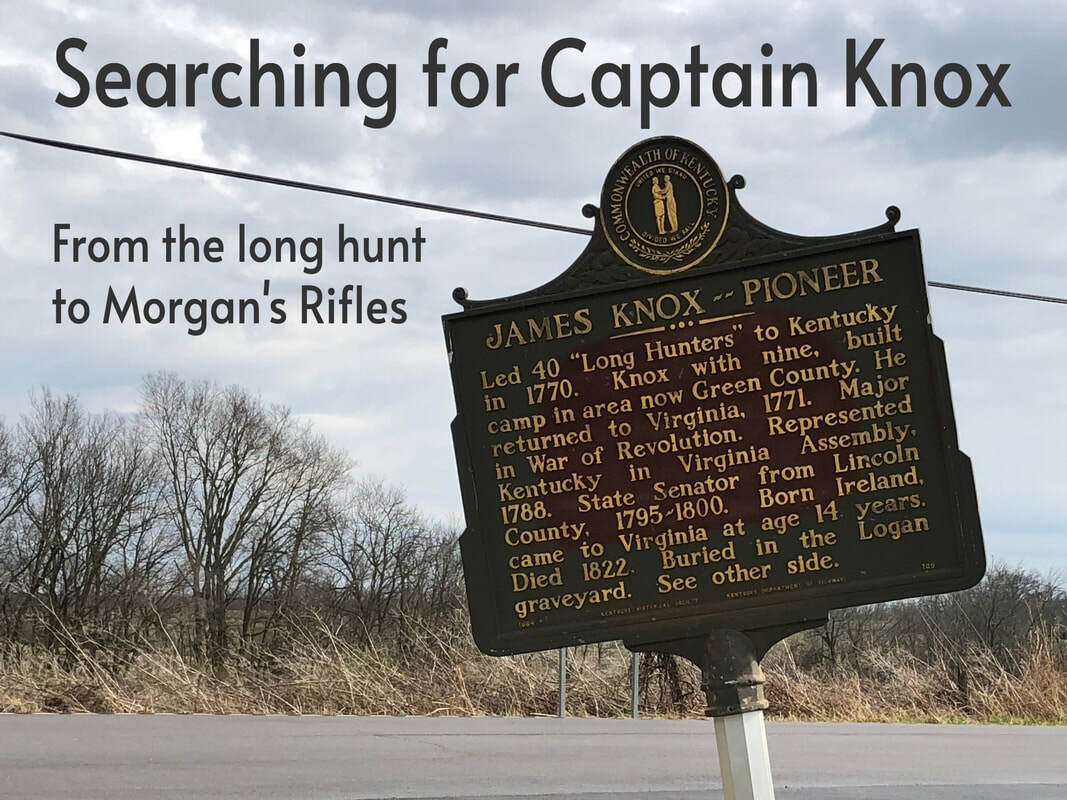
    ​The committees were generally dominated by English elites and could be counted on to appoint the right kind of company officers. Only two of ten companies had Irish captains: Fincastle County and the West Augusta district (both on the frontier) selected James Knox and William Croghan. Both were capable and loyal officers.


    The choice of field officers, however, was up to the Virginia Convention and it chose three Germans as it had planned. Each was from a different down in the lower (northern) Shenandoah Valley. Muhlenberg was appointed to be the colonel. Abraham Bowman of Strasburg (also in Dunmore County) was appointed to be the lieutenant colonel. Bowman came from a prominent family. His grandfather, Jost Hite, had led the first group of German settlers into the valley from Pennsylvania in 1731.  

    More from The 8th Virginia Regiment
    Picture
    Picture
    Picture
  • Published on

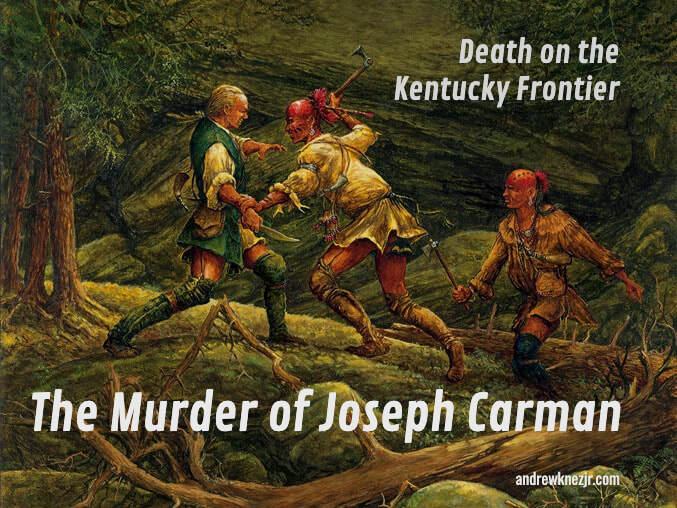
    The Murder of Joseph Carman

    Picture

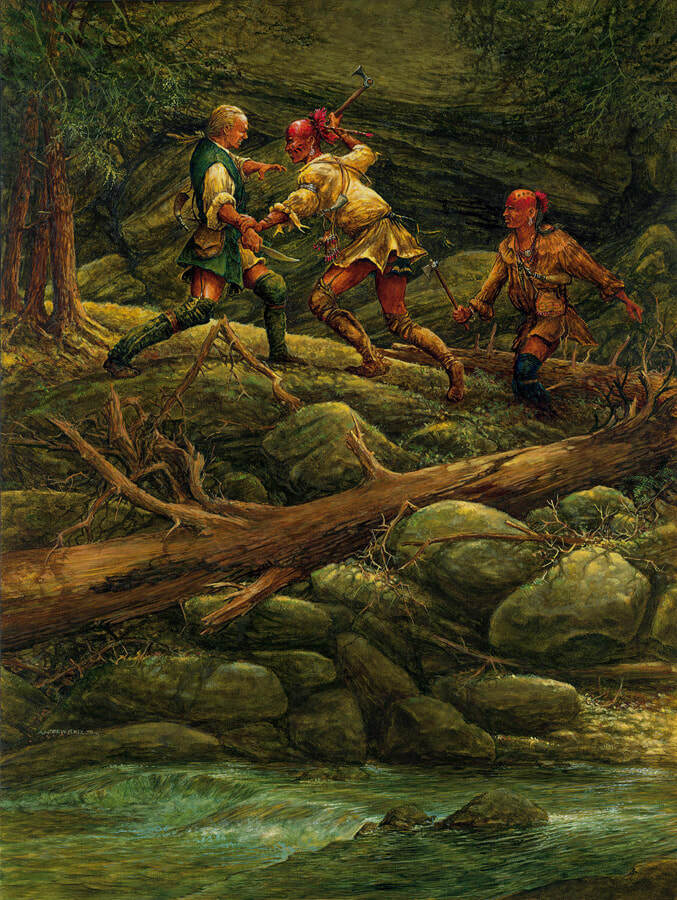
    Joseph Carman survived the Revolution, but did not surviver postwar life on the frontier. (Image: "Andrew Poe and Bigfoot" by Andrew Knez, www.andrewknezjr.com)

    ​Joseph Carman was thirty years old when he enlisted in Captain William Croghan’s company of the 8th Virginia. He joined at Fort Pitt, then claimed by Virginia, early in 1776. He was from Bordentown New Jersey but had gone west for reasons that aren’t known. Croghan was the Irish-born nephew of the controversial Indian agent, trader, and land speculator George Croghan. Abraham Kirkpatrick, the company’s senior lieutenant, had fled Maryland as a youth after killing a man in a fight.
     
    When we think of the “wild west” we are far more likely to think of Arizona than Pennsylvania. Yet, the distinction is really one of time, not of geography. No place illustrates this better than Pittsburgh. When the Revolutionary War broke out, and for years after, it was a virtual “Dodge City.” It was full of sketchy characters with fluid loyalties. People there were often just “passing through.” It was already known for violence and would soon be better known for whiskey. Its very existence was, in a sense, illegal under British rule. Fort Pitt was there to guard the frontier, but it was beyond the 1763 Proclamation Line and people were not supposed to settle there.
    The great event of the pre-Revolutionary frontier was the 1774 Indian war known as Lord Dunmore’s War. Carman had been a soldier in that war in the division of the army personally commanded by Dunmore—the royal governor. Dunmore’s division had arrived too late at Point Pleasant to join in the victory there on October 10. Negotiations to formalize terms with the defeated Indians were just about to begin when Croghan’s men marched out of town a year later. They marched southeast along Braddock's old road toward Winchester, en route to the provincial capital at Williamsburg and an intended final destination at Suffolk.
     
    The unique story of Croghan’s company in 1776 has been told here already. After another missed rendezvous, they were reassigned to the 1st Virginia Regiment for the year. Carman died too soon to leave a narrative of his specific experiences in the war. None of his five messmates are known to have left a record either. (They were Michael Martin, Moses Martin, George Martin, Daniel Viers, and John McDonald.) It is likely that he crossed the Delaware with Washington on Christmas Day for the attack on Trenton. Though most were too ill after the Trenton adventure he may also have been at the battles of Assunpink Creek and Princeton in early January. United at last with the 8th Virginia in the spring, he was very likely at the Battles of Brandywine and Germantown. Muster rolls confirm he was present and healthy during this time. His Continental service concluded when his two-year enlistment expired near the end of the winter encampment at Valley Forge
     
    Meanwhile, back in Pittsburgh, the Indian peace broke down again and there was plenty to keep the militia (every fighting-age male) busy. An expedition across the Ohio under Col. Edward Hand failed about the time Carman was discharged. If Carman returned directly to Pittsburgh, he may have participated in one or both of the campaigns led by Gen. Lachlan McIntosh and Col. Daniel Brodhead in 1778 and 1779.
     
    Though Pittsburgh itself was on the frontier Colonel Brodhead reported in 1780, “The Emigrations from this new Country to the Settlements on Kentucke & the Falls [of the Ohio—later Louisville] are incredible….” Joseph Carman and his family were among the thousands of pioneers headed to Kentucky, though the date of their move could fall anywhere between 1778 and 1787.
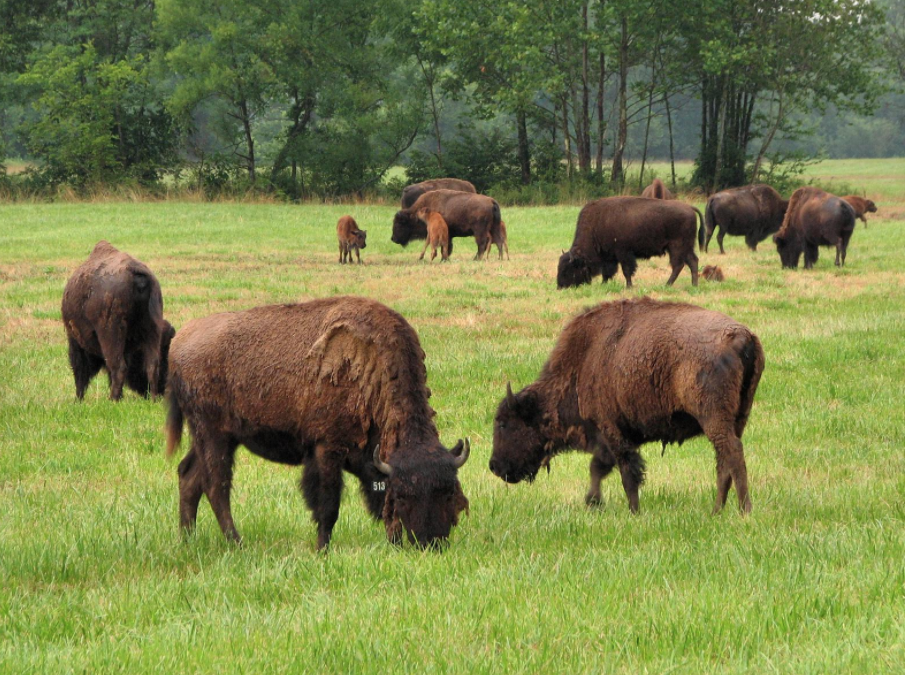
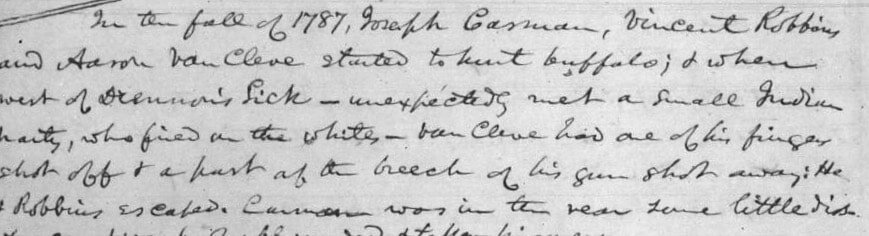
    Seven years later Carman was living at Well’s Station. This was a frontier Kentucky settlement located about half way between Louisville and Frankfort. Well's Station was near the home of storied longhunter, frontiersman, and former 8th Virginia Captain James Knox. The town of Shelbyville would appear close by in 1792. In the fall of 1787, Carman and two companions—Vincent Robbins and Aaron Van Cleve— set out on a buffalo hunt. Buffalo were still common in Kentucky at the time. They headed a few miles north toward Drennon’s Lick, a saltwater spring that attracted large game. The site is known today as Drennon Springs.
    Picture

    American buffalo were once common in Kentucky. The last herd was seen in about 1820. (Image: Art Lander)

    They were ambushed there by a party of Indians—probably Shawnee—who fired on them. Van Cleve had a finger and part of the breech of his gun shot off. Though wounded, he and Robbins were able to escape. Carman was not so lucky. Van Cleve and Robbins raced to the settlements along the Bullskin Creek for help. Robbins then led a rescue party that set off after Carman and his captors. From the site of his capture they followed a trail of blood for about two hundred yards to the place where the Indians had been camping.  There they found Carman’s body “dismembered and hung about on saplings. They gathered it up and took it back to Well’s Station, his home, for burial.” He may have been tortured, though the record doesn’t say and there may have been no way for his neighbors to know.
    Carman left behind a wife, Mary, and six children. Though little more than courage can be discerned from our sources about Joseph Carman’s character, the fact that one of his sons was named “Isaac Newton Carman” is intriguing. Carman's fate was not an unusual one at that time on the frontier. A final "peace" with the Shawnee would not be achieved until after William Henry Harrison's victory at Tippacanoe in 1811 and the collapse of Tecumseh's Confederacy following the Battle of the Thames in 1813.
    Picture

    An account of the death of Joseph Carman from the Draper Manuscripts. (Courtesy of Duane Carter)

    ​(Thanks to Duane Carter for sharing information about his ancestor.)

    More from The 8th Virginia Regiment
    Picture
    Picture
    Picture