• Published on

    James Knox Was There Before Daniel Boone

    Image description
    ​The adventures of 8th Virginia Captain James Knox have been unfairly overshadowed by those of Daniel Boone. This may be true generally, but it is definitely—and literally—true at the site of a memorial marker in Greene County, Kentucky.
     
    The 8th Virginia’s recruitment area was vast—covering almost the entire Virginia frontier, which at that time stretched from Pittsburgh to the Cumberland Gap—a distance of 450 miles. Those two places were, at that time, the only practical access points to the “Kentucky Country”—all of which was, at the start of the war, part of Fincastle County, Virginia. To get there, you could float down the Ohio River from Pittsburgh, or you could travel overland through the Cumberland Gap. Few had taken the latter route, however, when James Knox led a hunting party that way in 1770.
     
    Knox was one of the original “Long Hunters,” who entered Kentucky on months-long or even years-long hunting trips, intending to return with large quantities of pelts. Daniel Boone is by far the most famous of the long hunters, but that is partly because there is only room for one of these little-remembered adventurers in public memory.
     
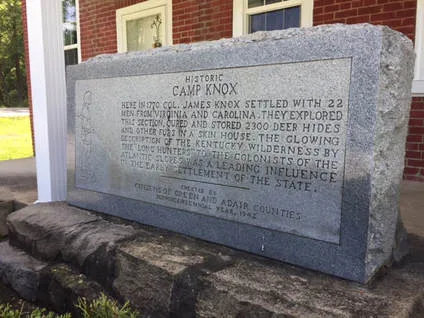
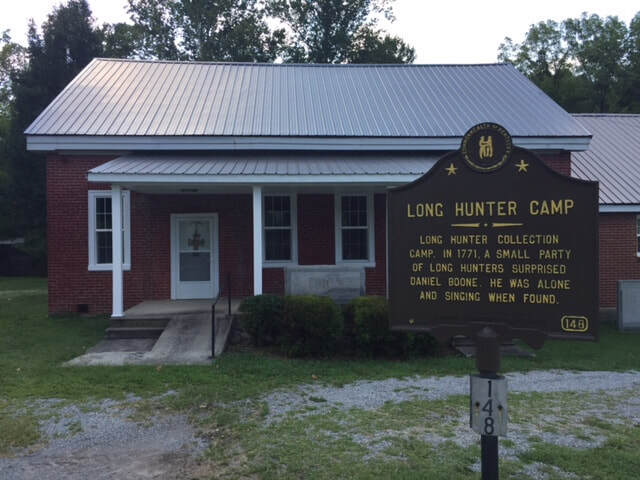
    In 1770, James Knox and his team established a hunting camp and pelt repository (a “skin house”)  by the north bank of a creek now known as Skinhouse Branch. Years later, a church was built on the same site. Today, the 187-year old nondenominational church sits at the intersection of Skinhouse Branch and Long Hunters Camp roads—neither of which carries enough traffic to warrant painted markings. It is surrounded by farms growing corn, tobacco, and soybeans. Two stone markers were put there long ago by local citizens to memorialize James Knox and the hunting expedition of 1770. In front of them, and closer to the road, is an official Kentucky state historic marker noting that Daniel Boone was also there—a year later.
     
    Early in 1776, Knox recruited one of the 8th Virginia’s ten companies. His men were decimated by malaria during the South Carolina expedition of that summer and fall. By the spring of 1777, only a handful were left. Knox became a captain in Morgan’s Rifles and commanded a company at the victory at Saratoga. He took a few of his 8th Virginia men with him, and his 8th Virginia Regiment company ceased to exist. He was a prominent citizen of Kentucky in his later years, but has always been overshadowed by Daniel Boone.

    Read More: "Searching for Captain Knox" (3/29/18)
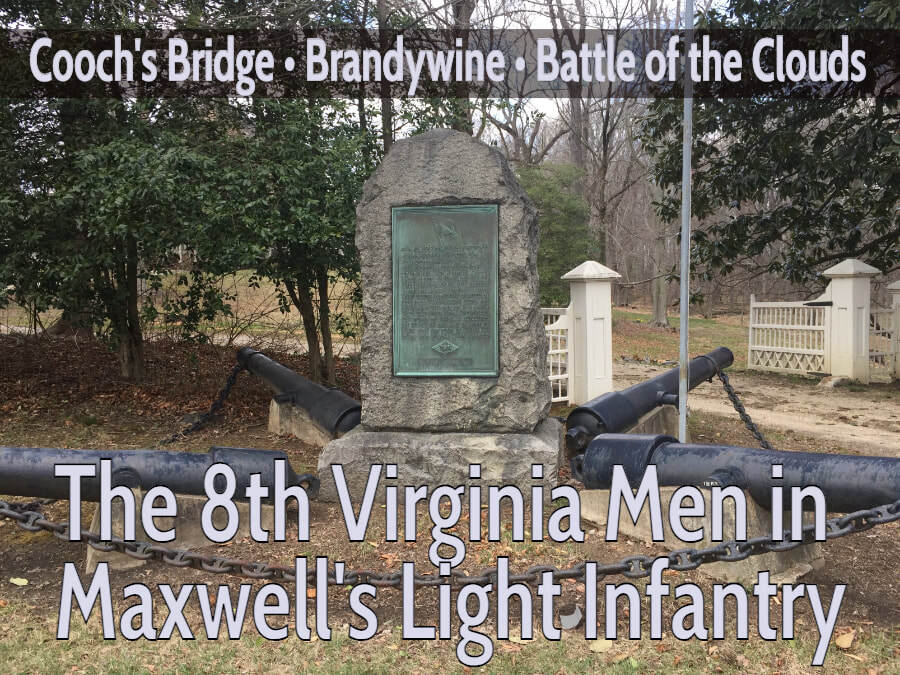
    Picture

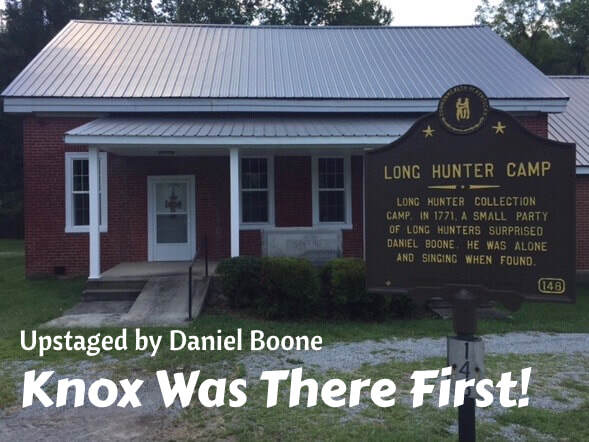
    The Knox monument is upstaged by a marker celebrating Daniel Boone's presence at Camp Knox a year later.
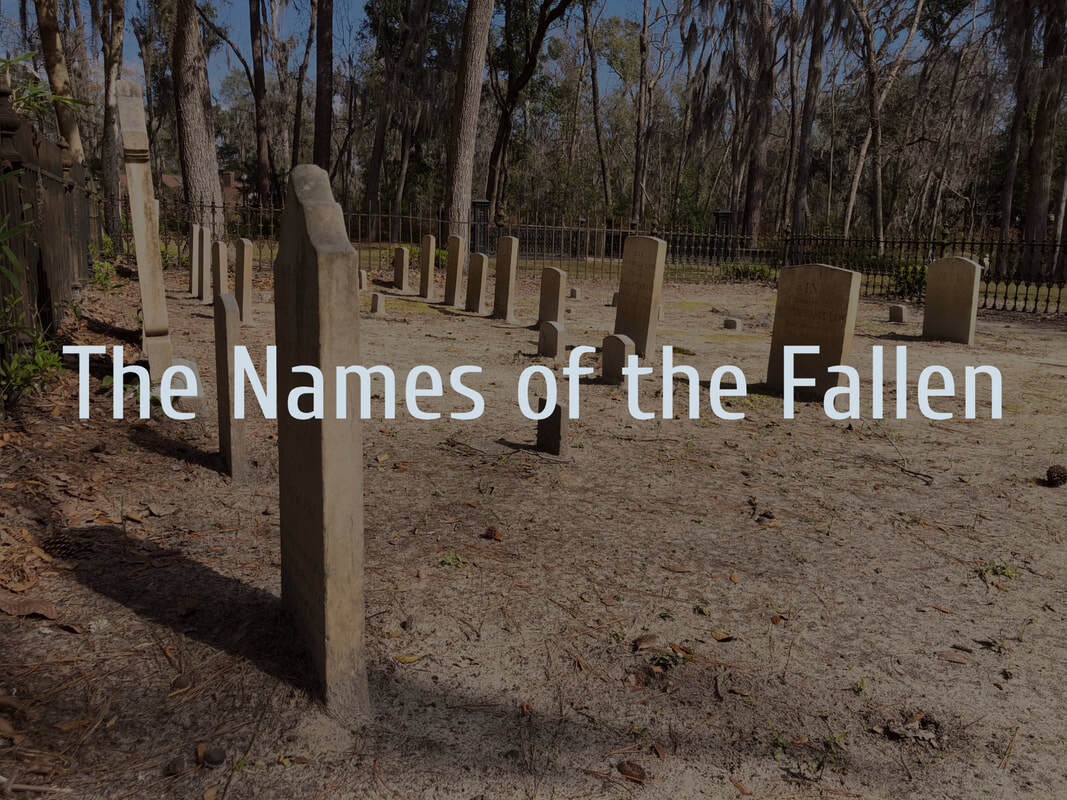
    Picture

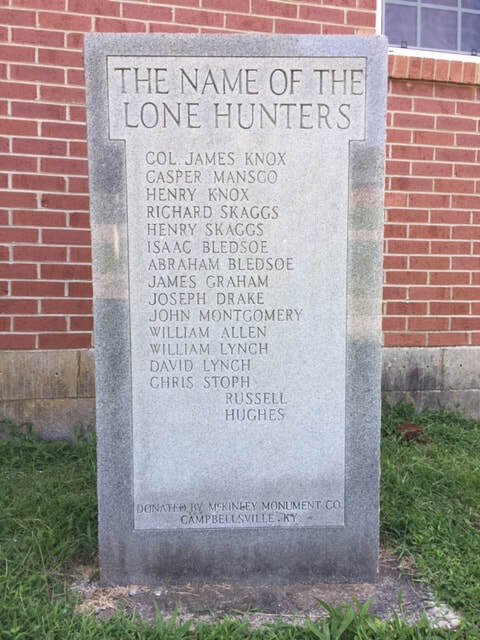
    Knox's hunting companions are listed under a header that was probably intended to say "The Names of the Long Hunters."
  • Published on

    The Fourth of July in Soldiers’ Eyes

    Picture

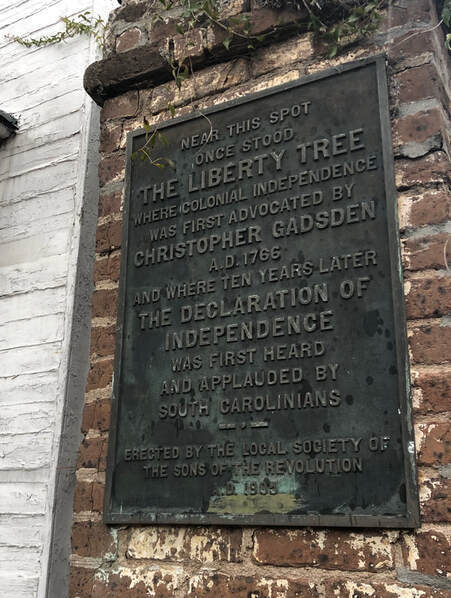
    The 8th Virginia celebrated the Declaration of Independence under the Liberty Tree outside Charleston, South Carolina. (Author)

    The men of the 8th Virginia learned of the Declaration of Independence on the heels of a major victory. For nearly all of them, it was the high point of the war. It was followed by very deep lows.
     
    Two hundred and forty years later, most of us celebrate America’s independence with cookouts and fireworks. Colonel Peter Muhlenberg’s soldiers experienced the event in its original context, which meant learning of it many days after the fact. News traveled slowly back then. When they heard it read, a month after it was signed, the list of grievances in the middle of the document probably meant more to them than the high-minded introduction we focus on today. As is true in every era, their personal aspirations and disappointments meant more to most people than abstract ideas of political philosophy.
    ​​About three months before July 4, 1776, the regiment’s ten companies began to rendezvous in Suffolk, Virginia. Tidewater Virginia was abuzz with military affairs and politics. Lord Dunmore, the colonial governor, had fled the capital. From the safety of a British naval vessel, he had promised freedom to slaves who fled their masters and took up arms for the king. He met with British General Henry Clinton who had come south with a sea-born army of redcoats. Where those redcoats were headed was unclear. Williamsburg expected an attack at any time.

    ​When Clinton sailed south, the 8th Virginia was ordered to follow him (on foot), to counter him where ever he might attack. They departed just as Virginia’s defiant revolutionary assembly voted in favor of Independence on May 15, empowering its delegation to propose it in Congress. Less than a month later, Thomas Jefferson produced a Declaration for all the colonies asserting it to be “self-evident” that “all men are created equal, that they are endowed by their Creator with certain unalienable Rights, that among these are Life, Liberty and the pursuit of Happiness.” 
    Jefferson’s document also contained a long list of indictments against the King, including some that were of particular importance to the men of the 8th Virginia. At the end of the French and Indian War, the victorious British King had allowed the Canadians to maintain their French laws. He had extended the Province of Quebec south to the banks of the Ohio River, while also prohibiting new English settlements west of the Alleghenies. This obstructed the dreams of Virginia’s frontiersmen—and offended the convictions of those who hated (and had fought against) the French. The French, and their Catholic faith, were hated by the English who saw them as champions of tyranny. The parents of many 8th Virginia men had fled French armies in Germany. 
    Image description
    The Declaration of Independence, in reference to Canada and Ohio, accused the King and Parliament of “abolishing the free System of English Laws in a neighbouring Province, establishing therein an Arbitrary government, and enlarging its Boundaries so as to render it at once an example and fit instrument for introducing the same absolute rule into these Colonies.” The subtext here was that the King was abandoning the principles of the Glorious Revolution of 1688 and reverting to the tyranny of the old Stuart monarchs.
    The French were not Virginia’s only enemies. Of special relevance for the 8th Virginia was Jefferson’s charge that the King had "endeavoured to bring on the inhabitants of our frontiers, the merciless Indian Savages whose known rule of warfare, is an undistinguished destruction of all ages, sexes and conditions.” Most of the army's senior officers were veterans of the French and Indian War. Braddock’s defeat in 1755 had unleashed an era of conflict with the Indians in the Ohio Valley that would not really end until the War of 1812. There was already strong evidence that the King’s agents were stirring up the Cherokee and the Shawnee to create a two-front war for the Americans. 
    Picture

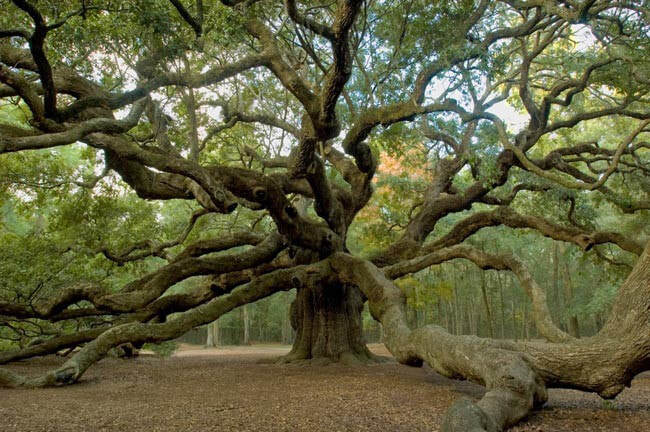
    Charleston celebrated the Declaration under a southern live oak tree that had served as the city's "liberty tree" since the Stamp Act crisis. The tree was cut down by the British in 1780.

    The 8th Virginia was in South Carolina when the Declaration was signed. (Many of them, under the command of Major Peter Helphenstine, had participated in the miraculous victory on Sullivan’s Island on June 28.)

    ​News of the Declaration arrived in Charleston on either July 31 or August 2. A celebration was immediately planned. On an “intensely hot” day, August 5, all of Charleston was assembled and paraded out of the city to South Carolina’s Liberty Tree for the first formal reading of the document. 
    There was, according to Henry Laurens, a “Procession of President, Councils, Generals, Members of Assembly Officers & Military &c &c amidst loud acclamation of thousands.” The troops were assembled along with civilians. The tree was located north of town in an open area that would not be built on until after the war. “Thither the procession moved from the city…embracing all the young and old, of both sexes, who could be moved so far. Aided by bands of music, and uniting all the military of the country and city, in and near Charleston, the ceremony was the most splendid and solemn that ever had been witnessed in South Carolina.” No one seems to have noted the irony that the main speaker at the event was shaded and fanned by a slave as he expounded on liberty and freedom. It would take a long time for the full implication of the Declaration’s assertion that “all men are created equal” to penetrate American minds.

    For South Carolina and for Muhlenberg’s men, this was the high point of the war. The Battle of Sullivan’s Island was a tremendous victory that defied all odds and expert predictions. By the start of August, Americans had inflicted heavy blows upon the British regulars at Lexington and Concord, Ticonderoga, Bunker Hill, Great Bridge, Norfolk, Moore’s Creek Bridge, the siege of Boston, and now also at Charleston. The only major loss had been in Canada. The war was going well. America was winning and America had declared its independence.
    As summer turned into fall, however, fortunes changed. Washington suffered a series of major defeats in New York and New Jersey. The 8th Virginia marched on toward Florida on a mission they could not complete. The regiment’s mountain boys were already succumbing to the low country’s heat and ubiquitous mosquitos. For weeks, those mosquitos had been silently spreading malaria among the men. Those who had the weakest resistance, the ones born and raised in the Virginia mountains, began to die.​
    Picture

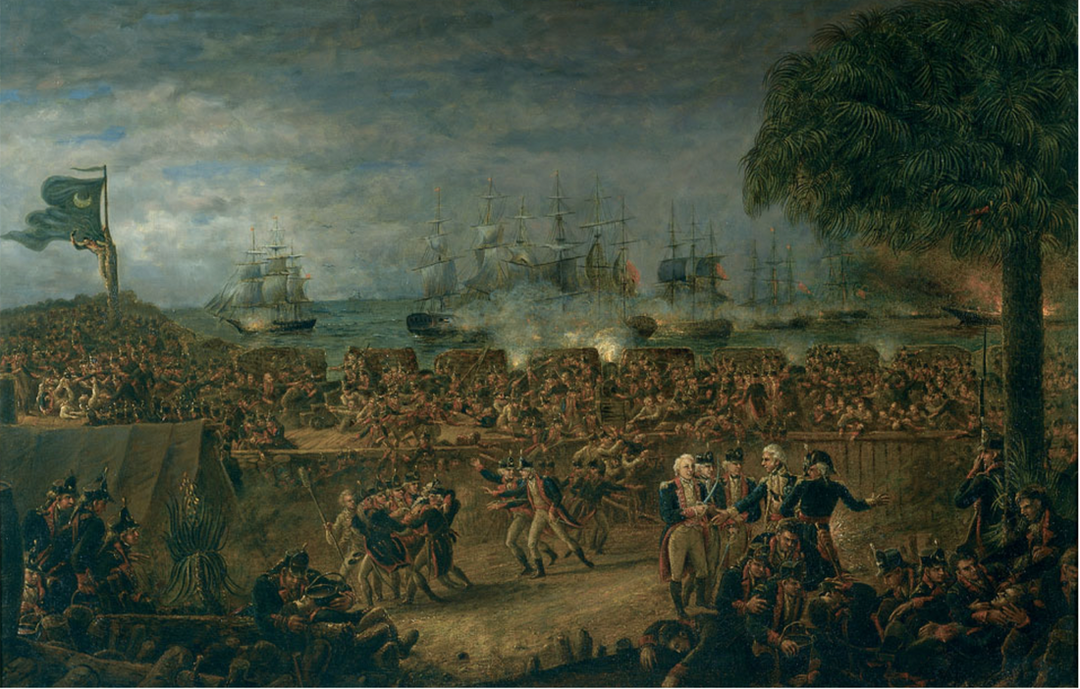
    The Battle of Fort Moultrie, painted by John Blake White in 1826. Maj. Gen. Charles Lee is portrayed in the foreground with his arm outstretched toward Col. William Moultrie, who is holding a sword. The 8th Virginia did not participate in the defense of the fort, which was called Fort Sullivan until after the battle. (United States Senate)

    More from The 8th Virginia Regiment

  • Published on

    The 8th Virginia's Generals

    Picture

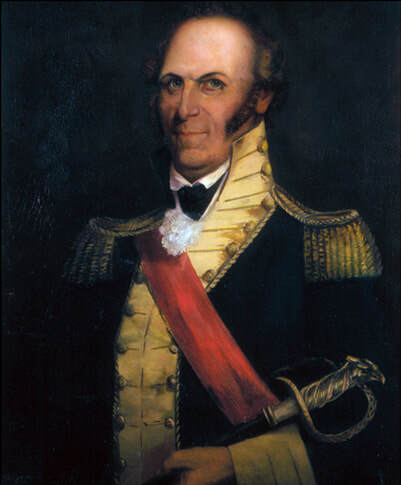
    Brigadier General Charles Scott (shown here in a 19th century uniform) commanded the 8th longer than any other brigade commander. He was later elected Governor of Kentucky and was active alongside many other veterans in the Northwest Indian War.

    A dozen different generals commanded the 8th Virginia at various times and levels during its roughly 30-month existence.  The Continental Army grades of general officers were: general (Washington), major general (typically division commanders), and brigadier generals (brigade commanders). The army was organized into departments: Canadian, northern, Highlands, eastern, main, southern, and western. Washington was the de facto commander of the middle (or "main") department for most of the war.

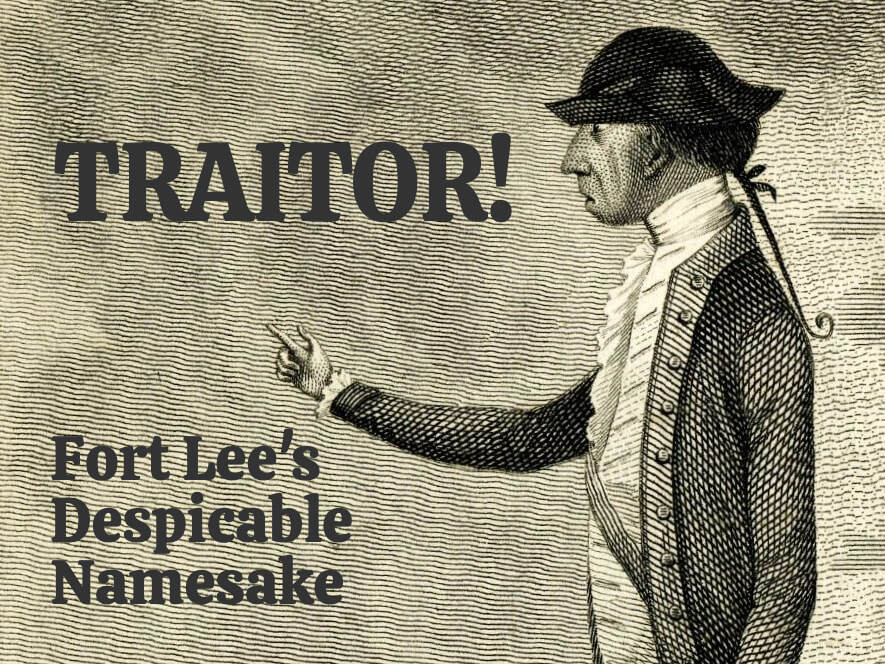
    Major General Charles Lee (junior only to Washington in the entire army) was commander of the Southern Department during the 8th Virginia's 1776 service in that theater. At the same time, a large number of 8th Virginia men were detached to the 1st Virginia under the command of Pittsburgh’s Captain William Croghan. While the rest of the regiment went south from Virginia to serve in South Carolina and Georgia under Lee, Croghan’s detachment went north to serve in New York, New Jersey, and Pennsylvania with Washington.
    In 1777, the main body of the regiment served in Maj. Gen. Adam Stephen's division at Brandywine and Germantown. A small group of riflemen from the 8th were detached to Daniel Morgan’s Rifle Battalion under the command of Captain James Knox and participated in the Saratoga campaign. A few dozen were detached for a month to William Maxwell's Light Infantry in August and September of 1777 under the command of Captain (later and retroactively Major) William Darke, at Cooch's Bridge and Brandywine. Stephen was replaced by the Marquis de Lafayette late in the year.

    In 1778, with its ranks severely depleted by disease, casualties, and expired enlistments, the 8th was folded into the 4th Virginia after the Battle of Monmouth.
     
    1776 Southern Campaign (Sullivan’s Island, Savannah, Sunbury):
     
    Gen. George Washington, Commander in Chief (not present)
    Maj. Gen. Charles Lee, Commander of the Southern District
    Brig. Gen. Andrew Lewis (Tidewater service)
    Brig. Gen. Robert Howe (Cape Fear, Charleston, Savannah, Sunbury)
     
    Captain Croghan Detachment attached to 1st Virginia (White Plains, Trenton, Assunpink Creek, Princeton):
     
    Maj. Gen. Joseph Spencer (White Plains)
    Maj. Gen. Nathanael Greene (Trenton and Princeton)
    Col. George Weedon (temporary brigade at Fort Washington)
    Brig. Gen. William Alexander, Earl of Stirling (White Plains through Trenton)
    Brig. Gen. Hugh Mercer (Princeton)
     
    1777 Philadelphia Campaign (Brandywine, Germantown, Valley Forge)
     
    Gen. George Washington, Commander in Chief
    Maj. Gen. Benjamin Lincoln (New Jersey rendezvous)
    Maj. Gen. Adam Stephen (Brandywine, Germantown)
    Maj. Gen. Gilbert du Motier, Marquis de Lafayette (Valley Forge)
    Brig. Gen. Charles Scott
     
    Captain Knox Detachment under Colonel Daniel Morgan (Saratoga)
     
    Maj. Gen. Horatio Gates
    Maj. Gen. Benjamin Lincoln
     
    Captain Darke Detachment in Maxwell's Light Infantry (Cooch's Bridge, Brandywine)

    Brig. Gen. William Maxwell

    1778 Campaign (Valley Forge, Monmouth):
     
    Gen. George Washington, Commander in Chief
    Maj. Gen. Gilbert du Motier, Marquis de Lafayette
    Maj. Gen. Charles Lee (at Monmouth)
    Brig. Gen. Charles Scott
    ​Col. William Grayson (temporary brigade commander at Monmouth)

    More from The 8th Virginia Regiment

  • Published on

    Enemy Number One: the Mosquito

    Image description
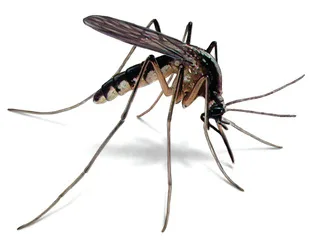
    Mosquitos were an unrecognized but deadly enemy in the Revolutionary War, and no troops suffered more from them than the 8th Virginia. The current plague of mosquitos in South Carolina is a reminder of what Colonel Peter Muhlenberg and his men had do deal with in the summer and fall of 1776.
     
    After record October rainfalls, South Carolina is presently experiencing record numbers of mosquitos, and citizens are calling for state or even federal action to combat the bugs. Tony Melton of Florence, S.C., told a reporter this week that mosquitos were “eating me alive” the last time he tried to ride his tractor through his sweet potato field. “People are stayng inside; that’s the bottom line.” Mosquitos are nothing new to South Carolina. In 1774 a resident called them “devils in miniature.”
     
    In May of 1776, The 8th Virginia Regiment rushed south from Virginia to help defend Charleston, South Carolina. On their arrival, Captain Jonathan Clark spent much of the first week staying at the home of Christopher Gadsden. He initially camped in Gadsden’s garden, but recorded that upon the “arr[ival] of [the] Moschetto” he got up and moved “in the House.” Enlisted men didn't have the option.
     
    The Battle of Sullivan’s Island on June 28 was a major early victory for the Americans, and the successful defense by South Carolina provincial troops of the Island’s half-finished fort was regarded as a virtual miracle. About three companies of the 8th Virginia (Continental troops) were posted at the opposite end of the island blocking a cross-channel infantry attack. Major General Lee praised his Continentals after the battle. “I know not which Corps I have the greatest reason to be pleased with Muhlenberg’s Virginians, or the North Carolina troops—they are both equally alert, zealous, and spirited.”
     
    Though they fended off the British, many of them lost their battle with the mosquitos. Unlike the mosquitos bothering Tony Melton, the mosquitos of 1776 carried malaria. By August, 150 8th Virginia men were sick. By fall, a few were dying every day. Muhlenberg got it and would never fully recover. Major Peter Helphinstine got it and was so sick he was forced to resign his commission and died a slow death at home in Virginia.
     
    As measured by death and illness, malaria was the 8th Virginia's number one enemy in the war--and nobody knew what caused it. Most people thought it was bad air ("mal aria") hovering over swamps and other areas. In fact, it was the mosquitos that breaded in such places.Today, malaria has been eradicated in South Carolina, Georgia and other warm, wet areas of the United States. It continues to kill millions every year in Africa and other developing parts of the world.