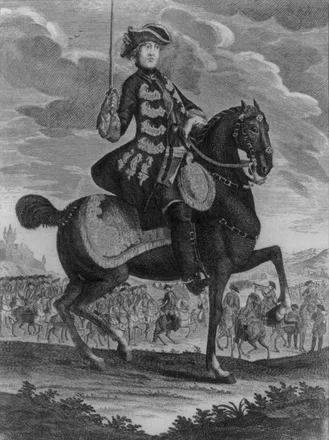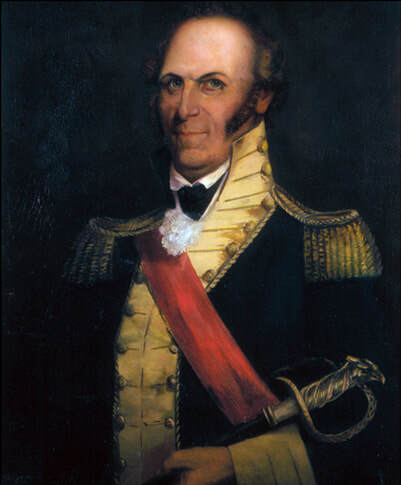
Brigadier General Charles Scott (shown here in a 19th century uniform) commanded the 8th longer than any other brigade commander. He was later elected Governor of Kentucky and was active alongside many other veterans in the Northwest Indian War.
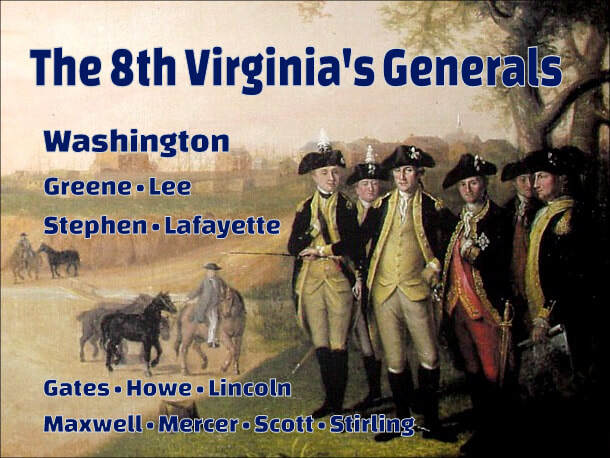
A dozen different generals commanded the 8th Virginia at various times and levels during its roughly 30-month existence. The Continental Army grades of general officers were: general (Washington), major general (typically division commanders), and brigadier generals (brigade commanders). The army was organized into departments: Canadian, northern, Highlands, eastern, main, southern, and western. Washington was the de facto commander of the middle (or "main") department for most of the war.
Major General Charles Lee (junior only to Washington in the entire army) was commander of the Southern Department during the 8th Virginia's 1776 service in that theater. At the same time, a large number of 8th Virginia men were detached to the 1st Virginia under the command of Pittsburgh’s Captain William Croghan. While the rest of the regiment went south from Virginia to serve in South Carolina and Georgia under Lee, Croghan’s detachment went north to serve in New York, New Jersey, and Pennsylvania with Washington.
Major General Charles Lee (junior only to Washington in the entire army) was commander of the Southern Department during the 8th Virginia's 1776 service in that theater. At the same time, a large number of 8th Virginia men were detached to the 1st Virginia under the command of Pittsburgh’s Captain William Croghan. While the rest of the regiment went south from Virginia to serve in South Carolina and Georgia under Lee, Croghan’s detachment went north to serve in New York, New Jersey, and Pennsylvania with Washington.
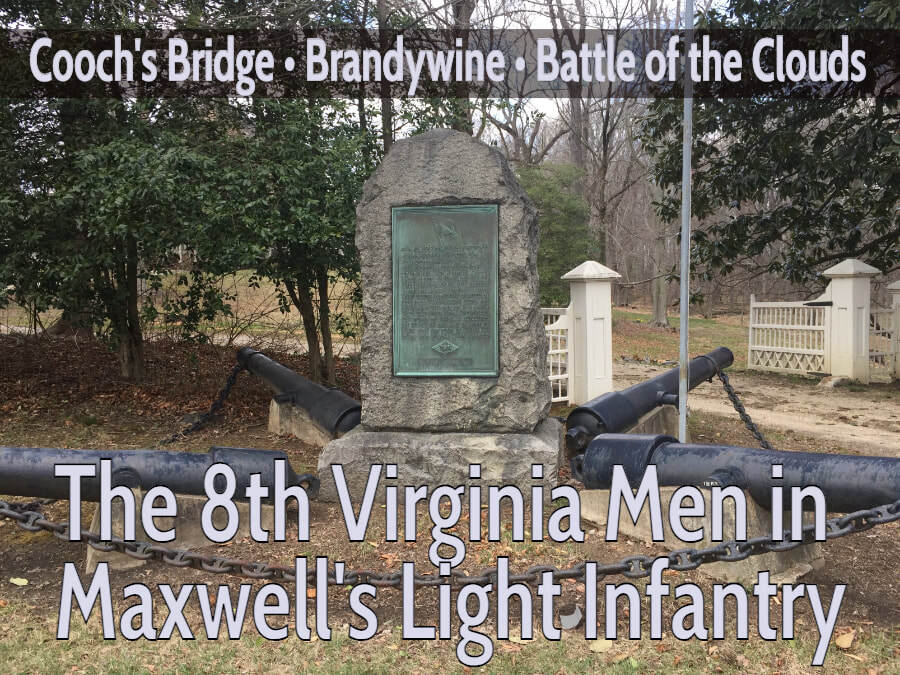
In 1777, the main body of the regiment served in Maj. Gen. Adam Stephen's division at Brandywine and Germantown. A small group of riflemen from the 8th were detached to Daniel Morgan’s Rifle Battalion under the command of Captain James Knox and participated in the Saratoga campaign. A few dozen were detached for a month to William Maxwell's Light Infantry in August and September of 1777 under the command of Captain (later and retroactively Major) William Darke, at Cooch's Bridge and Brandywine. Stephen was replaced by the Marquis de Lafayette late in the year.
In 1778, with its ranks severely depleted by disease, casualties, and expired enlistments, the 8th was folded into the 4th Virginia after the Battle of Monmouth.
1776 Southern Campaign (Sullivan’s Island, Savannah, Sunbury):
Gen. George Washington, Commander in Chief (not present)
Maj. Gen. Charles Lee, Commander of the Southern District
Brig. Gen. Andrew Lewis (Tidewater service)
Brig. Gen. Robert Howe (Cape Fear, Charleston, Savannah, Sunbury)
Captain Croghan Detachment attached to 1st Virginia (White Plains, Trenton, Assunpink Creek, Princeton):
Maj. Gen. Joseph Spencer (White Plains)
Maj. Gen. Nathanael Greene (Trenton and Princeton)
Col. George Weedon (temporary brigade at Fort Washington)
Brig. Gen. William Alexander, Earl of Stirling (White Plains through Trenton)
Brig. Gen. Hugh Mercer (Princeton)
1777 Philadelphia Campaign (Brandywine, Germantown, Valley Forge)
Gen. George Washington, Commander in Chief
Maj. Gen. Benjamin Lincoln (New Jersey rendezvous)
Maj. Gen. Adam Stephen (Brandywine, Germantown)
Maj. Gen. Gilbert du Motier, Marquis de Lafayette (Valley Forge)
Brig. Gen. Charles Scott
Captain Knox Detachment under Colonel Daniel Morgan (Saratoga)
Maj. Gen. Horatio Gates
Maj. Gen. Benjamin Lincoln
Captain Darke Detachment in Maxwell's Light Infantry (Cooch's Bridge, Brandywine)
Brig. Gen. William Maxwell
1778 Campaign (Valley Forge, Monmouth):
Gen. George Washington, Commander in Chief
Maj. Gen. Gilbert du Motier, Marquis de Lafayette
Maj. Gen. Charles Lee (at Monmouth)
Brig. Gen. Charles Scott
Col. William Grayson (temporary brigade commander at Monmouth)
In 1778, with its ranks severely depleted by disease, casualties, and expired enlistments, the 8th was folded into the 4th Virginia after the Battle of Monmouth.
1776 Southern Campaign (Sullivan’s Island, Savannah, Sunbury):
Gen. George Washington, Commander in Chief (not present)
Maj. Gen. Charles Lee, Commander of the Southern District
Brig. Gen. Andrew Lewis (Tidewater service)
Brig. Gen. Robert Howe (Cape Fear, Charleston, Savannah, Sunbury)
Captain Croghan Detachment attached to 1st Virginia (White Plains, Trenton, Assunpink Creek, Princeton):
Maj. Gen. Joseph Spencer (White Plains)
Maj. Gen. Nathanael Greene (Trenton and Princeton)
Col. George Weedon (temporary brigade at Fort Washington)
Brig. Gen. William Alexander, Earl of Stirling (White Plains through Trenton)
Brig. Gen. Hugh Mercer (Princeton)
1777 Philadelphia Campaign (Brandywine, Germantown, Valley Forge)
Gen. George Washington, Commander in Chief
Maj. Gen. Benjamin Lincoln (New Jersey rendezvous)
Maj. Gen. Adam Stephen (Brandywine, Germantown)
Maj. Gen. Gilbert du Motier, Marquis de Lafayette (Valley Forge)
Brig. Gen. Charles Scott
Captain Knox Detachment under Colonel Daniel Morgan (Saratoga)
Maj. Gen. Horatio Gates
Maj. Gen. Benjamin Lincoln
Captain Darke Detachment in Maxwell's Light Infantry (Cooch's Bridge, Brandywine)
Brig. Gen. William Maxwell
1778 Campaign (Valley Forge, Monmouth):
Gen. George Washington, Commander in Chief
Maj. Gen. Gilbert du Motier, Marquis de Lafayette
Maj. Gen. Charles Lee (at Monmouth)
Brig. Gen. Charles Scott
Col. William Grayson (temporary brigade commander at Monmouth)
More from The 8th Virginia Regiment