• Published on

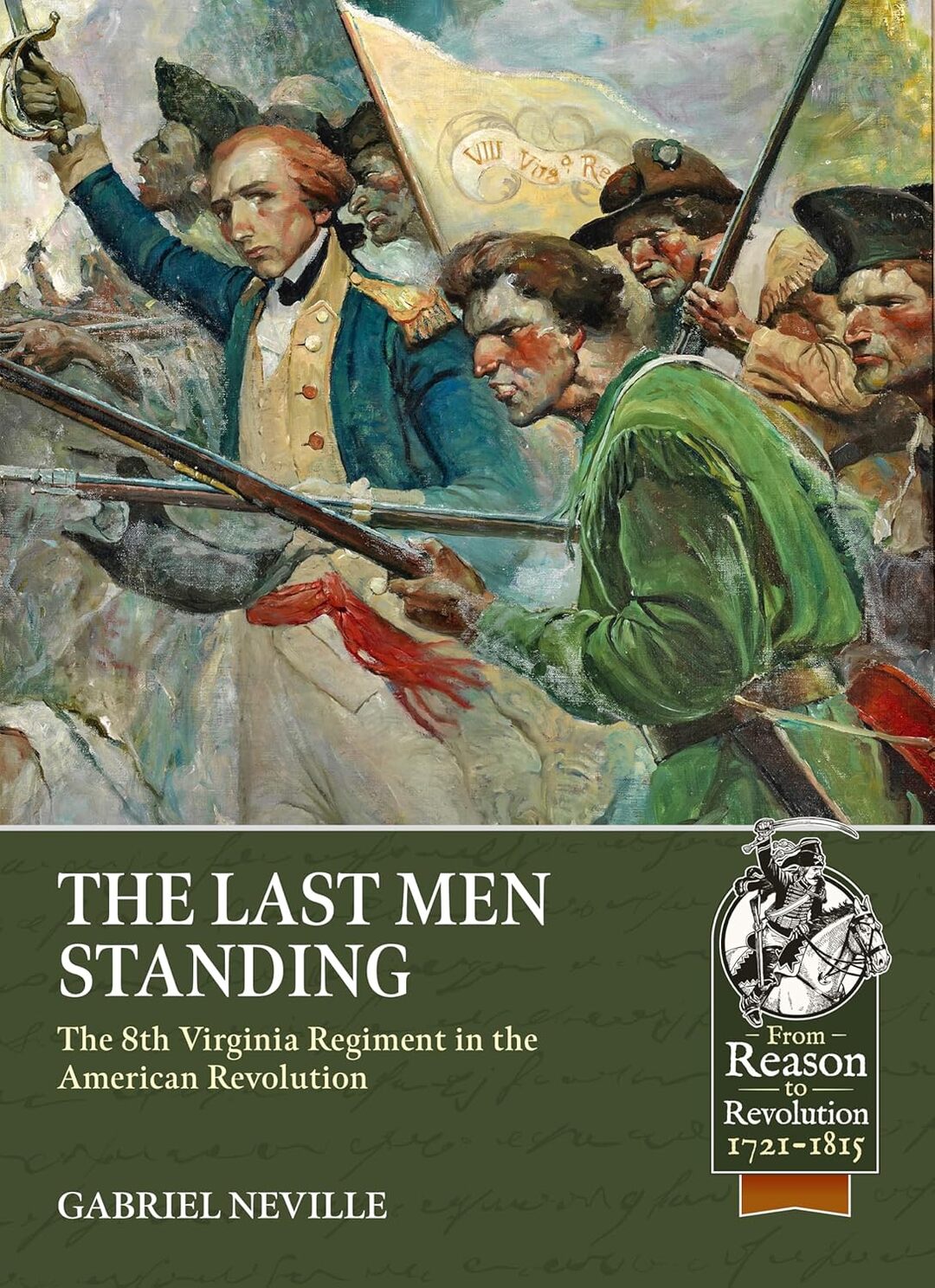
    The Last Men Standing: The 8th Virginia Regiment in the American Revolution.

    Early orders create “buzz,” so consider buying yours now.
    {The final price won't be set until it goes to print and may be lower.}
    After years of research, the complete history of the 8th Virginia Regiment will finally be published this spring. Gabriel Neville’s book The Last Men Standing: The 8th Virginia Regiment in the American Revolution is scheduled for release on May 31. The book will be the first of its kind, focusing on the actual Revolutionary soldiers from their childhoods to their last days on the frontier. Every identifiable man who served in the regiment is listed.
    ​​The 8th Virginia Regiment was unique in the Continental Army, and its story has never been fully told. This is a book that was once thought impossible to write.
    ​The regiment is famous for its first colonel, the “fighting parson,” Peter Muhlenberg. However, there is much more to the story than the well-known story of Muhlenberg’s final sermon. The 8th Virginia was multi-ethnic, and its very existence tied north with south and east with west in a way that contributed meaningfully to national unity. About 800 men signed up to fight early in 1776. By the end of the war, only a few of them remained.
    Their story is different from the usual narrative. They were Western men who cared more about Kentucky and Ohio than the tax on tea. They were the original pioneers, setting cultural precedents that became fixtures in Western movies: fringed shirts, long rifles, migration trails, Conestoga wagons, Indian fighting, dueling, and buffalo hunting. To go west, though, they first had to fight in the east.
    George Bancroft called them "one of the most perfect battalions of the American Army." Major General Charles Lee called them “a most excellent regiment” and chose them first for Continental service “in preference to any other.” Two of its men rose from private to general over the course of their full military careers.
    "I fought in our Revolutionary War for liberty."
    —Sgt. John Vance
    The Virginia Convention initially intended the 8th Virginia to be a "German Regiment." It raised several companies in the Shenandoah Valley, where thousands of Germans had migrated along the Great Wagon Road from Pennsylvania. Thousands of Scotch-Irish immigrants had come the same way, and they enlisted in equal measure. One 8th Virginia man, Sergeant John Vance, declared, "I fought in our Revolutionary War for liberty."

    ​Frequently divided and detached, the regiment’s men served almost everywhere: Charleston, White Plains, Trenton, Princeton, Short Hills, Cooch's Bridge, Brandywine, Saratoga, Germantown, Valley Forge, and Monmouth.  They suffered, and many died from frostbite, malaria, smallpox, malnourishment, musket balls, bayonets, and cruel imprisonment. Their numbers dwindled until only a few remained to help corner Charles Cornwallis at Yorktown. Victorious, those who survived turned west to build the America we know.
     
    The Last Men Standing includes over a hundred color and black-and-white illustrations, twenty maps, and an appendix listing every identifiable man who served. It will be published by Helion & Company and is now available for pre-order. It is available at Amazon and other retailers, or from The Fort Plain Museum at a generous discount.
    "...one of the most perfect battalions of the American Army."
    —George Bancroft
  • Published on

    A New Stone For An Old Soldier

    Picture
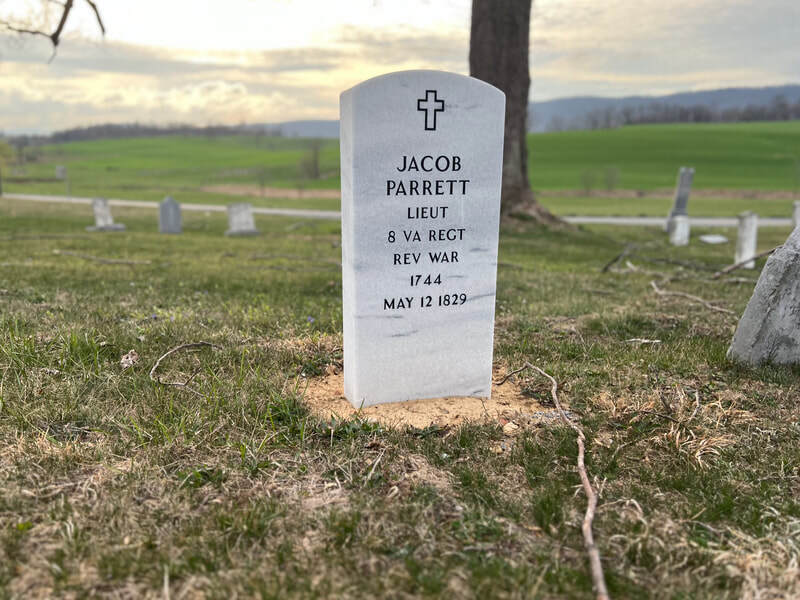
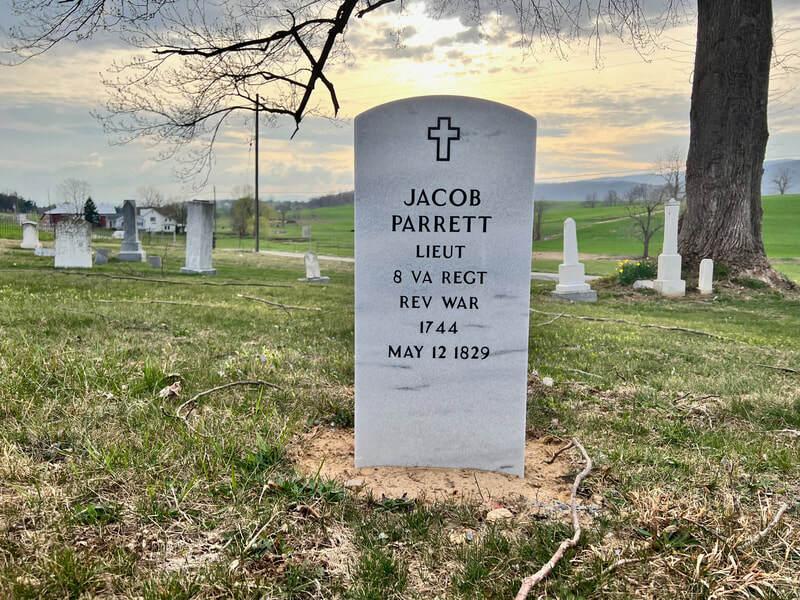
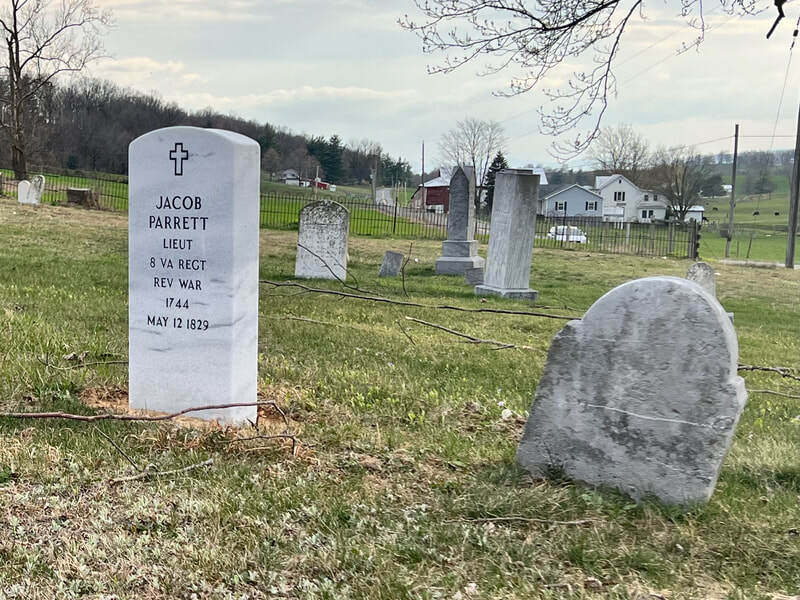
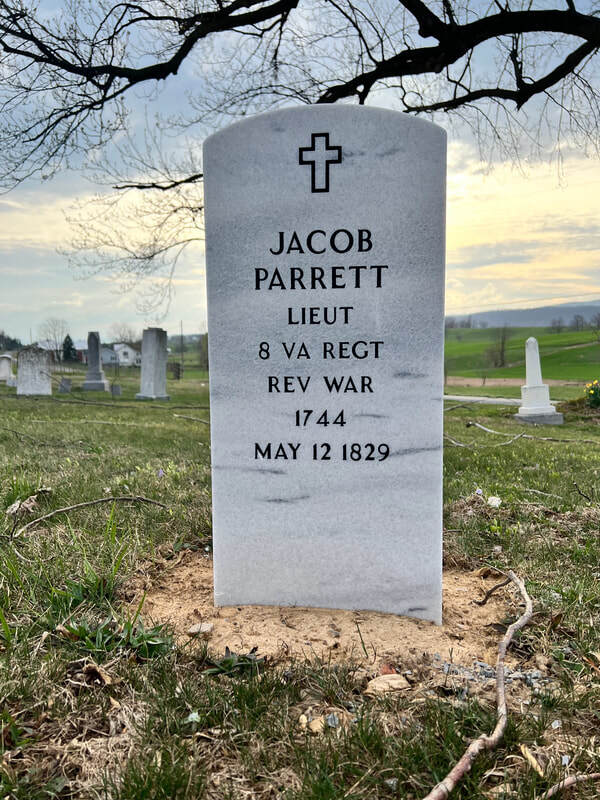
    ​Jacob Parrett got some help. A year ago, I wrote a post titled “A Little Help for Lt. Jacob Parrot” lamenting the state of his grave site near Harrisonburg, Virginia. The 8th Virginia officer, whose name was spelled various ways, was one of several Swiss-descended soldiers from the Shenandoah Valley. He and his wife are buried next to each other in a rural Lutheran cemetery with matching hand-etched fieldstone markers. Hers is intact, but Jacob’s was broken at the base and seemingly lost for some time. The marker is not lost, but it did need to be repaired or replaced. Indirect descendant Pat Kelly took the initiative. A new Department of Veterans Affairs stone now marks the grave, standing upright where the old stone was positioned for two centuries. Thanks, Pat! Thanks also to Hartman Memorials.

    To learn more about Lieutenant Parrett, make sure to read the post from last year.

    More from The 8th Virginia Regiment

  • Published on

    A Little Help for Lt. Jacob Parrot

    Picture

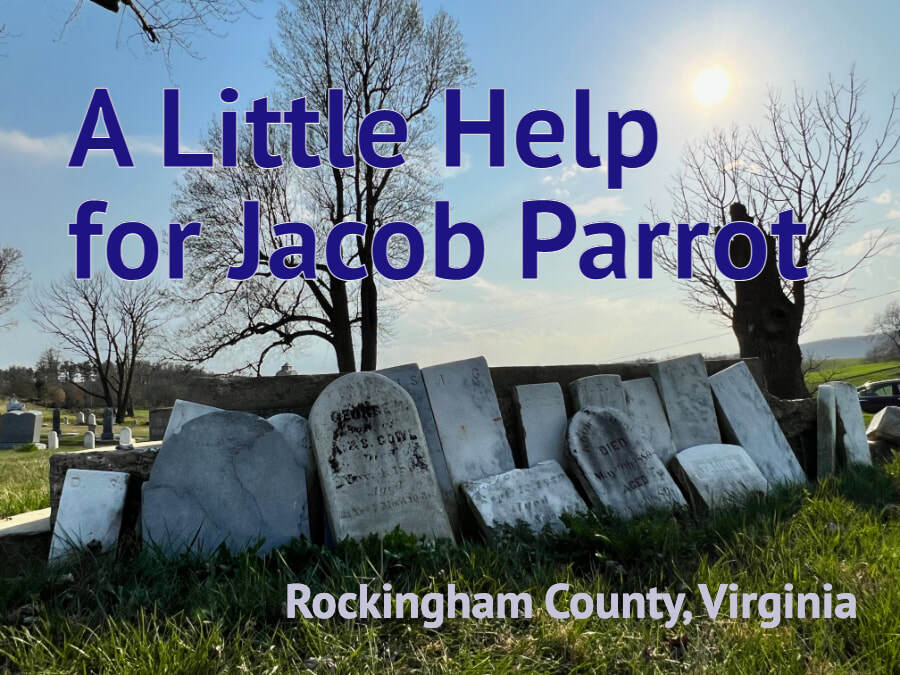
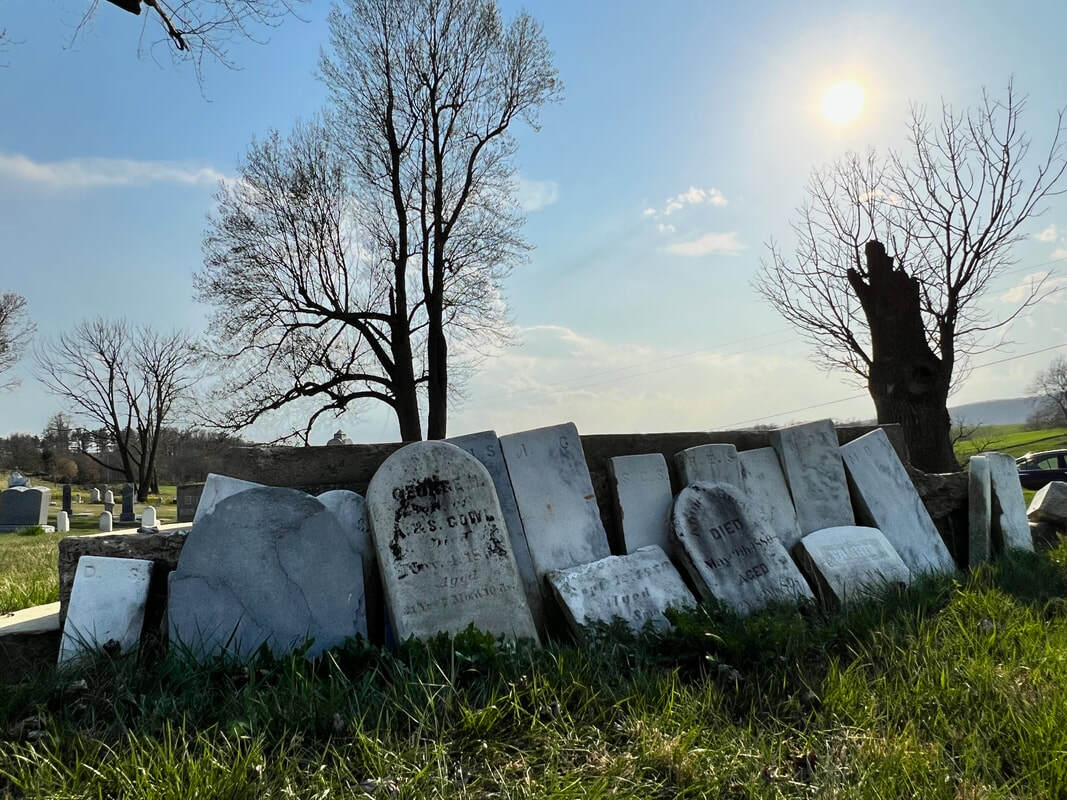
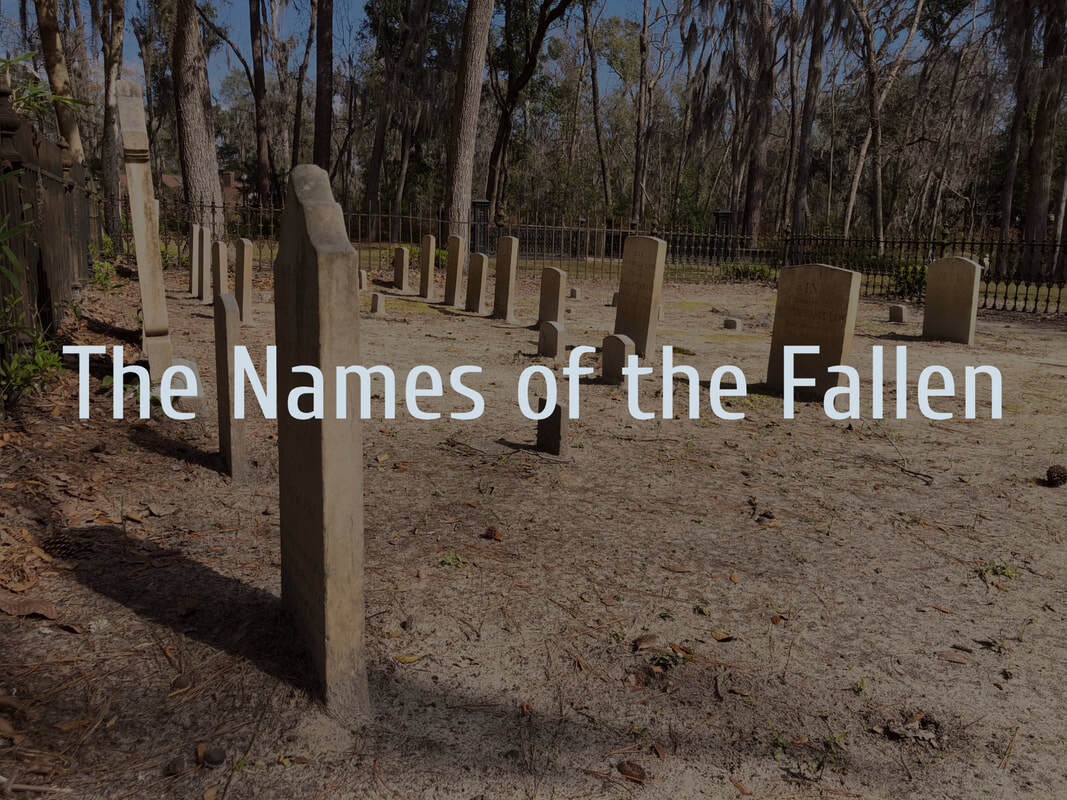
    Fallen gravestones in a Rockingham County cemetery.

    ​General Washington approved several judgements of a court martial at Morristown, New Jersey on May 7, 1777. Among the orders: Lt. Jacob Parrot of the 8th Virginia was “to be discharged from the service, and his pay stop’d from the time he left his detachment, until he did duty in his regiment again.” In modern terms, he had been AWOL and was fired for it. Today his broken gravestone sits off to the side of a Rockingham County, Virginia cemetery in a collection of about fifteen stones that have also succumbed to age.
    The Parrot family were, according to genealogies, among the earliest German-speaking settlers of the Shenandoah Valley in 1734. They are believed to have been Swiss, which would make Jacob and his brothers Joseph and George three of several Swiss-descended soldiers in the 8th Virginia, alongside Chaplain Christian Streit, Lt. Jacob Rinker, and private soldier Joachim Fetzer. The name was originally spelled "Parett" or possibly "Barrett."
    ​Jacob’s first Revolutionary service was in the Dunmore Independent Company of volunteers in 1775. In the period before open war, Virginia’s leaders were not yet ready to raise regular troops or engage the militia against the Crown. County committees of safety, however, were encouraged to organize volunteer companies to support the committees’ work and to enforce the Articles of Association. Dunmore County is now Shenandoah County and parts of Page and Warren counties. The Dunmore Independents were called out in April of 1775 to respond to Gov. Lord Dunmore’s seizure of gunpowder from the magazine in Williamsburg, but returned home when word was received of a peaceful resolution.

    ​When the 8th Virginia was formed early in 1776, Jacob earned a commission as an ensign in Jonathan Clark’s Company. His brother Joseph signed on as a sergeant. George Parrot enlisted as a private soldier. They traveled to Suffolk, Virginia where they countered efforts by slaves, servants, and Tories to aid and reenforce Lord Dunmore ‘floating city’ of soldiers and Tory refugees in Hampton Roads. They were then taken south to oppose the British attack on Sullivan’s Island and then a futile effort to attack St. Augustine, Florida. Malaria took many lives and resulted in the scattering of the 8th Virginia’s men as large numbers of sick men were left behind in various places. The survivors hobbled back to Virginia in the winter, marched to Philadelphia for smallpox inoculations, and then reunited in New Jersey in April and May.
    Picture

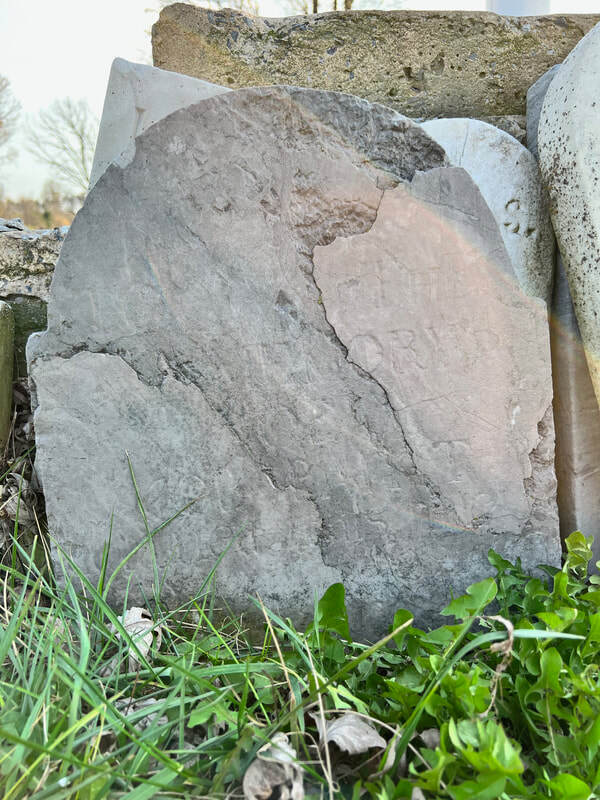
    The grave of Lt. Jacob Parrot has a broke base and has been removed from the ground. The 200-year-old marker appears to have been made by an amateur craftsman and is now barely legible.

    What Lieutenant Parrot did when he "left his detachment" is not clear, though the term "detachment" hints that it happened before the regiment was united in the spring of 1777. A fair guess is that he went home sick from the south without permission. After the ignominious end to his military service, he returned to the Shenandoah Valley and remained there until his death in 1829. He is buried next to his wife in a small cemetery northwest of Harrisonburg, several miles south of his old home in Shenandoah County. Though the stones match, it should be noted that one genealogy states that Jacob was never married.
    Picture

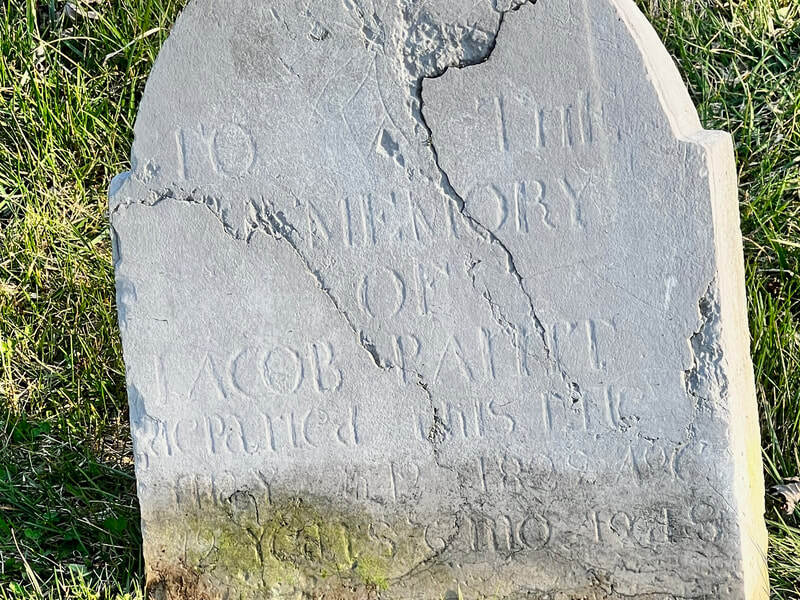
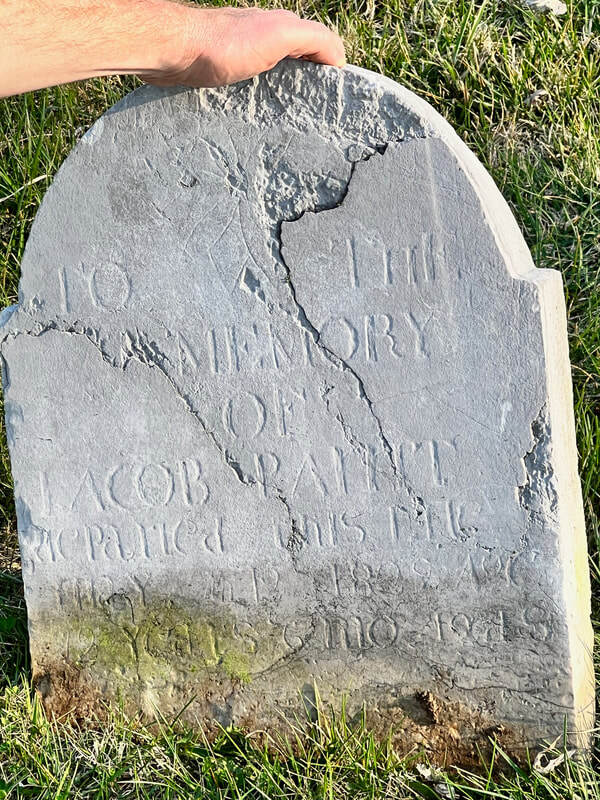
    Angled into the light of a low sun, the inscription on Parrot's headstone is legible.

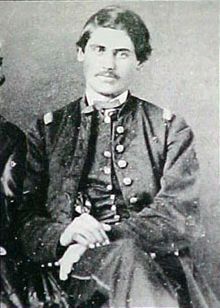
    The very first Civil War Medal of Honor recipient was Jacob's namesake and great-great nephew. The later Jacob Parrott (1843-1908) was the grandson of John Parrot, an elder brother of the 8th Virginia veteran. He enlisted as a private in the Union Army from Ohio in 1861 and volunteered to participate in the Great Locomotive Chase of 1862. He was captured but exchanged and awarded the Medal of Honor by Secretary of War Edwin Stanton on March 25, 1863. He was taken to meet President Abraham Lincoln and promoted from private to lieutenant. His exploits were the basis of Buster Keaton's most famous film, "The General," which is named for the train.
    Pat Kelly lives on the east side of the Blue Ridge in Albemarle County, about thirty miles south of Thomas Jefferson’s Monticello and more than an hour southeast of Jacob Parrot’s resting place. He descends from Jacob’s brother John, making him a 7th great-nephew. He grew up in East Tennessee (where his ancestor founded Parrottsville), but moved to Virginia in 1978 when he retired from the Navy. He has several Revolutionary War ancestors and has been researching Henry to see if he also fought in the war. Henry is listed in the Capt. John Tipton's company of  activated Dunmore County Militia during Lord Dunmore’s War (1774), but he was not in the 8th Virginia and further service has not yet been demonstrated.
    Pat traveled up to Singer’s Glen to look for Jacob’s grave and to see if he might find Henry’s there too. Neither could be found. Henry may or may not be buried there, but Jacob is definitely there and the absence of his marker was alarming. Of the more than 900 men who served at any time in the 8th Virginia, only 53 have identifiable marked graves. Of those, only twelve to fifteen still have their original headstones. Twelve or fifteen of 900 is a tiny fraction, but Jacob’s can be narrowed down to a category of just two. His and Capt. John Stephenson’s headstones both appear to be “home made” or "primitive" stones. A professionally-cut and engraved gravestone was beyond the economic reach of most veterans' families when they died and the majority of 8th Virginia men may have just had simple wooden crosses or planks to mark the spots where they were lowered into the ground. Though a few were given elegant and expensive markers, an unknown number were likely memorialized with hand-etched or scratched markers of varying quality. The marker put on Jacob Parrot’s grave appears to be a higher-end example of such a marker. Its disappearance would have been a terrible thing.
    Picture

    Jacob Parrot (1843-1908) was the first Civil War-era recipient of the Medal of Honor.

    Fortunately, a search of the cemetery found his marker leaning with more than a dozen others against a concrete riser off to the side of the cemetery and not visible from the other graves. It is severely eroded, but its inscription is intact. It is broken at its base and could not be placed back in the ground in its current state. The stone for Jacob’s wife, Rachel, is still in the ground and is of identical design.
     
    Though intact, Jacob’s and Rachel’s inscriptions are too eroded to be easily legible. Only a few letters can be made out in photographs taken of them in 2013. Pouring water on Jacob’s stone made it only slightly more legible. The full inscription therefore seemed to be lost before a trick of nature revealed the full wording. Very carefully turning the stone to obliquely face the light of the late afternoon sun illuminated the edges of the letters and brought them back to almost full visibility.  It reads
    TO THE
    MEMORY
    OF
    JACOB PArrIT
    Departed this Life
    May th[e?] 12 1829 Age[d?]
    [7?]2 Years 6 mo 19 d[ays?]
    The letters are carefully and somewhat formally executed, the odd mix of capital letters, the variant spelling of "Parrit," the small capital “H” in the second word, and the off-center placement of the fourth and fifth lines indicate that the marker was not made by a professional stone carver. If anything, this makes the memorial even more valuable as a relic of Jacob Parrot’s life. Someone who dearly loved him and his wife appears to have worked the stones to honor them. What at first look like scratches near the top of Jacob’s marker seem on closer inspection to be a decoration of some kind, perhaps a flower.
    Yet the stone is broken and removed from his actual grave. I made several recommendations for marking Revolutionary graves in a recent essay. Because they are free, almost all Revolutionary marker replacements are now of the modern, Arlington-style type issued by the Department of Veterans Affairs. I argued that original markers are in most cases the only tangible connection we have with the warriors in the ground, and should be left in place with new markers next to them. 8th Virginia veteran James Kay’s original marker, broken the same way Parrot’s is, was placed flat in the ground next to a new marker earlier this spring. I also argued that the pre-World War I type should be used if a government marker is to be acquired.
    Picture

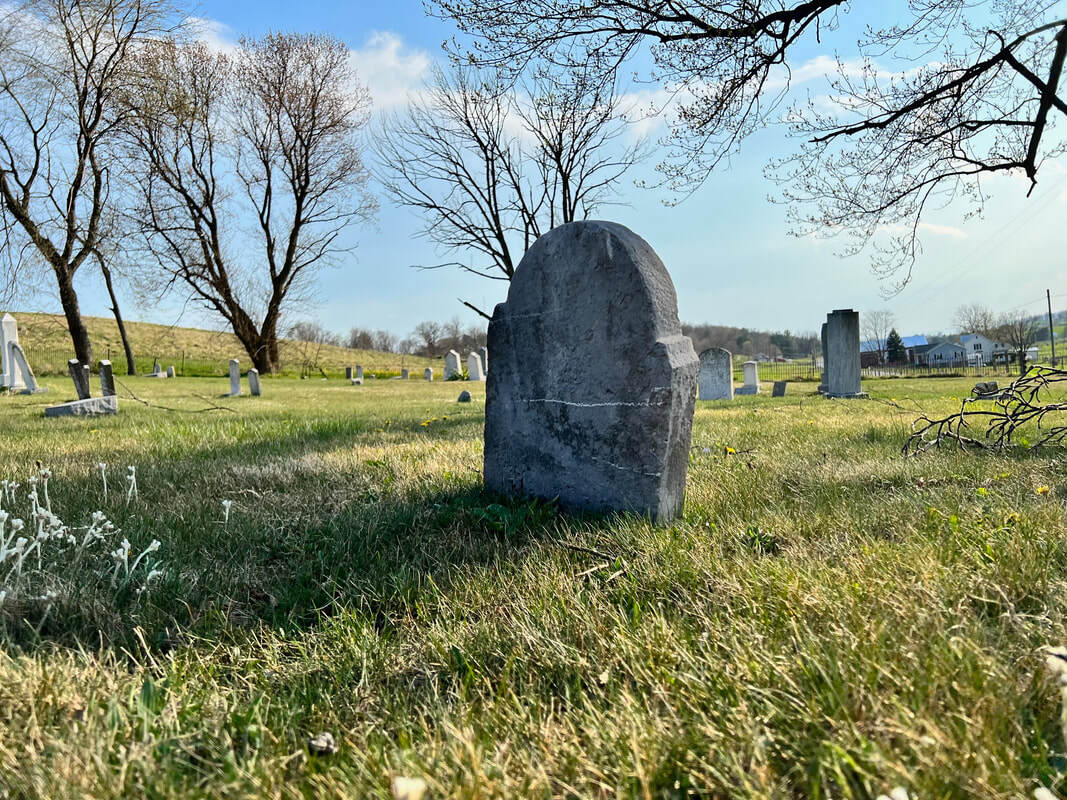
    The grave of Rachel Parrot remains firmly placed in the ground.

    In Parrot’s case, it may be possible to craft a facsimile of the original stone. Then he and Rachel could continue to have matching stones as they have for two centuries. A repaired original could be reset upright at the correct angle to catch the rays of the late-day sun. Or it could be taken to the Harrisonburg-Rockingham Historical Society’s museum. At all costs, it should not disappear into someone’s garage.

    More from The 8th Virginia Regiment

  • Published on

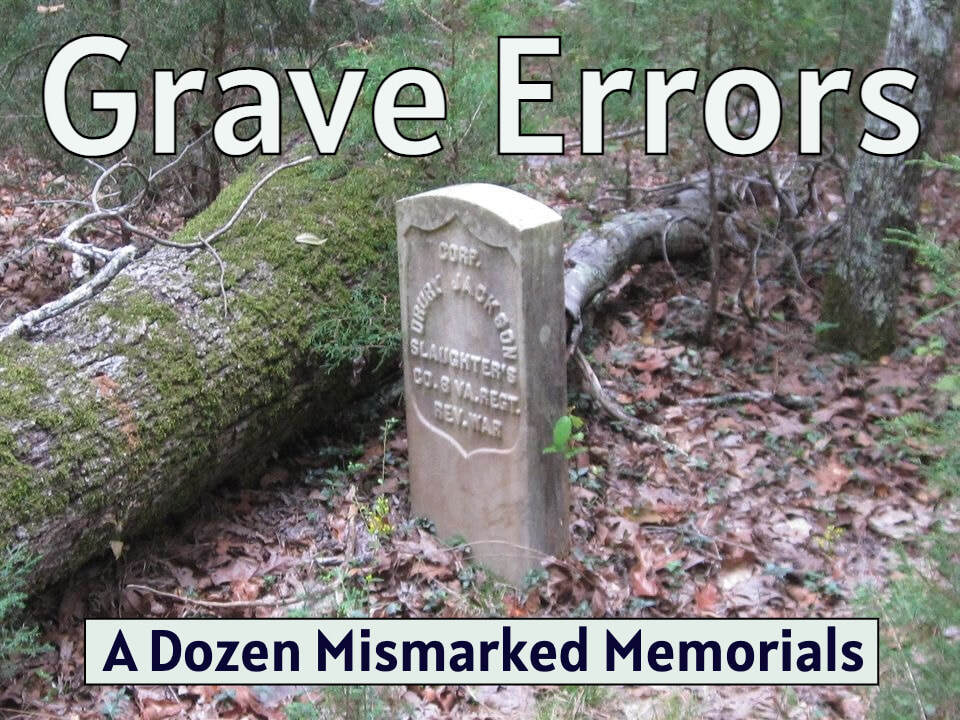
    Grave Errors: Erroneous Burial Markings

    Picture

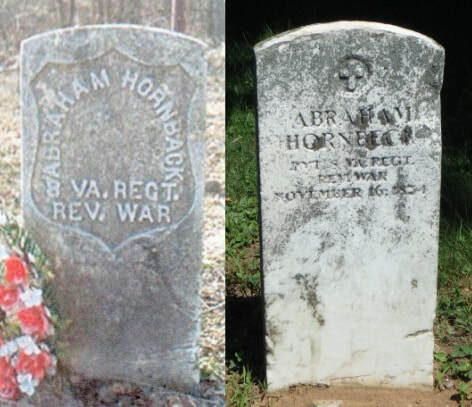
    Abraham Hornback was a marksman from Hampshire County picked from the 8th Virginia to serve in Morgan's Rifles. Gravestones have been installed for him in Indiana and Illinois, one of which is obviously in error. He isn't the only one.

    Of the roughly nine hundred men who served at some point in the 8th Virginia Regiment in the Revolutionary War, only fifty-two have identified graves. Several of them are marked with wrong information that needs to be corrected. In some cases, the information is dramatically wrong. Sadly, this review of fifty-two grave markers from just one regiment may indicate a significant amount of bad information carved into stone in cemeteries across the eastern half of the United States.

    Leonard Cooper had one leg and he didn’t like to tell people why. When he applied for a veteran’s pension in 1818, he more than bent the truth in saying that he was in “a skirmish” at Paramus Meeting House, New Jersey where he “was wounded and lost his leg.” The truth? He lost his leg in a duel with another officer at Pompton Plains in October 1779. 
    Cooper was the lieutenant commandant, or “captain lieutenant,” of Col. John Neville’s company of the 4th Virginia Regiment. This was a new rank for the Continental Army modeled on British practice that resulted from a cost-saving reduction in the number of officers. As the regiment’s senior lieutenant, Cooper led a company nominally under the direct command of the colonel. Perhaps Abraham Kirkpatrick, the man who shot him, thought Cooper was putting on airs.

    Whatever his reason, Kirkpatrick was clearly the aggressor. He attacked Cooper with a stick. Cooper apparently had a more peaceful temperament and showed no “disposition to demand satisfaction.” The era’s code of honor, however, required him to make the challenge. His peers could not abide Cooper’s reluctance to stand up for himself and told him that “unless he did, he must leave the Regiment, as they were Determined he should not rank as an Officer.” Cooper reluctantly complied. He and Kirkpatrick faced off with pistols and the hapless lieutenant took a ball of lead to his leg. The limb was amputated and he was transferred to the Corps of Invalids. He was one of the very last men discharged from the army at the end of the war.

    More from The 8th Virginia Regiment

  • Published on

    The Stamp Act and Captain Berry

    Picture

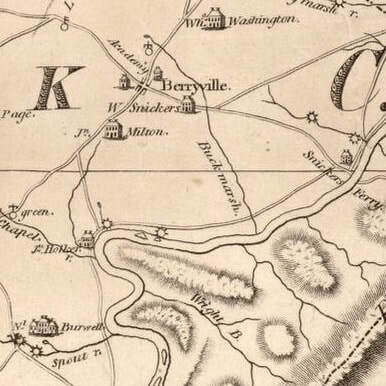
    An imprecise 19th century map shows Berryville and the Shenandoah River. Buck Marsh Creek ran through Thomas Berry's property.

    ​When future captain Thomas Berry bid on two lots of Shenandoah Valley land in 1774, it was the end of a sad story that had begun with the Stamp Act a decade before. The seller, George Mercer, had been one of Virginia’s leading citizens. Now he was bankrupt and living in exile.
     
    Mercer had served in important civil and military positions, often with George Washington. He was one of Washington’s lieutenants at Fort Necessity, where he was wounded, and commanded the short-lived 2nd Virginia Regiment in the French and Indian War. He was with Washington in the Forbes expedition to take Fort Du Quesne in 1758. In 1761 he and Washington successfully ran together for Frederick County’s two seats in the House of Burgesses.
    At the peak of his career, Mercer was selected by the Ohio Company of land speculators to represent their interests in London. The hated 1765 Stamp Act was enacted by Parliament while he was traveling. Not fully aware of sentiments at home, he accepted an appointment as Stamp Master for Virginia. He was overtaken by a mob and forced to resign when he returned to Virginia. Though the cheering crowd carried him out of the capitol in Williamsburg in celebration, Mercer soon left the colony for good.
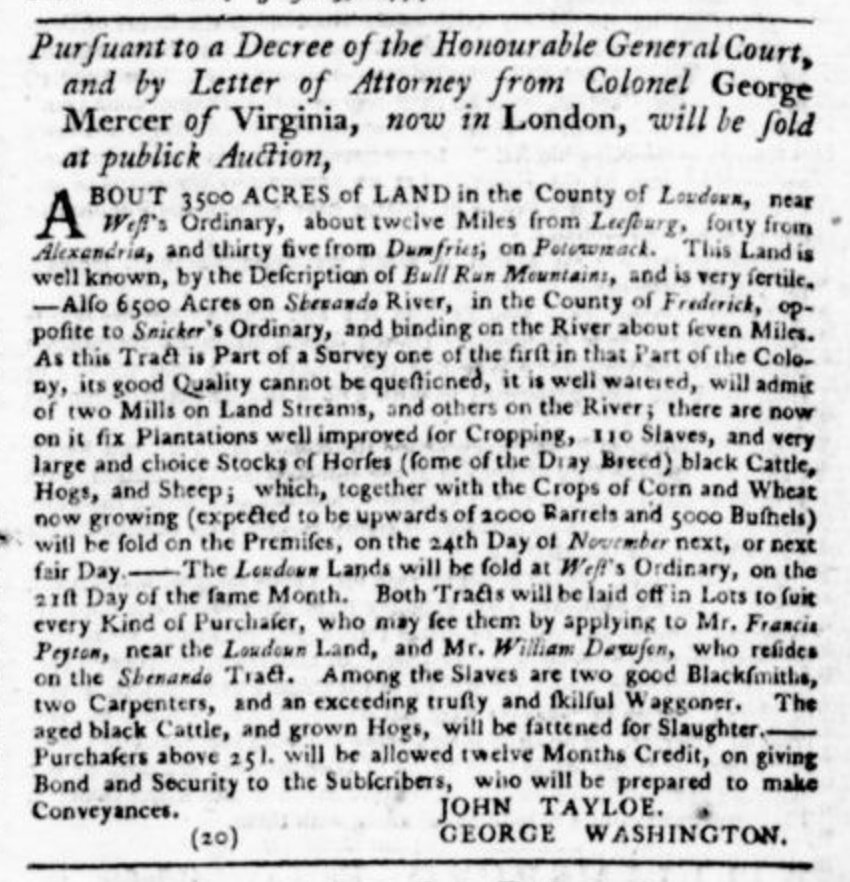
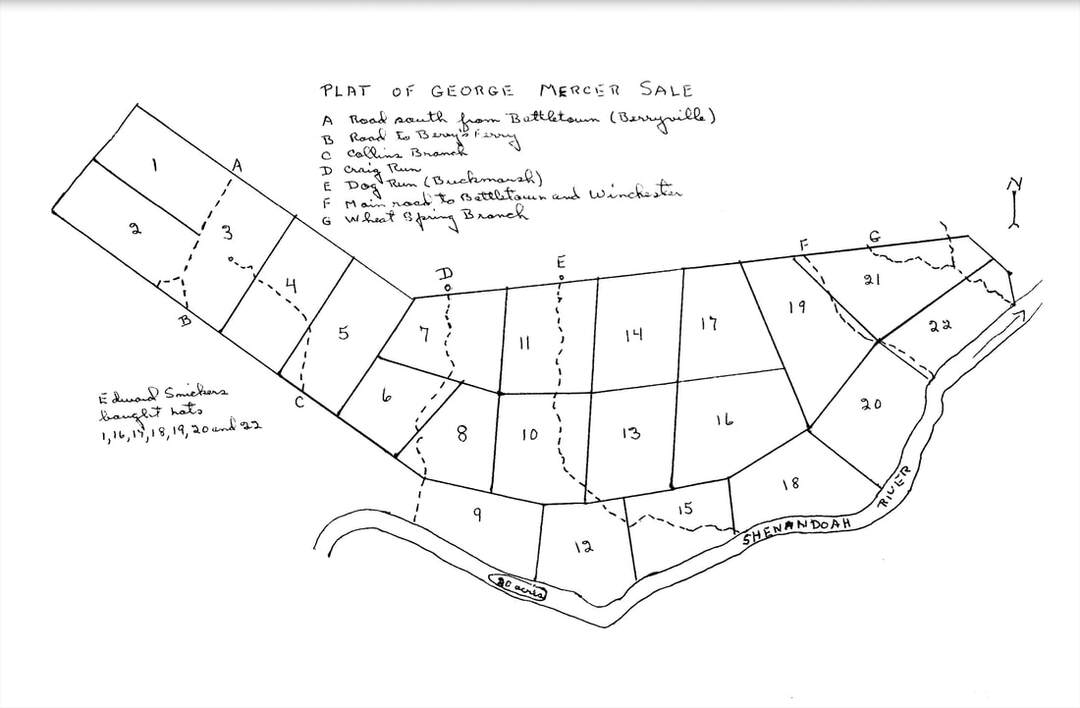
    The financial consequences of his exile eventually resulted in his mortgaging and then remortgaging his properties until he was ruined. He wrote to Washington, his cousin George Mason, and John Tayloe asking them to oversee the sale of his properties for him. The task fell to Washington. A large tract in what is now Clarke County was divided into lots by Francis Peyton and auctioned by Washington in 1774. Benjamin and Thomas Berry were among the bidders. Benjamin, who had more resources, acquired some prime riverfront land. Thomas acquired an inland lot but made up for it with the addition of a 20-acre island lot.
    Picture

    The auction notice in Purdie & Dixon's Virginia Gazette.

    ​Less than two years later, the Frederick Committee of Safety chose Thomas to lead a new company of Provincial soldiers, which was then assigned to the 8th Virginia Regiment. He continued to lead his men until their enlistments expired at Valley Forge in April of 1778 and then returned home to lead what appears to have been a quiet life. He died in 1818.
    Picture

    A sketch of the George Mercer plat made by Ingrid Jewell Jones in 1974 based on county records. Thomas Berry purchased lot 10 and the 20 acre island in the river. (Clarke County Historical Assn.)

    Picture

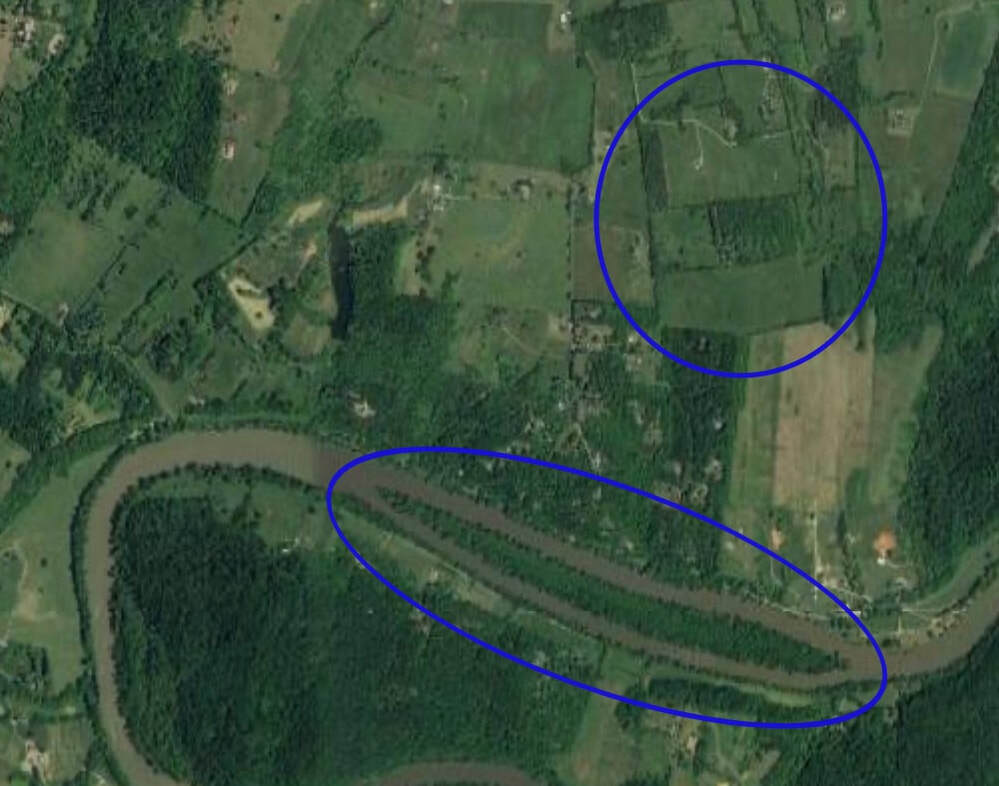
    A satellite image shows the clear outline of lot 10. Note especially it's V-shaped bottom. Berry's island appears to have grown considerably over 250 years.

    Benjamin, the older brother, was the founder of Berryville—a town just north and west of the old Mercer property. Benjamin is better remembered because of his namesake town, but Thomas’s military service deserves to be remembered as well.

    Read More: "Lost & Found: James Kay & Thomas Berry"

    More from The 8th Virginia Regiment

  • Published on

    Lost & Found: James Kay and Thomas Berry

    Picture

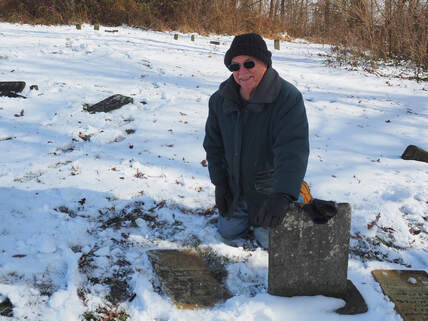
    Dave Gilbert of the Simon Kenton Chapter, Kentucky SAR, after he and Stuart Martin found Private Kay's headstone lying flat under the snow. (Stuart Martin)

    The grave stones of Revolutionary War veterans are remarkable things. Many of them are the last tangible vestiges of men who played a role not only in creating the United States but also in proving that governments dedicated to freedom and republican government can last. Sadly, many of them are long gone, and with them the last physical connection with the men who lie beneath them. In Boone County, Kentucky, Dave Gilbert and Stuart Martin are doing what they can to preserve or replace the markers that remain.
    James Kay enlisted in the 8th Virginia on February 20, 1776. This was four days after someone named John Kay enlisted in the same company. Recruiting and enlisting were family and community affairs in those days. John may have enlisted and then talked James into joining him. John was promoted to sergeant and then became an officer, so he was almost certainly older—probably James’s brother, but maybe his father, an uncle, or a cousin. James was only seventeen.
    They enlisted in Capt. Thomas Berry’s Frederick County company. Surprisingly, however, James attested later that he enlisted in King George County. Yes, it is ironic that a rebel soldier lived in “King George” county, but the county was named after King George I, who ruled from 1714 to 1727, not his great-grandson, George III. That, however, is not why the enlistment is surprising. Captain Berry, Lt. John Jolliffe, and two other officers were appointed by the local committee of safety to raise  their company in Frederick County, which surrounds the town of Winchester. Kay lived almost a hundred miles away. Frederick County sits west of the Blue Ridge in the lower (northern) Shenandoah Valley. King George County sits in the Virginia Tidewater between the Rappahannock and Potomac rivers east of Fredericksburg. They are a long distance apart, especially by horse. Like all historical oddities, however, there is an interesting explanation.
    Picture

    Private Kay's original headstone. Kay was wounded at the Battle of Brandywine. (Stuart Martin)

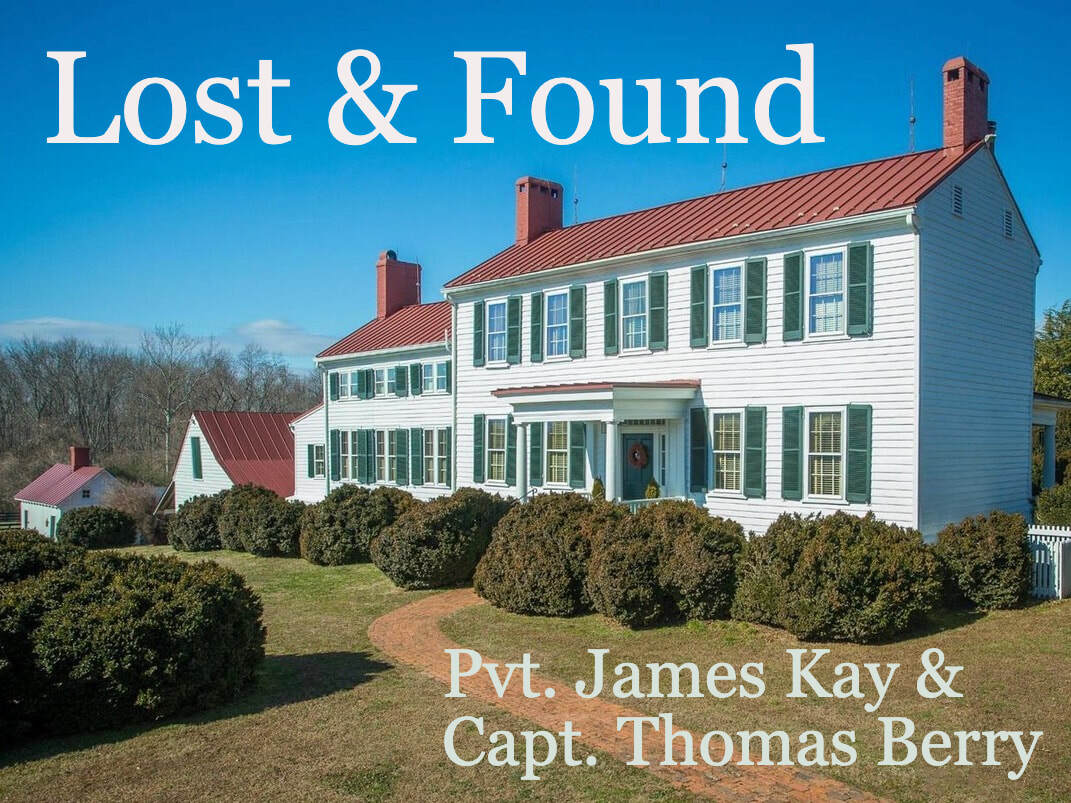
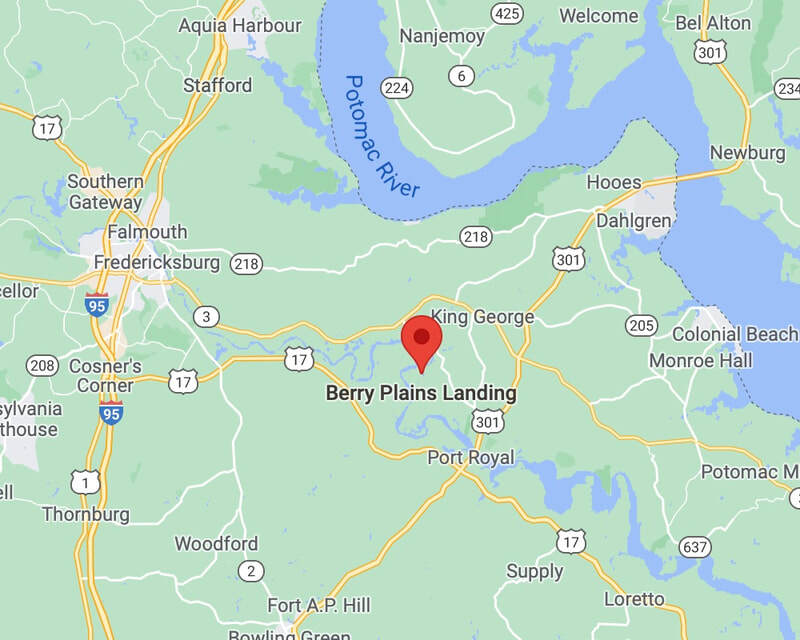
    Captain Berry grew up in King George, at the family plantation known as Berry Plain. Like so many others, his great grandfather had come to Virginia in 1650 as an indentured servant. From that humble start, the family did well. Berry Plain was built about 1720. Thomas and his older brother Benjamin moved to Frederick County sometime before the war and settled near Battletown, the tavern village famous for street brawls sometimes featuring future general Daniel Morgan. Berry Plain is still standing, has been restored, and was up for sale in 2007. (Some of the plantation’s valuable and ancient boxwoods were sold to Colonial Williamsburg in the 1930s, providing much needed funds to “save the farm.”)  Battletown, meanwhile, is now known as Berryville and is the county seat of Clarke County (created in 1836).  ​​Benjamin is recognized at the town's founder.

    ​When Berry and Jolliffe were appointed by the Frederick County Committee of Safety, they had recruiting quotas to fill. It appears that Berry's ties to King George County were still so strong that he made a trip home to recruit among his old friends and neighbors. That, at any rate, would explain Kay’s enlistment. Berry’s company was assigned to the 8th Virginia Regiment, which was brought south into the Carolinas in the spring of 1776. Berry and Kay were present in Charleston for the Battle of Sullivan’s Island, though most 8th Virginia men were not in combat. We know Private Kay was at Sunbury, Georgia that summer when many of his comrades succumbed to malaria. Having grown up near the Chesapeake, he may have had some resistance to the mosquito-borne disease. The soldiers were given furloughs after returning to Virginia that winter and then marched to Philadelphia where they were inoculated for smallpox. Lieutenant Jolliffe was quarantined with smallpox that spring in Winchester, either naturally contracted or from inoculation, and died from it.)
    Picture

    Berry Plain, built when Thomas Berry's grandfather was still alive about 1720, still stands in King George County near the Rappahannock River. This was Captain Berry's childhood home. Though now surrounded by development, it has been nicely restored and retains many of its centuries-old boxwoods.

    In September 1777, Kay saw his first serious combat at the Battle of Brandywine. He was “badly” wounded in his right hand. A musket ball seems most likely. The wound was serious enough that Brig. Gen. Charles Scott gave him a furlough to go home and recover. He returned to Battletown and spent the winter there while the rest of the regiment went into winter camp at Valley Forge. Kay's hand healed, but he was partially disabled for the rest of his life. His colonel, Abraham Bowman, also went home (to Strasburg) on furlough. “Soon after he was so recovered as to return to his company,” Kay's pension application says, “his two years expired & he was discharged in Virginia by Col. Abraham Bowman which was in the spring of the year 1778.”
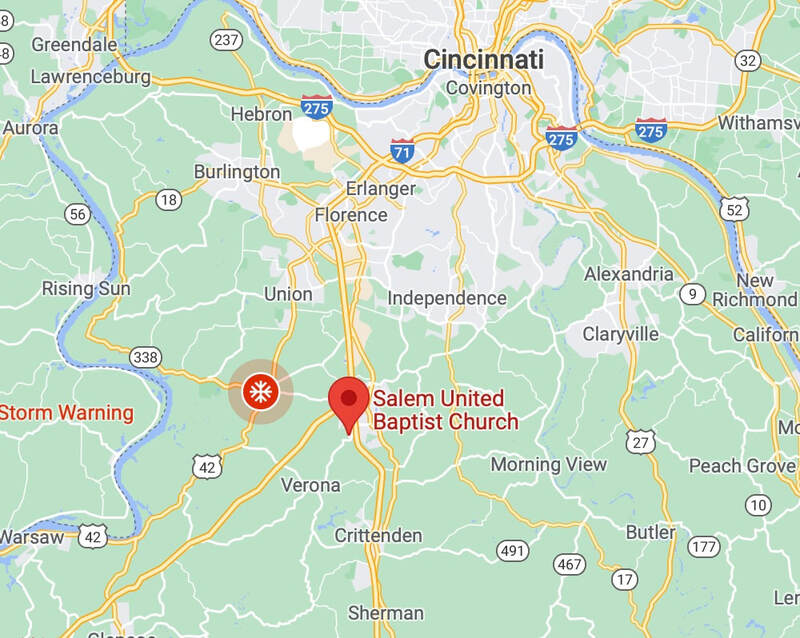
    After the war, thousands of Virginia veterans moved to Kentucky. Kay settled in Fayette County, named for the Marquis de Lafayette. By 1826 he lived in Boone County, named for Daniel Boone, but since Boone had originally been part of Fayette that doesn't necessarily mean he moved. He applied for a veteran’s pension in 1833 to supplement a wounded veteran’s benefit he was already receiving and died soon after. He was buried at Salem Baptist Church, then a log church built by a congregation formed in 1827. The church has since been known as Salem Predestinarian Baptist Church and as Salem Creek United Baptist Church.
    With the 250th Anniversary of the Revolution approaching, the Simon Kenton Chapter of the Sons of the American Revolution are working to compile a complete list of Patriot graves in their area, matching pension records with cemetery records. They are visiting each grave to confirm its existence and note its condition. Stuart Martin and Dave Gilbert have been leading the effort and have been at it since the start of the year. Stuart notes the project is sometimes challenging, especially when “graves have fallen into disrepair, or they reside on private property with access prohibited, or the family cemetery and the headstones are sadly lost to eternity.”
    Picture

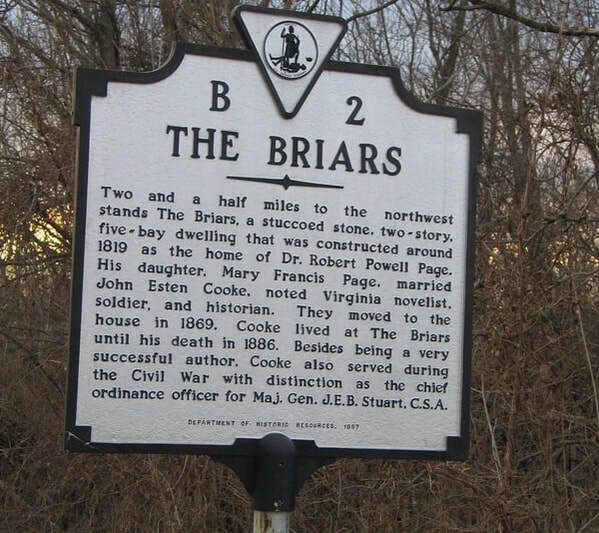
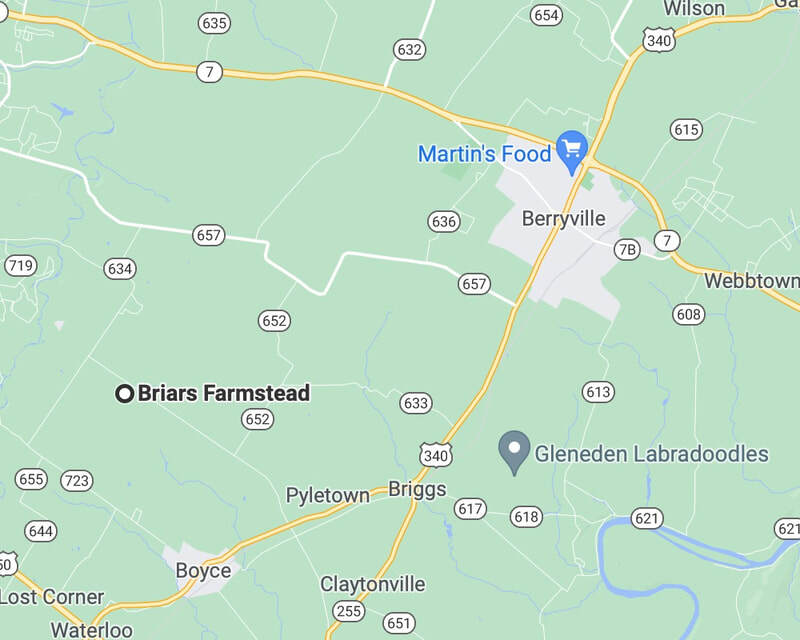
    Captain Berry is believed to be buried at The Briars.

    They found Private Kay’s marker intact but lying flat on the ground in the Salem Baptist Church cemetery. Because the stone is worn and hard to read, they plan to replace it with a new one. The ground is frozen, however, so they are leaving it alone until after the ground thaws. For now, they are working on the application for a government-issued headstone and searching for relatives who might attend a ceremony this summer or fall. If you are a descendant or relative of James Kay, please reach out to the Simon Kenon Chapter, SAR.
    Salem Baptist Church, Verona, Ky.
    Berry Plain, King George Co., Va.
    Berryville and The Briars, Clarke Co., Va.
    Captain Berry, according to genealogies, is buried at "The Briars" outside Berryville. This farm has a long history and now functions as an agricultural cooperative. A call to the cooperative revealed that the current occupants have never seen the grave or even a graveyard on the property. It seems Berry's is one more Patriot grave that, in Stuart Martin's phrase, "is sadly lost to eternity."

    Read more: "The Stamp Act and Captain Berry"

    More from The 8th Virginia Regiment