• Published on

    A Frontier Cabin Restored

    Image description
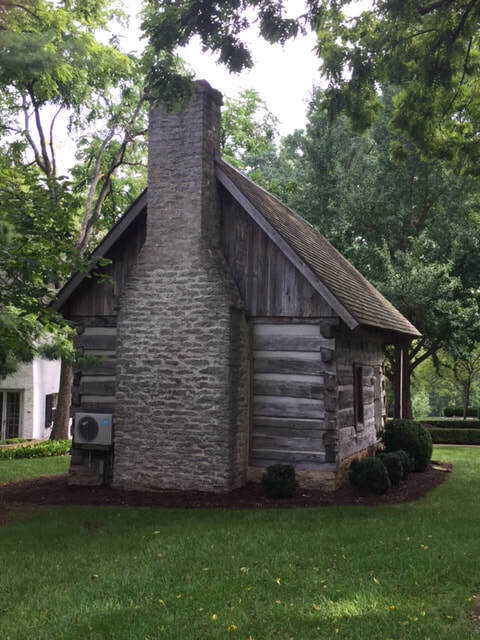
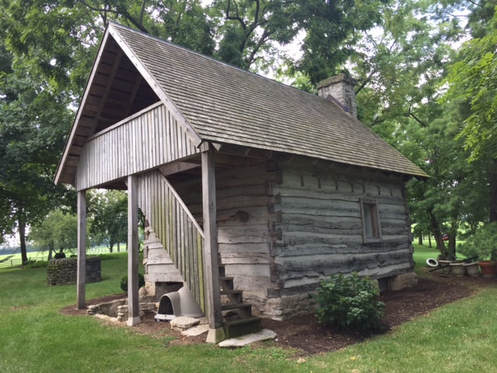
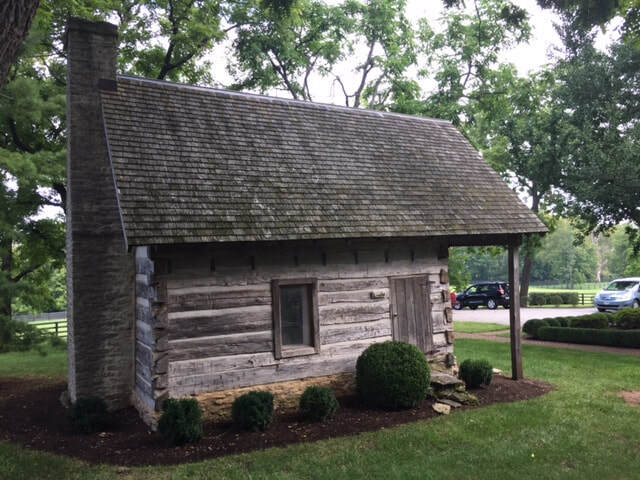
    ​8th Virginia Colonel Abraham Bowman’s frontier cabin looks better than has in 200 years.
     
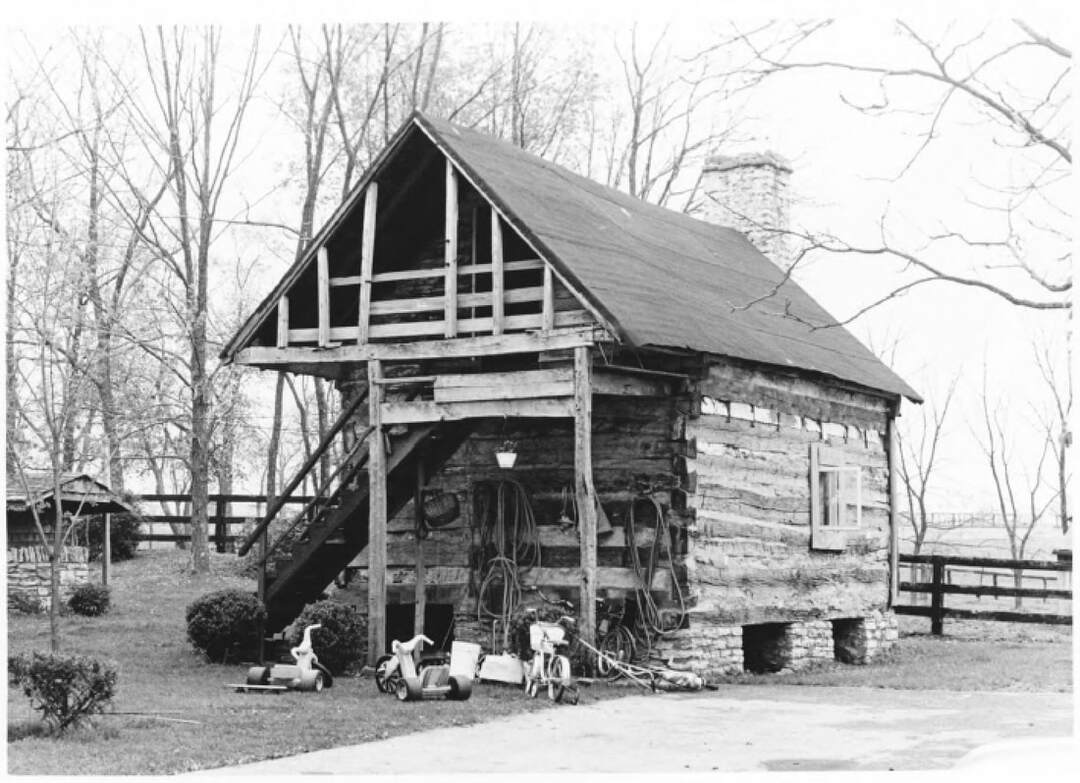
    Frontier log cabins, usually built of American Chestnut on stone foundations, were very durable structures. A surprising number of them survive today, including the cabin 8th Virginia Colonel Abraham Bowman built about 1779 or 1780 when he moved to Kentucky. Nevertheless, after two centuries, the Bowman cabin showed signs of deterioration (and alteration) when images of it were submitted to the National Park Service in 1979. 
     
    Bowman and his brothers are remembered as accomplished equestrians, reportedly known back in the Shenandoah Valley as the “Four Centaurs of Cedar Creek.” Appropriately, most of his land in Kentucky is now part of one of the most important equestrian facilities in the world. His Highness Sheikh Mohammed bin Rashid Al Maktoum, the Emir of Dubai and Prime Minister of the United Arab Emirates, is a horse enthusiast and owner of a global thoroughbred stallion operation which stands stallions in six countries. Soon after acquiring the property in 2000, Sheikh Mohammed had the Bowman cabin repaired and restored, along with other properties built long ago for Bowman’s children.
     
    The unique cabin, which features a basement and an exterior staircase to a second floor, has never looked better. The most notable change from the restoration is the reorientation of the exterior stairs, presumably to their original position and providing more headroom over the basement stairs.
    Picture

    The Cabin circa 1979 (Courtesy of the National Park Service)
    Picture

    Side view of the cabin.

    Picture

    Rear view of the cabin.
  • Published on

    A Tory Quotes the Bible

    Image description
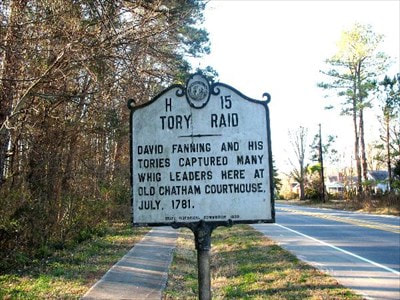
    ​Of all the Tories engaged in the brutal southern theater of the Revolution, none has a worse reputation than Colonel David Fanning. His savagery was matched only by his loyalty to the Crown. Fanning’s career and writings offer an unfamiliar perspective on the war and its aftermath.
     
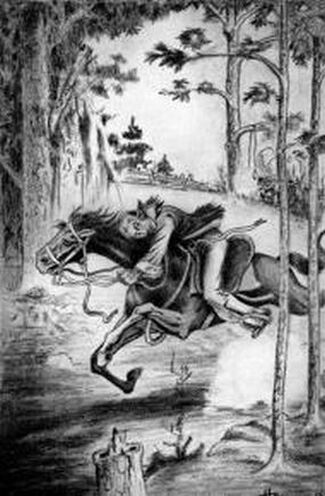
    Fanning used fear and violence to keep his part of North Carolina loyal, or at least neutral. “On one occasion, Fanning and his troop called at a smithshop to get their horse shoes repaired, where he met with a young man of the name of Bland, who had for a time served under him, but had withdrawn himself with a hope that he would be permitted to live at home in peace; Fanning charged him with being a deserter, stabbed him several times with his sword, and then shot him, and after turning him over with his foot to see that he was dead, said the d—-d rascal would never deceive him again.”
    Image description
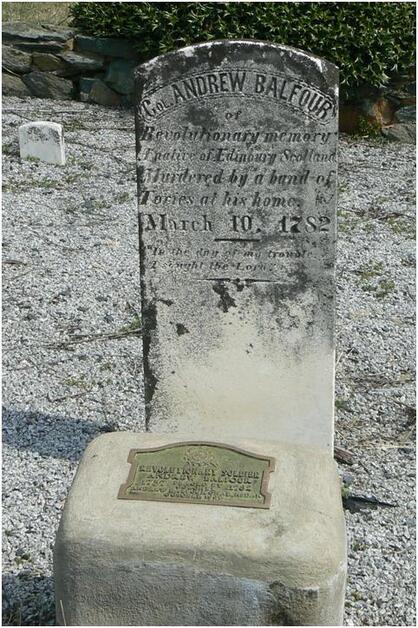
    In a better-remembered incident, “He and his raiders first rode to Col. [Andrew] Balfour's plantation. When they arrived, the Loyalists immediately opened fire. Absalom Autry fired at Col. Balfour and the shot broke his arm. Col. Balfour made his way back into the house to protect his daughter and his sister. The Loyalists rushed the house and pulled Col. Balfour away from the women, then riddled his body with bullets. Even Col. Fanning fired his pistol into Balfour's head. The women were kicked and beaten until they fled to the home of a neighbor.”
     
    Fanning left an account of his service, which includes interesting reflections of a loyalist in Canadian post-war exile. Like combatants everywhere, he had far more sympathy for his comrades than for his enemy. Reflecting on the fate of the loyalists he had commanded, he wrote, “Those people have been induced to brave every danger and difficulty during the late war, rather than render any service to the Rebels. .... As to place them in their former possessions, is impossible—stripped of all their property, driven from their Houses—deprived of their wives and children—robbed of a free and mild government—betrayed and deserted by their friends, what can repay them, for the misery? Dragging out a wretched life of obscurity and want, Heaven, only, which smooths the rugged paths, can reconcile them to misfortune. Numbers of them left their wives and children in North Carolina, not being able to send for them; and now in the West Indies and other parts of the world for refuge, and not returned to their families yet. Some of them, that returned, under the act of oblivion passed in 1783, was taken to Hillsboro, and hanged for their past services that they rendered the Government whilst under my command.”

    The Act of Pardon and Oblivion had been passed by the North Carolina legislature in 1783 to pardon most of the states citizens who had been Loyalists during the war. Some Loyalists were not eligible for pardon under the terms of the statute. Those who had become officers in the British Army were ineligible, as were those who had left the state with the British for more than a year. The act also made Tories who had committed "willful and deliberate murder, robbery and house-burning" ineligible. Fanning would therefore have been ineligible but, just to be sure, the law specifically excluded him and two others by name.
    Image description
    Fanning’s memoir begins with a scriptural citation. Quoting 1 Samuel 15:23, he writes, “Rebellion according to the Scripture is, as the Sin of Witchcraft; and the propagators thereof, has been more than once punished; which is dreadfully exemplified this day in the now United States of America but formerly Provinces; for since their Independence from Great Britain, they have been awfully and visibly punished by the fruits of the earth being cut off; and civil dissention every day prevailing among them; their fair trade, and commerce almost totally ruined; and nothing prospering so much as nefarious and rebellious Smuggling.”
     
    Indeed, the first years of Independence were messy. Even as Fanning was completing his memoir, the First Congress was meeting in New York under the new Constitution and working with the nation's first president to craft a more perfect union.
     
    A close read of 1 Samuel 15 puts Fanning’s scripture quote in context, providing food for thought. The full verse reveals that it is a king (Saul, the predecessor of King David) who has rebelled against the will of God. (I quote here from the King James version, the version Fanning would have read.) “For rebellion is as the sin of witchcraft, and stubbornness is as iniquity and idolatry. Because thou hast rejected the word of the LORD, he hath also rejected thee from being king.”  This, at least to modern minds, turns the meaning of the verse on its head. However, Saul’s confession turns the meaning around one more time. “And Saul said unto Samuel, I have sinned: for I have transgressed the commandment of the LORD, and thy words: because I feared the people, and obeyed their voice. (1 Samuel 15:24)

    Kings owe their allegiance to God, not to the people. To Fanning, evidently, that was an important distinction.

    ​(Revised September 16, 2020)

    More from The 8th Virginia Regiment

  • Published on

    Colonel Bowman's Post-War Log Cabin

    Image description
    Near Lexington, Kentucky, there is a Greek revival house, built in the early 1800s called “Helm Place.” Originally called “Cedar Hall,” the house was built either by 8th Virginia Colonel Abraham Bowman or his son. In documentation submitted to add it to the National Register of Historic Places, the building is described as “impressive." It “sits on a hill overlooking the South Elkhorn and gives one the impression of a Greek Temple.”
     
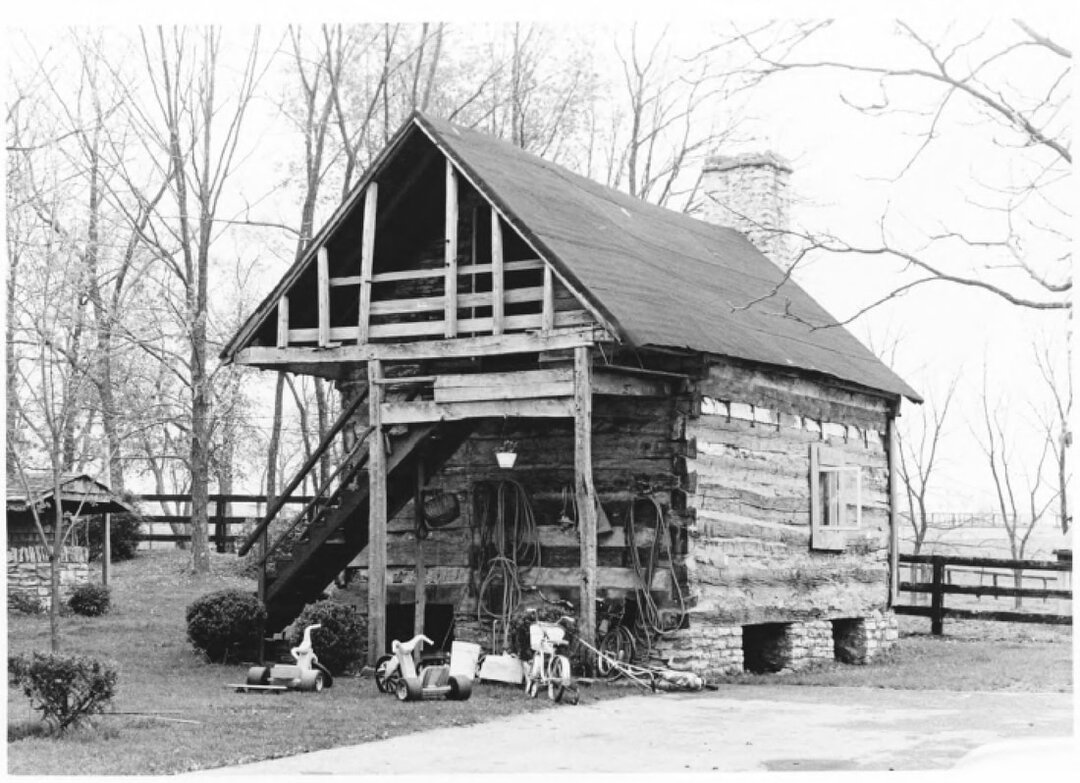
    The Bowman family prospered in Kentucky. They began as pioneers, however, and lived originally in pioneer fashion. Colonel Bowman’s first Kentucky home, a log cabin, survives just a quarter mile from Helm Place. “The cabin,” says the National Register paperwork from 1979, “a single-pen log structure with half-dovetail notching…faces southeast. There is a step-shouldered stone chimney on the south side and the exterior stair to the loft on the opposite end. The significant details of half-dovetail joinings of the logs and the outside staircase date this building to the late 1780s. The half-dovetail joining was characteristic of other log houses in this part of the state. The log house is also unique in that it contained a stone basement, which, in effect, created a three-story building.”

    A log cabin is not the sort of structure one might expect to survive for more than two centuries. Nonetheless, stone foundations and clapboard coverings have protected many of these pioneer dwellings into the 21st century. Here is an earlier post about 8th Virginia Captain Robert Higgin's cabin in Moorefield, West Virginia.
    Picture

    A photograph of the Bowman cabin submitted to the National Park Service in 1979 with an application to add the structure to the National Register of Historic Places. (National Park Service)

  • Published on

    Monmouth and the End of the 8th Virginia

    Image description
    The Battle of Monmouth Courthouse (June 28, 1778), was the last engagement for the 8th Virginia Regiment in the war. It was fought exactly two years after the 8th Virginia's first real battle at Sullivan's Island, South Carolina.

    Very few of the original enlistees were still in the regiment at Monmouth. Aside from deaths from disease and battle, all of the original enlistments from 1776 expired during the Valley Forge Encampment. Some of the original officers still remained, however. Some of the original recruits had also reenlisted.  Still, the numbers were not enough for a regiment. This was true to varying extents for all the Virginia regiments. Shortly before Monmouth, the 4th, 8th, and 12th Virginia regiments were merged into a unit referred to as the "4th-8th-12th Regiment" under the command of Col. James Wood of the 12th. The three regiments had served together for more than a year in Gen. Charles Scott's brigade, and continued under him. (Grayson's and Patton's "additional" regiments were also in the brigade.) 8th Virginia Colonel Abraham Bowman, who had less seniority than Wood, continued serving for the time being.

    On the approach to Monmouth, General Scott was put in charge of a detachment annoying the British flank, so Colonel William Grayson took command of the brigade. They led the approach and were in the center of the line during the morning engagement under Maj. Gen. Charles Lee. They were attached to Gen. Anthony Wayne in the afternoon.

    The was the last battle for the storied 8th Virginia, a unit that first began as a Virginia provincial regiment led by a pastor and loyal (technically, at least) to the King. The Virginia legislature had intended it to be a German (or German-led) unit and commissioned German field officers for it (Col. Muhlenberg, Lt. Col. Bowman, and Maj. Helphinstine). It recruited men of other ethnicities, however, and was never as German as originally envisioned.

    Some of the men, commissioned and enlisted, continued to fight on to the end of the war. In September, the regiment merged with the 4th Virginia under the latter's number. Colonel Wood's 12th Virginia became the "new" 8th Virginia. Col. John Neville of the 4th remained in command. 8th Virginia Col. Abraham Bowman, who was junior in seniority to both Wood and Neville, was released as a "supernumerary" officer. (After reporting to Gov. Patrick Henry he returned home and then moved to Kentucky.) In 1779, the consolidated 4th was provisionally merged with the 3rd Virginia and known for a time as the "3rd and 4th Virginia Regiment." Lastly, the handful who remained were included in the 2nd Virginia "brigade" sent to reinforce General Benjamin Lincoln at Charleston, South Carolina, in 1780. Some of them were under the command of Captain Abraham Kirkpatrick, who had begun the war as a lieutenant in William Croghan's Pittsburgh company of the 8th Virginia. Croghan, now a major, was also at Charleston. All of them were taken prisoner when Lincoln surrendered on May 12, 1780. 

    Brigadier General Peter Muhlenberg (the regiment's original colonel) and Lt. Colonel William Darke (one of the regiment's original captains) were both at Yorktown. They may be the only men of the original 8th Virginia who served at Yorktown as members of the Continental Army. Private Bean Smallwood, an original 8th Virginia recruit in Captain Berry's company, was at Yorktown as a militiaman. 

    Here is an excellent overview of the Battle of Monmouth

    (Updated 12/12/19)
  • Published on

    Washington's Harsh Words for Pennsylvania

    Picture
    George Washington knew how to bite his tongue. His response to criticism was usually a dignified silence. Like most people, he was more open when communicating with family. And so we see his unvarnished opinion about the Commonwealth of Pennsylvania in a letter to John Augustine Washington, written October 18, 1777. “[W]ith truth,” he wrote, “…it may be said, that this State acts most infamously, the People of it I mean, as we derive little or no assistance from them. In short they are, in a manner, totally, disaffected, or in a kind of Lethargy.”
    He wrote this two weeks after the Battle of Germantown. It is a revealing quote in many respects. It shows a normally very careful Washington speaking his mind to someone he trusted. At the same time, it is an informed assessment.  At Germantown and Brandywine before it, he had suffered from poor local intelligence, bad guides, and incompetent local militia support. Militarily speaking, William Penn's colony had been completely unprepared for war when the Revolution began. It didn't even have a militia system. In addition to the usual proportion of Tories and loyalists (generally a third, according to John Adams), a large number of Pennsylvanians were pacifists—Quakers, Moravians, Amish, and Mennonites—who were unwilling to resist established authority. Others simply had little faith in the cause. Washington had, after all, just lost three battles in a row.
     
    Philadelphia was the seat of the Congress for most of the war, but eastern Pennsylvania was never a hotbed of revolutionary fervor. Some of the city’s most prominent citizens remained openly loyal to the Crown. The war’s most fervent revolutionary patriots came from New England, the south, and the mostly Scotch-Irish settlements of the western frontier. Many observers, then and now, have ascribed this to the one thing New England and the Appalachian settlements had in common: Reformed (Congregational and Presbyterian) Christianity. Washington himself belonged to the Church of England, however, proving that cause and effect are never simple in history.
  • Published on

    The 8th Virginia at Fort Lee, NJ, September 1776

    Image description
    ​On September 22, 1776, William Croghan’s detachment of men from the 8th Virginia arrived at Fort Constitution, high on a cliff looking over the Hudson River and the island of Manhattan. Very soon, they would be part of the most famous campaign of the war.
     
    Months earlier, when the 8th Virginia first formed, its ten companies were ordered to rendezvous at Suffolk, Virginia—south and across the James River from the provincial capital at Williamsburg. Those from the far frontier were the last to arrive. Captain James Knox’s company from Fincastle County (now the state of Kentucky and parts of far southwest Virginia) arrived just in time to join the Regiment as it headed south to with General Charles Lee to defend Charleston.
     
    Captain William Croghan’s company from Pittsburgh came too late. His company and several dozen stragglers from other companies were attached for the season to the 1st Virginia and sent north to reinforce Washington at New York. After a march that took more than a month, the 1st Virginia arrived at a fort overlooking the Hudson.  It was called Fort Constitution, but was soon renamed Fort Lee after General Charles Lee got (only partially deserved) credit for the glorious June 28 victory at Sullivan's Island in South Carolina. Fort Lee was commanded by Gen. Nathanael Greene and, with Fort Washington across the river, was charged with maintaining patriot control of the strategically critical waterway.
    Image description
    Sergeant William McCarty recorded their arrival. After ferrying across the Passaic River they “marched to the fort, which we came by several camping places and camps on top of a high hill by the North [Hudson] River.” They “halted in sight of the fort and river till Colonel [James] Read [of the 1st Virginia] went to speak to General Greene.” He “returned shortly” and “ordered us to march back up the hill a piece, where it was late when we pitched camp.”
     
    For the next few days, the roughly 140 8th Virginia men under Captain Croghan rested and celebrated after their long march. They were issued flour, beef and rum. They got paid for the first time. On the third day there, McCarty wrote “We lay there and our men drunk very hard as they had plenty of money.”
    Image description
    Things soon turned serious, however. The day after their arrival, soldiers across the river were assembled to witness the execution of a man—bound, blind-folded, and kneeling—for cowardice (Washington gave him a last-minute reprieve). In addition to that news, Croghan’s men also learned that the Hessians and Scottish Highlanders had given no quarter at the Battle of Long Island the month before and had shot as many as seventeen Americans in the head after they had surrendered at Kip’s Bay. If they did not already know it, they now understood that there was no romance in war.
     
    Four days after their arrival, still at Fort Lee atop the Jersey Palisades, they watched British maneuvers in the river below. McCarty wrote, “The force heard the cannon fire very brisk from the shipping of the English, and we could see them land. We could easy see their camps and every turn they would make.”
    Image description
    Their stay at the fort was brief. Private Jonathan Grant later attested that they traveled through the Jerseys “to fort Lee on the North River & thence crossed the River to Fort Washington. The enemy at that time was in New York.” Similarly, Private Henry Gaddis recalled that they traveled “to Fort Lee, then we crossed over the North river to Fort Washington.” They joined the 3rd Virginia to form a small, temporary brigade commanded by Col. George Weedon. Now part of the main arm, they were thrust into battle—first at White Plains and later at Trenton. In January, only a handful of them were still well enough to participate in the critical victory at Princeton.
     
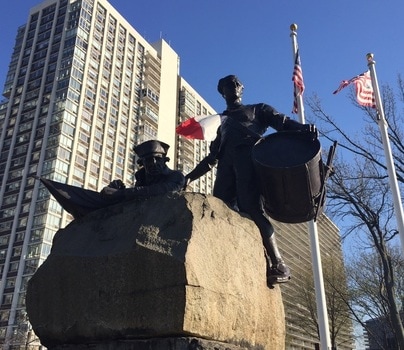
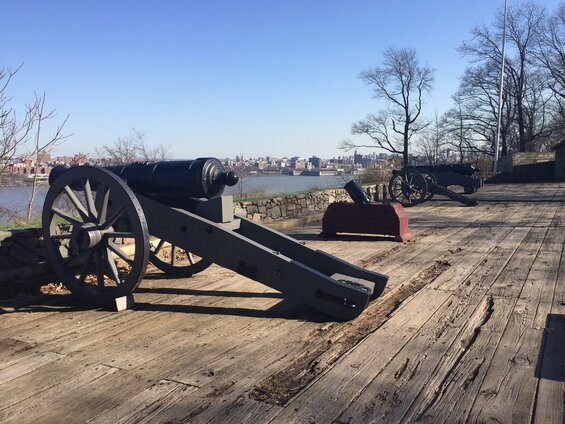
    The site of Fort Lee and its surrounding camps and artillery emplacements have been partially preserved. Judging purely from McCarty’s account it appears that much of the camping area has been blasted away to make room for the George Washington Bridge. Some of what remains has been preserved as Fort Lee Historic Park. The visitor center and its displays date from the 1976 Bicentennial and, though a bit worn down, still tell the story well. Reconstructed buildings and artillery batteries illustrate the site’s purpose despite the massive bridge and surrounding skyscrapers that make the area look very different from they way it was in the fall of 1776. The position of the actual fort is in the middle of the town of Fort Lee and called Monument Park. An artistic monument records the presence of the fort and the events that occurred there.
     
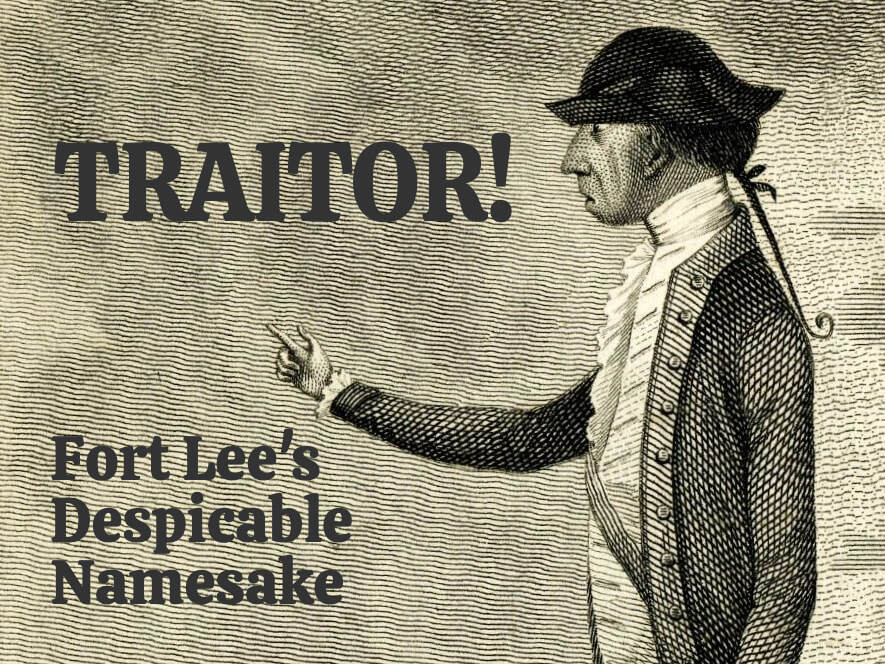
    Fort Lee was abandoned during the retreat through New Jersey, a retreat the fort’s namesake pointedly did nothing to assist with. Lee was in fact captured by the enemy and began to advise them on how to defeat the Continentals—a story told in this earlier post. One has to wonder how many people who live in Fort Lee today have any idea that their town is named for a traitor.

    Read More: Fort Lee's Despicable Namesake

    More from The 8th Virginia Regiment