• Published on

    The Battle of Drake's Farm

    Picture

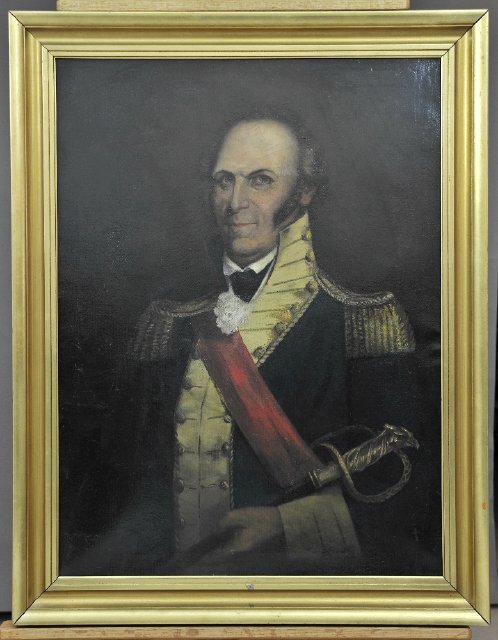
    Col. Charles Scott, depicted here many years later, commanded the Virginia troops at the Battle of Drake's Farm on February 1, 1777. His bold leadership there contrasted sharply with that of Connecticut Col. Andrew Ward, who did not or could not get his troops to engage. Scott was promoted soon after to brigadier general. The 8th Virginia served in his brigade at the battles of Brandywine and Germantown. He later served as governor of Kentucky. (Kentucky Historical Society)

    Thomas McCarty spent his first two days in Morristown drunk. It was January 1777 and he was one of the many 8th Virginia men detached to the 1st Virginia in New Jersey. The regiment was in bad shape. The field officers were all wounded or dead. Captain Croghan had been sick in Philadelphia for months. Lieutenant Kirkpatrick was in command, but even he had been wounded at Princeton. Now the remnant of Washington's army was in Morristown for the winter. Reinforcements would come, but for now most of the army was gone. The remaining men were mostly Virginians on long enlistments and Adam Stephen, newly a general, led the Virginia brigade.

    ​After sobering up, McCarty spent Monday and Tuesday—January 13 and 14—organizing and distributing supplies to the men. He was, he wrote, “sick, most excessive bad.” It wasn’t the first time he wrote that in his diary. Wednesday and Thursday he spent resting in the sergeant major’s quarters. Then he ran to Chatham “about some business” on Friday. On Sunday, he felt the lure of alcohol again. He “took a walk through the country with Mr. Depoe, and bought a barrel of cyder.”
    After a couple of quiet days in quarters, McCarty was ordered to have the men ready to march with three days’ provisions. They marched on Thursday, January 23, to Springfield, where McCarty was able to acquire a store of new shoes, stockings, and breeches. The men, some of whom were barefoot, lined up in the snow for the desperately-needed gear. On Saturday evening, his tasks completed, McCarty once again “took a walk to the country, where I got some cyder and a very good supper.” Quartermastering had definite perquisites. Again, on Sunday, he went “into the country,” took some lodgings and “stayed all day.”

    On Monday, Stephen’s severely understrength brigade headed out to look for the enemy.  McCarty followed behind, responsible for the wagons. “Our Virginia troops had marched, and I got orders from General Stephen to follow on, and I marched to Westfield, and then to Scotch Plains, it being in the night and very muddy. I got lodgings at one Mr. Halsey’s.” There was was a regiment of Connecticut men in the field as well, commanded by Col. Andrew Ward. These were one-year men whose enlistments would be up in May. Ward's men had been begging to go home since December, however, and were beginning to desert. McCarty and his wagons caught up with the Virginians, commanded by Col. Charles Scott, and joined them in taking quarters at Quibbletown, a village known today as New Market. 
    The next couple of days were spent scouting for enemy foraging parties. Part of Washington's winter strategy was to prevent the British from collecting hay. Less hay over the winter would mean fewer horses for them in the spring—and armies needed horses. Finally, on Saturday, February 1, the Virginians found the fight they had been looking for. They spotted five British light horsemen. They captured an officer, but seventy or eighty balls of lead failed to stop any of the others as they rode away. 

    ​Scott and his ninety or a hundred men were walking into a trap set by the enemy, who had grown tired of having their foraging parties ambushed. Though their officer was not meant to be captured, the small group of mounted men had done their job. The Virginians pursued them to Drake’s Farm, near Metuchen, where they "discovered their main body where they were loading hay.” It was not immediately apparent to the Virginians that they were approaching a much larger force than had previously been sent out to guard foragers. Colonel Ward’s surly Connecticuters were nearby, but it is not clear why and command was not unified. 

    ​Scott was a popular and aggressive officer and his Virginians attacked immediately. They soon realized they were facing two brigades of British and Hessian troops supported by eight artillery pieces. The Continentals were heavily outnumbered, but fought hard anyway, counting on Ward’s men to back them up. They boldly attacked the enemy line and drove back a battalion of grenadiers. “We attacked the body, and bullets flew like hail,” McCarty wrote. The enemy artillery checked their momentum, but they kept fighting anyway for several minutes. “We stayed about 15 minutes, when we retreated with loss. We drove them first, but at our retreat the balls flew faster than ever.”
    Picture

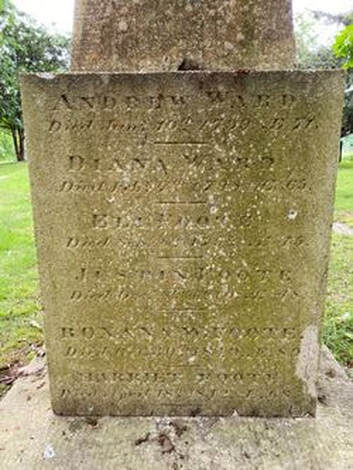
    The grave of Col. Andrew Ward V in Guilford, Conn. Ward's great-great grandfather came to New England with John Winthrop in 1630. He was a veteran of the 1745 Siege of Louisbourg (assisting his father as a boy) and the Battle of Lake George in 1760. Though his regiment fought at White Plains, Trenton, and Princeton, his miserable and poorly-equipped men were deserting and begging to go home as early as December when he wrote to Gov. Jonathan Trumbull asking him to prevail upon Washington to let them go home. He appears to have completely lost control of his regiment by March. Ward left Continental service in May but was later made a brigadier general in the Connecticut militia. He voted against the U.S. Constitution at the state ratification convention in 1788. (Findagrave.com)

    McCarty, like the other Virginians, was furious that Ward’s men didn't support them. “There was a body of above 400 men that never came up to our assistance till we retreated. Then they came up, but too late, and only some.” Their anger was soon directed back at the enemy when it was discovered that some wounded Americans had been murdered on the field. Several enemy soldiers (officers, according to McCarty), “went to the field where we retreated from, and the men that was wounded in the thigh or leg, they dash out their brains with their muskets and run them through with their bayonets, made them like sieves. This was barbarity to the utmost.”

    The murder of the wounded Virginians is confirmed by several sources. General Stephen wrote directly to British general Sir William Erskine to complain that six Virginians “slightly wounded in the muscular parts, were murdered, and their bodies mangled, and their brains beat out, by the troops of his Britannic Majesty.” He warned that such conduct would “inspire the Americans with a hatred to Britons so inveterate and insurmountable, that they never will form an alliance, or the least connection with them.”

    Stephen could think of no better threat than a reprise of Gen. Edward Braddock’s defeat in the French and Indian War. Stephen used his credentials as a survivor of that battle to insult and to intimidate the British general with over-the-top threats of Indian cannibalism.

    I can assure you, Sir, that the savages after General Braddock’s defeat, notwithstanding the great influence of the French over them, could not be prevailed on to butcher the wounded in the manner your troops have done, until they were first made drunk. I do not know, Sir William, that your troops gave you that trouble. So far does British cruelty, now a days, surpass that of the savages.

    In spite of all the British agents sent amongst the different nations, we have beat the Indians into good humour, and they offer their service. It is their custom, in war, to scalp, take out the hearts, and mangle the bodies of their enemies. This is shocking to the humanity natural to the white inhabitants of America. However, if the British officers do not refrain their soldiers from glutting their cruelties with the wanton destruction of the wounded, the United States, contrary to their natural disposition, will be compelled to employ a body of ferocious savages, who can, with an unrelenting heart, eat the flesh, and drink the blood of their enemies. I well remember, that in the year 1763, Lieutenant Gordon, of the Royal Americans, and eight more of the British soldiers, were roasted alive, and eaten up by the fierce savages that now offer their services.


    The fundamental British strategy in the Revolution was to empower Loyalists and to pacify rebels and persuade them to accept offers of amnesty. The plan clearly wasn’t working. Shortly after the Battle of Drake’s Farm, a loyalist wrote home: “For these two month[s], or nearly, we have been boxed about in Jersey, as if we had no feelings. Our cantonments have been beaten up; our foraging parties attacked, sometimes defeated, and the forage carried off from us; all travelling between the posts hazardous; and, in short, the troops harassed beyond measure by continual duty.”
     
    The Forage War was a brilliant (and still-unheralded) success for the Americans. Denying the enemy forage and forcing them to live in close quarters for several months had a cumulatively severe impact on them. Howe had more than 31,000 troops at New York on August 27, 1776. When spring came, he had lost between forty and fifty percent of those men to death, desertion, capture, or disease. That was not sustainable.
    Picture

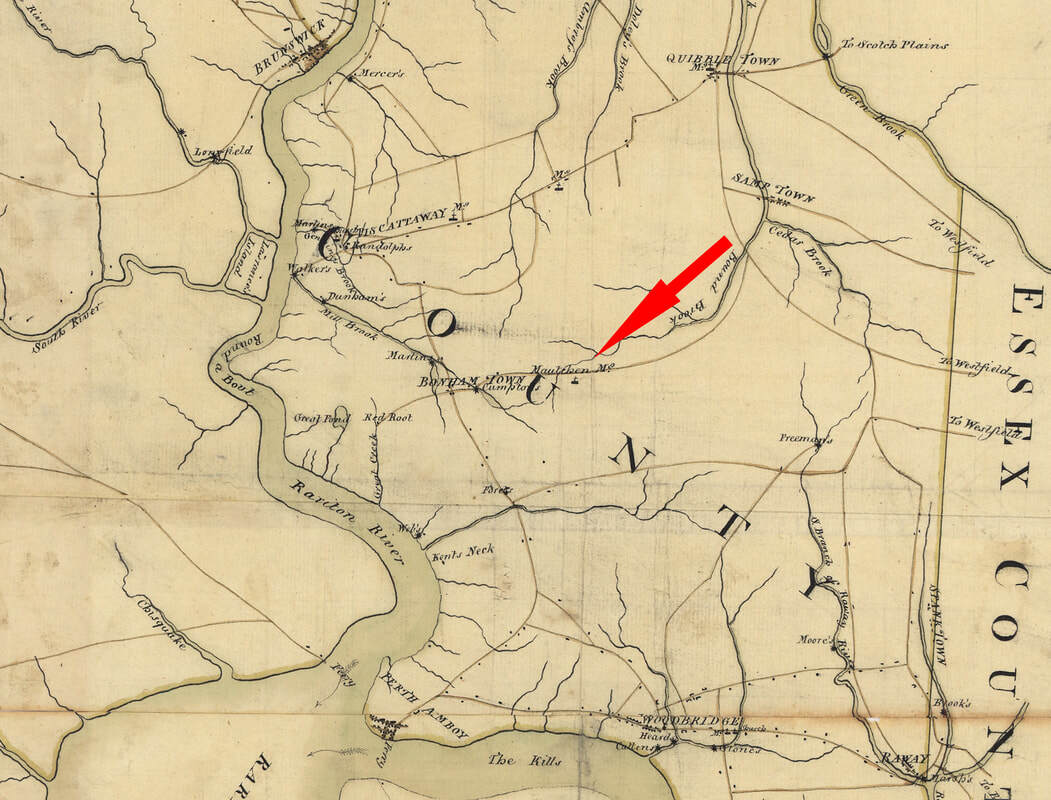
    The Battle of Drake's Farm occurred at nor near Metuchen, N.J., half-way between major British outposts at New Brunswick and Perth Amboy. This 1781 map was drawn four years after the engagement. This map is oriented ninety degrees to the right of standard orientation, with the right facing to the north. (Library of Congress)

    More from The 8th Virginia Regiment
  • Published on

    It's Not "Presidents' Day"

    Picture

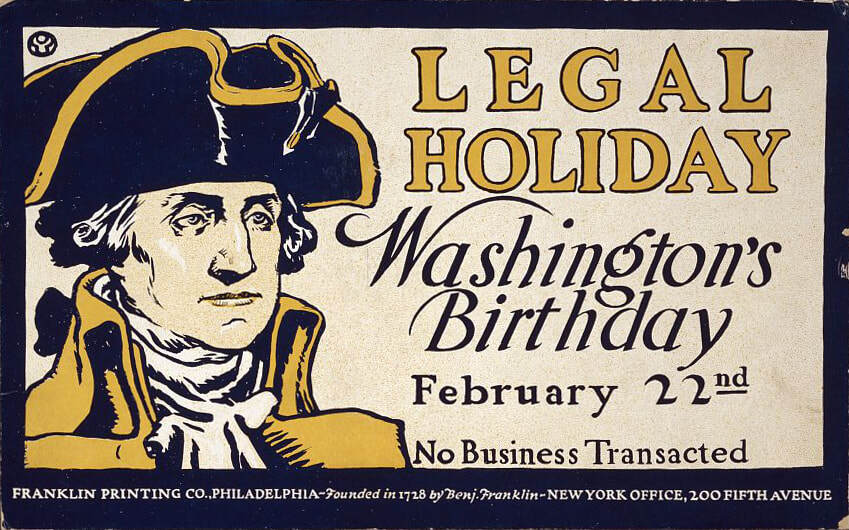
    A sign for store windows printed before the Uniform Monday Holiday Act of 1968. (Library of Congress)

    Are we really celebrating Millard Fillmore and Warren Harding today? Not according to federal law. Today’s national holiday is “George Washington’s Birthday.”  That’s the simple answer. The full answer is complicated: It’s not actually his birthday today. The holiday actually never falls on Washington’s real birthday. Moreover, we use a different calendar today than we did when he was born. Yet another complication is that in several states it is also “Presidents’ Day.” 
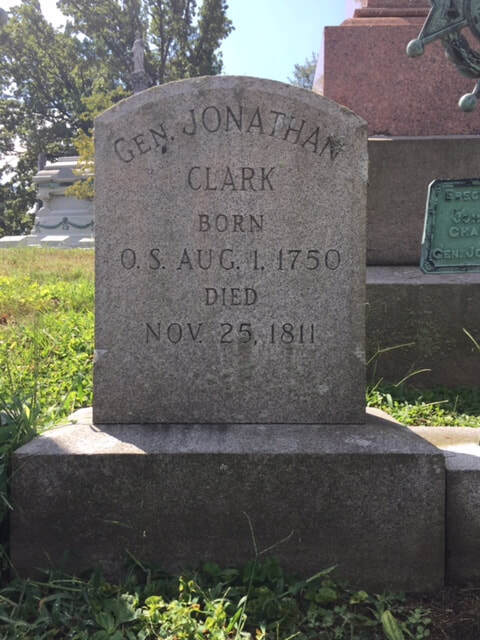
    Washington was born on February 11, 1731…under the Julian Calendar. This was the old calendar established under Julius Caesar. Pope Gregory moved the Catholic world to a more accurate calendar in 1582, but Protestant England, under Queen Elizabeth, wasn’t bound by the change. Leap year differences put Britain and the America colonies eleven days behind the rest of the western world. Moreover, New Year’s Day was March 25 under the old calendar, not January 1. Consequently, when the British Empire finally changed to the Gregorian Calendar in 1752, Washington’s birthday changed from February 11, 1731 to February 22, 1732. Both dates are correct, but the proper way to note the Julian date is “February 11, 1731 (O.S.).” The abbreviation stand for “old style.”

    Washington’s Birthday was declared a holiday by Congress in 1879. Many people don’t realize that Congress has no authority to declare holidays (days off) for anyone other than federal employees and residents of the District of Columbia. States, however, followed the federal government’s lead and Washington’s Birthday was celebrated for decades on February 22. Abraham Lincoln’s birthday was never a federal holiday, but was celebrated by many states on February 12—just ten days before Washington’s birthday. In the 1950s, there was an effort to establish a third holiday, President’s Day, to honor “the office of the presidency” on March 4 – the original day of quadrennial inaugurations. Though some states adopted the new holiday, Congress declined to in the belief that three holidays in rapid succession were too many.

    In 1968, Congress passed the Uniform Monday Holiday Act, guaranteeing three-day weekends for Washington’s Birthday, Memorial Day, Labor Day, Columbus Day, and Veterans Day. A proposal to also replace Washington’s Birthday with a generic “President’s Day” was specifically rejected. However, because the holiday was set to be celebrated on the third Monday in February, it was guaranteed to always fall between Lincoln’s and Washington’s birthdays yet never on either. This invited use of the generic term “President’s Day (with the apostrophe sometimes after the “s.”) Advertisers are usually blamed for popularizing the term.

    Though the federal holiday is Washington’s Birthday, it is state law that determines days off for most Americans.  Only seven states celebrate Washington alone on the third Monday in February. Virginia calls it “George Washington Day.”Illinois, Iowa, Michigan, Louisiana, and New York call it “Washington’s Birthday.” Twenty-two states celebrate “President’s Day” (with varying punctuation). The rest of the states name the holiday after Washington and someone else, most often Lincoln, but also Jefferson (Alabama), civil rights activist Daisy Bates (Arkansas), and all presidents (Maine and Arizona).

    Picture

    The grave of 8th Virginia captain and major Jonathan Clark indicates that he was born under the Julian calendar. (author)

    Under our present Constitution, the United States has had forty-five presidents. Some have been great and some have not. Reputations have waxed and waned as attitudes change and new biographies are written. Celebrating “President’s Day” seems to make no more sense that celebrating “Congress Day” or “Supreme Court Day.” In the fact, the notion of a “President’s Day” has vaguely monarchist overtones. Surely, we can all think of several presidents who don’t deserve the honor. Washington, however, stands high above the rest. He is rightly known as the father of the country. He effectuated a great break with the past, establishing durable and free government in part by repeatedly declining to cling to power. Only one other president rivals his claim to greatness.
     
    Holidays have always been the subject of civic activism. Veterans Day was moved back to November 11 in 1975 to align with the World War I armistice. Columbus Day has been replaced by “Indigenous People’s Day” in Florida, Hawaii, Alaska, Vermont, South Dakota, New Mexico, and Maine. If you live in a place (such as, believe it or not, Washington State) that celebrates “President’s Day,” you might want to call your state legislator and point out that Chester Arthur doesn’t belong on the same holiday stage as George Washington.

    More from The 8th Virginia Regiment
  • Published on

    Greene Eludes Cornwallis

    Picture
    To the End of the World: Nathanael Green, Charles Cornwallis and the Race to the Dan
    Andrew Waters (Yardley, Pa: Westholme, 2020)

    Image description
    “In a place like Salisbury,” writes Andrew Waters of the North Carolina town that witnessed the 1781 Race to the Dan, “you can live among its ghosts and still not know it’s there.” Enthusiasts know that this is true of many Revolutionary War sites, including some of real importance. Mr. Waters complains in his book To the End of the World: Nathanael Greene, Charles Cornwallis, and the Race to the Dan of the simplified understanding most Americans have of the Revolutionary War. “For most of us, the story of the American Revolution is of George Washington and the minutemen, Valley Forge and Yorktown.” In our Cliffs Notes version of history, many places, heroes, and even whole campaigns are left out.

    Like most of the war in the south, the Race to the Dan is overshadowed by Yorktown. The mere fact that George Washington was not a participant relegates the story to a second-tier status. The Race, however, holds unique challenges for the historian and the storyteller. It occurred over more than two hundred miles, depending on how you count it, rather than at one identifiable spot. Nathanael Greene’s genius is to be found in his mastery of logistics and strategy, which are subjects that make many people’s eyes glaze over. Though heroic and difficult, it was still a retreat and retreats don’t lend themselves to celebration. Its significance is not so much in what it achieved but rather in what it made possible, which requires detailed explanation.

    Consequently, the Race to the Dan has been given short shrift for more than two centuries. It is mentioned in the war’s histories, but almost never in detail. In writing this book, Mr. Waters was determined to correct that and he has succeeded. One can’t resist noting the appropriateness his name: the waterways of the Carolinas play a central role in the story. He makes plain from the beginning that the story is personal to him. He is a conservationist and doctoral candidate in South Carolina who has made a career of conserving the Palmetto State’s watersheds. “Rivers are my business,” he says at the very beginning of the book. He also plainly declares, “We all need heroes, and . . . Greene has become one of mine.”


    ...Continue to The Journal of the American Revolution.

    More from The 8th Virginia Regiment
  • Published on

    Mounting the Soldier Second

    Picture
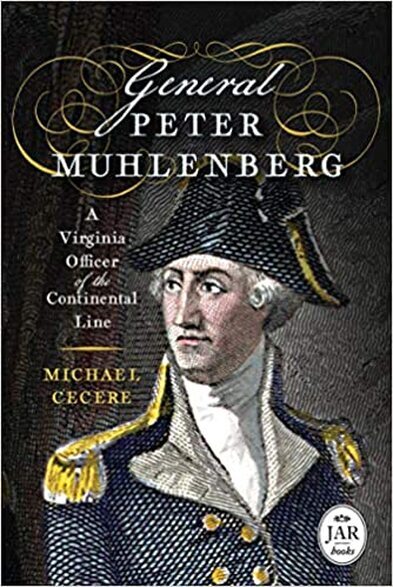
    General Peter Muhlenberg: A Virginia Officer of the Continental Line
    by Michael Cecere (Yardley, Pa: Westholme, 2020)
    Picture
    “The General, mounted upon a white horse, tall and commanding in his figure, was very conspicuous at the head of his men…many of the [enemy] soldiers (German enlistments being for life,) remembered their former comrade, and the cry ran along their astonished ranks, ‘Heir kommt teufel Piet!’”

    This tale about Gen. Peter Muhlenberg at Brandywine appears in the 1849 biography written by his great nephew (and congressman) Henry Augustus Muhlenberg. “Here comes Devil Pete!” was shouted by members of a German dragoon company to which the writer says Muhlenberg had belonged as a young man. The story is nonsense, and just one example of why Michael Cecere’s new biography of the general is desperately needed.

    Peter Muhlenberg was a Pennsylvania-born German who was the son of the patriarch of the Lutheran Church in America.
    He is best-known as the rector of a Shenandoah Valley (Anglican) parish and colonel of the 8th Virginia Regiment, which was raised on the frontier and initially intended to be a “German” regiment. The famous but poorly-documented farewell sermon he delivered in Woodstock, Virginia, in the spring of 1776 has been the subject of epic poetry and modern political debate. After a tour of the southern theater under Maj. Gen. Charles Lee, he was made a brigadier general. His brigade of Virginians was in Maj. Gen. Nathanael Greene’s division at Brandywine and Germantown. He was at Monmouth and remained in the army to the end of the war. He played an important role in the Virginia campaign leading up to Yorktown.

    ​...continue to The Journal of the American Revolution.

    More from The 8th Virginia Regiment

  • Published on

    A Martinsburg Mystery

    Image description
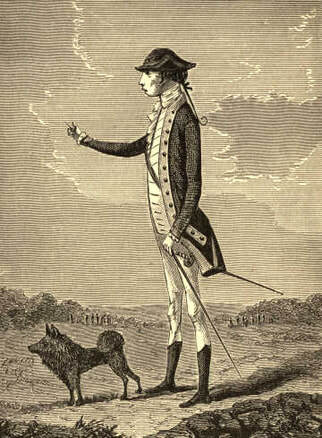
    Maj. Gen. Adam Stephen was the 8th Virginia's division commander in 1777, leading them at the battles of Brandywine and Germantown. He worked closely with George Washington for more than two decades, sometimes challenging and undercutting him. He ran against Washington for the House of Burgesses and almost ruined the surprise Christmas, 1776 attack on Trenton by sending soldiers across the river to settle a personal vendetta against the Hessians. He was reportedly drank too much, and was finally court-martialed and cashiered from the Army after the disaster at Germantown.

    That did not end his life of civic engagement, though. He founded Martinsburg (now in West Virginia) and served in the Virginia convention that ratified the U.S. Constitution. Sometime during the war, he built a fine house for himself where Martinsburg grew up. Intriguingly, he built his house over the mouth of a cave. According to tradition, this was done to prove an escape in case of an attack by Indians or other enemies. Since that era, the cave has been filled in with dirt, leaving a persistent mystery: where does the natural underground tunnel lead? For nearly twenty years, TriState Grotto--a local caving club--has been working to excavate the passage, one five-gallon bucket at a time. Videos of their progress (and archeological finds) have been posted occasionally on YouTube. Here they are, in chronological order. 

    Stephen died in 1791 and is buried under a rustic monument not far from his home. Despite the controversies associated with his life, he served his country at important moments and in important ways. He was with Washington at Jumonville Glen, Fort Necessity, and Braddock's Defeat years before his Revolutionary War service. His French and Indian War waistcoat and gorget are in the Smithsonian. Aside from his legacy of service and these artifacts, he left an enduring mystery beneath his house. One day soon, perhaps, we'll know where the tunnel leads.

    More from The 8th Virginia Regiment
    Picture
    Picture
    Picture
  • Published on

    Off to War

    All ten companies of the 8th Virginia hadn’t even arrived yet when Maj. Gen. Charles Lee took the regiment south to face the enemy. Suffolk, Virginia was the designated place of rendezvous. The ten companies came from all but one of the counties along Virginia’s 350-mile frontier, stretching from the Cumberland Gap to Pittsburgh. They traveled to the rendezvous on foot, stopping in Williamsburg to collect company officers’ commissions. Col. Peter Muhlenberg and the early-arrived companies were posted at Kemp’s Landing, near Norfolk.

    British Gen. Henry Clinton was sailing south with a significant force to meet with Gen. Charles Cornwallis, who was sailing from Britain with a fleet of warships and still more men. North Carolina was their target and a Tory uprising was their goal. On May 11, Lee impatiently wrote to the post commander at Kemp’s landing, inquiring, “[H]ave you order’d Muhlenberg’s Regiment to march to Halifax? I hope to God you have, for no time is to be lost, as we have certain news of the Enemy’s arrival in the River Cape Fear.”
    Picture

    Maj. Gen. Charles Lee was a veteran (former) British officer and junior only to George Washington in the Continental army. He was a strange and notably ugly man. He lost both his career and his mind before dying of natural causes in 1782.

    This was evidently true despite the absence of two complete companies. Lee may have extrapolated to account for the absent companies. Alternately, at least one of the present companies (Captain Jonathan Clark’s) appears to have enlisted numbers beyond its quota. When Muhlenberg set off on May 13, Capt. James Knox’s southwest (Fincastle County) company had not yet arrived. It was close, though—probably at Williamsburg. Or perhaps it had just arrived and needed to rest. Lee wrote, “Capt[ai]n Knox will follow the Regiment, so the Colonel must not wait for him.” Capt. William Croghan’s Pittsburgh (West August District) company, however, was even farther behind. Lee took the regiment anyway. There was no time to spare. Consequently, it would be an entire year until Croghan’s men joined the regiment.

    ​Lee wrote to John Hancock, “As the Enemy’s advanced Guard…is actually arrived—I must, I cannot avoid detaching the strongest Battalion we have to [North Carolina’s] assistance; but I own, I tremble at the same time, at the thoughts of stripping this Province of any part of its inadequate force.” Battalions and regiments were essentially synonymous at this time. Lee was, in fact, calling the 8th Virginia the “strongest” of the province’s nine regiments. He would later confirm this assessment when he wrote to Muhlenberg, “You were ordered not because I was better acquainted with your Regiment than the rest
    --but because you were the most compleat, the best armd, and in all respects the best furnish’d for service.” To Congress he reported, “Muhlenberg’ s regiment wanted only forty at most. It was the strength and good condition of the regiment that induced me to order it out of its own Province in preference to any other.”
    Picture

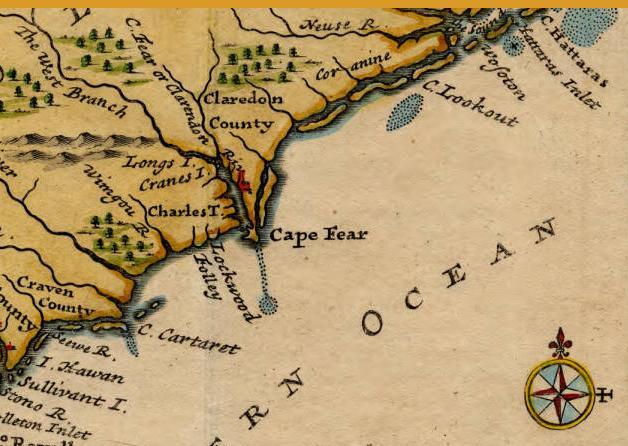
    Cape Fear, North Carolina, was the expected point of invasion, but the Battle of Moore's Creek Bridge had quelled Loyalist support in the area.

    The other nine companies marched for Cape Fear via Halifax, North Carolina, joined by a North Carolina Regiment that had come north to Virginia’s aid. Unlike every other Virginia regiment, the 8th Virginia men all carried rifles. No muskets also meant no bayonets, which were—at the end of the day—often the real implements of war. Lee compensated for this by issuing pikes (he called them “spears”) to some of the men. “I have formed two companies of grenadiers to each regiment; and with spears of thirteen feet long, their rifles (for they are all riflemen) slung over their shoulders, their appearance is formidable, and the men are conciliated to the weapon.” 
    Meanwhile, the British commanders were learning that the Patriot victory at Battle of Moore’s Creek Bridge had quelled their hoped-for Tory uprising. They opted, therefore, for an alternate target. Just as the 8th Virginia arrived at Cape Fear, the enemy was sailing off for Charleston, South Carolina. Muhlenberg’s men continued the chase, now at a forced-march pace. A very difficult and deadly summer lay ahead of them.

    More from The 8th Virginia Regiment