• Published on

    It's Not "Presidents' Day"

    Picture

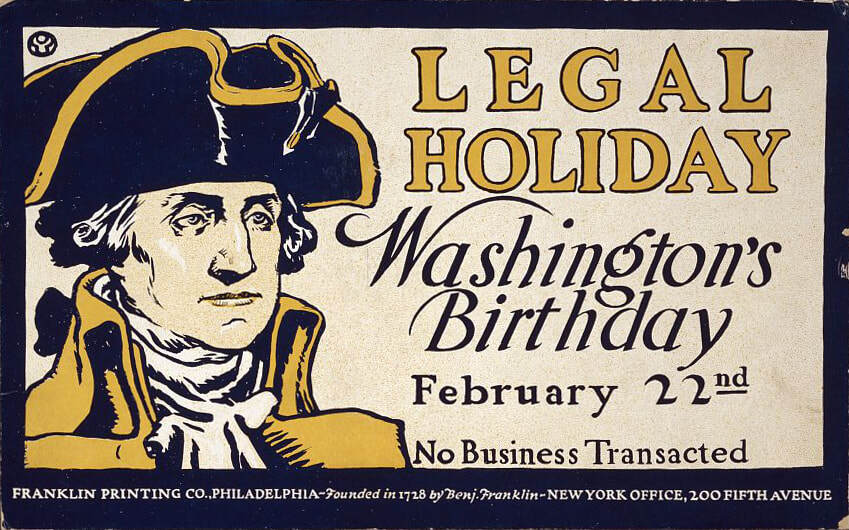
    A sign for store windows printed before the Uniform Monday Holiday Act of 1968. (Library of Congress)

    Are we really celebrating Millard Fillmore and Warren Harding today? Not according to federal law. Today’s national holiday is “George Washington’s Birthday.”  That’s the simple answer. The full answer is complicated: It’s not actually his birthday today. The holiday actually never falls on Washington’s real birthday. Moreover, we use a different calendar today than we did when he was born. Yet another complication is that in several states it is also “Presidents’ Day.” 
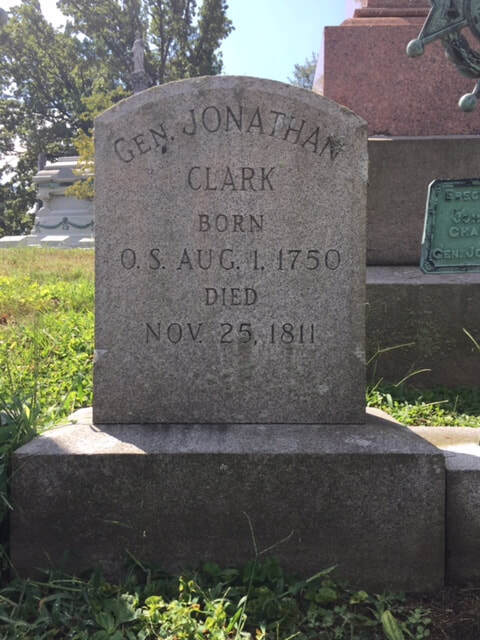
    Washington was born on February 11, 1731…under the Julian Calendar. This was the old calendar established under Julius Caesar. Pope Gregory moved the Catholic world to a more accurate calendar in 1582, but Protestant England, under Queen Elizabeth, wasn’t bound by the change. Leap year differences put Britain and the America colonies eleven days behind the rest of the western world. Moreover, New Year’s Day was March 25 under the old calendar, not January 1. Consequently, when the British Empire finally changed to the Gregorian Calendar in 1752, Washington’s birthday changed from February 11, 1731 to February 22, 1732. Both dates are correct, but the proper way to note the Julian date is “February 11, 1731 (O.S.).” The abbreviation stand for “old style.”

    Washington’s Birthday was declared a holiday by Congress in 1879. Many people don’t realize that Congress has no authority to declare holidays (days off) for anyone other than federal employees and residents of the District of Columbia. States, however, followed the federal government’s lead and Washington’s Birthday was celebrated for decades on February 22. Abraham Lincoln’s birthday was never a federal holiday, but was celebrated by many states on February 12—just ten days before Washington’s birthday. In the 1950s, there was an effort to establish a third holiday, President’s Day, to honor “the office of the presidency” on March 4 – the original day of quadrennial inaugurations. Though some states adopted the new holiday, Congress declined to in the belief that three holidays in rapid succession were too many.

    In 1968, Congress passed the Uniform Monday Holiday Act, guaranteeing three-day weekends for Washington’s Birthday, Memorial Day, Labor Day, Columbus Day, and Veterans Day. A proposal to also replace Washington’s Birthday with a generic “President’s Day” was specifically rejected. However, because the holiday was set to be celebrated on the third Monday in February, it was guaranteed to always fall between Lincoln’s and Washington’s birthdays yet never on either. This invited use of the generic term “President’s Day (with the apostrophe sometimes after the “s.”) Advertisers are usually blamed for popularizing the term.

    Though the federal holiday is Washington’s Birthday, it is state law that determines days off for most Americans.  Only seven states celebrate Washington alone on the third Monday in February. Virginia calls it “George Washington Day.”Illinois, Iowa, Michigan, Louisiana, and New York call it “Washington’s Birthday.” Twenty-two states celebrate “President’s Day” (with varying punctuation). The rest of the states name the holiday after Washington and someone else, most often Lincoln, but also Jefferson (Alabama), civil rights activist Daisy Bates (Arkansas), and all presidents (Maine and Arizona).
    Picture

    The grave of 8th Virginia captain and major Jonathan Clark indicates that he was born under the Julian calendar. (author)

    Under our present Constitution, the United States has had forty-five presidents. Some have been great and some have not. Reputations have waxed and waned as attitudes change and new biographies are written. Celebrating “President’s Day” seems to make no more sense that celebrating “Congress Day” or “Supreme Court Day.” In the fact, the notion of a “President’s Day” has vaguely monarchist overtones. Surely, we can all think of several presidents who don’t deserve the honor. Washington, however, stands high above the rest. He is rightly known as the father of the country. He effectuated a great break with the past, establishing durable and free government in part by repeatedly declining to cling to power. Only one other president rivals his claim to greatness.
     
    Holidays have always been the subject of civic activism. Veterans Day was moved back to November 11 in 1975 to align with the World War I armistice. Columbus Day has been replaced by “Indigenous People’s Day” in Florida, Hawaii, Alaska, Vermont, South Dakota, New Mexico, and Maine. If you live in a place (such as, believe it or not, Washington State) that celebrates “President’s Day,” you might want to call your state legislator and point out that Chester Arthur doesn’t belong on the same holiday stage as George Washington.

    More from The 8th Virginia Regiment
  • Published on

    Greene Eludes Cornwallis

    Picture
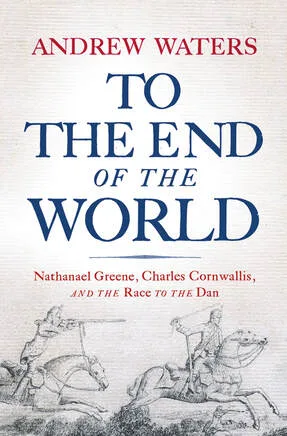
    To the End of the World: Nathanael Green, Charles Cornwallis and the Race to the Dan
    Andrew Waters (Yardley, Pa: Westholme, 2020)

    Image description
    “In a place like Salisbury,” writes Andrew Waters of the North Carolina town that witnessed the 1781 Race to the Dan, “you can live among its ghosts and still not know it’s there.” Enthusiasts know that this is true of many Revolutionary War sites, including some of real importance. Mr. Waters complains in his book To the End of the World: Nathanael Greene, Charles Cornwallis, and the Race to the Dan of the simplified understanding most Americans have of the Revolutionary War. “For most of us, the story of the American Revolution is of George Washington and the minutemen, Valley Forge and Yorktown.” In our Cliffs Notes version of history, many places, heroes, and even whole campaigns are left out.

    Like most of the war in the south, the Race to the Dan is overshadowed by Yorktown. The mere fact that George Washington was not a participant relegates the story to a second-tier status. The Race, however, holds unique challenges for the historian and the storyteller. It occurred over more than two hundred miles, depending on how you count it, rather than at one identifiable spot. Nathanael Greene’s genius is to be found in his mastery of logistics and strategy, which are subjects that make many people’s eyes glaze over. Though heroic and difficult, it was still a retreat and retreats don’t lend themselves to celebration. Its significance is not so much in what it achieved but rather in what it made possible, which requires detailed explanation.

    Consequently, the Race to the Dan has been given short shrift for more than two centuries. It is mentioned in the war’s histories, but almost never in detail. In writing this book, Mr. Waters was determined to correct that and he has succeeded. One can’t resist noting the appropriateness his name: the waterways of the Carolinas play a central role in the story. He makes plain from the beginning that the story is personal to him. He is a conservationist and doctoral candidate in South Carolina who has made a career of conserving the Palmetto State’s watersheds. “Rivers are my business,” he says at the very beginning of the book. He also plainly declares, “We all need heroes, and . . . Greene has become one of mine.”


    ...Continue to The Journal of the American Revolution.

    More from The 8th Virginia Regiment
  • Published on

    The Mighty Oaks of the Forest

    Picture
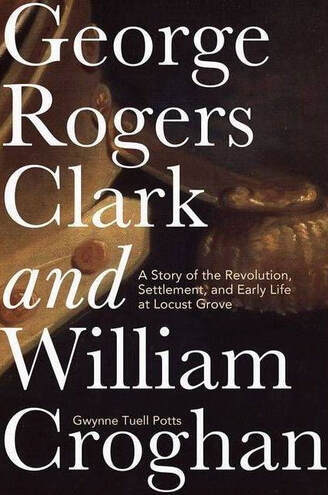
    George Rogers Clark & William Croghan by Gwynne Tuell Potts (Lexington: University Press of Kentucky, 2020)
    Picture
    “The phenomenon of fame confounds and fascinates, indiscriminately raising some to glory while consigning apparent equals to exile.” This is Gwynne Tuell Potts’s insight in her new book on George Rogers Clark and his brother-in-law, William Croghan. “In its most satirical form,” she continues, “fame dooms an occasional soul to both states.” Potts’s 300-page volume is an exploration of the vagaries of fame and fortune.

    George Rogers Clark was famous, once. He was a towering figure on the western front of the Revolutionary War. Potts quotes French Gen. Henri Victor Collot describing Clark as the person who had “gained from the natives almost the whole of that immense country which forms now the Western states.” Collot said Clark was “the rival, in short, of George Washington.” Clark’s reputation was diminished in his own lifetime and his fame has since waned. His story is not taught in most schools and his Virginia commission excludes him from the pantheon of well-known Continental generals.

    William Croghan has never been famous, but his life illustrates the aspirations and achievements of America’s early frontiersmen. He fought for national expansion and then played an important role in that expansion by moving to Kentucky and running the office that parceled out bounty land to veterans. This was a lucrative position. Croghan prospered and built a stately home, which he called Locust Grove.

    ...continue to The Journal of the American Revolution.

    More from The 8th Virginia Regiment
  • Published on

    A Portrait of John Cuppy

    Picture

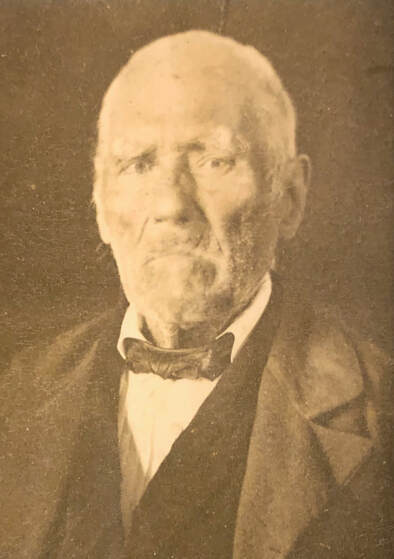
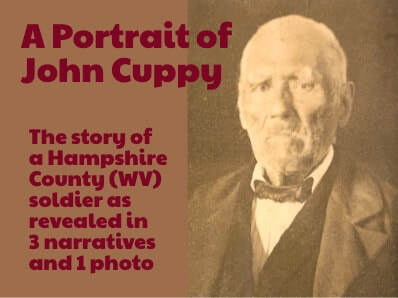
    Hampshire County's John Cuppy at the age of 99. (Museum of the American Revolution/Wisconsin Historical Society)

    The story behind the face in a very rare photograph of a Revolutionary War veteran.
    Most of the enlisted men of the Revolutionary War are faceless and forgotten—just names on lists. Biographies and painted portraits are honors that were reserved for officers. Even so, it is possible to trace the lives of some common soldiers using original sources. Many of them applied for pensions after 1818, which required them to provide (usually brief) narratives of their service. Some gave similar attestations when they applied for military bounty land. A small number left detailed accounts of their experiences in interviews, letters, or diaries. Finally, and very rarely, we have photographs taken in the last years of some veterans’ lives. Virginian John Cuppy may be the only Revolutionary War soldier to leave us an artifact in each of these categories.
    Cuppy was born near Morristown, New Jersey on March 11, 1761. While still an infant, he was brought to Hampshire County, Virginia by his German parents. Their new home was on the South Branch of the Potomac River near the town of Romney, which is now in West Virginia. About forty miles west of the Shenandoah Valley, this was the very edged of settled Virginia territory. John was just fourteen years old when the war began—too young to be a candidate for service when Hampshire was directed to raise a rifle company in July of 1775. He was still too young when Dutch-descended Capt. Abel Westfall recruited a company there that winter for Col. Peter Muhlenberg’s new 8thVirginia Regiment.

    More from The 8th Virginia Regiment

    Picture
    Picture
    Picture
  • Published on

    From Canada to Florida? Yes, and Maybe.

    Image description
    As an old man, Daniel Anderson wanted to spend his last years in prayer. He said he would “ever pray for the success and prosperity of his native state and country.” He would pray “to secure the liberties of which in his younger days he voluntarily encountered the perils of war and shed his blood in her service.” These were not platitudes. The bloodshed was real and there is no reason to doubt that his prayers were just as authentic. He was a humbled man. He was disabled by his war wounds and obliged to use the few resources he had caring for his wife and three physically and mentally handicapped adult children.
     
    Surprisingly, the unique contours of Anderson’s war service resolve a persistent question.  The men of the 8th Virginia fought almost everywhere during the Revolution. I have sometimes described them as having served “from New York to Georgia,” but wished I could say “from Canada to Florida.” The regiment didn't range that far, but I have long suspected that some of its men did over the course of the war.
     
    The Florida question remains unsolved. In 1776, Maj. Gen. Charles Lee took the regiment south to  attack the Tory haven at St. Augustine. They made it to  Sunbury, Georgia before the expedition was called off. The malaria-stick regiment was posted there at Fort Morris, on the Medway River, for some time. Did they ever cross the St. Mary’s River into what was then the colony of East Florida? 
     
    The governor of Florida reported in October of 1776 that “depredations were made by the Rebels as far [across the border] as Saint John River,” forcing him to commandeer a boat for defense. The main body of the 8th Virginia was probably gone by then, but had any of them gone scouting across the river before the raid? Quite a few men also remained behind to recover from sickness and some--like William Gillihan and Collin Mitchum--transferred to the 5th South Carolina Regiment. Did any 8th Virginia men participate in the foray to the St. John’s River that summer or fall? Probably. Maybe. We may never know.
    Image description
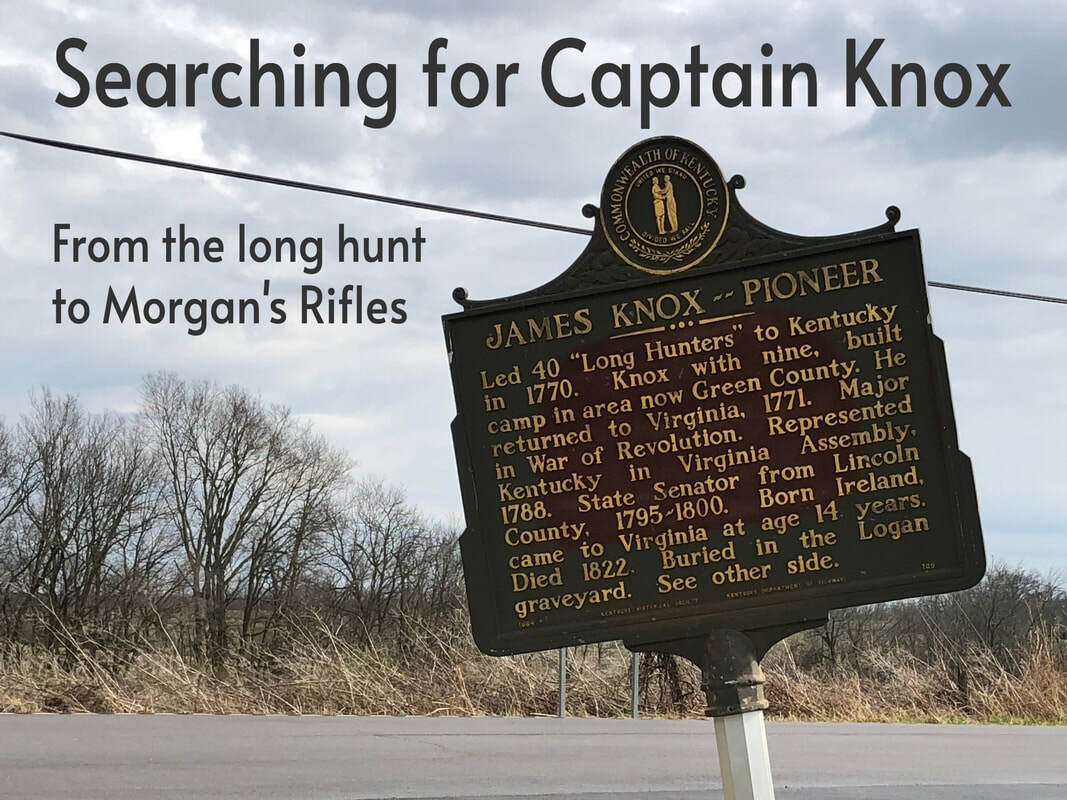
    The Canada question, on the other hand, is now settled. The very first companies of Congress-authorized “Continental” troops included two companies of riflemen raised in the Shenandoah Valley in July of 1775. I have hoped to find just one 8th Virginia soldier who was in Capt. Daniel Morgan’s Frederick County company. But was there one? Yes. Daniel Anderson enlisted in Morgan’s rifle company in July of 1775 and was with him at Boston and the attack on Quebec. He was wounded at Quebec in the chest and the right arm, captured, and held prisoner for months. He was eventually exchanged and then discharged at Elizabeth, New Jersey. 
     
    In February 1777 he enlisted again under Morgan, who was now the colonel of the 11th Virginia. There is no record of Anderson in the 11th Virginia rolls, however, because he was promoted to sergeant and transferred into Capt. Thomas Berry’s company of the 8th Virginia. Anderson was with the 8th through Germantown, Whitemarsh, Valley Forge, and Monmouth. He was discharged on February 2, 1779. He then received a state commission as a lieutenant in the Western Battalion of Virginia state troops (state regulars—not militia and not Continentals), probably fighting Indians as far west as Indiana under Col. Joseph Crockett.  Other 8th Virginia men were on the frontier as well, serving as far west as Illinois. After the war, Anderson settled in Shenandoah County, Virginia and lived the rest of his life there.
     
    So what can we claim for the length and breadth of the regiment’s service? “From Canada to Florida” is still a stretch beyond what we can prove. To the Florida line? Still too far. Until we can prove more, we’ll have to settle for “From Canada nearly to Florida.” Can we also say, “From the Atlantic to the Mississippi?” Not yet, but it’s entirely plausible. Regardless, the range of the 8th Virginia’s men is impressive. Almost all of that movement was covered on foot.

    In retirement, Daniel Anderson’s wounds kept him from performing hard labor—even the work of a subsistence farmer. Still, he somehow had to support his wife and three disabled children. “I am by occupation a farmer,” he said in 1820, “but owing to wounds and age I am unable to follow it. I have my wife living with me, aged 57 years; 1 daughter, aged 23 years, a cripple; and two dumb children, both simple, one a girl aged 14 the other a boy aged 27. The reason for his older daughter’s disability was her being “so much afflicted with Cancers that she has not been out of the house for 16 months.” The word "dumb" in those days still meant "mute." "Simple" meant intellectually disabled.

    There were no federal pensions yet, but he applied to the Virginia legislature for pension on the basis of his own service-connected disability. He made his case before a judge. His conclusion was recorded by the court in the third person: “The prayer of your petitioner therefore is that your honorable body will pass an Act allowing such pension as in your wisdom you may deem sufficient to enable him to end his few remaining days in praying, as he will ever pray for the success and prosperity of his native state and country to secure the liberties of which in his younger days he voluntarily encountered the perils of war and shed his blood in her service.”

    The date of his petition isn’t shown, but it was supported by notes from doctors and a letter from Daniel Morgan in 1796: “The bearer of this Dan’l. Anderson Inlisted a soldier with me in the year 1775 march’d with me to Boston & from thence to Quebec – was with me in the storm of the garison, on the last Day of Dec’r. when Gen;l Montgomery fell. He Rec’d two wounds in the action, one in the Breast & one in his Arm which Doctor senseny & Doctor Balwin certyfies that said wounds has so disabled him as to Rendered unfit for Hard Labour & thinks Him a proper object for a Pension.”

    "Doctor Balwin" was Cornelius Baldwin, the former surgeon of the 8th Virginia. Anderson received his state pension and later received federal support as well. He died on November 6, 1840.

    ​UPDATE: Thanks to Carolyn Brown Butler who alerted us to the pension of her ancestor William Smith. Smith, after his time in the 8th, served under George Rogers Clark and (former 8th VA captain) George Slaughter. He was sent by Clark as an express rider to the Iron Banks, six miles below the mouth of the Ohio on the Mississippi. So now we can say that at least one 8th Virginia man served from "the Atlantic to the Mississippi."

    More from The 8th Virginia Regiment
    Picture
    Picture
    Picture
  • Published on

    Shenandoah Martyr: Richard Campbell at War

    Picture

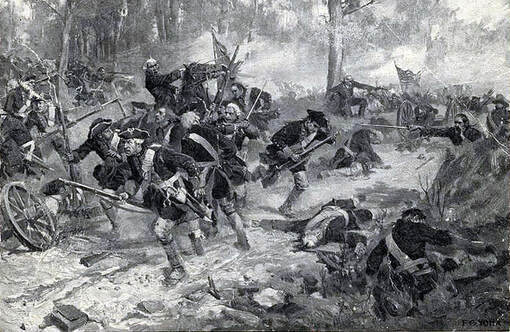
    The Battle of Eutaw Springs, by F.C. Yohn.

    Reviving the memory of a Revolutionary War hero from Woodstock, Virginia.
    There is no dignity in being forgotten. A case in point is Virginia Lt. Col. Richard Campbell, a Continental officer who died bravely for his country but lies today in an unmarked grave far from his home. “Killed near the end of the battle at Eutaw Springs,” wrote the authors of a 2017 study of that battle, “he is virtually unknown today.” In his own day, however, Nathanael Greene called him a “brave, active, and intrepid Soldier.” Light Horse Harry said he was an “excellent officer” who was “highly respected and beloved.” In 1832 one of his soldiers still remembered him as “the brave Col. Campbell.” Dick Campbell, as he was known, deserves to be remembered.
    Little is known of his early life. Historian Louise Phelps Kellogg asserted a century ago that he was “a distant relative of the Campbell family of southwest Virginia.” This would tie him to militia Gen. William Campbell, a leader at the Battle of King’s Mountain. He was evidently born in Virginia about 1730 and raised in Dunmore (now Shenandoah) County, where he was appointed a sheriff’s deputy in 1772 and reappointed in 1774. The Shenandoah Valley was culturally distinct from the eastern parts of Virginia. Many of Campbell’s neighbors were Germans who had migrated from Pennsylvania.
    As war approached, he joined the First Independent Company of Dunmore. News of the Virginia Powder Alarm sent the company parading out of the county seat at Woodstock toward Williamsburg. When word of a peaceful settlement arrived they returned and held a barbeque. In November 1775, Campbell was tasked with conducting a census of his part of the county, reporting for his own household ten white and two black residents. Notably, his was the only household out of seventy-six that reported black, likely enslaved, members.
    Picture

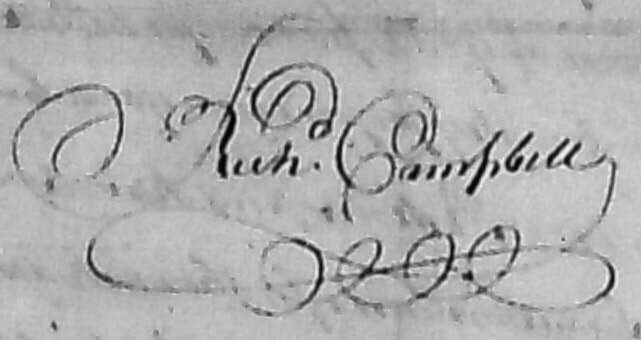
    Richard Campbell's signature from a January, 1777 letter.

    More from The 8th Virginia Regiment
    Picture
    Picture
    Picture