• Published on

    Dunmore County Prepares for Revolution

    Picture
    When Virginia’s legislature voted to declare a day of fasting, humiliation, and prayer to support Boston in 1774, the governor shut it down. This began when unofficial organizations began organizing to enforce boycotts and (later) prepare for war without being outwardly disloyal to the King. With the House of Burgesses dissolved, most members reconvened as (and were reelected to) the “Virginia Convention.” Peter Muhlenberg and Jonathan Clark represented Shenandoah County in the convention. Shenandoah County was then named “Dunmore County,” after John Murray, the Earl of Dunmore (the governor). Muhlenberg, the Pennsylvania- German Anglican priest, and Clark, the deputy county clerk, were elected to the second, third, and fourth Conventions.

    At home, a County Committee was formed to enforce the Virginia Association, an agreement to boycott British goods. In addition to being parish rector and a delegate to the Convention, Muhlenberg was chairman of the committee. Other members of the Dunmore Committee included Francis Slaughter, Abraham Bird, Taverner Beale, John Tipton, and Abraham Bowman. Taverner Beale’s farm, “Mount Airy remains intact two miles south of Mount Jackson.

    As things became more serious, more than 80 young men from Dunmore County formed The First Inde- pendent Company of Dunmore, a volunteer military organization separate from the county militia (technically still under the governor’s control). Taverner Beale was probably captain of the Dunmore Volunteers, with Jonathan Clark as his lieutenant. Abraham Bowman, Richard Campbell, John Steed, Matthias Hite, Leonard Cooper, Philip Huffman, Jacob Parrot, and Clark’s younger brother John also belonged. These men would later be officers in Colonel Muhlenberg’s 8th Virginia Regiment.

    More from The 8th Virginia Regiment

  • Published on

    The Birth of the Longrifle: Martin Meylin's Gun Shop

    Picture

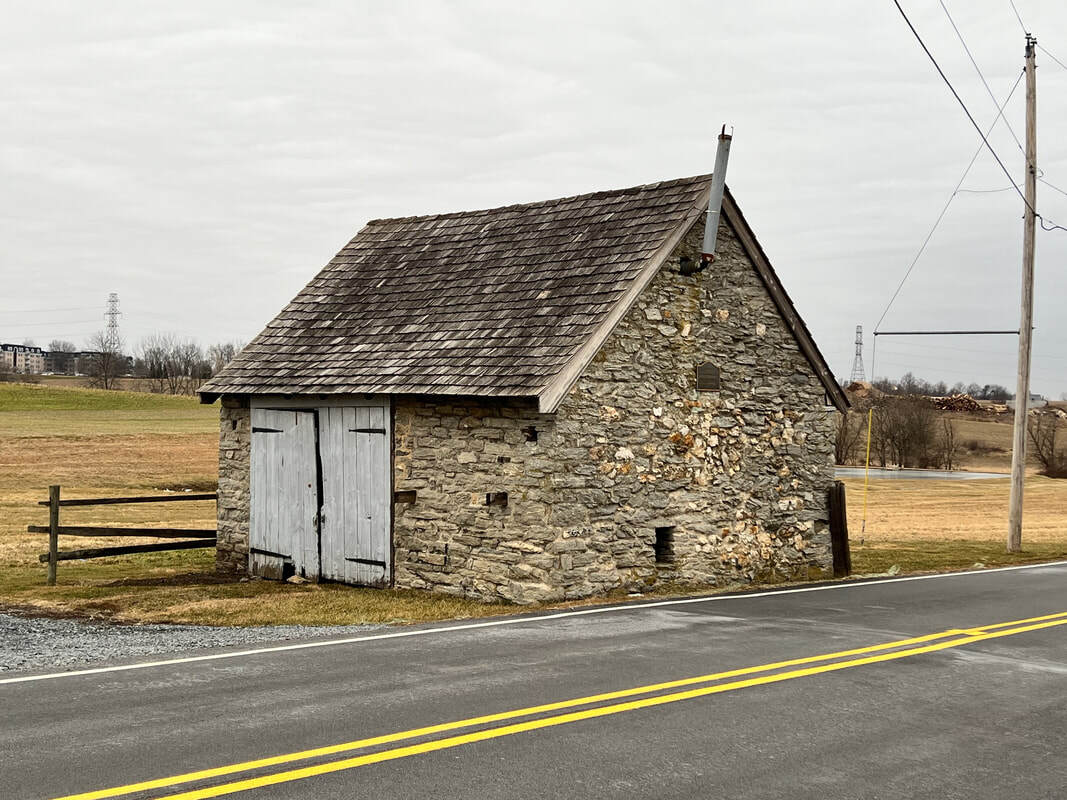
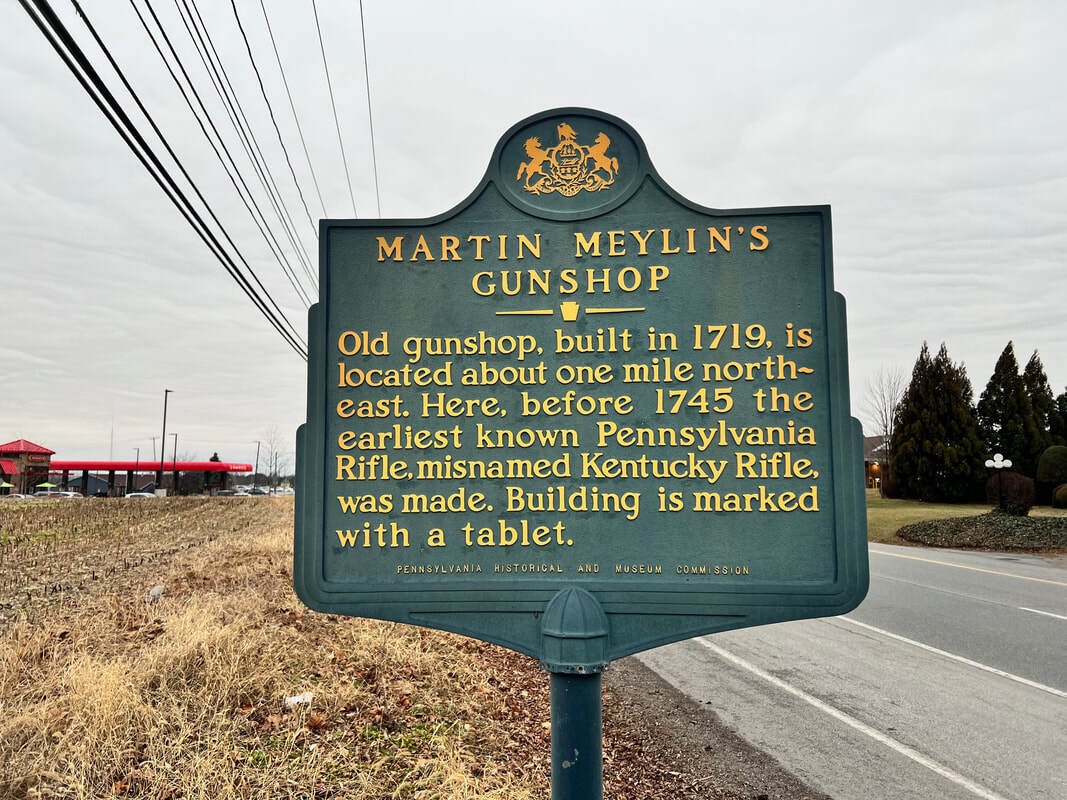
    Meylin's gun shop in West Lampeter, Lancaster County, was built about 1718.

    All or nearly all the 15 infantry regiments raised by the Old Dominion in 1775, 1776, and 1777 had two or more companies of riflemen. Their weapon is sometimes called the “Kentucky Rifle,” but because the long-barreled design originated in Pennsylvania, "Pennsylvania Rifle" is the better term. The Metropolitan Museum of Art in New York diplomatically calls it the "American Longrifle." It asserts in a display that the weapon was “the first distinctly American art form created by European settlers in North America.” Many of the guns are indeed works of art.
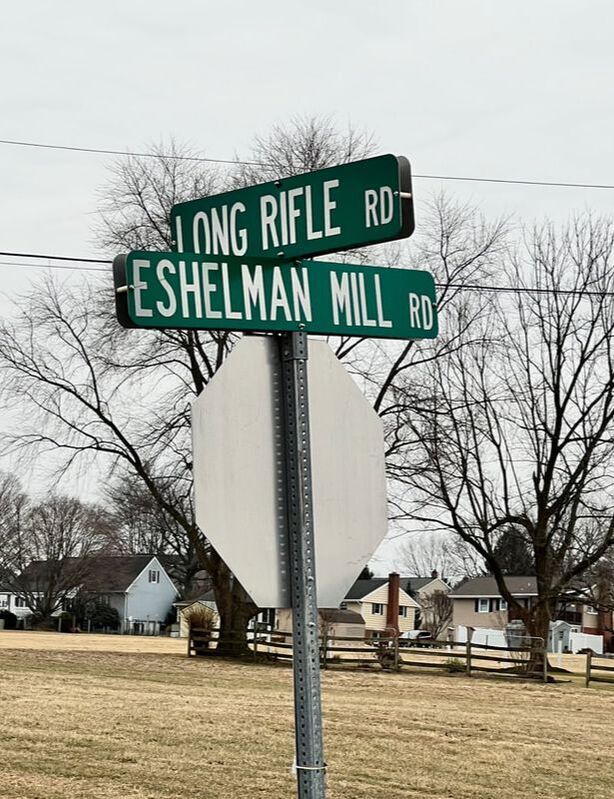
    Tradition, supported but not proved by documentary evidence, holds that Martin Meylin of Lancaster County, Pennsylvania, made the first longrifle. He was an immigrant from Switzerland and may have produced an early version of his design in Germantown, Pennsylvania, in 1705 before he built his gun shop or “boring mill” in West Lampeter Township in 1719. An 1844 history records matter-of-factly that Meylin was “the first gun-smith within the limits of Lancaster County; as early as 1719, he erected a boring-mill, on what is known as Meylin’s run.” The building still stands at the intersection of Eshelman Mill Road and Long Rifle Road. There is no archeological evidence to prove or disprove that rifles were made there, and skeptics suspect the site was merely a blacksmith shop. However, two early rifles with “MM” engraved by their maker seem to show, but again do not prove, that Meylin was the earliest creator of the familiar firearm. Even if entirely true, “inventor” might be too strong of a term for him. The longrifle evolved from German hunting guns, which made a separate leap over the Atlantic in 1776 in the hands of Hessian and Anspacher Jägers. The primary innovation was the long barrel, which made the weapons very accurate.
    Picture

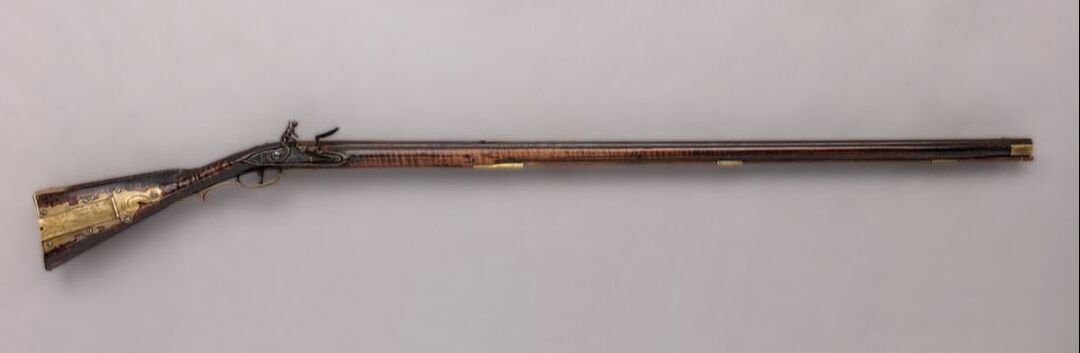
    An ornate Pennsylvania rifle probably made by George Schreyer Sr. (1739–1819) in York County, Pennsylvania ca. 1770. (Metropolitan Museum of Art)

    Though historians debate Meylin’s role, Lancaster County’s central place in the development of the longrifle is undisputed. It was the earliest and most prominent center of rifle production in colonial times. Adjacent York, Berks, and Lebanon counties also had many gunsmiths, and the craft followed settlement on the western and southern path on the Great Philadelphia Wagon Road. By the time of the Revolution, craftsmen made rifles in Shepherdstown, Winchester, Staunton, and other Shenandoah Valley towns. The unique styles of different counties and different artisans can still be discerned by knowledgeable observers. Rifles were essential on the frontier for self-defense, subsistence hunting, and for hunting expeditions supporting the robust transatlantic deerskin trade. By the 1770s, western men in Virginia, Maryland, and Pennsylvania had an established reputation for expert marksmanship.
    Pennsylvania rifles were used infrequently in the French and Indian War. They demonstrated their military value in Lord Dunmore’s War, the last colonial Indian war, fought in 1774. Virginia’s western militia bested a large Indian army on the banks of the Ohio River in a battle that only barely resembled European tactics. When the Revolution broke out, Virginia’s first contribution to the Continental Army was two companies of riflemen from Berkeley and Frederick counties, led by Hugh Stephenson and Daniel Morgan. When the Old Dominion began to form its own full-time regiments, it incorporated rifle companies in a way that mimicked British use of grenadier and light infantry companies. The rifle companies were recruited in the western counties to “act as light infantry” alongside musket companies from the east side of the Blue Ridge. ​
    Picture

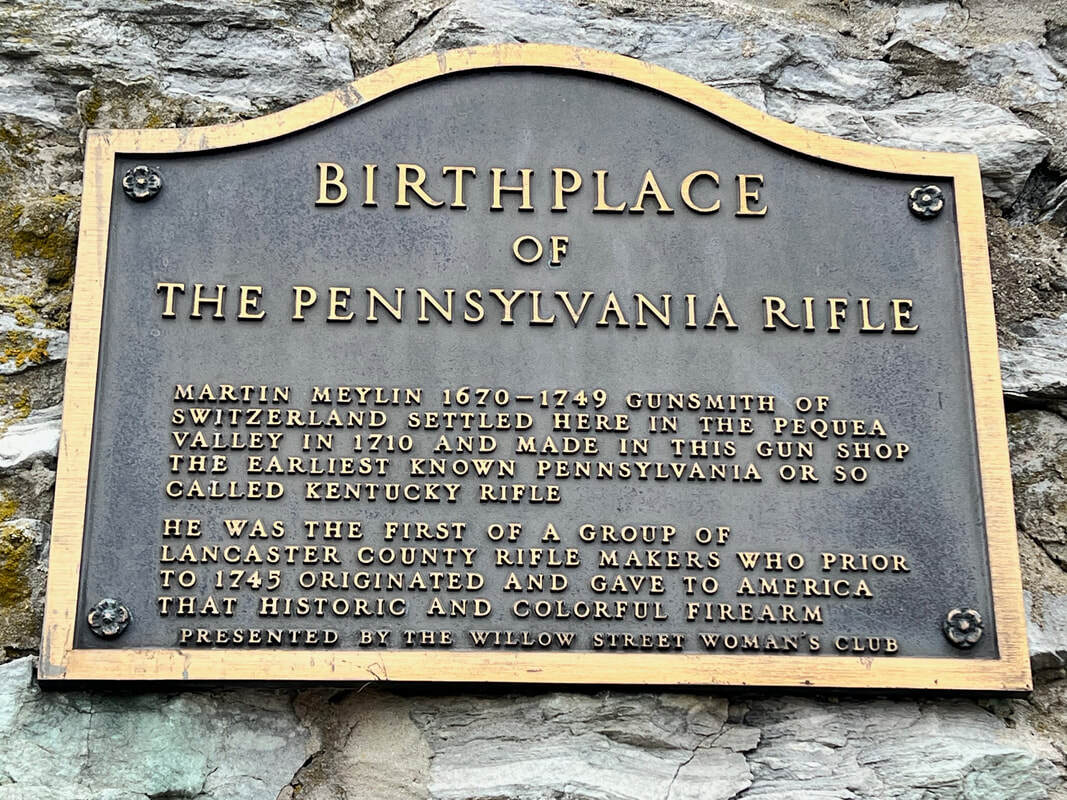
    Like the nearby state historical marker, a plaque on the building is prickly about the "so-called Kentucky Rifle." The longrifle was developed in Pennsylvania two or three decades before the earliest white settlement of Kentucky.

    Virginia’s regiments of “regulars” (full-time troops) began as provincial (or “state” after July 4, 1776) before joining the Continental Army. The 1st and 2nd regiments were created with two rifle companies each. The 3rd, 4th, 5th, 6th, and 7th each had three. The 9th, originally formed for service on Virginia’s eastern shore, had two. Virginia does not seem to have specifically ordered rifle companies for the six newest regiments, but the 11th, 12th, and 13th certainly included riflemen, and the 10th, 14th, and 15th may have as well. Uniquely, the 8th Virginia was raised entirely in the west and carried only rifles.
    Picture
    It took some time for American commanders to learn how to effectively incorporate rifles into their tactical playbooks. Slow-loading and unable to hold bayonets, they were suited only for skirmishing and harassing from a distance. In close combat they became little more than unwieldy clubs after firing one round. This was tragically illustrated in the opening minutes of the Battle of Princeton. In addition to the 1775 independent companies, Moses Rawlings, Abraham Kirkpatrick, and William Darke, led effective early rifle units in different capacities. Peter Muhlenberg, Colonel of the 8th Virginia, grew frustrated with the high-maintenance weapons and asked that his men be issued muskets. Daniel Morgan, on the other hand, paired himself with Henry Dearborn’s musket-carrying light infantry to form a very effective combined-arms force during the Saratoga campaign.
    Rifles played an important role in the Revolution and the conflicts that followed. They were centrally important in Andrew Jackson’s lopsided 1815 victory at the Battle of New Orleans. Many rifles for military use were churned out by gun shops with little ornamentation, but the best ones were custom-made personal possessions that were often highly ornate.
    Today, 18th century long rifles are high-prized collectors’ items. Notable collections can be viewed at the Metropolitan Museum of Art in New York, the Landis Valley Museum in Pennsylvania, and the Museum of Southern Decorative Arts in North Carolina. Like much that is important in early American history, the longrifle’s story began in Lancaster County, perhaps in Martin Meylin’s gun shop.
    Picture

    More from The 8th Virginia Regiment

  • Published on

    The Other 8th Virginia Regiments

    Image description
    The designation “8th Virginia Regiment” was used three times in two wars for non-militia units: twice in the Revolution and once in the Civil War. The existence of three regiments of the same name sometimes causes confusion for researchers and genealogists. This confusion is exacerbated by the fact that two of them were recruited in overlapping territory and the third was recruited nearby. This post is intended to make it easy to distinguish among them, and to provide a little bit of service history.

    In the French and Indian War, Virginia had one "Virginia Regiment," notably commanded for part of the war by George Washington. The was (briefly) a 2nd Virginia Regiment, as well. In the Revolution, the Old Dominion had 15 numbered regiments. In the Civil War it had 64.

    The Original 8th Virginia, 1776-1778

    Picture

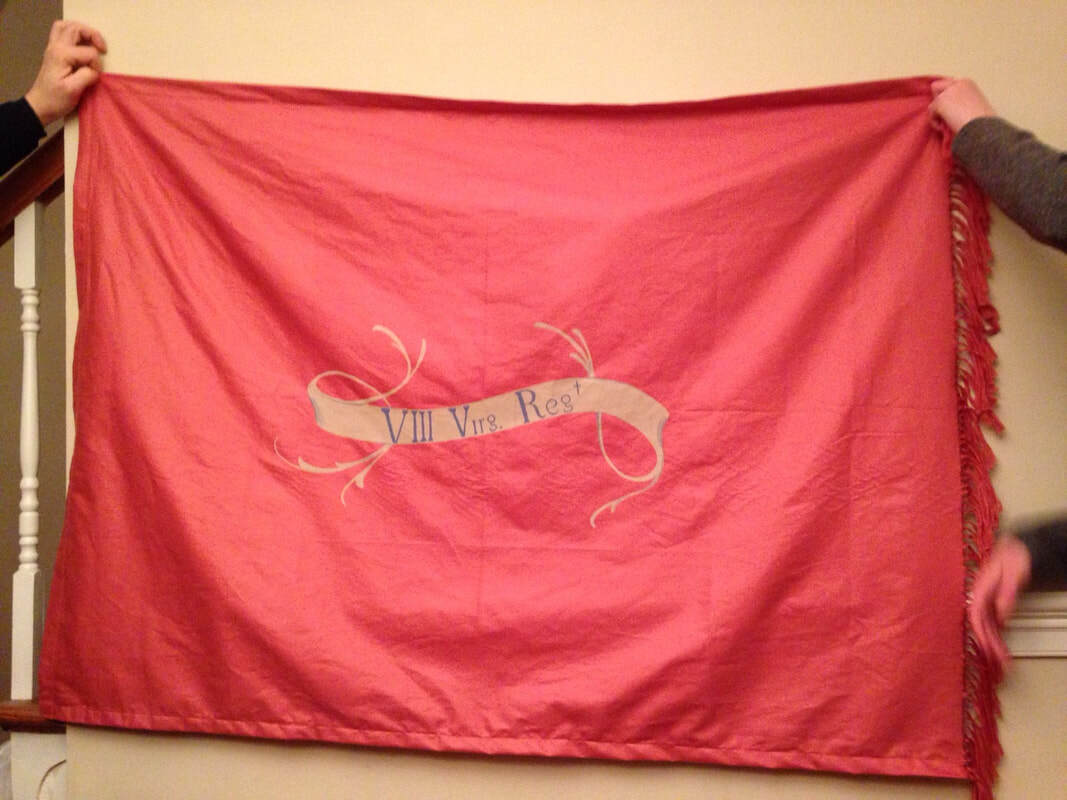
    A recreated "grand division banner" of the 8th Virginia. The original survives in a private collection. This was not the regimental banner, but rather one of a pair of flags used for tactical direction.

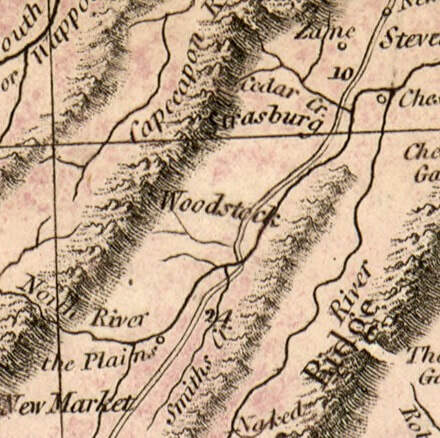
    This website is dedicated to the history of the original 8th Virginia Regiment. It was authorized in the Virginia Convention’s second authorization of troops in December of 1775, recruited over the winter, and took the field in March and April of 1776.  The 8th Virginia was commanded initially by Col. Peter Muhlenberg, Lt. Col. Abraham Bowman, and Maj. Peter Helphenstine. These field officers were from Woodstock, Strasburg, and Winchester, respectively. Bowman succeeded Muhlenberg as colonel when the latter became a general early in 1777.  The regiment originally had ten companies. For more, see the the "Soldiers" page on this website.
    Most of the men in the original regiment signed up for two-year enlistments that ended in the spring of 1778 at Valley Forge. That, combined with casualties and weak recruiting, left the regiment significantly understrength when it marched out of Valley Forge. At the Battle of Monmouth, it was provisionally combined with the 4th and 12th regiments, which were also understrength, as the “4th-8th-12th Virginia Regiment.” The 4th, the 8th, and the 12th had all served together in Charles Scott’s brigade since the spring of 1777.

    The “New” 8th Virginia of 1778-1779

    Picture

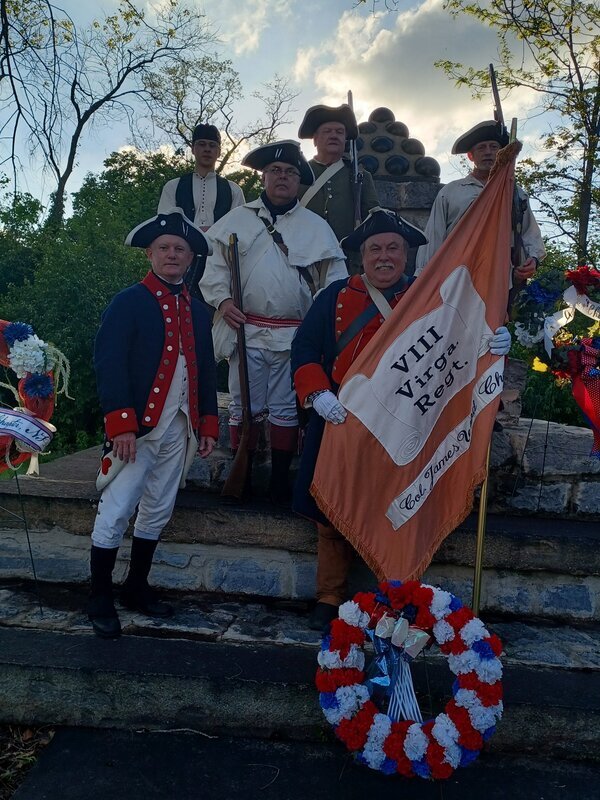
    Members of the James Wood II Chapter, Sons of the American Revolution, hold a modern flag honoring Col. Wood's leadership of the "new" 8th Virginia Regiment, originally the 12th Virginia Regiment. This photo was taken at the grave of Maj. Gen. Adam Stephen, who commanded both regiments in 1777.

    On September 14, 1778, the Virginia line was consolidated from 15 regiments down to 11. As part of this consolidation, Bowman’s 8th Virginia was folded into the 4th Virginia under Col. John Neville and Bowman was released as a supernumerary officer. The original 8th Virginia ceased to exist and the 12th Virginia was renumbered to be the “new” 8th Virginia.

    ​The 12th Virginia had been authorized by the three-month old Virginia General Assembly in October of 1776 and recruited over the coming months, in part by regimenting formerly independent frontier companies. The original field officers were Col. James Wood of Winchester, Lt. Col. John Neville of Frederick County and West Augusta, and Maj. Charles Simms of Prince William County and later Fairfax County. Its captains were Andrew Waggoner (Augusta County), Benjamin Casey (Hampshire County), Stephen Ashby (Hampshire County), Michael Bowyer (West Augusta District), Matthew Arbuckle (western Botetourt County), William McKee (Rockbridge County), Jonathan Langdon (Dunmore, later known as Shenandoah County), Joseph Mitchell, Rowland Madison, and Thomas Bowyer (Botetourt County). All of these counties except Botetourt had raised companies for the original 8th Virginia.
    In October of 1777, after Germantown but before the Valley Forge encampment, George Slaughter was promoted to become the new major of the 12th Virginia. He had, up until that time, been a captain in the original 8th Virginia. He resigned in November to deal with a family emergency. In January, he was succeeded by Jonathan Clark, who likewise had until that time been a captain in the original 8th Virginia.
     
    When the 12th was redesignated in September of 1778, it’s field officers were Col. John Neville, Lt. Col. Charles Fleming, and Maj. Jonathan Clark.  It continued in service until 1779 when the line was reorganized again.

    The Confederate 8th Virginia 

    Image description
    Another 8th Virginia Regiment was authorized by the Governor of Virginia in May of 1861 for service in the Confederate Army. It was led by Col. Eppa Hunton, Lt. Col. Charles Tebbs, and Maj. Norborne Berkeley. Major Berkeley was named in honor of Gov. Norborne Berkeley (1718-1770), a popular late-colonial governor. Berkeley, the regiment's best-remembered commander, was a graduate of VMI from Aldie, Loudoun County. Three of his brothers also served as officers in the regiment, leading it to sometimes be called the “Berkeley Regiment.” (It did not recruit in Berkeley County (named for the governor), as is sometimes assumed.) It was also called the “Bloody Eighth” because of its hard service.
    The Civil War 8th Virginia’s original companies and captains were Company A, the “Hillsboro Border Guards,” raised in Loudoun County and led by N.R. Heaton; Company B, the “Piedmont Rifles,” raised at Rectortown in Fauquier County and led by Richard Carter; Company C, the “Evergreen Guards,” raised in Prince William County and led by Edmund Berkeley; Company D, “Champe’s Rifles,” raised at Haymarket in Prince William County and led by William Berkeley; Company E, “Hampton’s Company,” raised at Philomont in Loudoun County and led by Mandley Hampton; Company F, the “Blue Mountain Boys,” raised at Bloomfield in Loudoun County and led by Alexander Grayson; G Company, “Thrift’s Company,” recruited at Dranesville in Fairfax County and led by James Thrift; H Company, the “Potomac Grays,” raised at Leesburg in Loudoun County and led by Capt. Morris Wampler; Company I, “Simpson’s Company,” raised at Mount Gilead and North Fork in Loudoun County and led by James Simpson, and Company K, “Scott’s Company,” raised in Fauquier County and led by Robert Scott.
    Picture

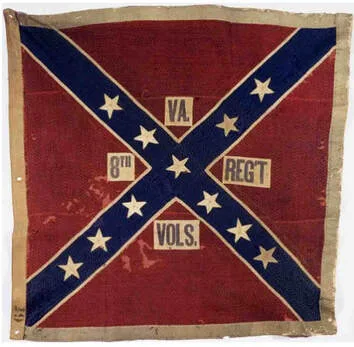
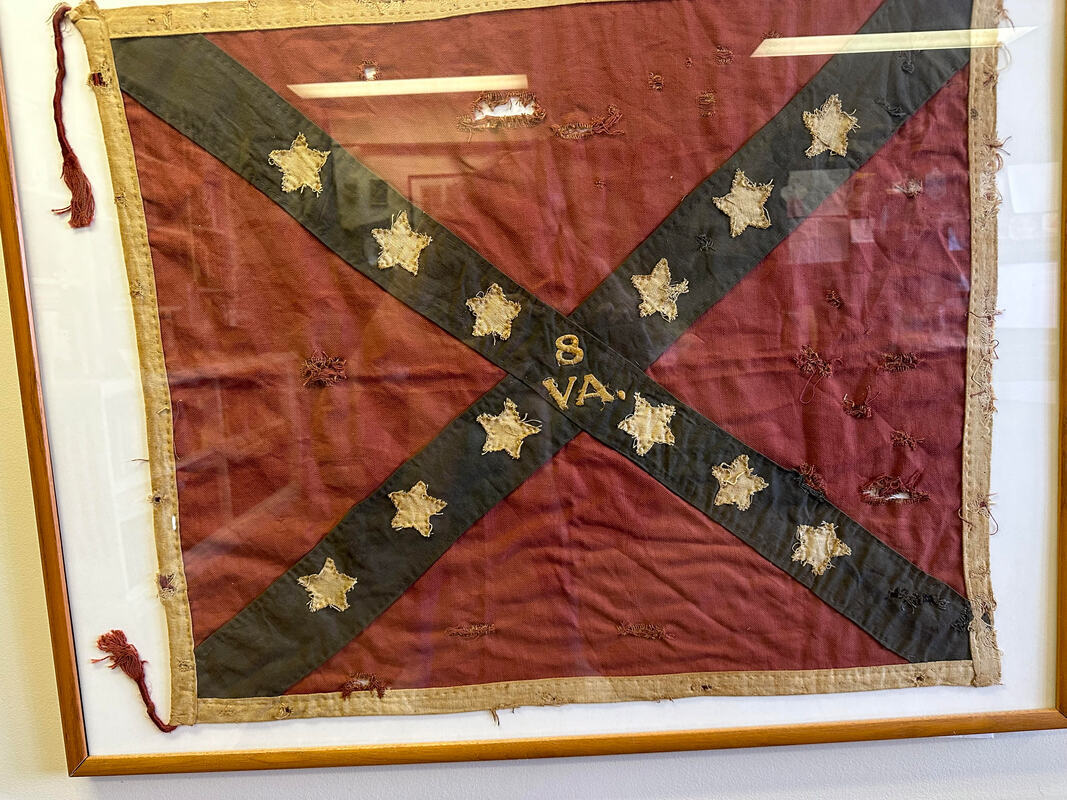
    The origin of this 8th Virginia flag has not be ascertained. It is visibly old, but may be a recreation. It is owned by a collector.

    The regiment fought at First Manassas, Ball’s Bluff, the Peninsula Campaign, Gaines’ Mill, and Second Manassas. It suffered a 70 or 80 percent casualties at Gettysburg. Hunton was promoted to general in August of 1863, after which the regiment was led by Col. Norborne Berkeley, Lt. Col. William Berkeley, and Maj. Charles Berkeley, leading to the “Berkeley Regiment” nickname. After Gettysburg it participated in the Overland Campaign, the Richmond-Petersburg Campaign, and the Appomattox Campaign. Most of the surviving men were either killed or surrendered at the Battle of Sailor's Creek, shortly before the surrender at Appomattox. A full service record can be found here.
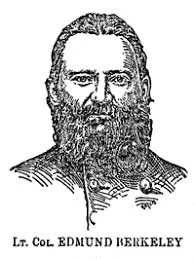
    In 1905, Edmund Berkeley wrote a poem to welcome Union veterans to a reunion at the Manassas Battlefield that is notable for the grace shown to men who had fired at him on that very field. It was published by the Society of the Army of the Potomac in the report on its fortieth reunion.

    O Lord of love, bless thou to-day
    This meeting of the Blue and Gray.
    Look down, from Heaven, upon these ones,
    Their country's tried and faithful sons.
    As brothers, side by side, they stand,
    Owning one country and one land.
    Here, half a century ago,
    Our brothers' blood with ours did flow;
    No scanty stream, no stinted tide,
    These fields it stained from side to side,
    And now to us is proved most plain,
    No single drop was shed in vain;
    But did its destined purpose fill
    Of carrying out our Master's will,
    Who did decree, troubles should cease
    And his chosen land have peace;
    And to achieve this glorious end
    We should four years in conflict spend;
    Which done the world would plainly see
    Both sides had won a victory.
    And then this reunited land
    In the first place would ever stand
    Of all the nations, far and near,
    Or East or Western hemisphere.
    Brothers, to-day in love we've met,
    Let us all bitterness forget,
    And with true love and friendship clasp
    Each worthy hand in fervent grasp
    And in remembrance of this day
    Let one and all devoutly pray:
    That when our earthly course is run
    And we, our final victory won,
    Together we'll pass to that blessed shore
    That ne'er has heard the cannon's roar;
    And where our angel comrades stand
    To welcome us to Heaven's bright strand.
  • Published on

    Root Hog or Die!

    Picture
    The Battle of Musgrove's Mill, 1780
    John Buchanan (Westholme, 2022)
    British victory in the Revolution required one thing above all: the ability of American Loyalists to retake and hold the civil and military functions of government. Then as now, occupying armies are expensive and cannot stay forever. In this light, a battle between Tories and Patriots involving no Redcoats, Hessians, or even Continentals, towers in importance — not because of casualty counts or territory gained or lost, but as a test of the basic requirement for ultimate British success. By 1780, the British had basically given up on holding the North. With a negotiated settlement increasingly likely, what mattered now was demonstrating civil and military control of the southern colonies. The British knew that holding two or three coastal cities wasn’t going to cut it. They had to control the backcountry.
    Though still insufficiently covered in classrooms, the Battle of Kings Mountain is recognized as the key event in the demonstration of popular southern refusal to submit to Loyalist rule. Even less well-remembered is the smaller Battle of Musgrove’s Mill, without which there may have been no Kings Mountain. It was a little encounter in which just 200 Patriot militiamen faced off against 264 Loyalist regulars and militia. Though small, it sent a strong signal that backcountry Americans simply would not be ruled any longer by a foreign king.

    Giving such small battles their due is the purpose of Westholme Publishing’s “Small Battles” series. The Battle of Musgrove’s Mill, 1780 comes from the pen of John Buchanan, the undisputed dean of southern Revolutionary War history. Now in his 90s, Buchanan writes as well as ever. In fewer than a hundred pages, he puts the story in context; explains the British, Tory, Indian, and Patriot perspectives; tells us about the key commanders on both sides; narrates the battle; and tells us why it matters. That is a lot to put into eighty-eight pages of text, but he has done it masterfully.

    More from The 8th Virginia Regiment

  • Published on

    The Stamp Act and Captain Berry

    Picture

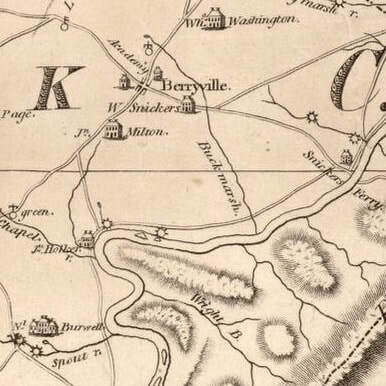
    An imprecise 19th century map shows Berryville and the Shenandoah River. Buck Marsh Creek ran through Thomas Berry's property.

    ​When future captain Thomas Berry bid on two lots of Shenandoah Valley land in 1774, it was the end of a sad story that had begun with the Stamp Act a decade before. The seller, George Mercer, had been one of Virginia’s leading citizens. Now he was bankrupt and living in exile.
     
    Mercer had served in important civil and military positions, often with George Washington. He was one of Washington’s lieutenants at Fort Necessity, where he was wounded, and commanded the short-lived 2nd Virginia Regiment in the French and Indian War. He was with Washington in the Forbes expedition to take Fort Du Quesne in 1758. In 1761 he and Washington successfully ran together for Frederick County’s two seats in the House of Burgesses.
    At the peak of his career, Mercer was selected by the Ohio Company of land speculators to represent their interests in London. The hated 1765 Stamp Act was enacted by Parliament while he was traveling. Not fully aware of sentiments at home, he accepted an appointment as Stamp Master for Virginia. He was overtaken by a mob and forced to resign when he returned to Virginia. Though the cheering crowd carried him out of the capitol in Williamsburg in celebration, Mercer soon left the colony for good.
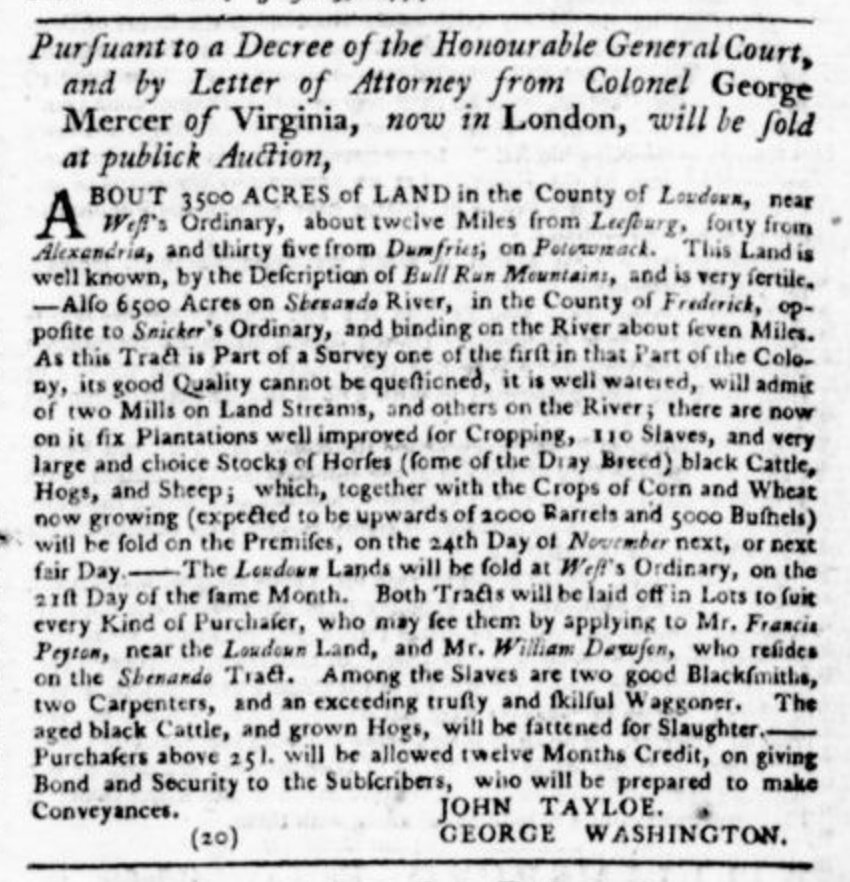
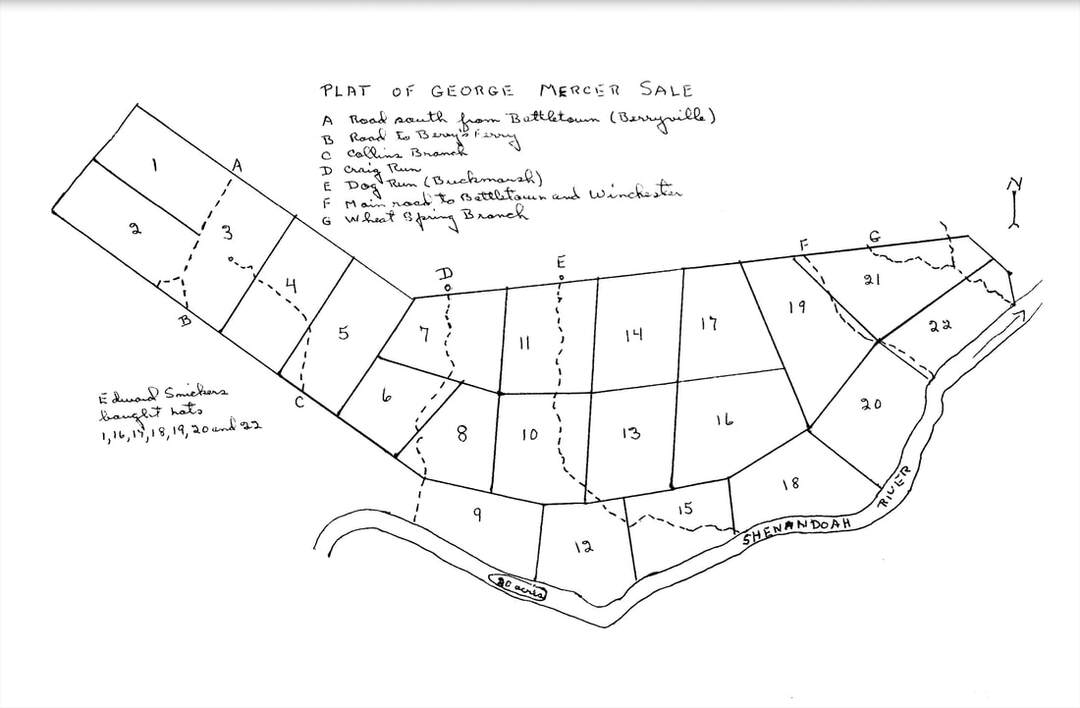
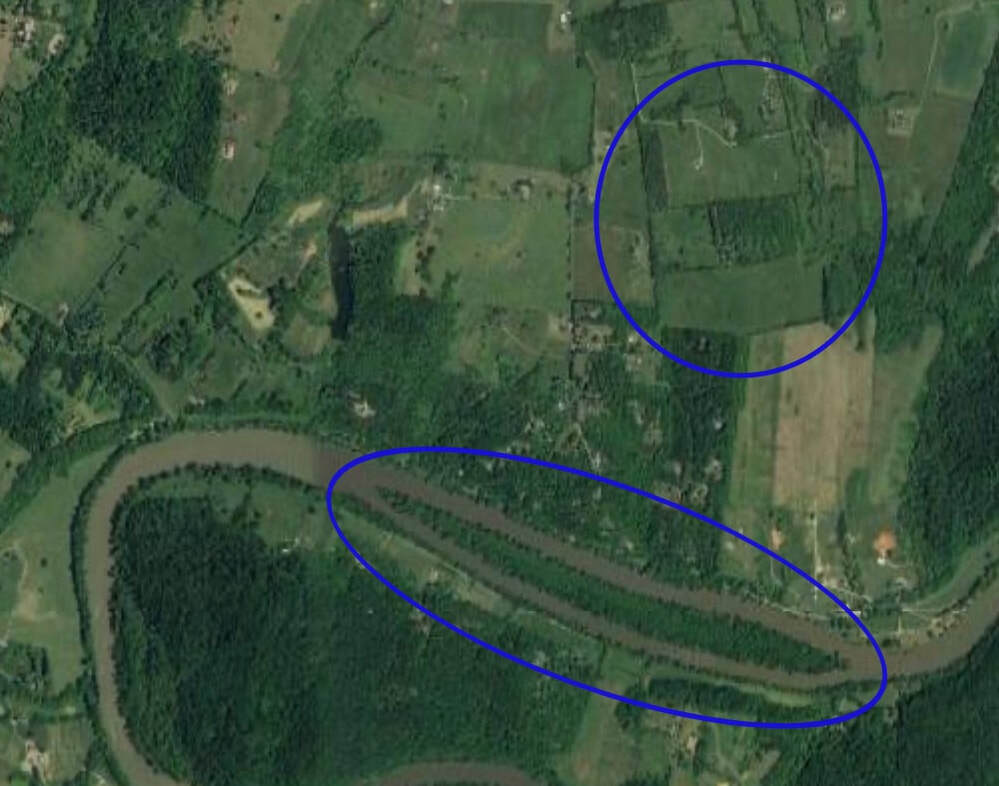
    The financial consequences of his exile eventually resulted in his mortgaging and then remortgaging his properties until he was ruined. He wrote to Washington, his cousin George Mason, and John Tayloe asking them to oversee the sale of his properties for him. The task fell to Washington. A large tract in what is now Clarke County was divided into lots by Francis Peyton and auctioned by Washington in 1774. Benjamin and Thomas Berry were among the bidders. Benjamin, who had more resources, acquired some prime riverfront land. Thomas acquired an inland lot but made up for it with the addition of a 20-acre island lot.
    Picture

    The auction notice in Purdie & Dixon's Virginia Gazette.

    ​Less than two years later, the Frederick Committee of Safety chose Thomas to lead a new company of Provincial soldiers, which was then assigned to the 8th Virginia Regiment. He continued to lead his men until their enlistments expired at Valley Forge in April of 1778 and then returned home to lead what appears to have been a quiet life. He died in 1818.
    Picture

    A sketch of the George Mercer plat made by Ingrid Jewell Jones in 1974 based on county records. Thomas Berry purchased lot 10 and the 20 acre island in the river. (Clarke County Historical Assn.)

    Picture

    A satellite image shows the clear outline of lot 10. Note especially it's V-shaped bottom. Berry's island appears to have grown considerably over 250 years.

    Benjamin, the older brother, was the founder of Berryville—a town just north and west of the old Mercer property. Benjamin is better remembered because of his namesake town, but Thomas’s military service deserves to be remembered as well.

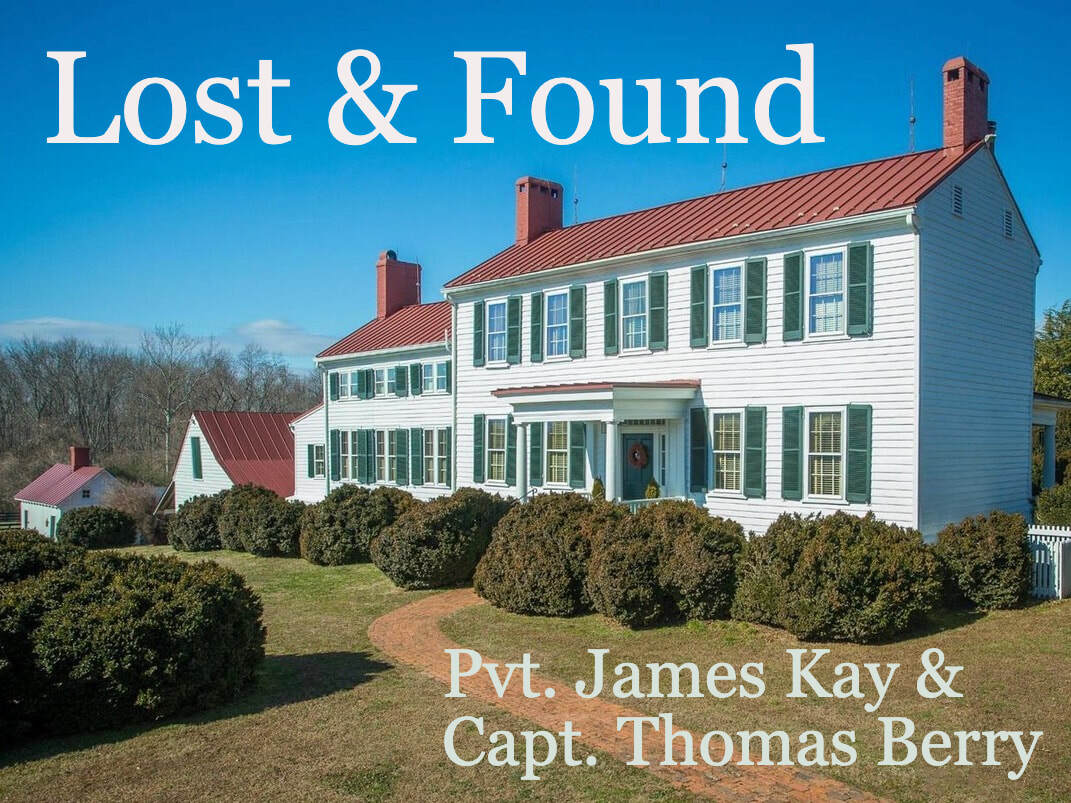
    Read More: "Lost & Found: James Kay & Thomas Berry"

    More from The 8th Virginia Regiment

  • Published on

    Three Centuries of Violence

    Picture
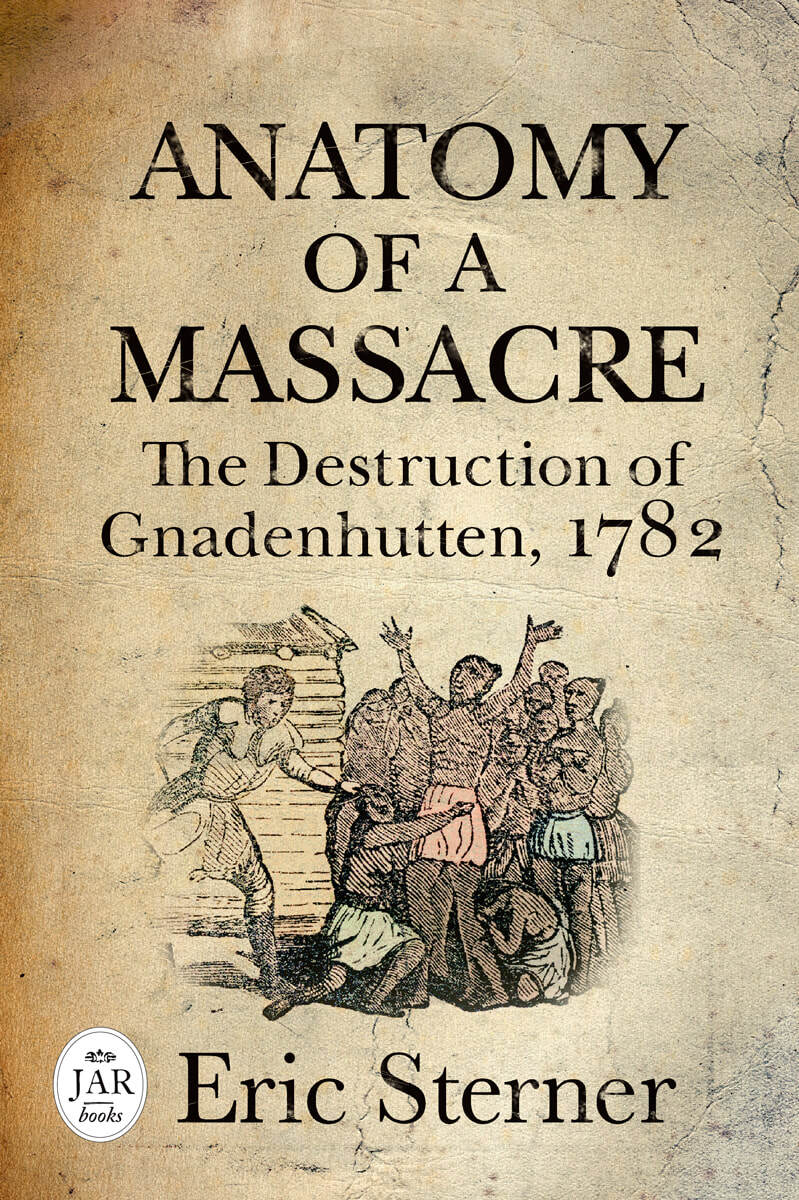
    Anatomy of a Massacre: The Destruction Gnadenhutten, 1782
    Eric Sterner (Yardley, Pa: Westholme, 2020)
    Picture
    In his first book, Anatomy of a Massacre: The Destruction of Gnadenhutten, 1782, Eric Sterner has taken on a difficult subject. Racial violence is something many writers would shy away from while others might delight in the chance to condemn the perpetrators. Mr. Sterner, laudably, does neither. Instead, he seeks to understand what happened.

    It is worth noting that the first known massacre of Indians by white men in what is now the United States occurred long before the events in the book. It happened near Jamestown, Virginia in 1610 when Virginia’s governor, Thomas West, 3rd Baron de la Warr, ordered an attack on the Paspahegh Band of Powhatans. Seventy men attacked the village, killing between 65 and 75 Paspaheghs and kidnapping the village leader’s wife and children. Rowing away, the colonists decided to kill the children, “w[hi]ch was effected by Throweinge them overboard and shoteinge owtt their Braynes in the water.” Three centuries of violence ensued.
    Lord de la Warr’s name appears frequently in Mr. Sterner’s story. His name was given to the Delaware River, which in turn lent its name to the Lenape people who have long been known to English speakers as the Delaware Tribe. Mr. Sterner has provided the definitive account of the worst atrocity of the Revolutionary War. In 1782 more than eighty white settlers clubbed, killed, and scalped ninety-six peaceful, Christian Indians as they prayed and sang hymns. The attack on the Moravian mission town of Gnadenhutten (Ohio) was intended as both a punitive and preemptive strike, conducted by settlers whose families and farms had been targeted by other Indians acting as proxies of the British. It is a horrific story that has defied understanding until now.

    ​...continue to Emerging Revolutionary War Era.

    More from The 8th Virginia Regiment