• Published on

    What Are Unalienable Rights?

    Picture
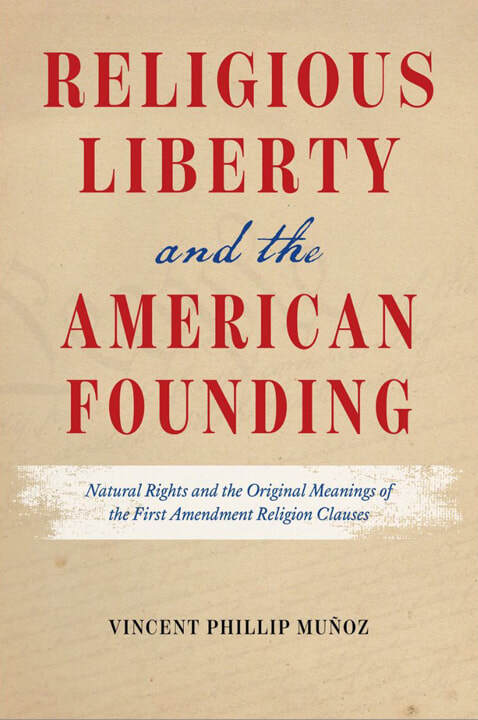
    Religious Liberty and the American Founding
    Vincent Phillip Muñoz (University of Chicago Press, 2022)
    We are told in the Declaration of Independence that certain rights are “unalienable.” Have you ever wondered what that means? Are other rights “alienable?” Notre Dame’s Professor Vincent Phillip Muñoz, author of Religious Liberty and the American Founding, wants you to ask that question.

    The importance of the First Amendment is universally understood. It is the most-discussed part of the Constitution and the courts have ruled on its meaning many times. 
    Professor Muñoz argues persuasively, however, that scholars, lawyers, and judges have all done a consistently sloppy job of seeking to understand what the founders actually meant by the words they used. So much so, in fact, that the original meaning of the Establishment and Free Expression clauses has effectively been lost. The result is that the text has become an ideological Rorschach test. It can be made to mean almost anything. “The consensus that the Founders’ understanding should serve as a guide has produced neither agreement nor coherence in church-state jurisprudence,” Dr. Muñoz writes. “Indeed, it has produced the opposite; it seems that almost any and every church-state judicial position can invoke the Founders’ support.

    ​Many readers will be surprised to hear that the Founders themselves are largely to blame for this. The language of the First Amendment itself (“Congress shall make no law respecting an establishment of religion, or prohibiting the free exercise thereof”) is not very precise. The reason for this is that “Many, if not most, of the individuals who drafted the First Amendment did not think it was necessary.”[2] Establishment was a state issue and the Federal constitution already banned religious tests in Article VI.[3] It was the Anti-Federalists who insisted on the Bill of Rights, but they were in the minority in the 1st Congress.

    More from The 8th Virginia Regiment
  • Published on

    Catholics and the Founding

    Picture
    Our Dear-Bought Liberty: Catholics and Religious Toleration in Early America
    Michael D. Breidenbach (Harvard University Press, 2021)
    Most Americans in pre-revolutionary times had a strong dislike of Catholicism. They believed it to be a religion of ignorance, a religion of tyranny, and the religion of the enemy. The ever-opinionated John Adams attended a mass in Philadelphia in 1774, motivated by “curiosity and good company.” He wrote home to Abigail to describe the “poor Wretches, fingering their Beads, chanting Latin, not a Word of which they understood, their Pater Nosters and Ave Maria’s. Their holy Water—their Crossing themselves perpetually—their Bowing to the Name of Jesus, wherever they hear it—their Bowings, and Kneelings, and Genuflections before the Altar.” 
    He described the priest’s ornate vestments, the beautiful music, and the bloody crucifix above the altar. “Here is every Thing which can lay hold of the Eye, Ear, and Imagination. Every Thing which can charm and bewitch the simple and ignorant. I wonder how Luther ever broke the spell.” He admitted, though, that the sermon was good.

    Protestants’ views of Catholics aside, it was the Church itself, and more specifically the Papacy, that presented a problem for the British Empire. The influential political thinker John Locke asserted in his 1689 Letter Concerning Toleration that a “church can have no right to be tolerated by the magistrate, which is constituted upon such a bottom, that all those who enter into it . . . deliver themselves up to the protection and service of another prince.”[3] By tolerating such a church, a ruler would “suffer his own people, to be lifted, as it were, for soldiers against his own government.”[4] The example he used was Islam, but it was Catholicism he was concerned about.

    ​Michael Breidenbach is a Cambridge University-educated associate history professor at Ave Maria University, an orthodox Catholic school in Florida. His book Our Dear-Bought Liberty: Catholics and Religious Toleration in Early America illustrates the remarkably rapid transformation of Americans’ treatment of Catholics during the Founding Era. Irish Catholics like Capt. John Barry, Lt. Col. John Fitzgerald, and Col. Stephen Moylan played important roles in the Continental Navy and Army. Maryland’s Charles Carroll signed the Declaration of Independence and held a seat on the Continental Congress’s powerful Board of War. Generals Lafayette and Pulaski were both Catholic, as were the French and Spanish empires that came to America’s aid.

    More from The 8th Virginia Regiment
  • Published on

    Disestablishment: The Separation of Faith from Government Power

    Picture
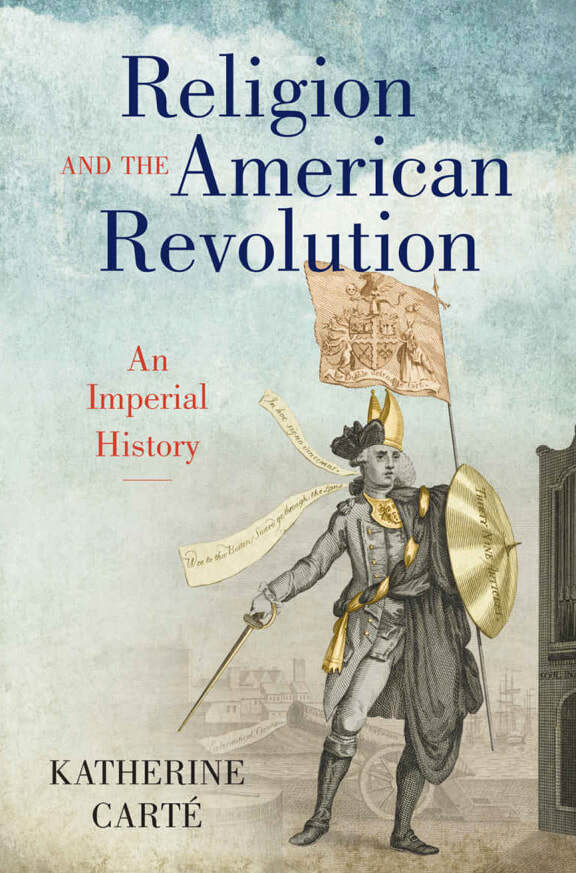
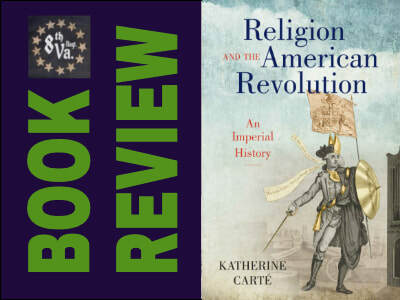
    Religion and the American Revolution: An Imperial History
    by Katherine Carté (Chapel Hill: University of North Carolina Press/Omohundro Institute of Early American History and Culture, 2021)
    Picture
    Dwight Eisenhower once said that “our form of government has no sense unless it is founded in a deeply felt religious faith, and I don’t care what it is.” This uniquely American argument, made by other presidents as well, is rooted in a seeming paradox of the Founding Era. America abandoned official religion in the wake of the Revolution and yet the nation became much more religious.

    ​Katherine Carté’s book 
    Religion and the American Revolution is not about the theological origins of the conflict or the so-called “black-robed regiment” of militant clergy. It is about the impact of the Revolution on established religion on both sides of the sea. It is one of several recent books that opens the historical aperture on the era and lets us see familiar events in a broader context. This is especially important when it comes to the dominant Protestant sects of the period. These were trans-Atlantic organizations and America’s established colonial churches remained very close to and even dependent on support from home.
    Fundamental to Carté’s analysis is understanding that the Church of England was just one of three denominations that represented a compound Imperial religious establishment. Anglicans, Presbyterians, and Congregationalists all held privileged status in different parts of the Empire: Anglicans in England and the American South, Presbyterians in Scotland, and Congregationalists in New England. Carté describes a tripartite “scaffold” of establishment that bound Protestants together and united the King’s dominions. Protestantism defined the British Empire more than Englishness did, since most of its subjects were not English.

    More from The 8th Virginia Regiment
  • Published on

    Three Centuries of Violence

    Picture
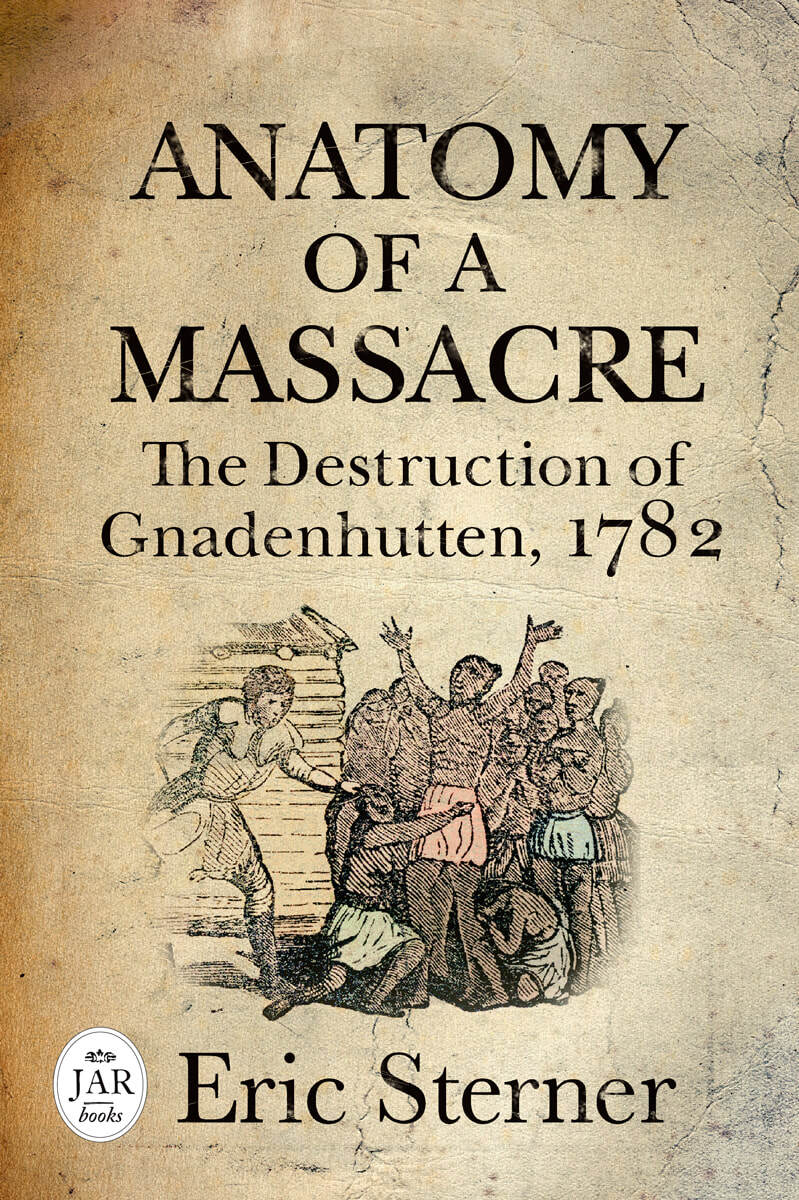
    Anatomy of a Massacre: The Destruction Gnadenhutten, 1782
    Eric Sterner (Yardley, Pa: Westholme, 2020)
    Picture
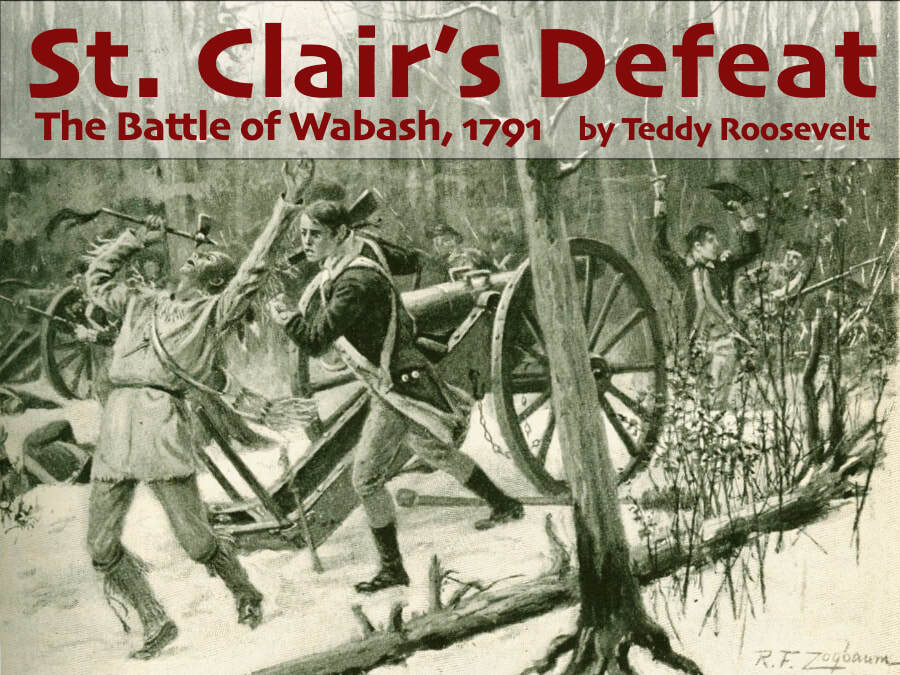
    In his first book, Anatomy of a Massacre: The Destruction of Gnadenhutten, 1782, Eric Sterner has taken on a difficult subject. Racial violence is something many writers would shy away from while others might delight in the chance to condemn the perpetrators. Mr. Sterner, laudably, does neither. Instead, he seeks to understand what happened.

    It is worth noting that the first known massacre of Indians by white men in what is now the United States occurred long before the events in the book. It happened near Jamestown, Virginia in 1610 when Virginia’s governor, Thomas West, 3rd Baron de la Warr, ordered an attack on the Paspahegh Band of Powhatans. Seventy men attacked the village, killing between 65 and 75 Paspaheghs and kidnapping the village leader’s wife and children. Rowing away, the colonists decided to kill the children, “w[hi]ch was effected by Throweinge them overboard and shoteinge owtt their Braynes in the water.” Three centuries of violence ensued.
    Lord de la Warr’s name appears frequently in Mr. Sterner’s story. His name was given to the Delaware River, which in turn lent its name to the Lenape people who have long been known to English speakers as the Delaware Tribe. Mr. Sterner has provided the definitive account of the worst atrocity of the Revolutionary War. In 1782 more than eighty white settlers clubbed, killed, and scalped ninety-six peaceful, Christian Indians as they prayed and sang hymns. The attack on the Moravian mission town of Gnadenhutten (Ohio) was intended as both a punitive and preemptive strike, conducted by settlers whose families and farms had been targeted by other Indians acting as proxies of the British. It is a horrific story that has defied understanding until now.

    ​...continue to Emerging Revolutionary War Era.

    More from The 8th Virginia Regiment
  • Published on

    The Need for Freedom

    Picture

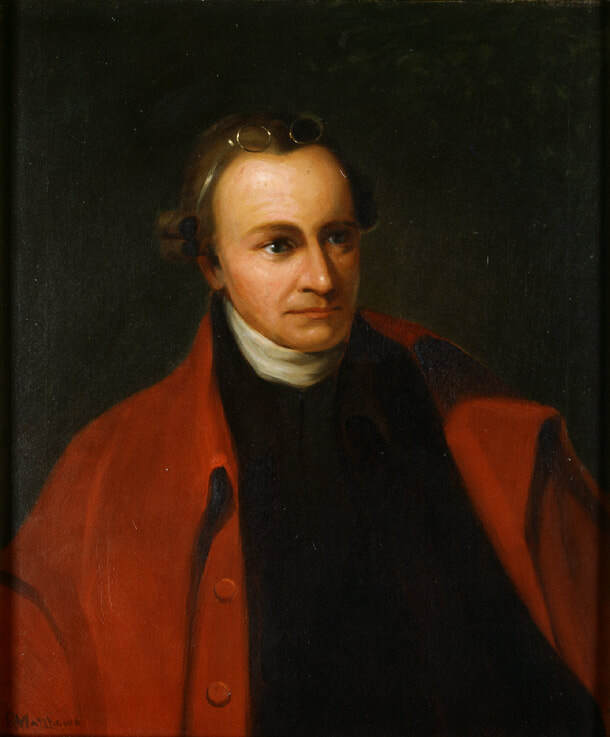
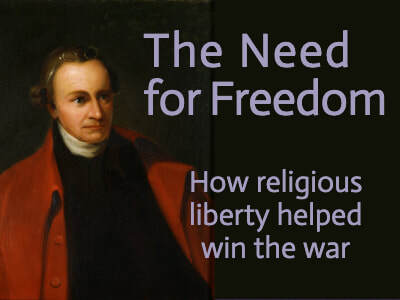
    Patrick Henry was a proponent of religious freedom in Virginia, but also proposed state support for churches.

    The soldiers of the 8th Virginia regiment included Anglicans, Methodists, Lutherans, Reformed, Presbyterians, Baptists. Lieutenant Isaac Israel was probably Jewish. They helped turn Virginia from a religiously intolerant colony with an official, established church into a state that was at the vanguard of establishing religious freedom in America.
     
    The Church of England was deeply integrated into the government and society of colonial Virginia. Property owners paid taxes to support it, and it performed important functions like recording vital statistics and caring for orphans. Non-Anglicans had to pay for marriage licenses, but county clerks were under no obligation to record their marriages.  Dissenting churches were not welcome and their clergy were sometimes imprisoned or physically assaulted. 
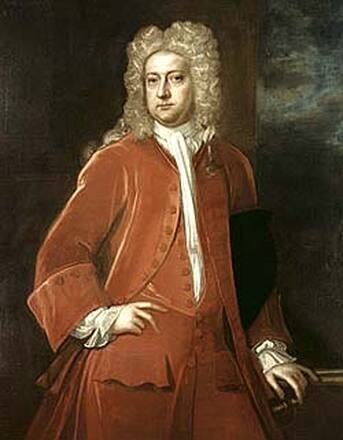
    The Old Dominion’s most influential colonial governor, William Berkeley (1642-1652 and 1660-1677) was “bitterly hostile” to religious nonconformists, especially Puritans and Quakers. A law was enacted under his leadership to “preserve the Established Church’s Unity and purity of doctrine” by punishing any dissenting minister who attempted to preach in Virginia. During the reign of William and Mary, the Toleration Act of 1688 allowed non-Catholic ministers to preach under certain conditions, a change that applied to Virginia. When the Revolution broke out nearly a century later, however, religious dissenters in the colony still hadn’t gained much beyond being tolerated. 
    On the western side of the Blue Ridge Mountains, however, things were different. Unlike the tidewater and piedmont areas of Virginia, the Shenandoah Valley was largely settled by German and Anglo- or Scotch-Irish immigrants who came inland on the Great Wagon Road from Pennsylvania. This brought Presbyterian, Lutheran, German Reformed, Quaker, Baptist, and Mennonite congregations into the colony. Collectively they made a regional majority, but their members still had to tithe to the English church, couldn’t hold public office, and had to build their churches in the countryside or on the edge of town.

    The government in Williamsburg allowed these dissenters to settle the Shenandoah Valley because they wanted to create a buffer between the older areas of Virginia and the dangers that existed in the wilderness: the Indians and the French. By the time the Revolution began, the valley was well-settled but culturally distinct from the areas east of the Blue Ridge.
    Picture

    Sir William Berkeley, Governor of Virginia (1642-1652, 1660-1677).

    The selection of Peter Muhlenberg as colonel of the 8th Virginia was clearly an effort to gain the support of the valley’s Germans for the cause. So too was the selection of Abraham Bowman for lieutenant colonel: he was the grandson of Jost Hite, who had led one of the first groups of German settlers to Virginia from Pennsylvania. Major Peter Helphenstine, the oldest but most junior of the three field officers, had immigrated to the valley from Germany as an adult. As residents of Woodstock, Strasburg, and Winchester, respectively, the three men also covered the geography of the heavily German lower (northern) Shenandoah Valley. Settlers in the upper (southern) Shenandoah Valley; the New and Holston river valleys of southwest Virginia; and the region around Fort Pitt in what is now southwestern Pennsylvania were also recruited for the regiment. Scotch-Irish Presbyterians predominated in these areas and were, at least by reputation, already willing to fight.
    Picture

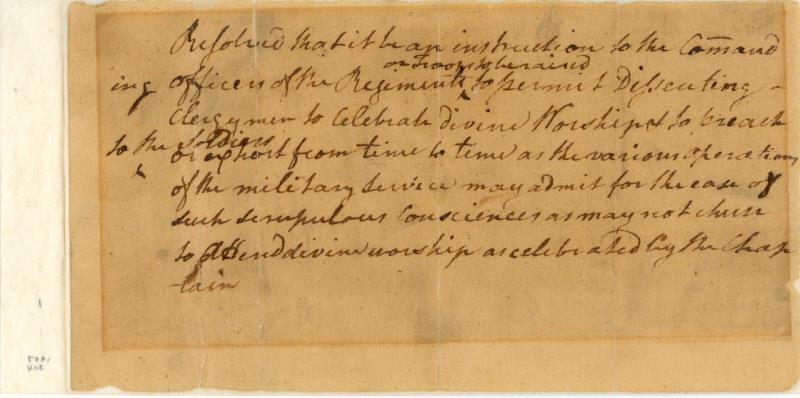
    Patrick Henry's 1775 resolution. (Library of Congress)

    For the first time, Virginia’s coastal elite needed to proactively accommodate and attract the Old Dominion’s western settlers. These western Virginians were typically good marksmen and many of them were experienced warriors with fresh experience from Lord Dunmore’s 1774 war against the Shawnee. The creation of a “German” regiment (which was probably about half Scotch-Irish) was only one way that the revolutionary Virginia Convention accommodated and wooed the colony’s religious minorities.
    On August 16, 1775, several months before the 8th Virginia was authorized, the Third Virginia Convention adopted a resolution offered by Patrick Henry to grant the Baptists’ request to have their own military chaplains and excuse Baptist soldiers from attending Anglican services. The following summer, while the 8th was serving in the Carolinas, the Fifth Virginia Convention adopted the Virginia Declaration of Rights. This precursor to both the Declaration of Independence and the Bill of Rights proclaimed that “all men are equally entitled to the free exercise of religion, according to the dictates of conscience; and that it is the mutual duty of all to practice Christian forbearance, love, and charity toward each other.”
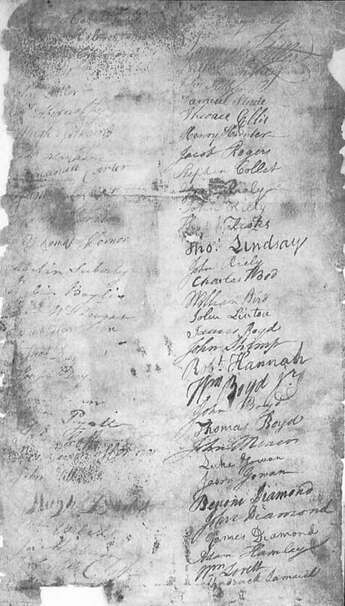
    It would take some time for Virginia’s actions and practices to match the Convention’s words. That fall, ten thousand Virginians signed a petition circulated by the Baptists requesting religious equality and the disestablishment of the Anglican Church in Virginia. The document was 125 pages long, sewn together, and joined with wax seals.
     
    Virginia was not alone in the colonial period in practicing religious (or religiously-based) discrimination. Massachusetts in the 1600s was a virtual theocracy. Four people on three occasions were hanged to death for being Quakers. Many others were flogged and expelled from the colony. Conversely, in Pennsylvania (which had no established church), the Quaker Party—a political faction—clung to power until the Revolution by refusing to create new legislative districts in the colony’s growing western regions. 

    North Carolina and Maryland were the first to disestablish the Church of England, both in 1776. However, Virginia suspended tithes for support of the church the same year and was at the forefront of articulating the importance of religious freedom during and after the Revolution. 
    Picture

    A signature page from the Ten Thousand Name Petition. (Library of Congress)

    The Virginia Statute for Religious Freedom was drafted in 1777 by Thomas Jefferson and enacted into law in 1786, formally disestablishing the Church of England (known thereafter as the Episcopal Church). Massachusetts was the last state to disestablish its state church, a predecessor of today’s United Church of Christ, in 1833.
    The Virginia Statute for Religious Freedom
    [Drafted 1777, Enacted 1786]

     
    Whereas, Almighty God hath created the mind free;
     
    That all attempts to influence it by temporal punishments or burthens, or by civil incapacitations tend only to beget habits of hypocrisy and meanness, and therefore are a departure from the plan of the holy author of our religion, who being Lord, both of body and mind yet chose not to propagate it by coercions on either, as was in his Almighty power to do,

    That the impious presumption of legislators and rulers, civil as well as ecclesiastical, who, being themselves but fallible and uninspired men have assumed dominion over the faith of others, setting up their own opinions and modes of thinking as the only true and infallible, and as such endeavouring to impose them on others, hath established and maintained false religions over the greatest part of the world and through all time;
     
    That to compel a man to furnish contributions of money for the propagation of opinions, which he disbelieves is sinful and tyrannical;
     
    That even the forcing him to support this or that teacher of his own religious persuasion is depriving him of the comfortable liberty of giving his contributions to the particular pastor, whose morals he would make his pattern, and whose powers he feels most persuasive to righteousness, and is withdrawing from the Ministry those temporary rewards, which, proceeding from an approbation of their personal conduct are an additional incitement to earnest and unremitting labours for the instruction of mankind;
     
    That our civil rights have no dependence on our religious opinions any more than our opinions in physics or geometry,
     
    That therefore the proscribing any citizen as unworthy the public confidence, by laying upon him an incapacity of being called to offices of trust and emolument, unless he profess or renounce this or that religious opinion, is depriving him injuriously of those privileges and advantages, to which, in common with his fellow citizens, he has a natural right,
     
    That it tends only to corrupt the principles of that very Religion it is meant to encourage, by bribing with a monopoly of worldly honours and emoluments those who will externally profess and conform to it;
     
    That though indeed, these are criminal who do not withstand such temptation, yet neither are those innocent who lay the bait in their way;
     
    That to suffer the civil magistrate to intrude his powers into the field of opinion and to restrain the profession or propagation of principles on supposition of their ill tendency is a dangerous fallacy which at once destroys all religious liberty because he being of course judge of that tendency will make his opinions the rule of judgment and approve or condemn the sentiments of others only as they shall square with or differ from his own;
     
    That it is time enough for the rightful purposes of civil government, for its officers to interfere when principles break out into overt acts against peace and good order;
     
    And finally, that Truth is great, and will prevail if left to herself, that she is the proper and sufficient antagonist to error, and has nothing to fear from the conflict, unless by human interposition disarmed of her natural weapons free argument and debate, errors ceasing to be dangerous when it is permitted freely to contradict them:
     
    Be it enacted by General Assembly that no man shall be compelled to frequent or support any religious worship, place, or ministry whatsoever, nor shall be enforced, restrained, molested, or burthened in his body or goods, nor shall otherwise suffer on account of his religious opinions or belief, but that all men shall be free to profess, and by argument to maintain, their opinions in matters of Religion, and that the same shall in no wise diminish, enlarge or affect their civil capacities. And though we well know that this Assembly elected by the people for the ordinary purposes of Legislation only, have no power to restrain the acts of succeeding Assemblies constituted with powers equal to our own, and that therefore to declare this act irrevocable would be of no effect in law; yet we are free to declare, and do declare that the rights hereby asserted, are of the natural rights of mankind, and that if any act shall be hereafter passed to repeal the present or to narrow its operation, such act will be an infringement of natural right.

    More from The 8th Virginia Regiment
  • Published on

    Mounting the Soldier Second

    Picture
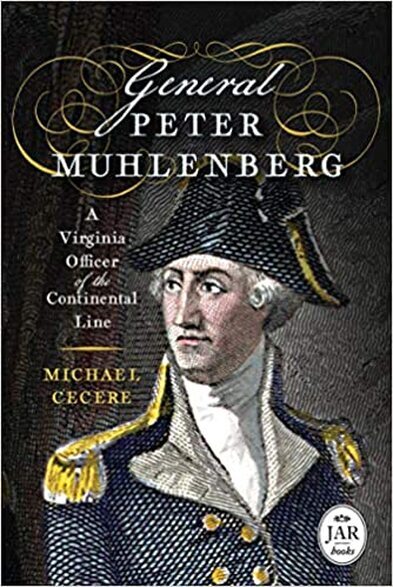
    General Peter Muhlenberg: A Virginia Officer of the Continental Line
    by Michael Cecere (Yardley, Pa: Westholme, 2020)
    Picture
    “The General, mounted upon a white horse, tall and commanding in his figure, was very conspicuous at the head of his men…many of the [enemy] soldiers (German enlistments being for life,) remembered their former comrade, and the cry ran along their astonished ranks, ‘Heir kommt teufel Piet!’”

    This tale about Gen. Peter Muhlenberg at Brandywine appears in the 1849 biography written by his great nephew (and congressman) Henry Augustus Muhlenberg. “Here comes Devil Pete!” was shouted by members of a German dragoon company to which the writer says Muhlenberg had belonged as a young man. The story is nonsense, and just one example of why Michael Cecere’s new biography of the general is desperately needed.

    Peter Muhlenberg was a Pennsylvania-born German who was the son of the patriarch of the Lutheran Church in America.
    He is best-known as the rector of a Shenandoah Valley (Anglican) parish and colonel of the 8th Virginia Regiment, which was raised on the frontier and initially intended to be a “German” regiment. The famous but poorly-documented farewell sermon he delivered in Woodstock, Virginia, in the spring of 1776 has been the subject of epic poetry and modern political debate. After a tour of the southern theater under Maj. Gen. Charles Lee, he was made a brigadier general. His brigade of Virginians was in Maj. Gen. Nathanael Greene’s division at Brandywine and Germantown. He was at Monmouth and remained in the army to the end of the war. He played an important role in the Virginia campaign leading up to Yorktown.

    ​...continue to The Journal of the American Revolution.

    More from The 8th Virginia Regiment