• Published on

    ​George Slaughter: Louisville’s Forgotten Founder

    Picture

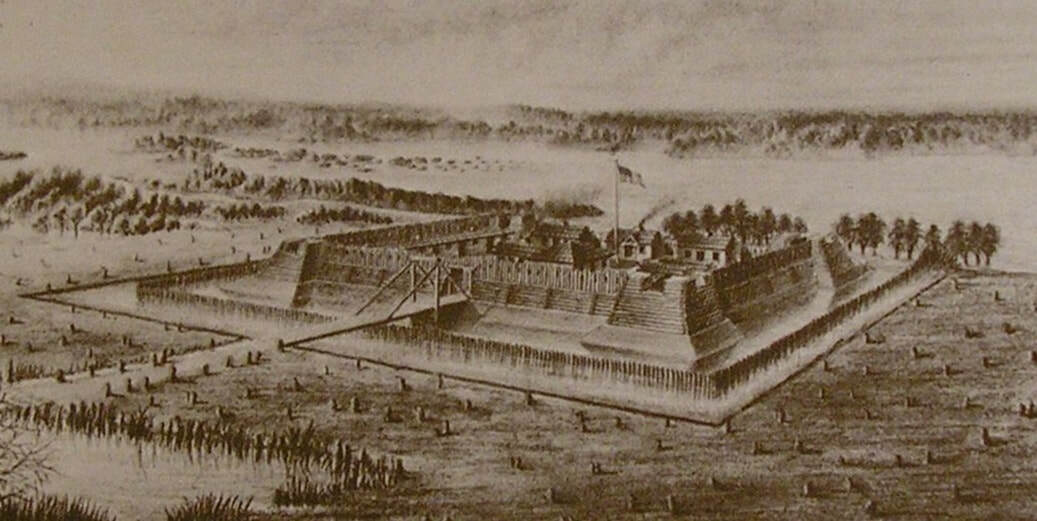
    George Slaughter oversaw the construction of Fort Nelson at Louisville. (1855 image)

    In 1855 an elderly widow named Jane Roberts applied for bounty land for her husband’s service “in the war with the Cherokees & British in the year 1776.” We don’t often think of the Revolution as a two-front war, but it was. Americans fought an Anglo-German army in the east and an Anglo-Indian opponent in the west. Most of the western fighting was against Indians who were fighting as proxies of the Crown. In Virginia’s northwest territory along the Ohio River and beyond, the Shawnee were the most fearsome.
    An 8th Virginia soldier like Captain George Slaughter might have seen the Revolution as just one chapter in a six-decade fight with the Indians for control of Kentucky and Ohio. The territories were the scenes of nearly constant bloodshed from the defeat of General Edward Braddock in 1755 to the defeat of Shawnee chief Tecumseh in 1813. After more than two decades of intermittent barbarity, Slaughter and his comrades suffered from no moral anguish when it came to killing Indians. 
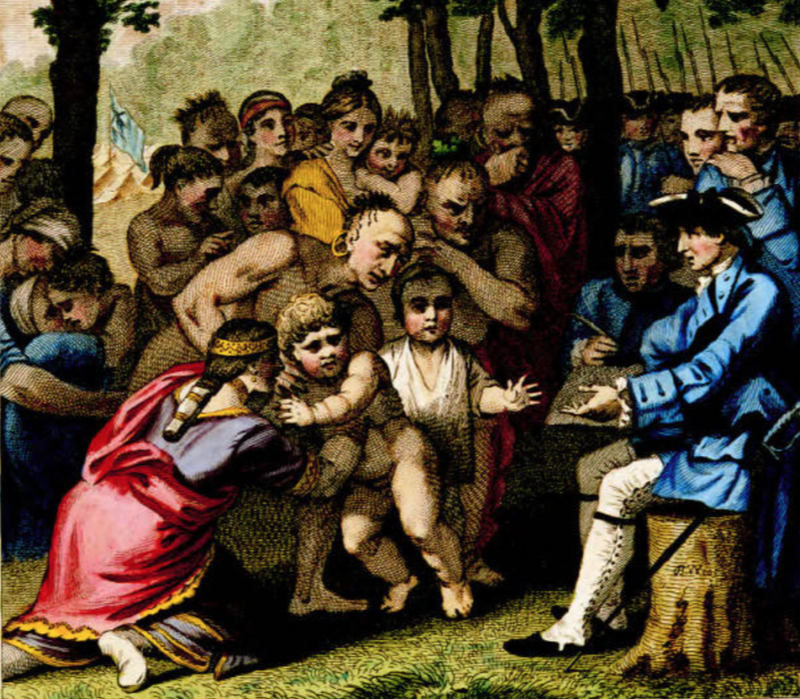
    George was born in Culpeper County, Virginia in 1739. He was the grandson of an illiterate indentured servant but the son of a locally important and successful man. When he was twenty-five years old, George volunteered to help put down a major Indian uprising known as Pontiac’s Rebellion—which was a sort of postlude to the French and Indian War. Colonel Henry Bouquet led nearly 1500 militiamen out of Fort Pitt (Pittsburgh) in 1764 and subdued the Indians in Ohio. Bouquet required the Indians to return 200 white people who had been kidnapped over the years. This liberation combined joy with sorrow: most of the captives had been taken as small children and were fully assimilated into the tribes. George's horse was requisitioned for the use of captives returning to their homes.
    Picture

    Clark witnessed the return of hundreds of kidnapped children at the end of Pontiac's Rebellion.

    A decade later, he participated in Dunmore’s War. This was another campaign, led by the royal governor of Virginia, to “pacify” the Indians. After a lengthy and bloody battle at Point Pleasant on the Ohio River, the Virginians were victorious. Slaughter’s unit, however, reportedly arrived too late to participate in the fighting. "They had not the satisfaction of carrying off any of our men's scalps, save one or two of the stragglers," he wrote to his brother. "Many of their dead they scalped, rather than we should have them; but our troops scalped upwards of twenty of their men, that were killed first." His father-in-law was killed in the battle.
    ​After the campaign ended, Slaughter explored Kentucky for a while and planted corn—perhaps to lay claim to some land. A year later, in 1775, he may have helped recruit one of the first companies for the famous Culpeper Minutemen. The minute battalions were replaced in 1776 by additional full-time regular regiments, including the 8th Virginia. Slaughter recruited a company in Culpeper County. He remained with the regiment through Charleston and Brandywine and was then promoted to major of the 12th Virginia just before the Battle of Germantown.
    At Valley Forge, in December of 1777, he learned that his family had lost their house in a fire. That, and a smallpox epidemic (against which he, but not his family, had been inoculated), prompted him to request a furlough from General Washington. The furlough was turned down. He resigned his commission on December 23 and headed home to Culpeper. On February 1, he contritely wrote to Washington begging to be reinstated. “If my reenstation can take place with propriety,” he wrote, “it will afford me great satisfaction; if not, I hope I can Acquiesce without murmuring.” The request was denied.

    ​Virginia authorized four battalions of six-month volunteers in June 1778. These were state (not Continental) soldiers intended to reinforce Washington's army. Slaughter was chosen to lead one of the battalions. However, in August Congress advised the Commonwealth that the battalions would not be needed and the half-recruited units were disbanded. It is possible, however, that Slaughter's battalion was ultimately repurposed rather than dissolved.
    After George Rogers Clark’s important victories in the west, Maj. John Montgomery returned to Virginia with dispatches. He was promoted to lieutenant colonel and ordered to recruit additional forces to reinforce Clark. On January 1, 1779, Gov. Patrick Henry drafted orders for Clark based on decisions of the state legislature. “They have directed your battalion to be completed, 100 men to be stationed at the falls of the Ohio under Major Slaughter, and one only of the additional battalions to be completed. Major Slaughter’s men are raised, and will march in a few days, this letter being to go by him. The returns which have been made to me do not enable me to say whether men enough are raised to make up the additional battalion, but I suppose there must be nearly enough. This battalion will march as early in the spring as the weather will admit.” 
    Picture

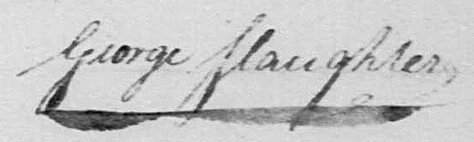
    George's Slaughter's signature.

    Montgomery was then redirected to help suppress an Indian uprising among the Cherokee in April of 1779, an operation known as Evan Shelby’s Chickamauga Campaign. William Hayden English wrote that Slaughter was along for this campaign, though documents to support this have not been found.
    Slaughter’s participation in Shelby’s campaign is circumstantially supported by the fact that he was once again recruiting in Virginia in the fall of 1779. Slaughter recruited 150 men who were sworn into the service in mid-December when they headed west. They made it as far as Redstone Fort in Pennsylvania before getting bogged down by snow. In the spring, they made it to Fort Pitt and boated downstream to the falls of the Ohio River. This site is now Louisville, Kentucky, a city of which Slaughter is considered a founder—he was one of the original trustees.
    Slaughter joined Clark on a 1780 campaign against the Shawnee in Ohio known as the Battle of Peckuwe (or “Piqua”). Clark then left for Virginia and left Slaughter in command. Slaughter oversaw the construction of Fort Nelson. It was from there that he reported to Jefferson on the dangerous situation with the Indians. In 1781 he wrote, “The Savages have been very troublesome this Spring; almost every other day we have accounts of some one being either kill’d or Captured; upwards of 40 Men, Women and Children have fallen a prey to them within the County of Jefferson in the course of 2 Months past and we have not had the satisfaction of getting but one of there Scalps.”
    Picture

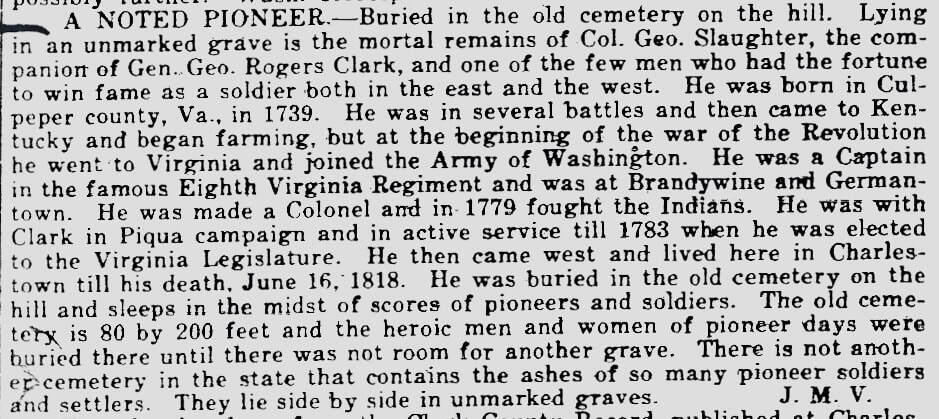
    In 1923, the Culpeper Exponent reprinted an 1898 story originally from a Charlestown, Indiana newspaper giving a brief biography and identifying the site of Slaughter's unmarked grave. (Thanks to Al McLean)

    ​Safety was not his only problem. He also reported, “We are here without money, Clothing, or any thing else scarsely to subsist on. By the fault of the Commissaries, Hunters or I cannot tell who upwards of One hundred and Thirty Th[ousan]d weight of meat was intirely spoiled and lost.”
    ​Things improved for Slaughter and his neighbors from there. This can be seen in a letter his old 8th Virginia commander Colonel Abraham Bowman (who moved to Kentucky in 1779) sent home on October 10, 1784. Bowman wrote to a brother that "General Clark has laid off a town on the other side of the Ohio, opposite the falls, at the mouth of Silver creek, and is building a saw and grist mill there." This was Clarksville, in Clark County, Indiana. The same year, Slaughter was elected to the Virginia legislature. In 1792 Kentucky became its own state.
    Picture

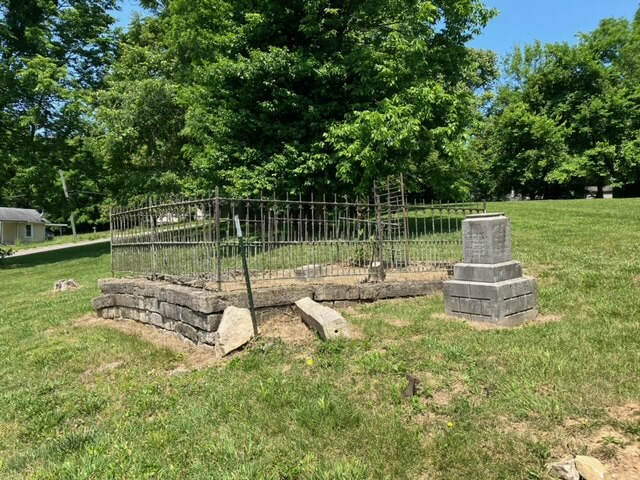
    Slaughter is buried in this abandoned cemetery in Charlestown, Indiana. His grave is unmarked. Indiana's first governor, Jonathan Jennings, was also originally buried here in an unmarked grave after he died a penniless alcoholic. (Indiana SAR)

    ​Slaughter eventually followed Clark and moved across the river. This was land that had been set aside for Virginia soldiers who had participated in “the reduction of the British in the Illinois.” Slaughter was not one of these soldiers, but he moved across the river anyway to Charleston, then the seat of Clark County. He died there in 1818. No grave marker survives, but (according to a genealogy website) he may be in the Shelby Family Cemetery, better known as the Halcyon Hill Cemetery.

    Like many 8th Virginia veterans who were prominent and important in their day, Slaughter has been largely forgotten. It is never too late for Louisville (or Culpeper, or Charleston) to memorialize him.
    (Revised and updated, December 22, 2019 and June 15, 2022.)
    More from The 8th Virginia Regiment

  • Published on

    Searching for Captain Knox

    Picture
    ​We only know the history that is written down. Some of the 8th Virginia’s most valiant warriors left sparse records and have consequently been forgotten. One of the best parts of this project is the opportunity to bring some of their stories back to life. A case in point is the story of Captain James Knox.

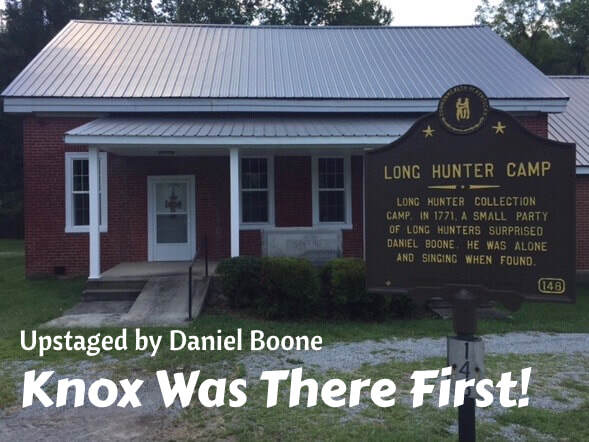
    It has long been believed that Knox used his inheritance to come to Virginia from Northern Ireland at the age of 14. Period records seem to indicate he was born in Virgina, so it may have been his father who came that way. Regardless, Knox lived an amazing life. He evidently entered Kentucky through the Cumberland Gap before Daniel Boone did. He was the leader of the famous “long hunts” into Kentucky in 1769, 1770 and 1771 before serving in Dunmore’s War against the Shawnee in 1774. 
    He then led the Fincastle (Kentucky) County company for the 8th Virginia in 1776. After his company was decimated by malaria in south, he was detached to lead a new company in Morgan’s Rifles and took part in the first major American victory of the war at Saratoga. After the war, he served in the legislatures of Virginia and Kentucky (after it separated from Virginia) and served in the Kentucky militia as a colonel. In 1805 he married the widow of his neighbor and friend, Benjamin Logan.
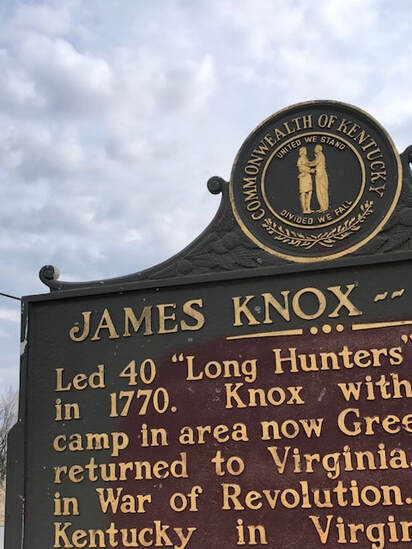
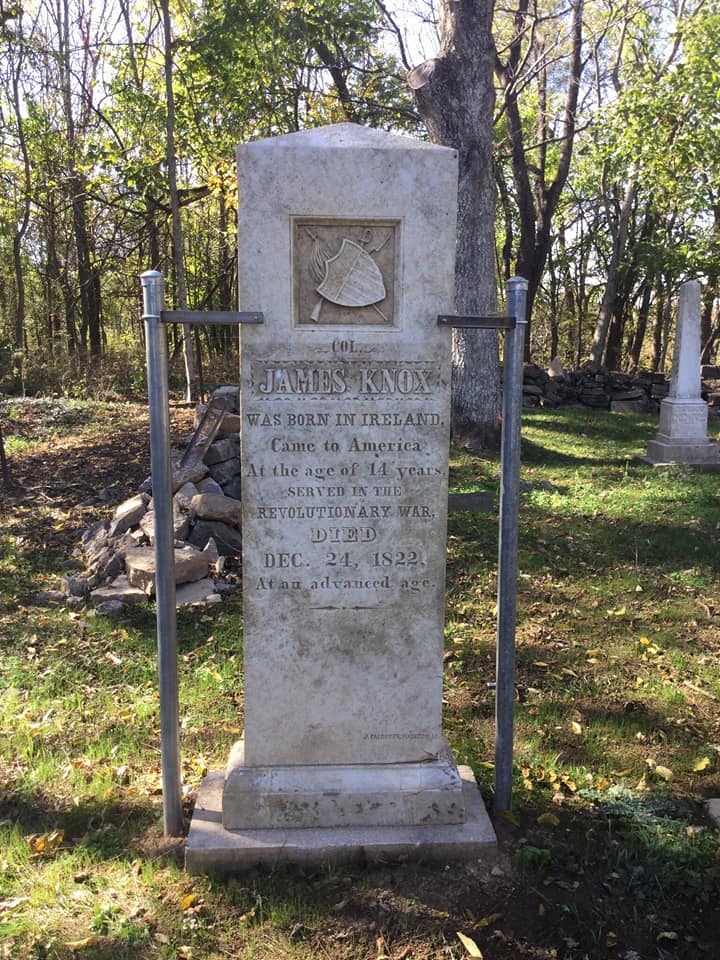
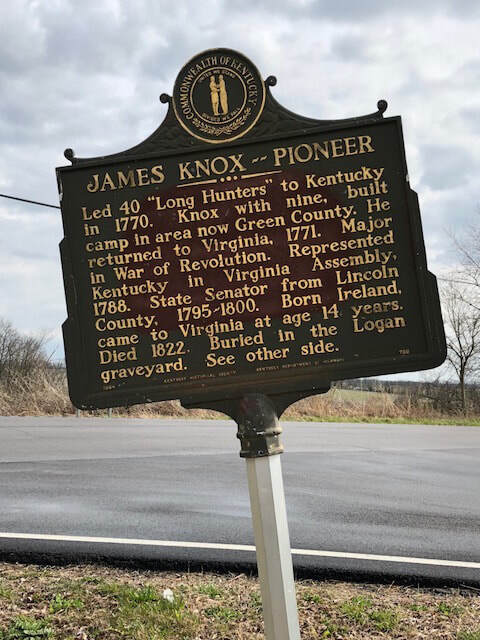
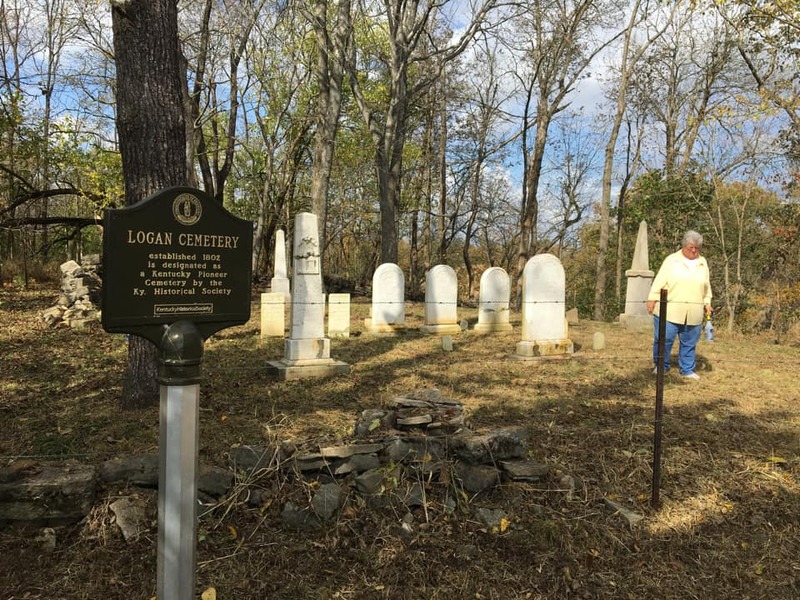
    Knox died on Christmas Eve in 1822 and was buried near his wife and Logan. From there, this once-prominent frontier hero slowly slipped into obscurity. In 1923, a Kentucky historian reported that Knox’s gravestone had “fallen from its base to the earth” where it lay “forgotten” in a “neglected and overgrown” graveyard. In 1964, the Commonwealth of Kentucky placed a historic marker two miles away on the Louisville Pike (Route 60). One side memorialized Benjamin Logan, the other (the back, officially) memorialized Knox.

    On a recent trip to Kentucky, I decided to find the marker and—if I could—Knox’s grave. The Kentucky Historical Marker Database said the Logan-Knox sign was four miles west of Shelbyville. I drove ten miles west of Shelbyville, but couldn’t find it. An internet search found a newspaper account of the 2015 rededication of the Logan family burial ground (where Knox is buried), with vague directions. I thought, perhaps, the sign had been moved there—somewhere on Brunerstown Road.
    Picture

    James Knox's grave. (Courtesy of Mike Harrod)

    Picture

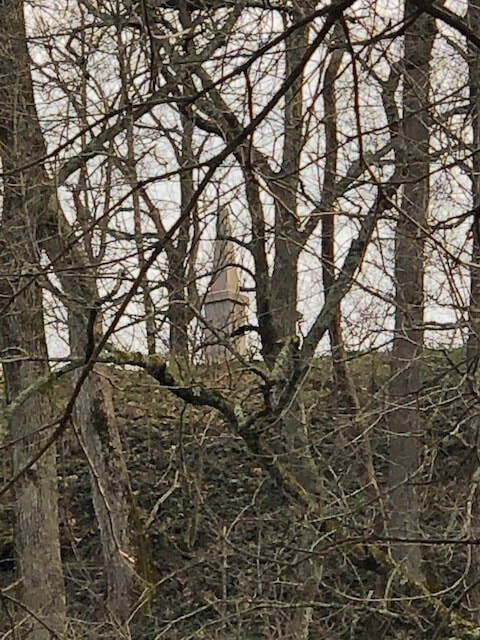
    The grave of Ann Logan Allen, just visible through the trees, high up on a bluff over the Bullskin Creek. This photo was taken with an iPhone at maximum zoom.

    [In 2020, Mike Harrod informed me that the marker visible from the road actually belongs to Logan's daughter, Ann Logan Allen.]

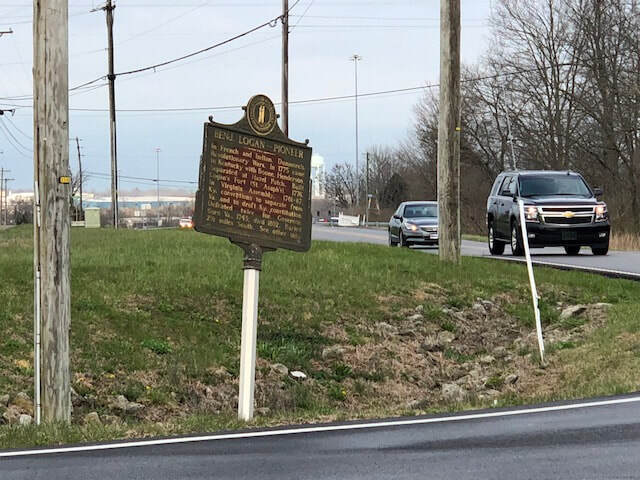
    ​Driving south from Shelbyville, Brunerstown Road was easy to find and the sign was right there at the intersection. Though happy to find it, I was disappointed to see it was literally posted in a ditch. Worse, it was falling over and situated so that the only way to read Knox’s side was to get out of your car and walk into the field behind it. After taking several photographs, I drove the length of Brunerstown Road looking for the cemetery but couldn’t find it. 

    After a mile, the road narrowed and lost its markings—looking, probably, just the way it had in Knox’s day but for the pavement. On my second pass, I encountered a man checking his mail box. He happily told me where the graveyard was—up on a hill overlooking the Bullskin Creek. Far from the road, it was inaccessible except through a neighbor’s property, and they were not home.
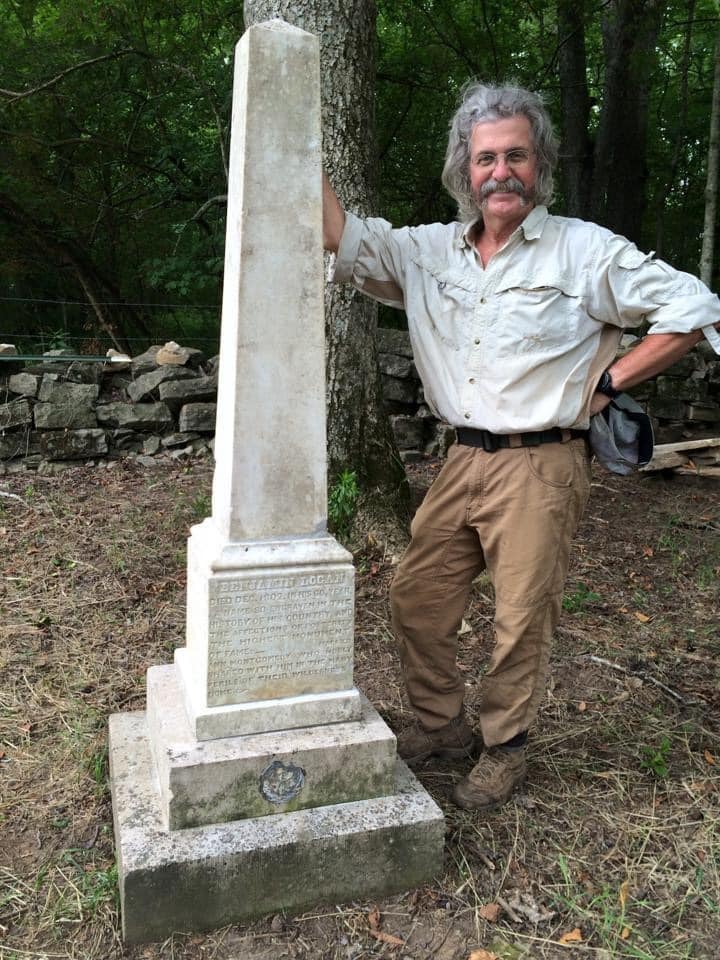
    I drove by the creek one more time and looked high up on the bluff on the opposite side. Through the trees, I could just make out a monument. Looking on my phone at pictures on FindAGrave.com, I decided it looked like Benjamin Logan’s grave marker. Knox’s grave is up there too, but can’t be seen from the road. 
    The Logan cemetery was cleaned up in 2015. Already “neglected and overgrown” in 1923, it was described in 2015 as “in complete disrepair; you couldn’t even walk through it, you had to spread the trees and the bushes and the vines apart to even get through it.” My search for Knox’s grave is a perfect allegory for the story of the 8th Virginia. The story is out there, but it’s frequently very hard to find.

    ​Read More: ​"James Knox Was There Before Daniel Boone" (8/19/17)

    (Updated 1/27/21)
    8th Virginia Captain James Knox was among the very first European Americans to explore Kentucky through the Cumberland Gap, possibly before Daniel Boone. (Author)
    The Logan-Knox marker has been relocated to the intersection of Taylorsville Road and Brunerstown Road, south of Shelbyville, Kentucky. It is leaning over in a ditch, with the Knox-side of the sign not visible from either intersecting road. (Author)
    The grave of Benjamin Logan. (Courtesy Mike Harrod)

    More from The 8th Virginia Regiment

  • Published on

    Locust Grove and the 8th Virginia Regiment

    Image description

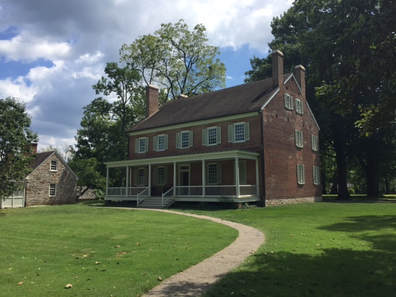
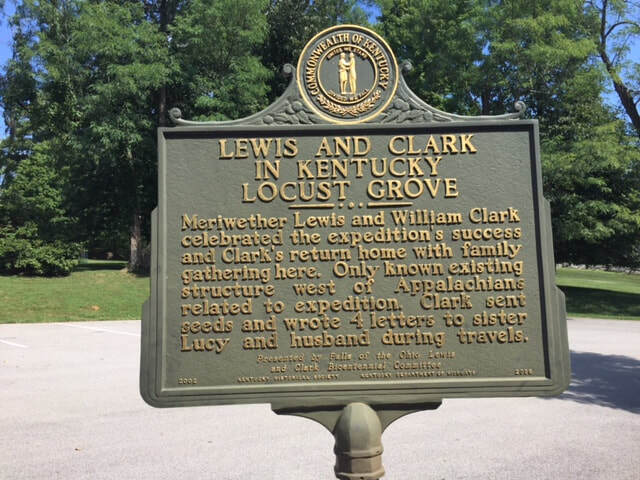
    No other place does more to tell the story of the 8th Virginia Regiment than the house and museum at Locust Grove, near Louisville, Kentucky. It does this almost unintentionally. Locust Grove was the after-war home of Captain William Croghan (who was a major when the war ended). He married the sister of fellow 8th Virginia Captain Jonathan Clark and lived not far from Clark at the fall-line of the Ohio River (Louisville). This was a roughly 400-mile boat ride from his old home at Pittsburgh.For many 8th Virginia men, the opening up of Kentucky was their main reason for fighting in the war. Colonel Abraham Bowman, captains Croghan, Clark, James Knox, and George Slaughter all moved to Kentucky after (or during) the war. So did a large number of the regiment’s junior officers and enlisted men.

    I have compared this research to a jigsaw puzzle—the compilation of thousands of discrete bits of information from a multitude of sources. It was a bit of a shock, therefore to visit Locust Grove and find a place that seemed in so many ways to be a memorial to the 8th Virginia Regiment and its veterans. It isn’t actually that, of course. I don't think the regiment itself is even mentioned. Much more is said about Croghan's brother-in-law George Rogers Clark. But the museum’s exhibits wonderfully contextualize and illustrate the world of the 8th Virginia, before, during and especially after the war.

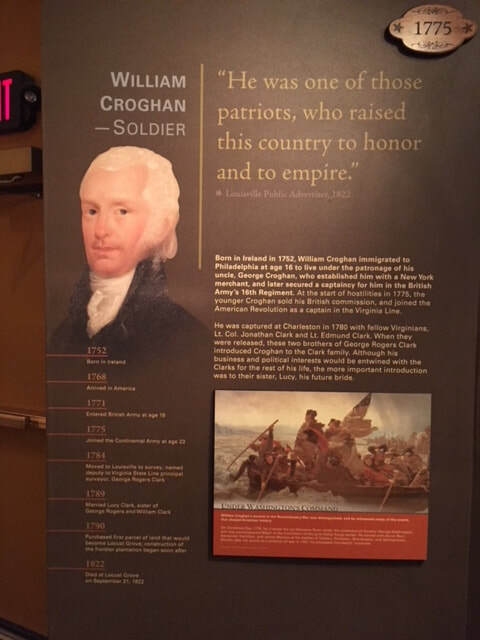
    Croghan was a very important man in Kentucky. He had money, land, and relationships. Much or most of that—including his marriage—came to him through his service in the war. The same could be said for many of his 8th Virginia comrades who prospered in the west. It was in large measure what they fought for during the Revolution: opportunity.
    Picture

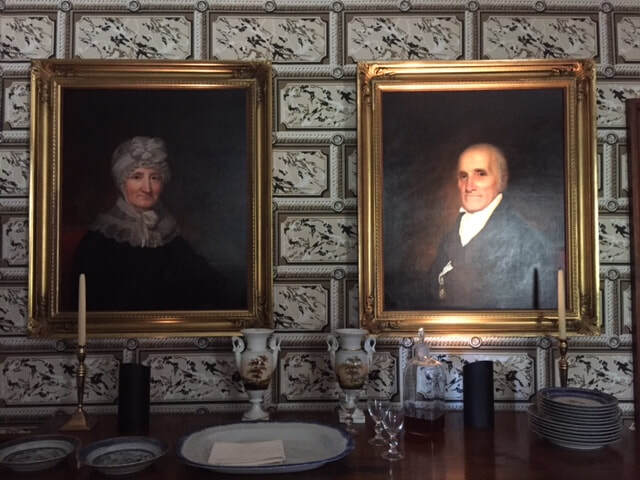
    Portraits of the elderly Lucy and William Croghan hang inside the house.

    Picture
    Picture

    Through his wife, Croghan was related to explorer William Clark and General George Rogers Clark.

  • Published on

    The Clarks: The First Family of the Frontier

    Picture

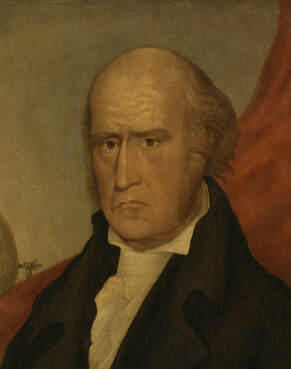
    8th Virginia Captain Jonathan Clark was the oldest of ten accomplished sisters and brothers. After the Revolution, he held the rank of Major General in the Virginia militia. (Author)

    ​8th Virginia captain and major Jonathan Clark was the oldest of ten siblings in a family that left a powerful impact on American history. No other family can claim a larger role in the history of the War for Independence, the conquest of the old frontier (the “Northwest Territory”), and the exploration of the post-Louisiana purchase frontier than the Clarks can.
     
    Today, the most famous of them is William, who was twenty years younger than Jonathan. Each of them, however, contributed to the founding and expansion of the nation in his or her own way.
     
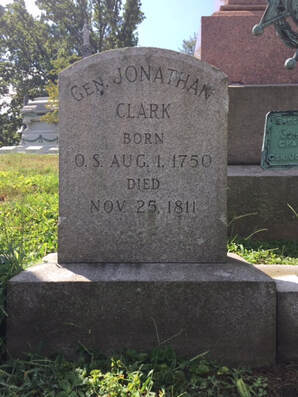
    Jonathan (1750 – 1811) was the oldest. A Captain in the 8th Virginia, he was later promoted to major and then lieutenant colonel and held a post-war rank of major general in the Virginia militia. He was at Brandywine, Germantown, Valley Forge, Monmouth, Paulus Hook, and the siege of Charleston--where he was taken prisoner. He lived his later years near Louisville, Kentucky.
    George Rogers (1752 – 1818) was, during his life, the most famous sibling, known as the “Conqueror of the Northwest.” He led successful western campaigns against the Shawnee, who were allied with the British. Control of that Northwest Territory (Ohio, Indiana, Illinois, Wisconsin, Michigan and a bit of Minnesota) was no small matter. Following the French and Indian War, the British Crown considered this territory to be part of Quebec. This territory would likely be part of Canada today were it not for George.
     
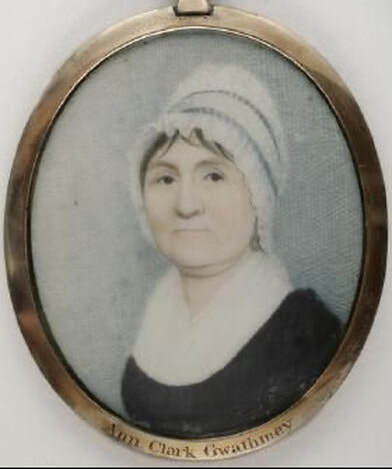
    Ann Rogers (1755 – 1822) married Owen Gwathmey, an early settler of Louisville.
     
    John (1757 – 1783) was, at the age of 19, awarded a commission in the 8th Virginia as a 2nd Lieutenant in Robert Higgins’ 1777 replacement company. He served only a short while. He was captured three weeks after his twentieth birthday at the Battle of Germantown. Held for much of the time in terrible conditions, he returned to his parents' home sick with "consumption" (pulmonary tuberculosis) in 1781. He was sent for a while to the Caribbean in the hope that the climate would help him. It didn't work. He returned home and continued to waste away until his death in 1784.

    Richard Henry (1760 – 1784) served under George Rogers in several western engagements, starting at the age of nineteen. He died while traveling alone on horseback from the falls of the Ohio (Louisville) to Vincennes or Kaskaskia (Illinois). He is presumed to have drowned, though the family hoped for many years that he would turn up alive.
     
    Edmund (1762 – 1815) served in the 4th Virginia Regiment as a young sergeant. This was the regiment the 8th Virginia merged with (and took the number of) in 1778. He received an ensign's commission in the 6th Virginia shortly before the siege of Charleston. He was taken prisoner there along with Jonathan and promoted to lieutenant while in captivity and released after Yorktown. He was received a captain's commission during the Quasi-War with France. He moved to Kentucky with the rest of the family and died there as a lifelong bachelor in 1815.
     
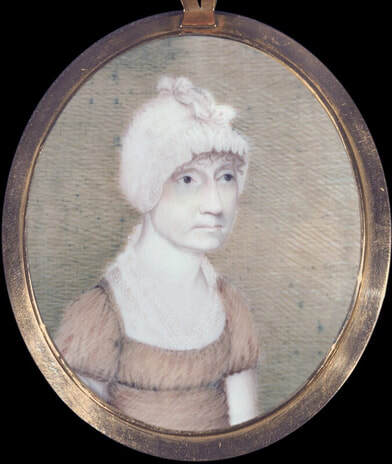
    Lucy (1765 – 1838) married 8th Virginia Captain William Croghan. The Croghans lived and prospered on their estate “Locust Grove” east of Louisville, Kentucky. Jonathan lived close by and George came to live with Lucy in his later years, struggling toward his eventual death with an amputated leg and the effects of a stroke.
     
    Elizabeth (1768 – 1795) married Richard Clough Anderson, a well-regarded officer in the Virginia Line and surveyor of Kentucky military bounty lands. She died young. Her husband remarried. One of his children from that marriage was Colonel Robert Anderson, the Union commander of Fort Sumpter at the outbreak of the Civil War.
    Picture

    George Rogers Clark was a key military figure on the western front during the Revolution. (C.D. Cooke, detail, NPG)

    Picture

    Ann Rogers married Owen Gwathmey, an early settler of Louisville.

    Picture

    Lucy Clark married former 8th Virginia Capt. William Croghan and was the mother of War of 1812 hero Maj. George Croghan. (Locust Grove)

    Picture

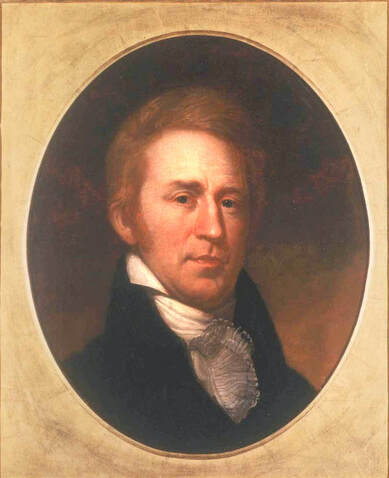
    William Clark was the parter of Meriwether Lewis in the famous Corps of Discovery. (Charles Wilson Peale, Independence National Historic Park)

    William (1770 – 1838) explored the new frontier with Meriwether Lewis at the head of the Corps of Discovery from 1804 to 1806, co-leading the first overland journey all the way to the Pacific Ocean. He is now, by far, the most famous of the Clark siblings. He was later made governor of Missouri.
     
    Frances Eleanor (1773 – 1825) married three times, the second time to Charles Mynn Thruston, Jr. Thruston’s father had been the rector of Berkeley Parish (Berkeley County), Virginia, and a colonel in the Continental Army. Berkeley County played an important role in the life of the 8th Virginia. The life of the elder Thruston holds strong parallels to the life of 8th Virginia Colonel Peter Muhlenberg—they were both “fighting parsons” from the Shenandoah Valley. Frances died in 1825 in St. Louis, Mo., at the home of her son, Col. John O'Fallon.
    Picture

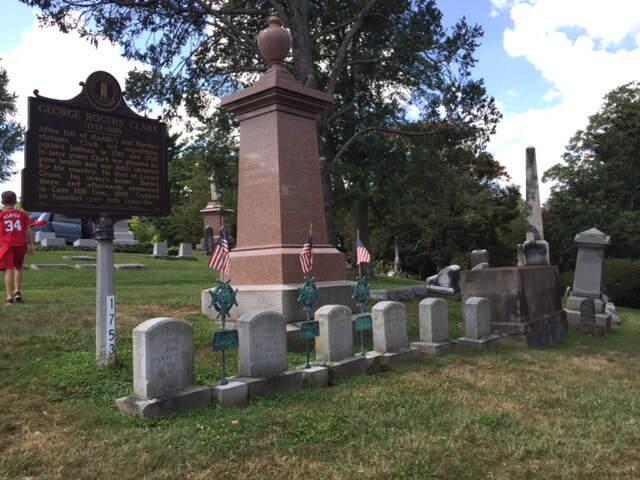
    Jonathan and his wife Sarah Hite Clark lie in the center of six Clark family graves fronting a family monument at Louisville's Cave Hill Cemetery. Flags adorn the graves of Jonathan, George, and Edmund, who fought in the Revolutionary War. Their famous younger brother, William, is buried in St. Louis, Missouri. (Author)

    Picture

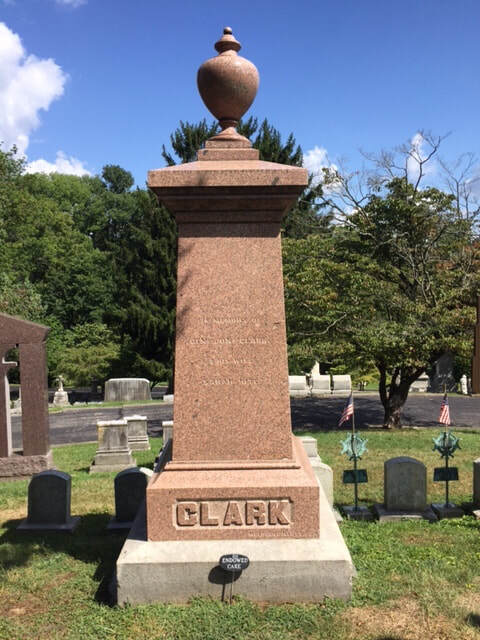
    The Clark family monument. (Author)

  • Published on

    A Frontier Cabin Restored

    Image description
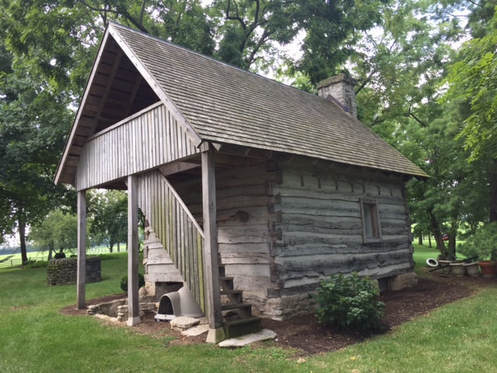
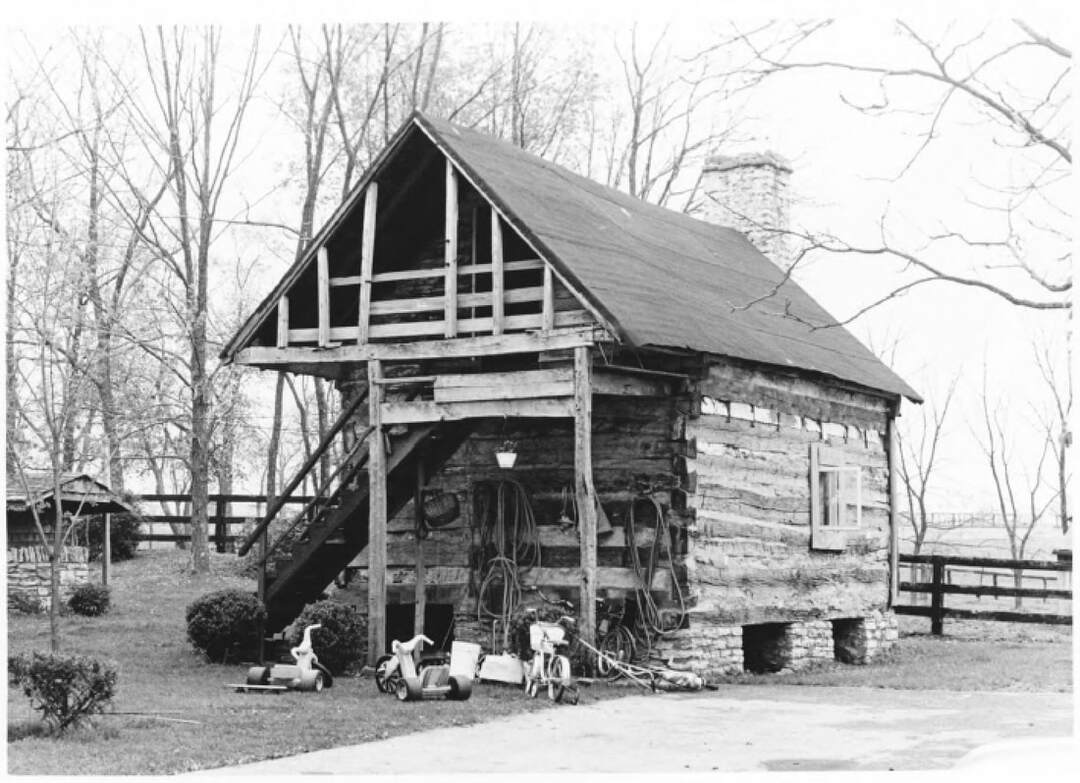
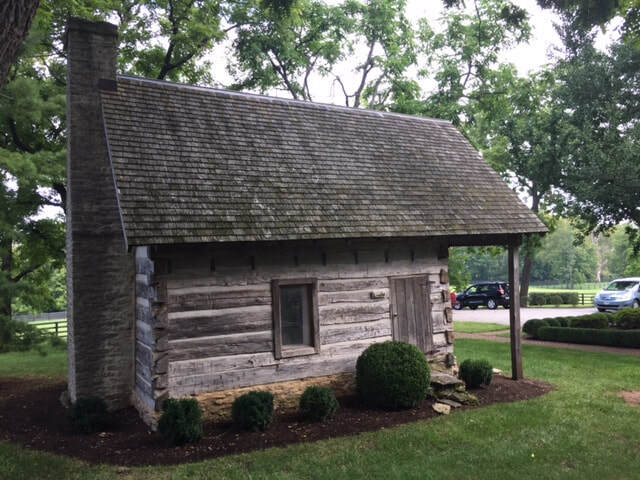
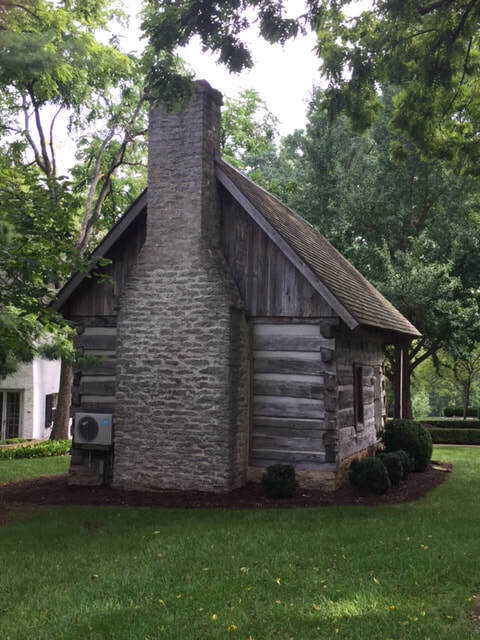
    ​8th Virginia Colonel Abraham Bowman’s frontier cabin looks better than has in 200 years.
     
    Frontier log cabins, usually built of American Chestnut on stone foundations, were very durable structures. A surprising number of them survive today, including the cabin 8th Virginia Colonel Abraham Bowman built about 1779 or 1780 when he moved to Kentucky. Nevertheless, after two centuries, the Bowman cabin showed signs of deterioration (and alteration) when images of it were submitted to the National Park Service in 1979. 
     
    Bowman and his brothers are remembered as accomplished equestrians, reportedly known back in the Shenandoah Valley as the “Four Centaurs of Cedar Creek.” Appropriately, most of his land in Kentucky is now part of one of the most important equestrian facilities in the world. His Highness Sheikh Mohammed bin Rashid Al Maktoum, the Emir of Dubai and Prime Minister of the United Arab Emirates, is a horse enthusiast and owner of a global thoroughbred stallion operation which stands stallions in six countries. Soon after acquiring the property in 2000, Sheikh Mohammed had the Bowman cabin repaired and restored, along with other properties built long ago for Bowman’s children.
     
    The unique cabin, which features a basement and an exterior staircase to a second floor, has never looked better. The most notable change from the restoration is the reorientation of the exterior stairs, presumably to their original position and providing more headroom over the basement stairs.
    Picture

    The Cabin circa 1979 (Courtesy of the National Park Service)

    Picture

    Side view of the cabin.

    Picture

    Rear view of the cabin.

  • Published on

    The Face of Peter Muhlenberg

    Picture

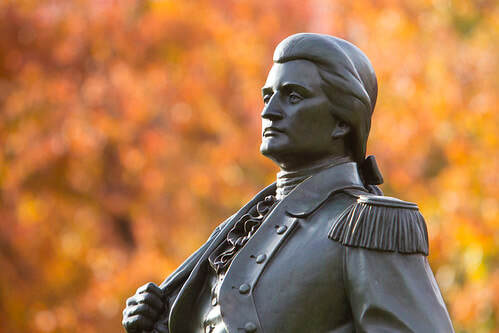
    Peter Muhlenberg did not look like this.

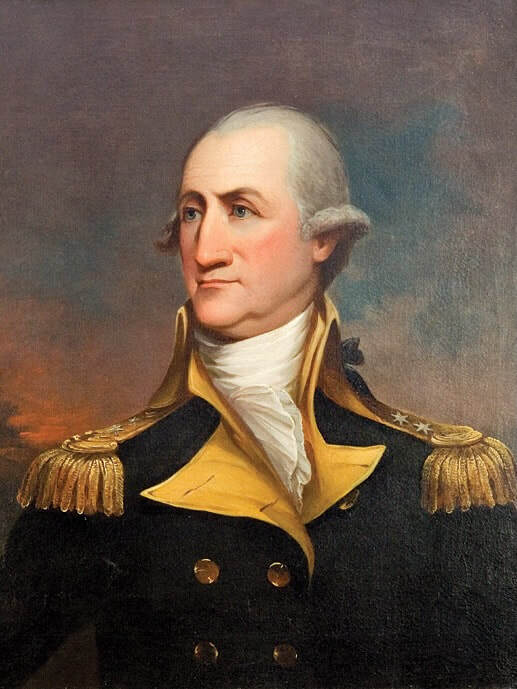
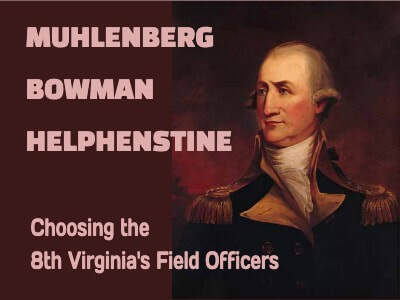
    ​What did Peter Muhlenberg look like? The celebrated "fighting parson" has been depicted in stained glass, marble, bronze, and oil. The most frequently-seen image of the general might be the oil-on-canvas portrait in the collection of the Martin Art Gallery at Muhlenberg College in Allentown, Pennsylvania. The gallery, however, identifies this portrait as the work of an anonymous artist, created on an unknown date “circa 1800-1900.” It appears, in fact, to be a copy of another portrait believed to be the work of noted founding era portrait artist John Trumbull. This portrait is in a private collection.
    As with many portraits of Revolutionary War figures, Muhlenberg appears in both paintings in uniform but as an older man. This is actually a good indicator that the general sat for the portrait. Former officers often had portraits made later in life, but wished to be depicted in uniform. An artist painting from his imagination would probably not have paired the older Muhlenberg's face with the younger man's uniform. Muhlenberg was just twenty-nine years old when he took command of the 8th Virginia. He was promoted to general in 1777 and breveted a major general when the army disbanded in 1783. By then, he was thirty-seven. The man in the Trumbull portrait and its copy appears to be in his late forties or fifties. Muhlenberg died on his sixty-first birthday in 1807. He wears two stars on his epaulets to indicate he is a major general, a practice begun during the war in 1780.
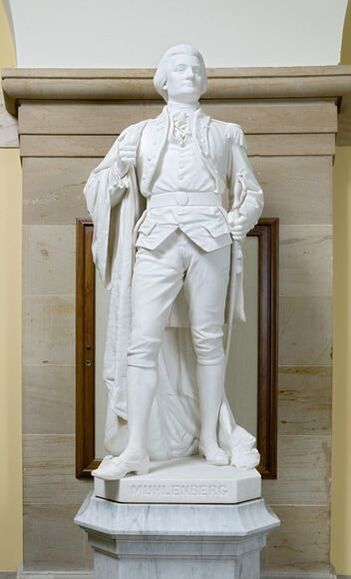
    The second-most commonly-seen image is probably the statue that stands in the United States Capitol, one of two statues representing the Commonwealth of Pennsylvania. This statue, which was created in 1889 by Blanche Nevin, hardly resembles the Trumbull portrait. It depicts Muhlenberg as the new colonel of the 8th Virginia Regiment, removing his pastor’s robe to reveal a military uniform. It appears to be a Continental Army uniform, which would be incorrect--the 8th Virginia was a Provincial Virginia regiment at thetime Muhlenberg gave his famous sermon. He may, in fact, have worn the same hunting shirt that his junior officers and enlisted men wore. This statue is the prototype for countless other images of Muhlenberg as a dashing young pastor surprising his congregation by revealing a uniform under his cloak. In fact, neither his commission nor his uniform a surprise to his congregation. There is no reason to doubt the sermon itself.

    Portraits from life or personal knowledge

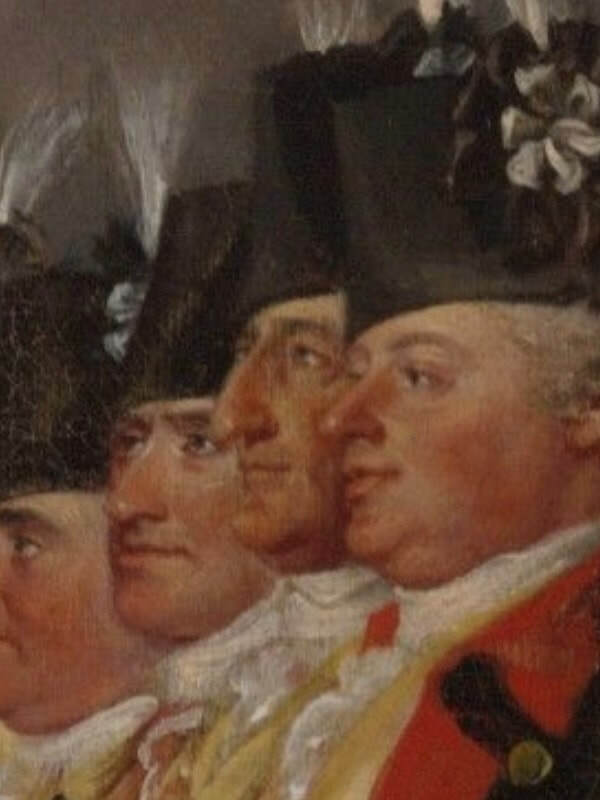
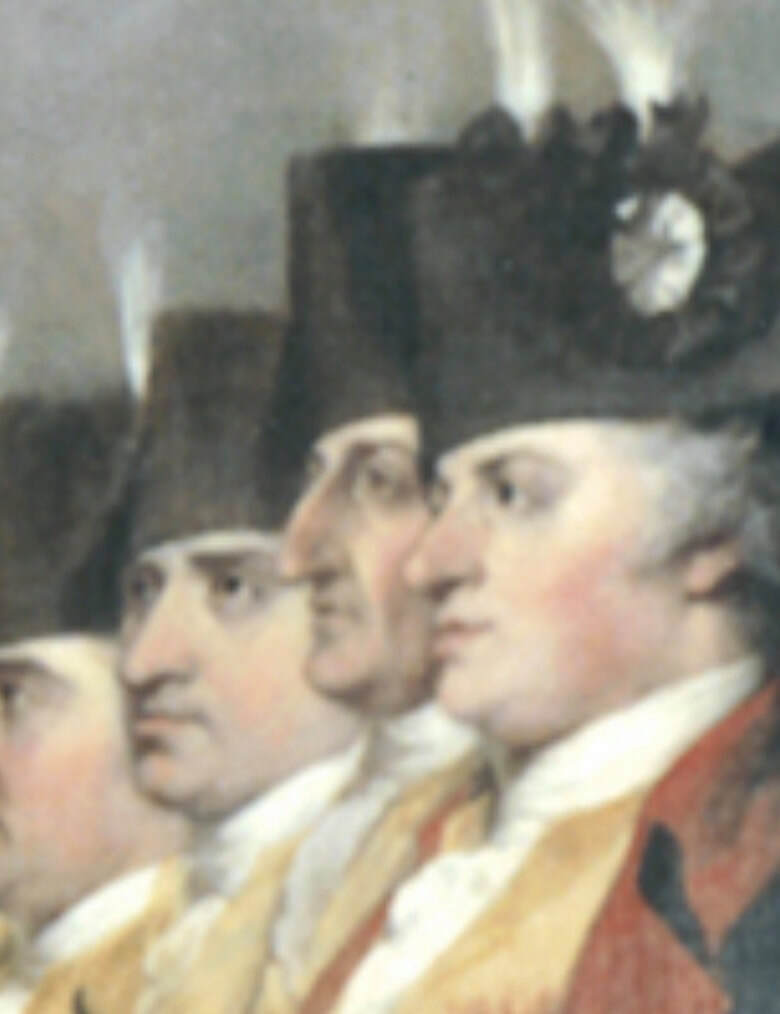
    Directly upstairs from that statue, in the Capitol rotunda, there is another image of Muhlenberg which may be the most reliable depiction of him as a soldier. It is a partially-obscured side image of the general in Trumbull’s grand depiction of The Surrender of Lord Cornwallis. According to the Architect of the Capitol, Trumbull created this giant painting “between 1819 and 1820, basing it upon a small painting … that he had first envisioned in 1785….  In 1787 he made preliminary drawings for the small painting. Although he struggled for a time with the arrangement of the figures, he had settled upon a composition by 1788.”

    “To create portraits from life of the people depicted in this and other paintings," the Capitol architect's website says, "Trumbull traveled extensively. He obtained sittings with numerous individuals in Paris (including French officers at Thomas Jefferson’s house) and in New York. In 1791 he was at Yorktown and sketched the site of the British surrender. He continued to work on the small painting during the following years but did not [immediately] complete it; nevertheless, in January 1817 he showed it and other works in Washington, D.C., and was given a commission to create four monumental history paintings for the Capitol. Surrender of Lord Cornwallis was the second of these large paintings that he completed. He exhibited it in New York City, Boston, and Baltimore before delivering it to the United States Capitol in late 1820. He completed the small painting around 1828; it is now part of the collection of the Yale University Art Gallery.”
    Trumbull worked hard to make his depiction of the people in his history paintings as accurate as possible. He wrote that “to transmit to their descendants, the personal resemblance of those who have been the great actors in those illustrious scenes” was one of the goals of his patriotic painting. A war veteran from a prominent Connecticut family, Trumbull knew many of his subjects personally.
    Picture

    The 1889 statue by Blanche Nevin in the U.S. Capitol is a work of the artist's imagination.

    If he even needed a sitting, Muhlenberg would not have been a hard man for Trumbull to find. The retired general served in Congress and as vice president and de-facto governor of Pennsylvania during the earlier years of Trumbull’s project. In the Yorktown painting, Muhlenberg stands between Henry Knox and Edward Hand. All of them were in their thirties in 1781 and appear so under Trumbull's brush.

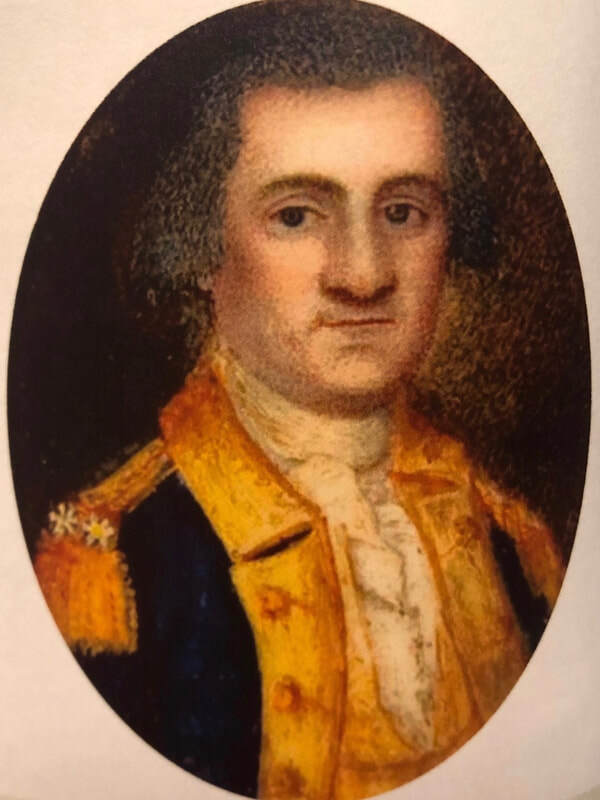
    A miniature portrait of the general from about 1784 also survives in a private collection. Here, he is facing the viewer directly and noticeably younger than he appears in the other paintings.

    The images were painted at different times and depict him at different ages, but at least one feature shows they are clearly the same man. The three-quarters portrait shows he has a long nose, slightly angled eyes, and jowly cheeks.  The Yorktown paintings show a side view and reveal a large and birdlike nose. Even the miniature, which might most easily have disguised the size of his nose, reveals its prominence.
    (Updated 9/17/21 and 8/20/25)

    More from The 8th Virginia Regiment