• Published on

    Catching Eagles

    Image description
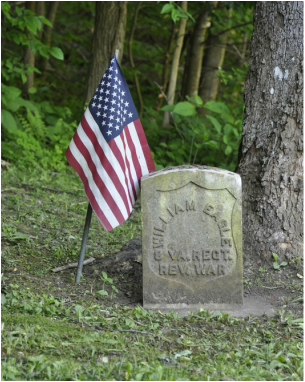
    A historic marker in Pendleton County, West Virginia tells the story of fifteen year-old William Eagle, who enlisted in the 8th Virginia on Christmas Eve, 1776. This was the Revolution's darkest hour. Washington's dwindling army had fled from the British across New Jersey and was now huddling, frozen by fear and cold on the West Bank of the Delaware. At a moment when few were willing to enlist, this teenage patriot stepped forward. 

    Except it isn't true. Eagle's pension gives the same date that appears on the sign, but they are both wrong. The sign probably takes its date from the pension. As far as we know, Eagle served honorably and well. But he didn't enlist until December of 1777 when he was sixteen years old. The evidence is clear.

    First, His name appears nowhere in the muster or pay rolls for 1777, and the "commencement of pay" date on his first pay roll entry is February 1, 1778.

    Second, His pension affidavit claims that he "enlisted for the term of three years, on or about the 24th day of December in the year 1776, in the state of Virginia in the Company commanded by Captain Stead or Sted or Steed, in the Regiment commanded by Colonel Nevil or Neville." Colonel John Neville (no known relation to me) commanded the regiment after it was folded into the 4th Virginia in the fall of 1778. Had Eagle enlisted in the regiment in December of 1776 and joined it in January of 1777 he would certainly have mentioned Colonel Abraham Bowman, who became a "supernumerary" officer and was released from service when the regiments merged. Eagle served under Bowman only for a short while and, consequently, did not mention him. Eagle got the names right (Neville and Steed), but the year wrong.

    Third, the term of his enlistment is consistently recorded as for 3 years or the length of the war (which ever was shorter). Soldiers who enlisted in 1777 or later enlisted under these terms. Virginia soldiers who enlisted in 1776 signed up for two years. (Someone might argue that a date so late in the year might have been treated differently, but I'm not aware of any examples of this.)

    The date of his enlistment is not recorded anywhere in the surviving official records. From the evidence, however, it seems certain that he in fact enlisted "on or about the 24th day of December" in the year of 1777--not 1776--and joined the regiment at Valley Forge about a month later. Eagle is not the only veteran who got the dates of his service wrong when applying for a pension decades later. It is an understandable error for an old man to make. The State of West Virginia might, however, want to invest in an updated marker.

    So what happened to William Eagle? After nearly two years of service he was “discharged for inability” on September 1, 1779. Tradition has it that he had a broken arm. Whatever his injury was, it saved him capture following the surrender of the Virginia Line after the Siege of Charleston in May of 1780.

    William Eagle’s grave is by Eagle Rocks, a steep peak near the headwaters of the Potomac in West Virginia’s remote Smoke Hole Canyon. Ross B. Johnston wrote in his book West Virginians in the Revolution that the veteran named his son George Washington Eagle, and he nearly lost his life one day climbing his namesake peak in an attempt to capture some baby eagles.
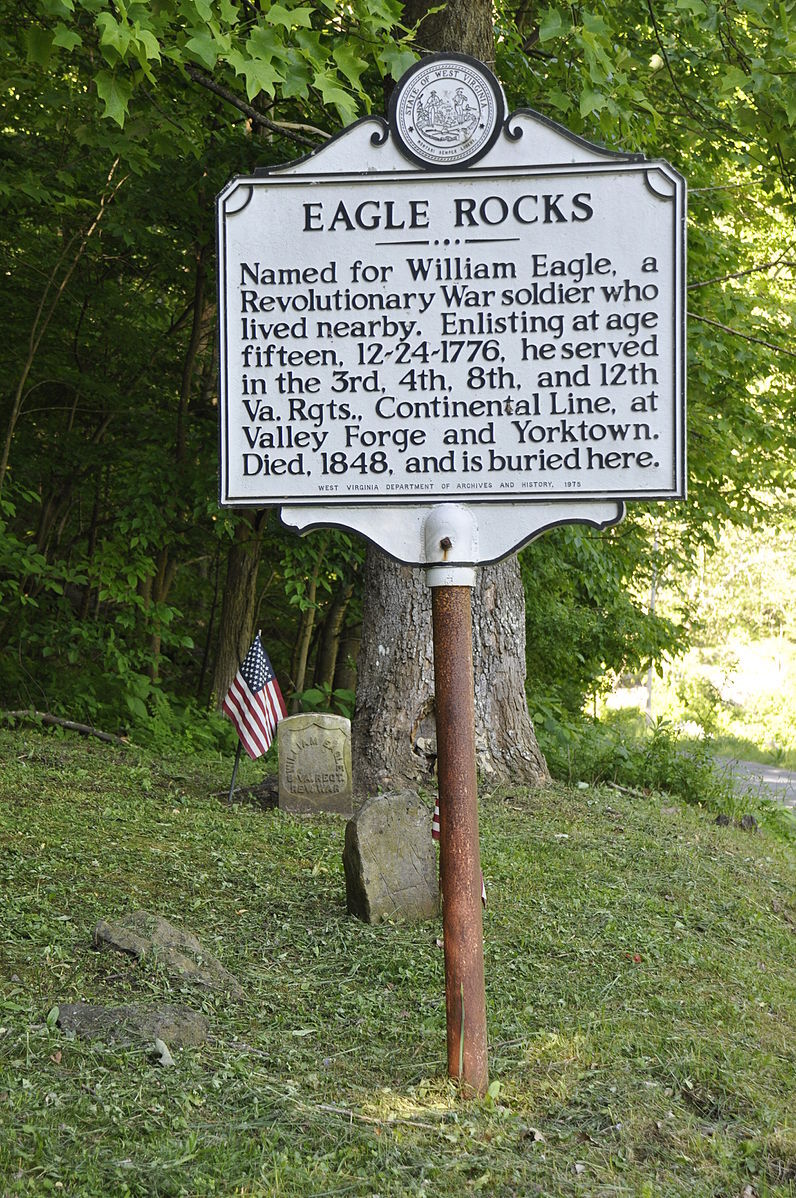
    An undated photo of the grave.
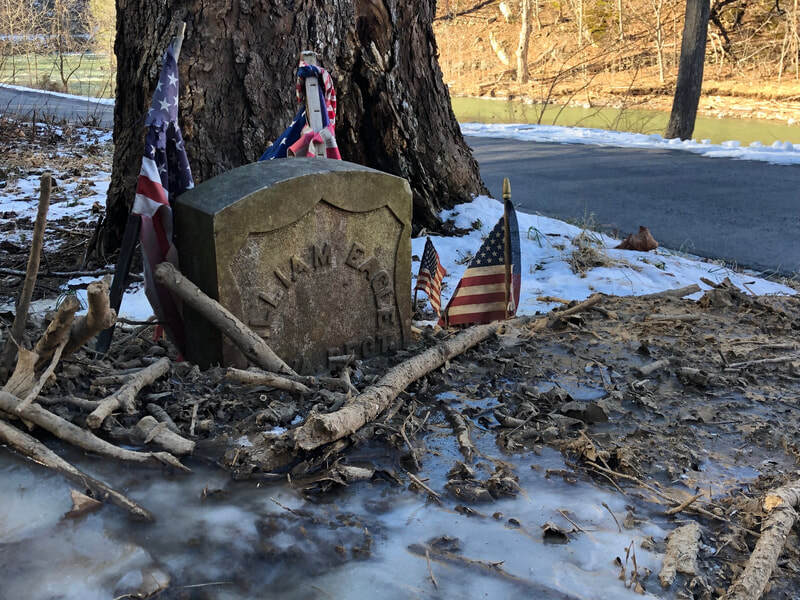
    A January, 2019 photo shows grave needing some care.
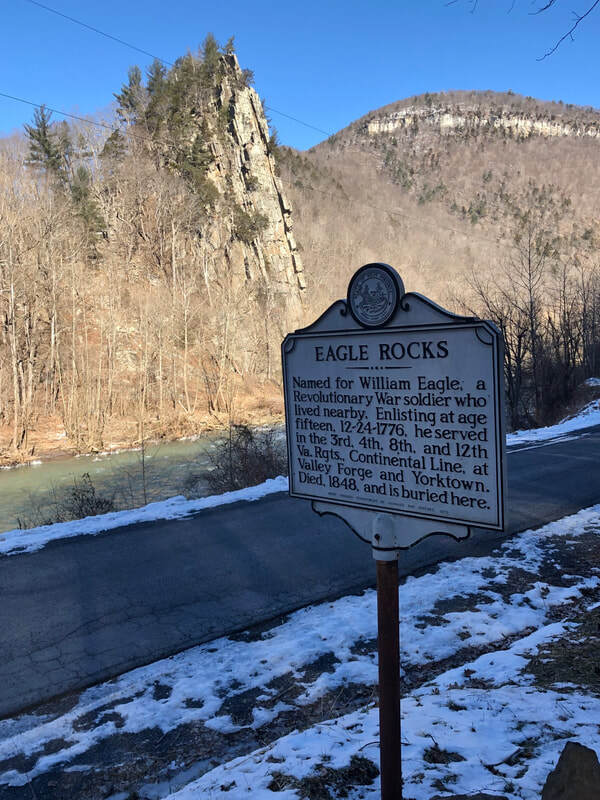
    Eagle Rocks is seen across a small road from William Eagle's grave.
    (Revised December 21, 2019)

  • Published on

    The Official Whiskey of the 8th Virginia

    Image description
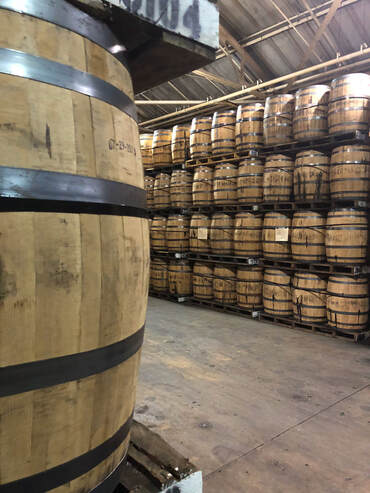
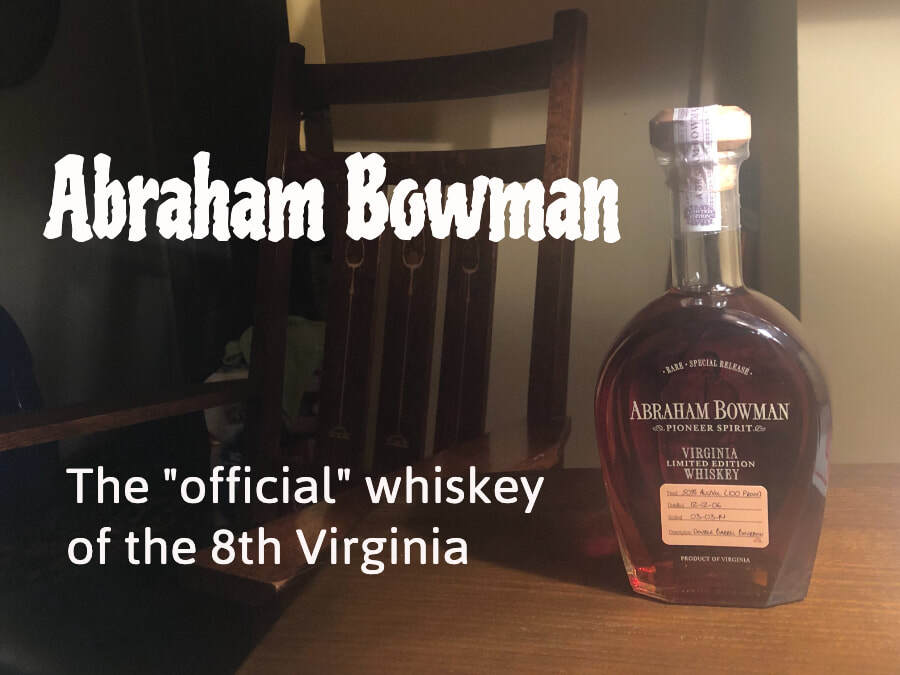
    Abraham Bowman whiskey, which is produced in Fredericksburg, Virginia, is named for the only field officer who commanded the 8th Virginia for its entire two-year existence. Originally distilled by his descendants, the whiskey is an excellent tribute.

    Americans drank rum in colonial times. After the Revolution, however, they drank whiskey. Rum was made from Caribbean molasses, but whiskey was purely home-grown. “The Revolution meant the decline of rum and the ascendancy of whiskey in America,” writes Mary Miley Theobald. “When the British blockade of American ports cut off the molasses trade, most New England rum distillers converted to whiskey. Whiskey had a patriotic flavor. It was an all-American drink, made in America by Americans from American grain.”

    Nowhere was whiskey more popular than on the Virginia frontier. Whiskey came to America with the “Scotch Irish” who settled the frontier of Virginia, the same areas that produced the 8th Virginia Regiment. After the war, many 8th Virginia men led their families and neighbors into the woods of Kentucky. Abraham Bowman was among the very first to go. They began making whiskey out of corn, aging it in charred oak barrels, and (eventually) calling it "Bourbon." 
    Image description
    Abraham Bowman was commissioned in 1776 to be the 8th Virginia’s original lieutenant colonel. A year later he was promoted to colonel to replace Peter Muhlenberg, who became a general. The Bowmans were not Scotch-Irish; they were German. Abraham was a third-generation American, however, and by his time or soon after there wasn’t much difference. After a few more generations, the Bowmans were back in the Old Dominion, and opened a whiskey distillery the day after Prohibition ended. For many years it was the only legal whiskey distillery in Virginia. 
     
    The historical label is “Virginia Gentleman,” a serviceable bottom-shelf whiskey that is aged for just a few year. A. Smith Bowman Distillery, which was sold by the family to the Sazerac Company in 2003, also has a line of award-winning top-shelf whiskeys named after members of the family’s Revolutionary War generation: Bowman Brothers, Isaac Bowman, and John J. Bowman. These are the labels for the company’s small batch, port barrel finished, and single barrel labels.
     
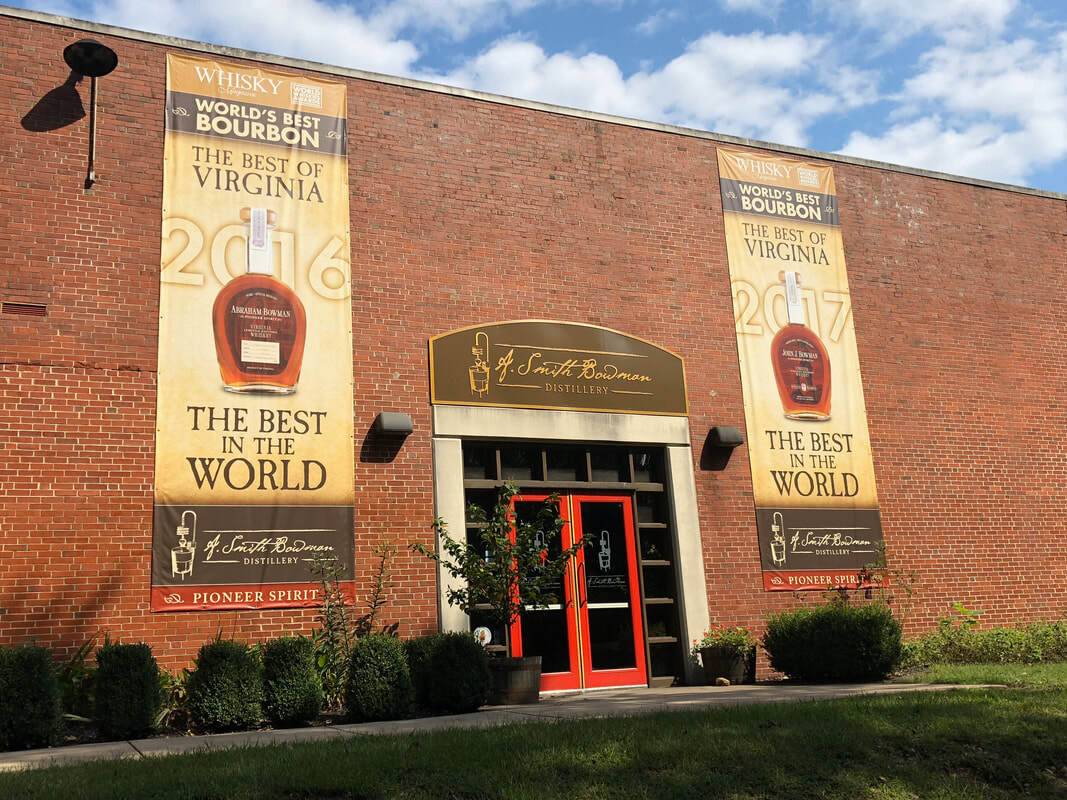
    The Abraham Bowman label is reserved for experimental whiskeys that are released once or twice a year in small quantities. There have been cider finished, “double barrel,” wheat bourbon, vanilla bean infused, coffee finished, and port wine finished versions. The port finished bourbon won a “world’s best bourbon” award in 2016 and became a regular product under the Isaac Bowman label. Since then, a bottle of Abraham Bowman whiskey has become very hard to acquire. To get one, a person has to stand in line at the distillery on the day of release or win a lottery conducted by the Virginia Alcoholic Beverage Control Authority. 
     
    If you live in Virginia or are ever driving through the state on Interstate 95, can stop in and take a tour of the distillery. You can go home with a bottle of good whiskey, but don’t count on a bottle of Abraham Bowman. It’s a safe bet they’ll be sold out.

    (Updated 1/11/20)
    Picture

    The distillery isn't shy about the awards it has received. (Author)

  • Published on

    The Less-Famous Older Brother

    Image description
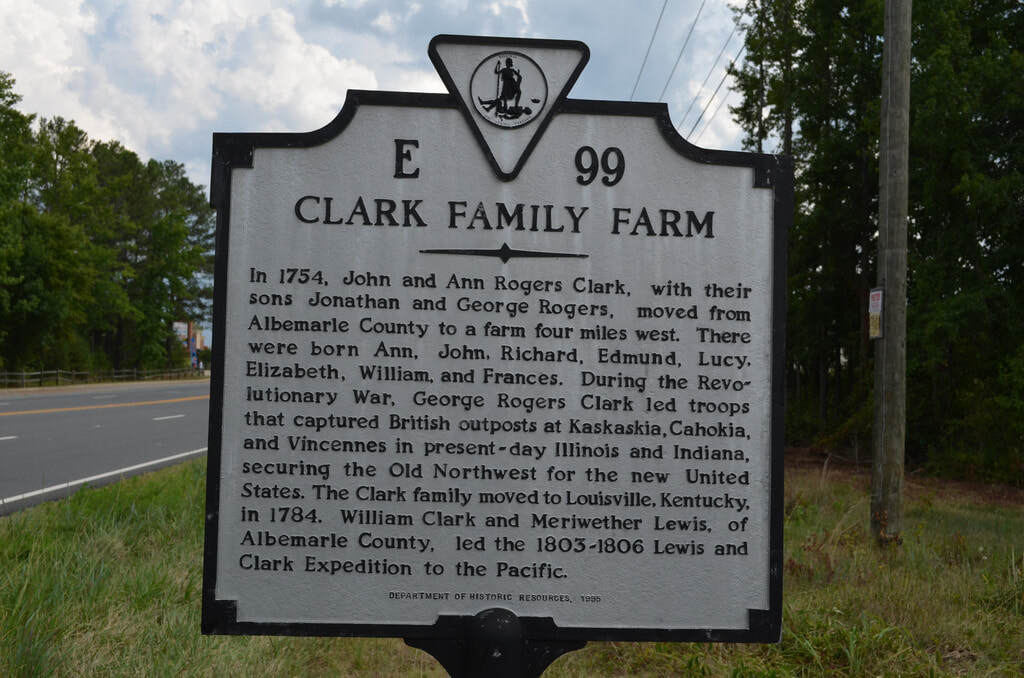
    Jonathan Clark was one of the 8th Virginia’s ten company captains. He was the older brother of the explorer William Clark, famous for the Lewis and Clark expedition. He was also the older brother of George Rogers Clark, the victor of the now-obscure Battle of Vincennes, which won the old “northwest territory” from the British in the Revolution. Did you ever wonder how all the territory east of the Mississippi became American territory after the war, not just the 13 colonies? The answer is George Rogers Clark.

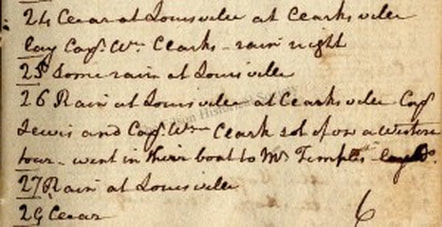
    Jonathan Clark was an important figure in his own right, and left the only comprehensive diary of the 8th Virginia’s experiences in the war. It is frustratingly concise, but also crucially important in piecing the regiment's history together. Jim Holmberg, a Kentucky historian and archivist, wrote a blog post about the eldest Clark brother four years ago on the bicentennial of his death. You can read it here.
    Picture

    More from The 8th Virginia Regiment

    Picture
    Picture
    Picture
  • Published on

    A Chance to Visit an 8th Virginia Homestead

    Image description
    On February 7, 1776, John Stump was one of the earliest recruits to join the 8th Virginia. He was recruited by Captain Abel Westfall or one of his lieutenants to join their new company of Virginia provincial soldiers. The company was one of ten that would make up the 8th Virginia Regiment.  John was probably the son of Michael Stump, a German who had changed his name from Hans Stumpff. 

    John marched with the regiment to South Carolina in the summer of 1776 and was present for the Battle of Sullivan's Island. The joy of that victory was followed by a summer and fall of intense suffering. The soldiers of the 8th fell victims to malaria--a mosquito-born illness these men from the mountains were ill-prepared for. After a planned invasion of British Florida was called off, they sat sick in camp at Sunbury, Georgia--a few of them dying nearly every day.

    When winter came and the malarial season ended, they hobbled back to Virginia. In the spring, those who were healthy enough marched off to join Washington's "Grand Camp" in New Jersey. They walked north, crossing the Potomac at Harper's Ferry  through Maryland into Pennsylvania before heading east through York, Lancaster, and Philadelphia. John Stump, however, couldn't make it much past Harper's Ferry. Muster rolls for the rest of the year report that he was "left sick in Maryland." After this, there is no further (discovered) record of him being alive.

    It could have been malaria, smallpox, or another disease--but John Stump probably died somewhere near Frederick, Maryland. This was the fate of many 8th Virginia soldiers. Disease was the primary killer of the war, and no regiment was hit harder by it than the 8th Virginia.

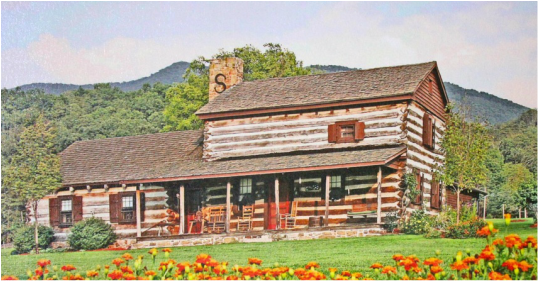
    The frontier cabin built by Michael Stump will be open for tours late this month. Records have not been found to prove it, but this is probably the cabin John Stump grew up in. Presumably, it was there that he shook his father's hand and kissed his mother's cheek before marching of to war, never to return. Current owners John and Beverly Buhl will open their doors during Hardy County Heritage Weekend, September 26 and 27. View their website for more information.
  • Published on

    Zachariah DeLong, We Hardly Knew You

    Image description
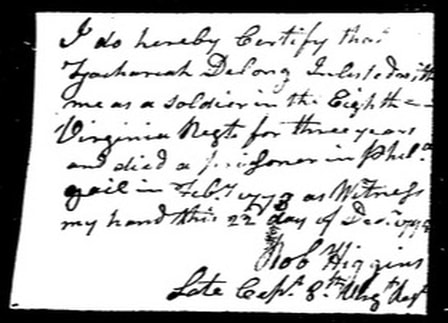
    Two posts ago, I featured the house of Captain Robert Higgins in Moorefield, West Virginia. Here is a note authored by Higgins in support of a post-war bounty land warrant issued to the heirs of one of his soldiers, Zachariah DeLong. I don't know much about DeLong, but the story we have is a sad one.

    In the fall of 1776, the enlistments of an entire company of the 8th expired. (This was John Stephenson's company, which was formed in 1775 when terms were just a year.) Short a company, Colonel Muhlenberg proposed his brother-in-law, Francis Swain (the regiment's adjutant), be made a captain. Washington rejected Muhlenberg's suggestion and promoted Lt. Robert Higgins instead. Higgins came from Capt. Abel Westfall's Hampshire County-raised company and may have been the senior surviving lieutenant in the regiment. That would explain his promotion. Higgins spent the next six months diligently attempting to recruit a new company from scratch. The euphoria of 1776, however, had been replaced by the cold reality that nearly half of the original regiment had already died, deserted, or become very sick from malaria. Higgins was never able to recruit more than about 15 men. Zachariah DeLong was one of the brave souls who signed up.

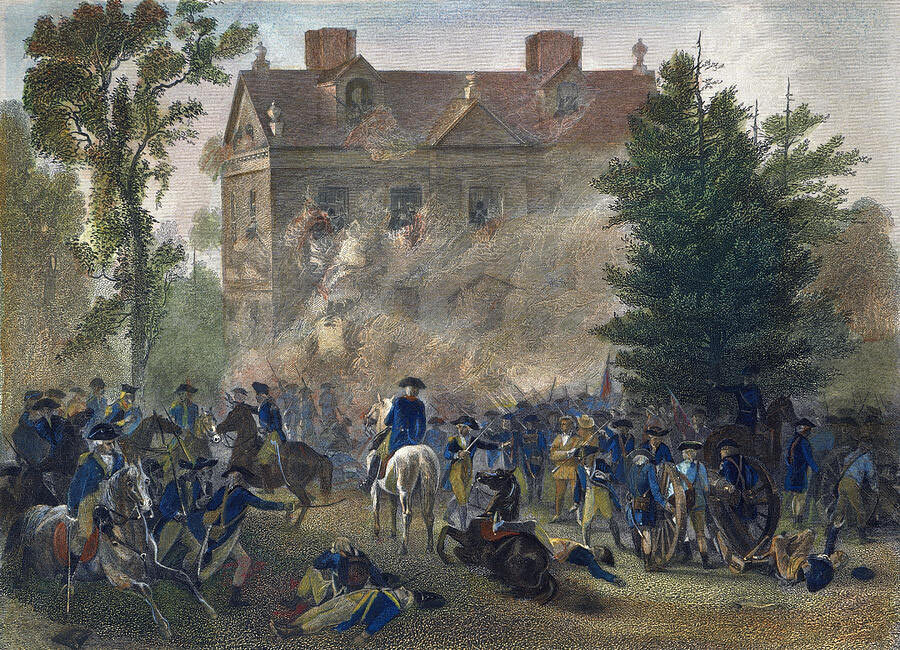
    Higgins brought his tiny company to the main army late in September of 1777 and quickly went into combat at Germantown on October 4. Higgins and many others were captured when they followed Major William Darke into the thick morning fog just before friendly fire put the rest of the army into a retreat. Unlike Higgins, who was a veteran of the 1776 campaign, DeLong was in Washington's Army for just a few days before he was captured.

    As an officer, Higgins was treated better by the British than enlisted men like DeLong. DeLong, like thousands of others, was held in conditions so terrible he could not survive them. Higgins signed at least three notes of this kind, attesting that soldiers like DeLong had indeed served under him before dying of rampant disease in a filthy British jail only four months after their capture.

    Peter Muhlenberg, by the way, became a brigadier general at about the same time Higgins became a captain. He appointed Francis Swain his brigade major. Swain was terrible at the job and eventually washed out of the army.

    Thanks to Tom Higgins of Shelbyville, Kentucky, for this document.

    (Updated 3/29/20)

    Read More: "Captain Higgins' House (8/30/15)"
    Picture

    This attack on the Chew House slowed the Continental advance during the Battle of Germantown. This and other causes of confusion led to a friendly fire incident. Zachariah DeLong and other advancing 8th Virginia men were captured along with the entire 9th Virginia Regiment when the rest of the army retreated. (Image: unknown artist after a painting by Alonzo Chappel)

    More from The 8th Virginia Regiment

    Picture
    Picture
    Picture
  • Published on

    Captain Higgins' House

    Picture

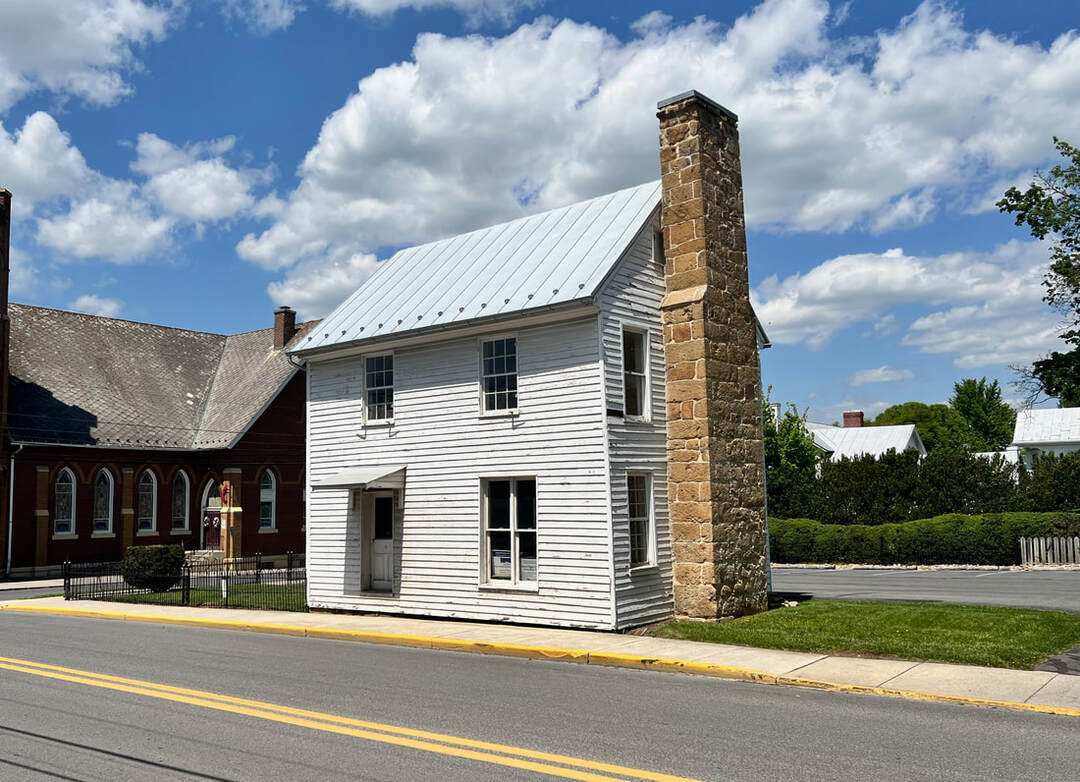
    The Higgins house in Moorefield, W.Va. (Author)

    Robert Higgins began the war in 1776 as a lieutenant in Capt. Abel Westfall's Hampshire County company of the 8th Virginia. In the spring of 1777 he was given command his own company, but had a hard time recruiting. The initial patriotic excitement of 1775 and early 1776 was over, and the grim reality of war had set in. Word had spread about the number of 8th Virginia men who had died of malaria. Smallpox was another major threat. 
    Nevertheless, he was ordered to join Washington's army in Pennsylvania with the few recruits he had. Higgins made it back to camp just in time to be captured by the enemy at Germantown on October 4. War was not a new experience for Higgins when he first signed up with Captain Westfall. According to Samuel Kercheval's 1833 History of the Valley of Virginia, he first experienced it as a boy in the French and Indian War. 

    In 1756, while the Indians were lurking about Fort Pleasant and constantly on the watch to cut off all communication therewith, a lad named Higgins, aged about twelve years, was directed by his mother to go to the spring, about a quarter of a mile without the Fort, and bring a bucket of water. He complied with much trepidation, and persuaded a companion of his, of about the same age, to accompany him. They repaired to the spring as cautiously as possible, and after filling their buckets, ran with speed towards the Fort, Higgins taking the lead. When about half way to the Fort, and Higgins had got about thirty yards before his companion, he heard a scream from the latter, which caused him to increase his speed to the utmost. He reached the Fort in safety, while his companion was captured by the Indians and taken to the settlements, where he remained until the peace, and was then restored.

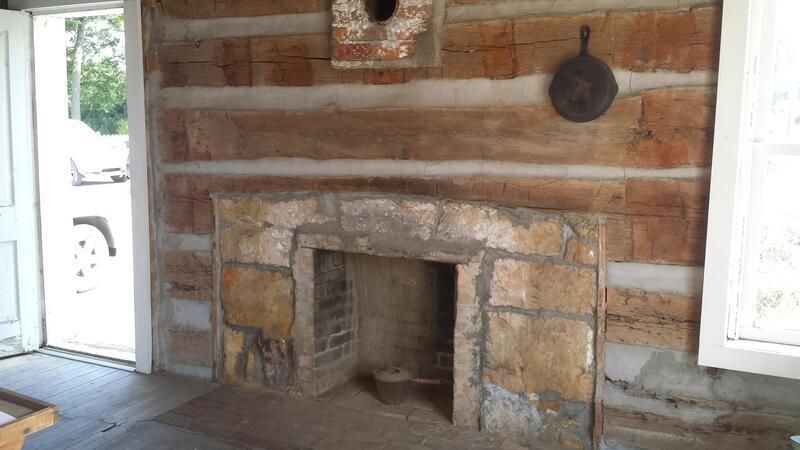
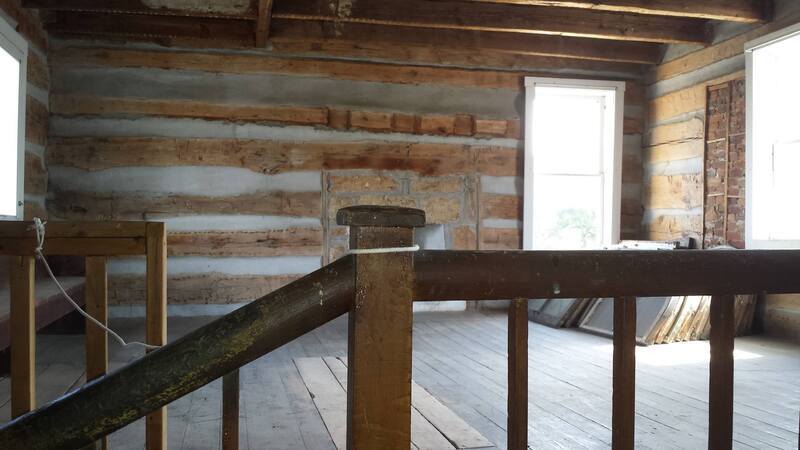
    ​After the war, Higgins built a log house in Moorefield, West Virginia, which is still standing and in good condition. It is the second-oldest building Moorefield. He built it sometime between 1786 and 1788. The clapboard siding is not a modern addition. Until the 20th century, log houses were routinely given siding if and when the owners could afford it. Higgins only lived in this house for a few years before heading farther west to Kentucky and then founding Higginsport, Ohio.

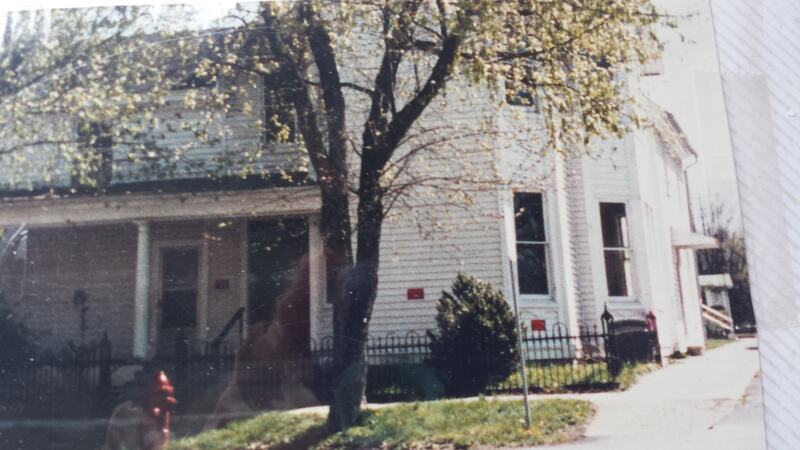
    The Higgins House is open once a year in September for Moorefield Heritage Days. The photographs below were shared by longtime Moorefield resident Judy Rice, who grew up next-door in an addition that has since been removed.

    To read more about Captain Higgins, read this article at the Kentucky Society of Sons of the American Revolution website. To read more about 18th and 19th century log cabins, view this essay from the National Park Service.

    Thanks to Judy Rice for additional information and for the photographs below. 

    (Updated April 22, 2020)

    Read More: "The Cost of Fog and Drunkenness" (10/3/15)
    This addition has been removed. The original house is visible around the corner to the right.

    More from The 8th Virginia Regiment