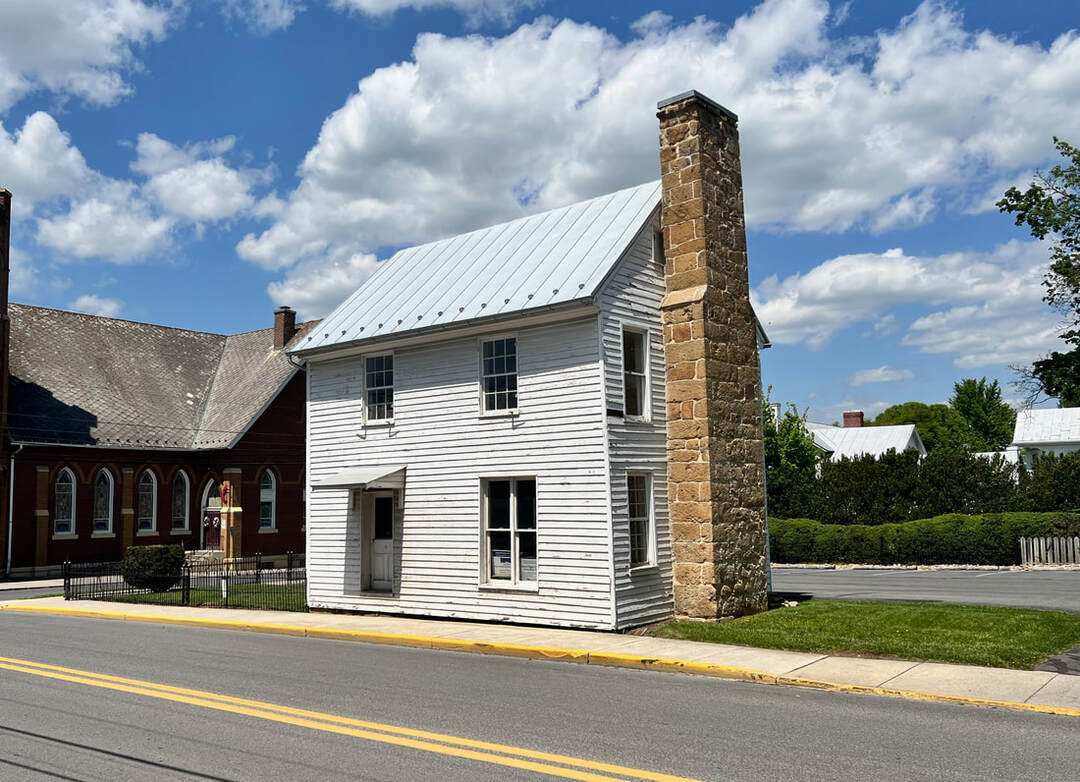
The Higgins house in Moorefield, W.Va. (Author)
Robert Higgins began the war in 1776 as a lieutenant in Capt. Abel Westfall's Hampshire County company of the 8th Virginia. In the spring of 1777 he was given command his own company, but had a hard time recruiting. The initial patriotic excitement of 1775 and early 1776 was over, and the grim reality of war had set in. Word had spread about the number of 8th Virginia men who had died of malaria. Smallpox was another major threat.
Nevertheless, he was ordered to join Washington's army in Pennsylvania with the few recruits he had. Higgins made it back to camp just in time to be captured by the enemy at Germantown on October 4. War was not a new experience for Higgins when he first signed up with Captain Westfall. According to Samuel Kercheval's 1833 History of the Valley of Virginia, he first experienced it as a boy in the French and Indian War.
In 1756, while the Indians were lurking about Fort Pleasant and constantly on the watch to cut off all communication therewith, a lad named Higgins, aged about twelve years, was directed by his mother to go to the spring, about a quarter of a mile without the Fort, and bring a bucket of water. He complied with much trepidation, and persuaded a companion of his, of about the same age, to accompany him. They repaired to the spring as cautiously as possible, and after filling their buckets, ran with speed towards the Fort, Higgins taking the lead. When about half way to the Fort, and Higgins had got about thirty yards before his companion, he heard a scream from the latter, which caused him to increase his speed to the utmost. He reached the Fort in safety, while his companion was captured by the Indians and taken to the settlements, where he remained until the peace, and was then restored.
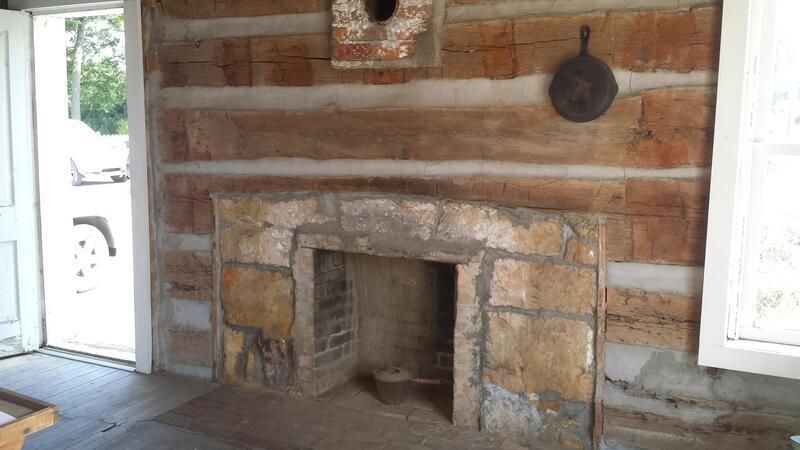
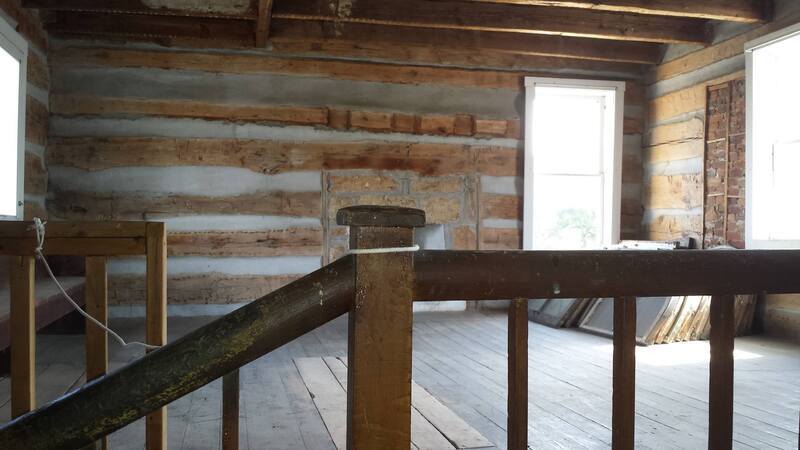
After the war, Higgins built a log house in Moorefield, West Virginia, which is still standing and in good condition. It is the second-oldest building Moorefield. He built it sometime between 1786 and 1788. The clapboard siding is not a modern addition. Until the 20th century, log houses were routinely given siding if and when the owners could afford it. Higgins only lived in this house for a few years before heading farther west to Kentucky and then founding Higginsport, Ohio.
The Higgins House is open once a year in September for Moorefield Heritage Days. The photographs below were shared by longtime Moorefield resident Judy Rice, who grew up next-door in an addition that has since been removed.
To read more about Captain Higgins, read this article at the Kentucky Society of Sons of the American Revolution website. To read more about 18th and 19th century log cabins, view this essay from the National Park Service.
Thanks to Judy Rice for additional information and for the photographs below.
(Updated April 22, 2020)
Read More: "The Cost of Fog and Drunkenness" (10/3/15)
In 1756, while the Indians were lurking about Fort Pleasant and constantly on the watch to cut off all communication therewith, a lad named Higgins, aged about twelve years, was directed by his mother to go to the spring, about a quarter of a mile without the Fort, and bring a bucket of water. He complied with much trepidation, and persuaded a companion of his, of about the same age, to accompany him. They repaired to the spring as cautiously as possible, and after filling their buckets, ran with speed towards the Fort, Higgins taking the lead. When about half way to the Fort, and Higgins had got about thirty yards before his companion, he heard a scream from the latter, which caused him to increase his speed to the utmost. He reached the Fort in safety, while his companion was captured by the Indians and taken to the settlements, where he remained until the peace, and was then restored.
After the war, Higgins built a log house in Moorefield, West Virginia, which is still standing and in good condition. It is the second-oldest building Moorefield. He built it sometime between 1786 and 1788. The clapboard siding is not a modern addition. Until the 20th century, log houses were routinely given siding if and when the owners could afford it. Higgins only lived in this house for a few years before heading farther west to Kentucky and then founding Higginsport, Ohio.
The Higgins House is open once a year in September for Moorefield Heritage Days. The photographs below were shared by longtime Moorefield resident Judy Rice, who grew up next-door in an addition that has since been removed.
To read more about Captain Higgins, read this article at the Kentucky Society of Sons of the American Revolution website. To read more about 18th and 19th century log cabins, view this essay from the National Park Service.
Thanks to Judy Rice for additional information and for the photographs below.
(Updated April 22, 2020)
Read More: "The Cost of Fog and Drunkenness" (10/3/15)
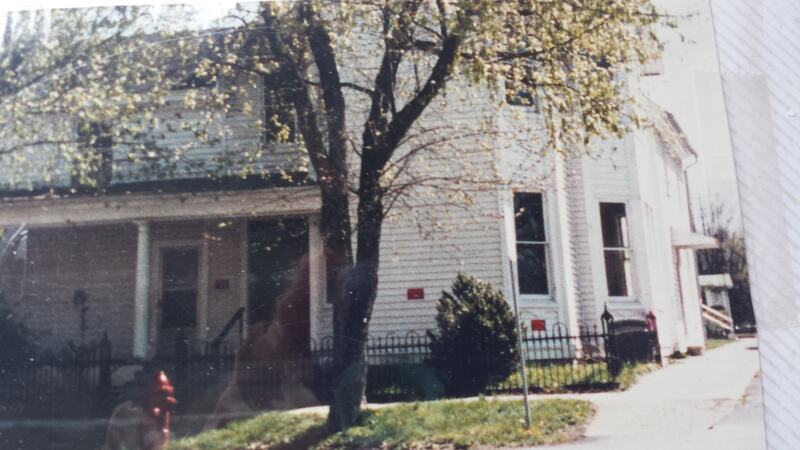
This addition has been removed. The original house is visible around the corner to the right.
More from The 8th Virginia Regiment