• Published on

    Root Hog or Die!

    Picture
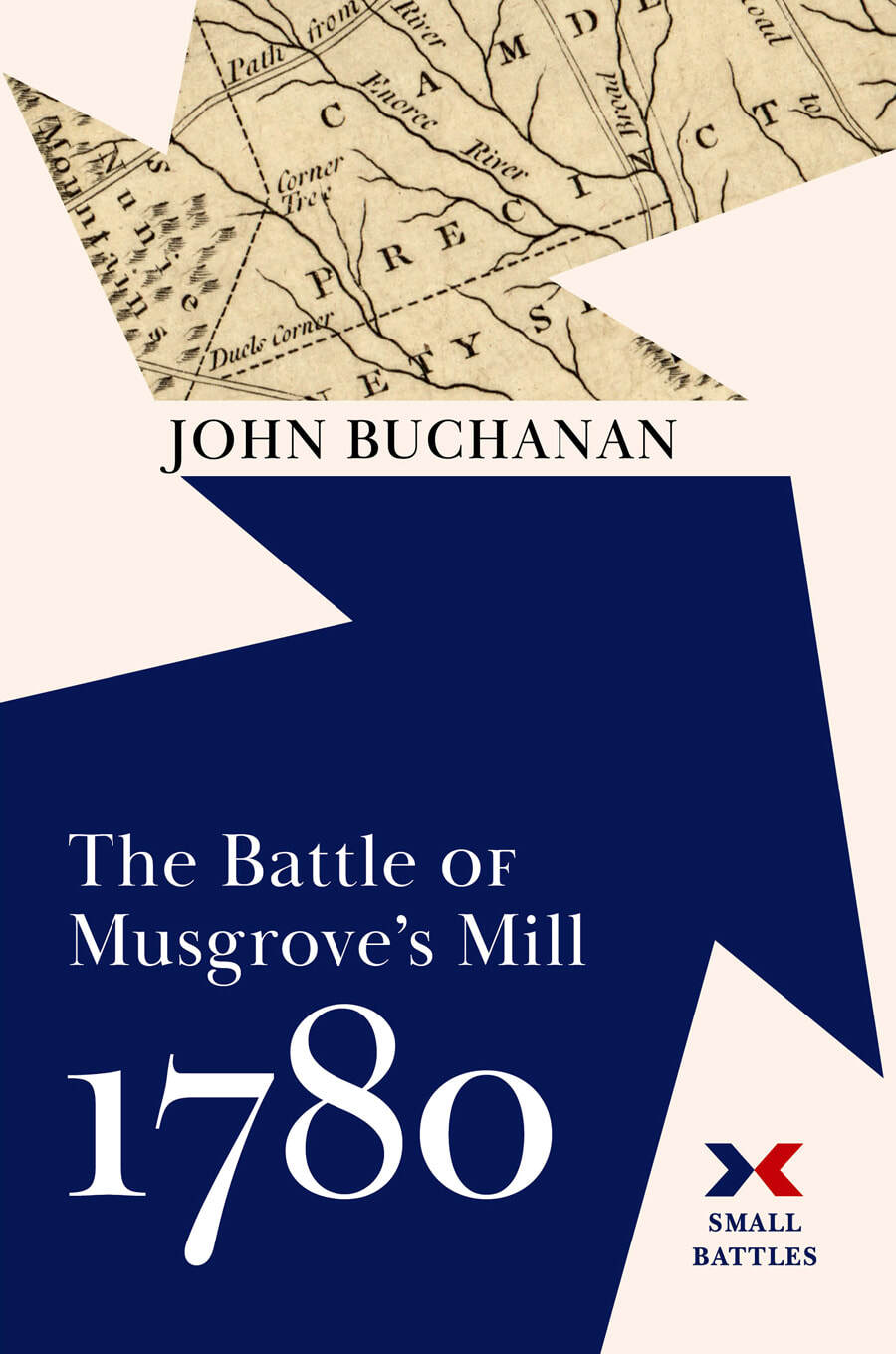
    The Battle of Musgrove's Mill, 1780
    John Buchanan (Westholme, 2022)
    British victory in the Revolution required one thing above all: the ability of American Loyalists to retake and hold the civil and military functions of government. Then as now, occupying armies are expensive and cannot stay forever. In this light, a battle between Tories and Patriots involving no Redcoats, Hessians, or even Continentals, towers in importance — not because of casualty counts or territory gained or lost, but as a test of the basic requirement for ultimate British success. By 1780, the British had basically given up on holding the North. With a negotiated settlement increasingly likely, what mattered now was demonstrating civil and military control of the southern colonies. The British knew that holding two or three coastal cities wasn’t going to cut it. They had to control the backcountry.
    Though still insufficiently covered in classrooms, the Battle of Kings Mountain is recognized as the key event in the demonstration of popular southern refusal to submit to Loyalist rule. Even less well-remembered is the smaller Battle of Musgrove’s Mill, without which there may have been no Kings Mountain. It was a little encounter in which just 200 Patriot militiamen faced off against 264 Loyalist regulars and militia. Though small, it sent a strong signal that backcountry Americans simply would not be ruled any longer by a foreign king.

    Giving such small battles their due is the purpose of Westholme Publishing’s “Small Battles” series. The Battle of Musgrove’s Mill, 1780 comes from the pen of John Buchanan, the undisputed dean of southern Revolutionary War history. Now in his 90s, Buchanan writes as well as ever. In fewer than a hundred pages, he puts the story in context; explains the British, Tory, Indian, and Patriot perspectives; tells us about the key commanders on both sides; narrates the battle; and tells us why it matters. That is a lot to put into eighty-eight pages of text, but he has done it masterfully.

    More from The 8th Virginia Regiment
  • Published on

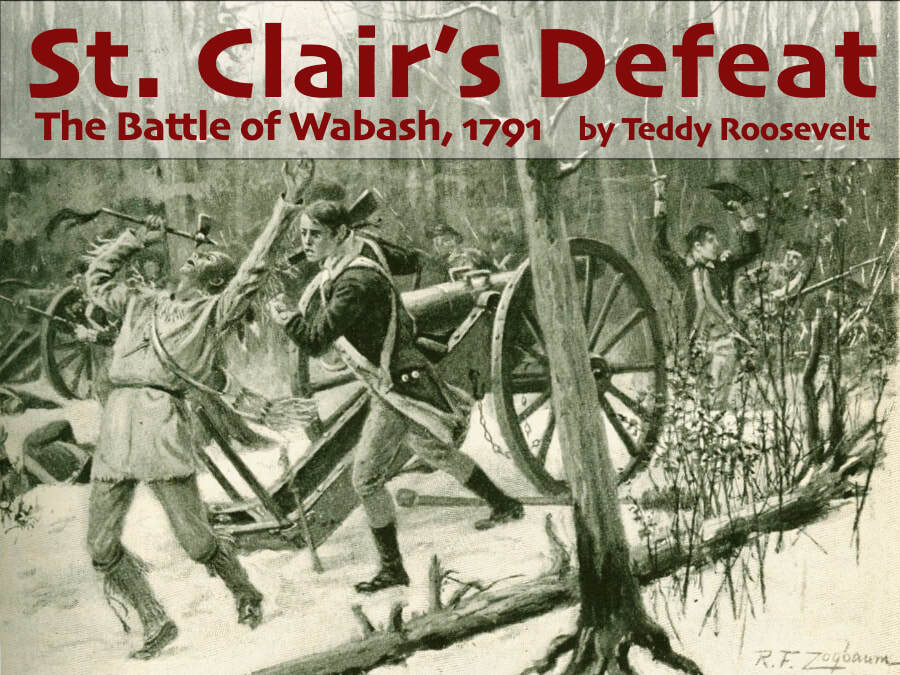
    What Are Unalienable Rights?

    Picture
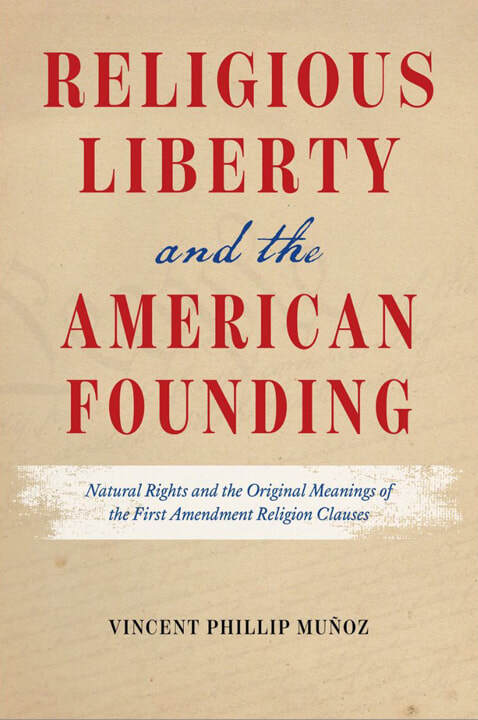
    Religious Liberty and the American Founding
    Vincent Phillip Muñoz (University of Chicago Press, 2022)
    We are told in the Declaration of Independence that certain rights are “unalienable.” Have you ever wondered what that means? Are other rights “alienable?” Notre Dame’s Professor Vincent Phillip Muñoz, author of Religious Liberty and the American Founding, wants you to ask that question.

    The importance of the First Amendment is universally understood. It is the most-discussed part of the Constitution and the courts have ruled on its meaning many times. 
    Professor Muñoz argues persuasively, however, that scholars, lawyers, and judges have all done a consistently sloppy job of seeking to understand what the founders actually meant by the words they used. So much so, in fact, that the original meaning of the Establishment and Free Expression clauses has effectively been lost. The result is that the text has become an ideological Rorschach test. It can be made to mean almost anything. “The consensus that the Founders’ understanding should serve as a guide has produced neither agreement nor coherence in church-state jurisprudence,” Dr. Muñoz writes. “Indeed, it has produced the opposite; it seems that almost any and every church-state judicial position can invoke the Founders’ support.

    ​Many readers will be surprised to hear that the Founders themselves are largely to blame for this. The language of the First Amendment itself (“Congress shall make no law respecting an establishment of religion, or prohibiting the free exercise thereof”) is not very precise. The reason for this is that “Many, if not most, of the individuals who drafted the First Amendment did not think it was necessary.”[2] Establishment was a state issue and the Federal constitution already banned religious tests in Article VI.[3] It was the Anti-Federalists who insisted on the Bill of Rights, but they were in the minority in the 1st Congress.

    More from The 8th Virginia Regiment
  • Published on

    Catholics and the Founding

    Picture
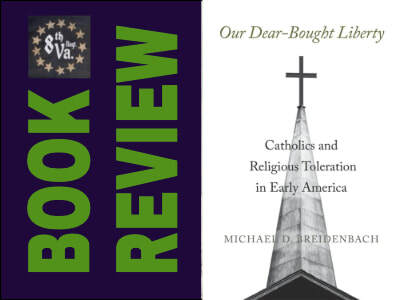
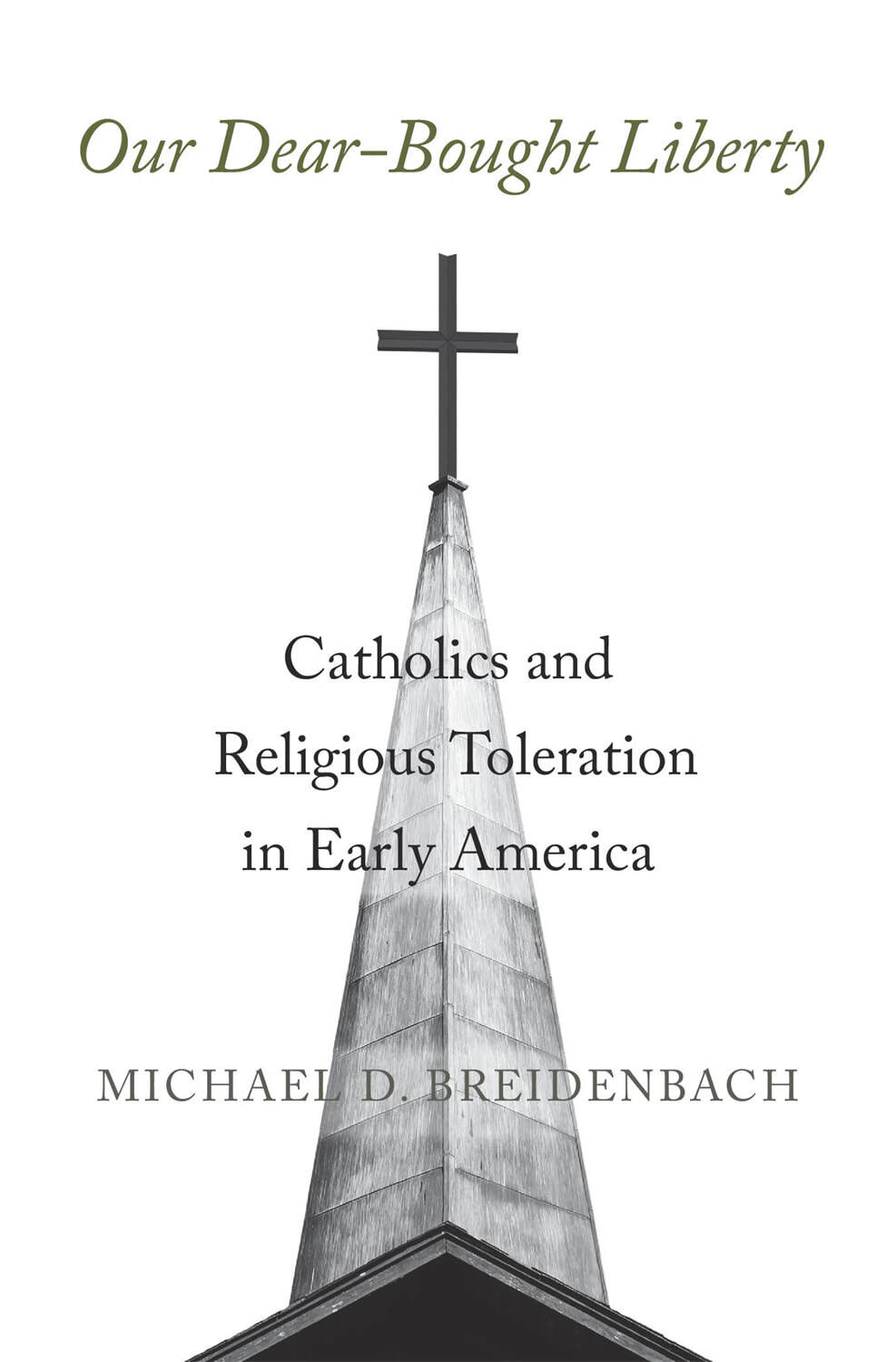
    Our Dear-Bought Liberty: Catholics and Religious Toleration in Early America
    Michael D. Breidenbach (Harvard University Press, 2021)
    Most Americans in pre-revolutionary times had a strong dislike of Catholicism. They believed it to be a religion of ignorance, a religion of tyranny, and the religion of the enemy. The ever-opinionated John Adams attended a mass in Philadelphia in 1774, motivated by “curiosity and good company.” He wrote home to Abigail to describe the “poor Wretches, fingering their Beads, chanting Latin, not a Word of which they understood, their Pater Nosters and Ave Maria’s. Their holy Water—their Crossing themselves perpetually—their Bowing to the Name of Jesus, wherever they hear it—their Bowings, and Kneelings, and Genuflections before the Altar.” 
    He described the priest’s ornate vestments, the beautiful music, and the bloody crucifix above the altar. “Here is every Thing which can lay hold of the Eye, Ear, and Imagination. Every Thing which can charm and bewitch the simple and ignorant. I wonder how Luther ever broke the spell.” He admitted, though, that the sermon was good.

    Protestants’ views of Catholics aside, it was the Church itself, and more specifically the Papacy, that presented a problem for the British Empire. The influential political thinker John Locke asserted in his 1689 Letter Concerning Toleration that a “church can have no right to be tolerated by the magistrate, which is constituted upon such a bottom, that all those who enter into it . . . deliver themselves up to the protection and service of another prince.”[3] By tolerating such a church, a ruler would “suffer his own people, to be lifted, as it were, for soldiers against his own government.”[4] The example he used was Islam, but it was Catholicism he was concerned about.

    ​Michael Breidenbach is a Cambridge University-educated associate history professor at Ave Maria University, an orthodox Catholic school in Florida. His book Our Dear-Bought Liberty: Catholics and Religious Toleration in Early America illustrates the remarkably rapid transformation of Americans’ treatment of Catholics during the Founding Era. Irish Catholics like Capt. John Barry, Lt. Col. John Fitzgerald, and Col. Stephen Moylan played important roles in the Continental Navy and Army. Maryland’s Charles Carroll signed the Declaration of Independence and held a seat on the Continental Congress’s powerful Board of War. Generals Lafayette and Pulaski were both Catholic, as were the French and Spanish empires that came to America’s aid.

    More from The 8th Virginia Regiment
  • Published on

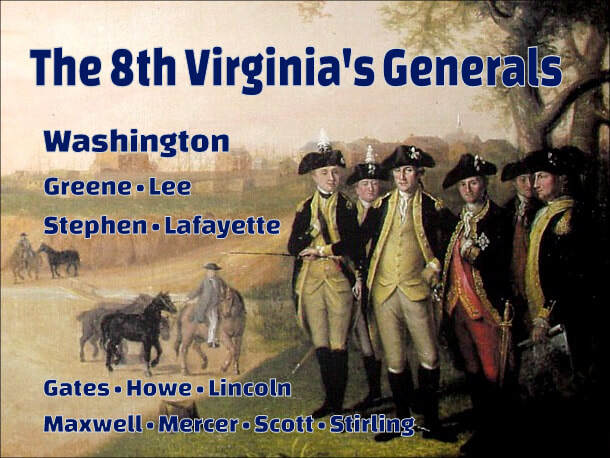
    Disestablishment: The Separation of Faith from Government Power

    Picture
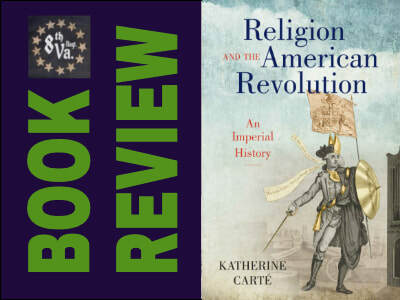
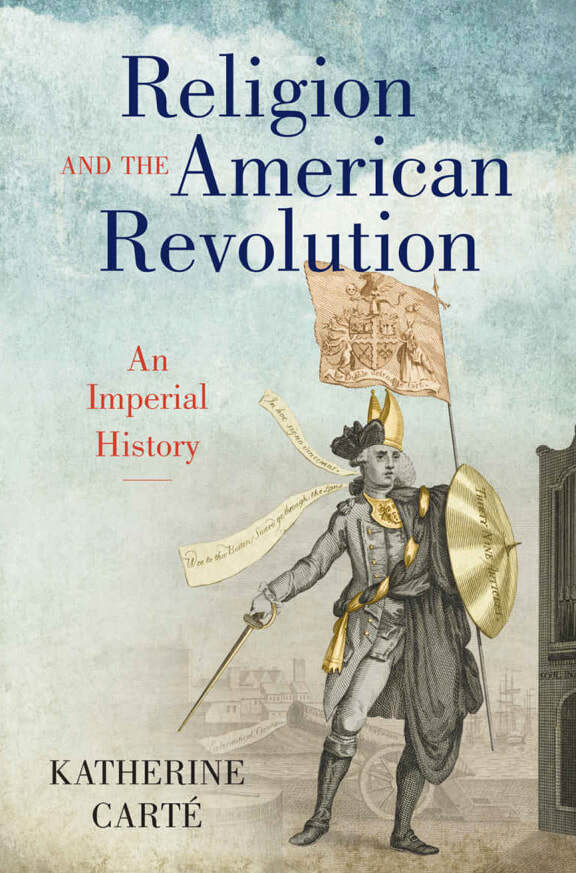
    Religion and the American Revolution: An Imperial History
    by Katherine Carté (Chapel Hill: University of North Carolina Press/Omohundro Institute of Early American History and Culture, 2021)
    Picture
    Dwight Eisenhower once said that “our form of government has no sense unless it is founded in a deeply felt religious faith, and I don’t care what it is.” This uniquely American argument, made by other presidents as well, is rooted in a seeming paradox of the Founding Era. America abandoned official religion in the wake of the Revolution and yet the nation became much more religious.

    ​Katherine Carté’s book 
    Religion and the American Revolution is not about the theological origins of the conflict or the so-called “black-robed regiment” of militant clergy. It is about the impact of the Revolution on established religion on both sides of the sea. It is one of several recent books that opens the historical aperture on the era and lets us see familiar events in a broader context. This is especially important when it comes to the dominant Protestant sects of the period. These were trans-Atlantic organizations and America’s established colonial churches remained very close to and even dependent on support from home.
    Fundamental to Carté’s analysis is understanding that the Church of England was just one of three denominations that represented a compound Imperial religious establishment. Anglicans, Presbyterians, and Congregationalists all held privileged status in different parts of the Empire: Anglicans in England and the American South, Presbyterians in Scotland, and Congregationalists in New England. Carté describes a tripartite “scaffold” of establishment that bound Protestants together and united the King’s dominions. Protestantism defined the British Empire more than Englishness did, since most of its subjects were not English.

    More from The 8th Virginia Regiment
  • Published on

    Three Centuries of Violence

    Picture
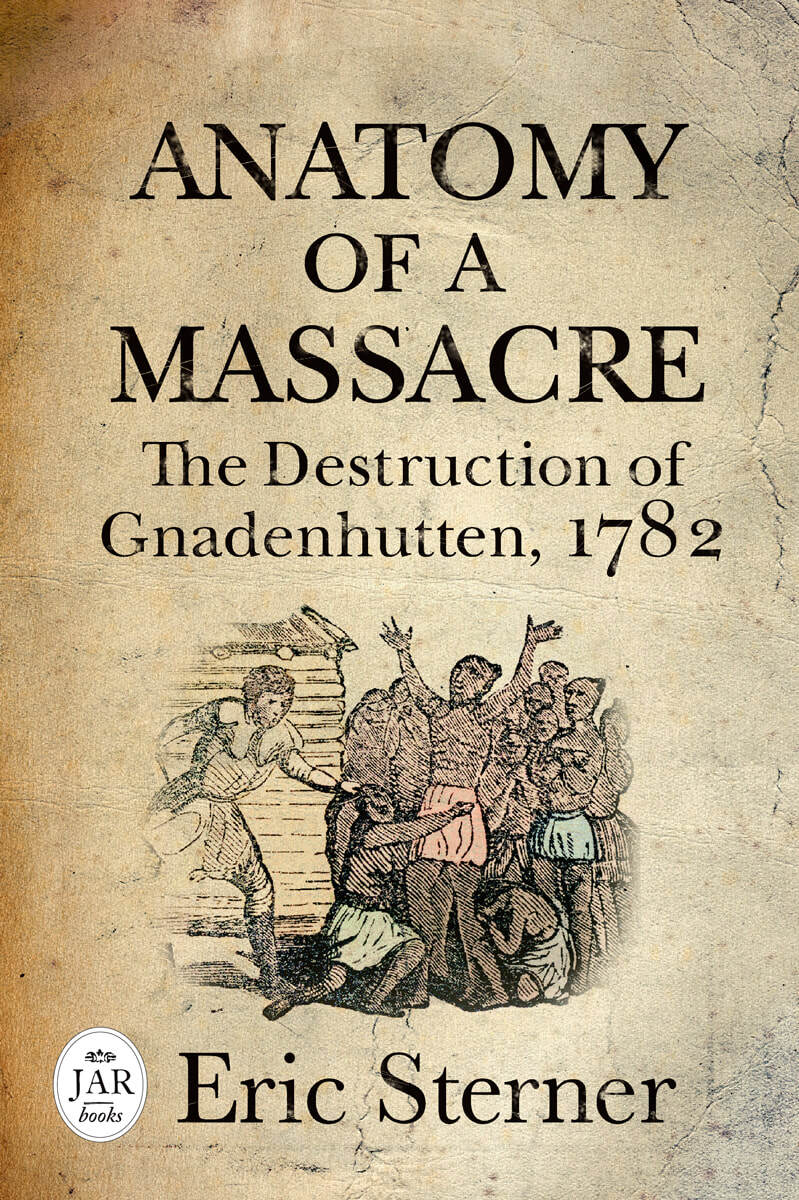
    Anatomy of a Massacre: The Destruction Gnadenhutten, 1782
    Eric Sterner (Yardley, Pa: Westholme, 2020)
    Picture
    In his first book, Anatomy of a Massacre: The Destruction of Gnadenhutten, 1782, Eric Sterner has taken on a difficult subject. Racial violence is something many writers would shy away from while others might delight in the chance to condemn the perpetrators. Mr. Sterner, laudably, does neither. Instead, he seeks to understand what happened.

    It is worth noting that the first known massacre of Indians by white men in what is now the United States occurred long before the events in the book. It happened near Jamestown, Virginia in 1610 when Virginia’s governor, Thomas West, 3rd Baron de la Warr, ordered an attack on the Paspahegh Band of Powhatans. Seventy men attacked the village, killing between 65 and 75 Paspaheghs and kidnapping the village leader’s wife and children. Rowing away, the colonists decided to kill the children, “w[hi]ch was effected by Throweinge them overboard and shoteinge owtt their Braynes in the water.” Three centuries of violence ensued.
    Lord de la Warr’s name appears frequently in Mr. Sterner’s story. His name was given to the Delaware River, which in turn lent its name to the Lenape people who have long been known to English speakers as the Delaware Tribe. Mr. Sterner has provided the definitive account of the worst atrocity of the Revolutionary War. In 1782 more than eighty white settlers clubbed, killed, and scalped ninety-six peaceful, Christian Indians as they prayed and sang hymns. The attack on the Moravian mission town of Gnadenhutten (Ohio) was intended as both a punitive and preemptive strike, conducted by settlers whose families and farms had been targeted by other Indians acting as proxies of the British. It is a horrific story that has defied understanding until now.

    ​...continue to Emerging Revolutionary War Era.

    More from The 8th Virginia Regiment

  • Published on

    Greene Eludes Cornwallis

    Picture
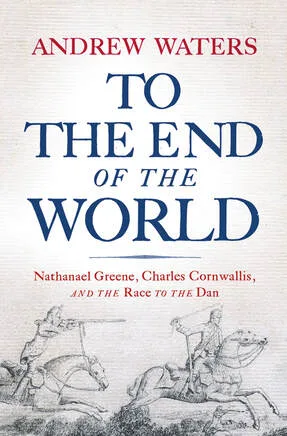
    To the End of the World: Nathanael Green, Charles Cornwallis and the Race to the Dan
    Andrew Waters (Yardley, Pa: Westholme, 2020)

    Image description
    “In a place like Salisbury,” writes Andrew Waters of the North Carolina town that witnessed the 1781 Race to the Dan, “you can live among its ghosts and still not know it’s there.” Enthusiasts know that this is true of many Revolutionary War sites, including some of real importance. Mr. Waters complains in his book To the End of the World: Nathanael Greene, Charles Cornwallis, and the Race to the Dan of the simplified understanding most Americans have of the Revolutionary War. “For most of us, the story of the American Revolution is of George Washington and the minutemen, Valley Forge and Yorktown.” In our Cliffs Notes version of history, many places, heroes, and even whole campaigns are left out.

    Like most of the war in the south, the Race to the Dan is overshadowed by Yorktown. The mere fact that George Washington was not a participant relegates the story to a second-tier status. The Race, however, holds unique challenges for the historian and the storyteller. It occurred over more than two hundred miles, depending on how you count it, rather than at one identifiable spot. Nathanael Greene’s genius is to be found in his mastery of logistics and strategy, which are subjects that make many people’s eyes glaze over. Though heroic and difficult, it was still a retreat and retreats don’t lend themselves to celebration. Its significance is not so much in what it achieved but rather in what it made possible, which requires detailed explanation.

    Consequently, the Race to the Dan has been given short shrift for more than two centuries. It is mentioned in the war’s histories, but almost never in detail. In writing this book, Mr. Waters was determined to correct that and he has succeeded. One can’t resist noting the appropriateness his name: the waterways of the Carolinas play a central role in the story. He makes plain from the beginning that the story is personal to him. He is a conservationist and doctoral candidate in South Carolina who has made a career of conserving the Palmetto State’s watersheds. “Rivers are my business,” he says at the very beginning of the book. He also plainly declares, “We all need heroes, and . . . Greene has become one of mine.”


    ...Continue to The Journal of the American Revolution.

    More from The 8th Virginia Regiment