• Published on

    A Frontier Cabin Restored

    Image description
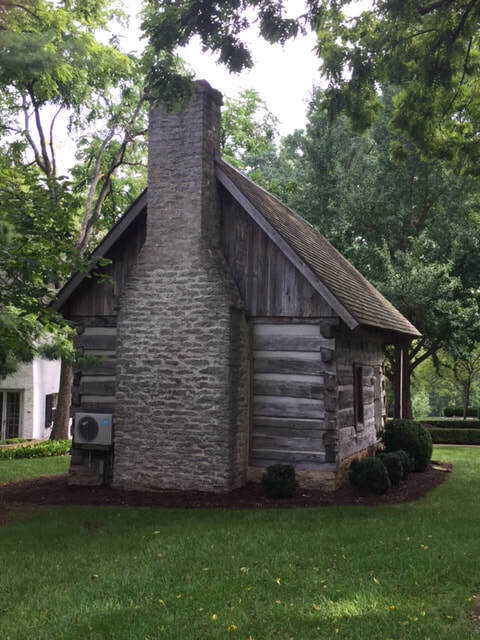
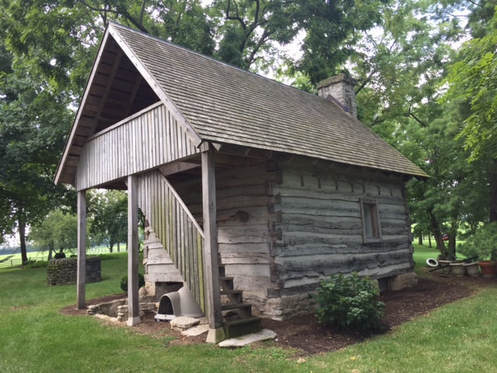
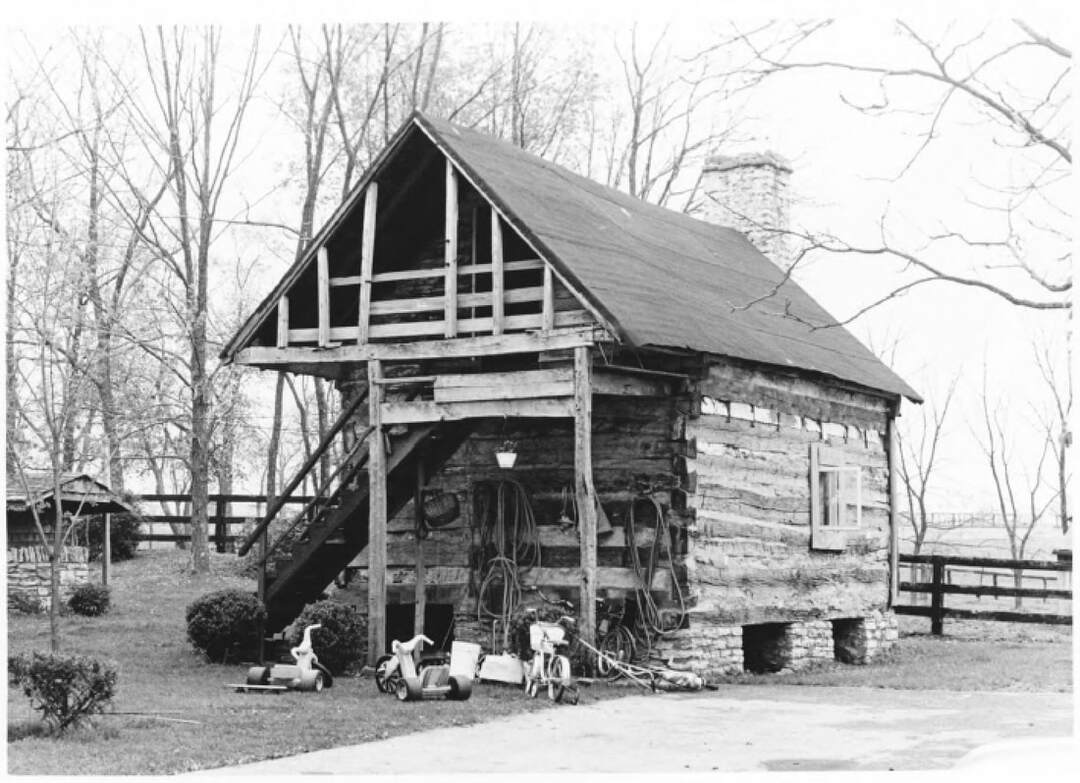
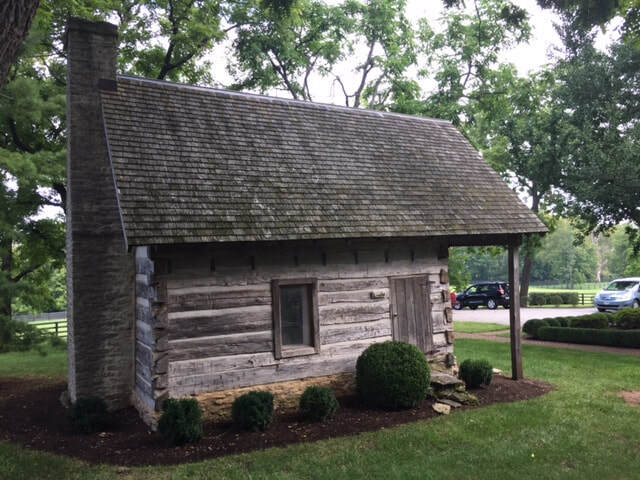
    ​8th Virginia Colonel Abraham Bowman’s frontier cabin looks better than has in 200 years.
     
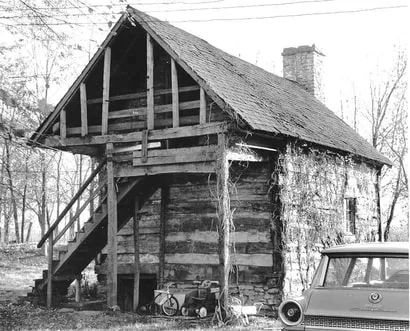
    Frontier log cabins, usually built of American Chestnut on stone foundations, were very durable structures. A surprising number of them survive today, including the cabin 8th Virginia Colonel Abraham Bowman built about 1779 or 1780 when he moved to Kentucky. Nevertheless, after two centuries, the Bowman cabin showed signs of deterioration (and alteration) when images of it were submitted to the National Park Service in 1979. 
     
    Bowman and his brothers are remembered as accomplished equestrians, reportedly known back in the Shenandoah Valley as the “Four Centaurs of Cedar Creek.” Appropriately, most of his land in Kentucky is now part of one of the most important equestrian facilities in the world. His Highness Sheikh Mohammed bin Rashid Al Maktoum, the Emir of Dubai and Prime Minister of the United Arab Emirates, is a horse enthusiast and owner of a global thoroughbred stallion operation which stands stallions in six countries. Soon after acquiring the property in 2000, Sheikh Mohammed had the Bowman cabin repaired and restored, along with other properties built long ago for Bowman’s children.
     
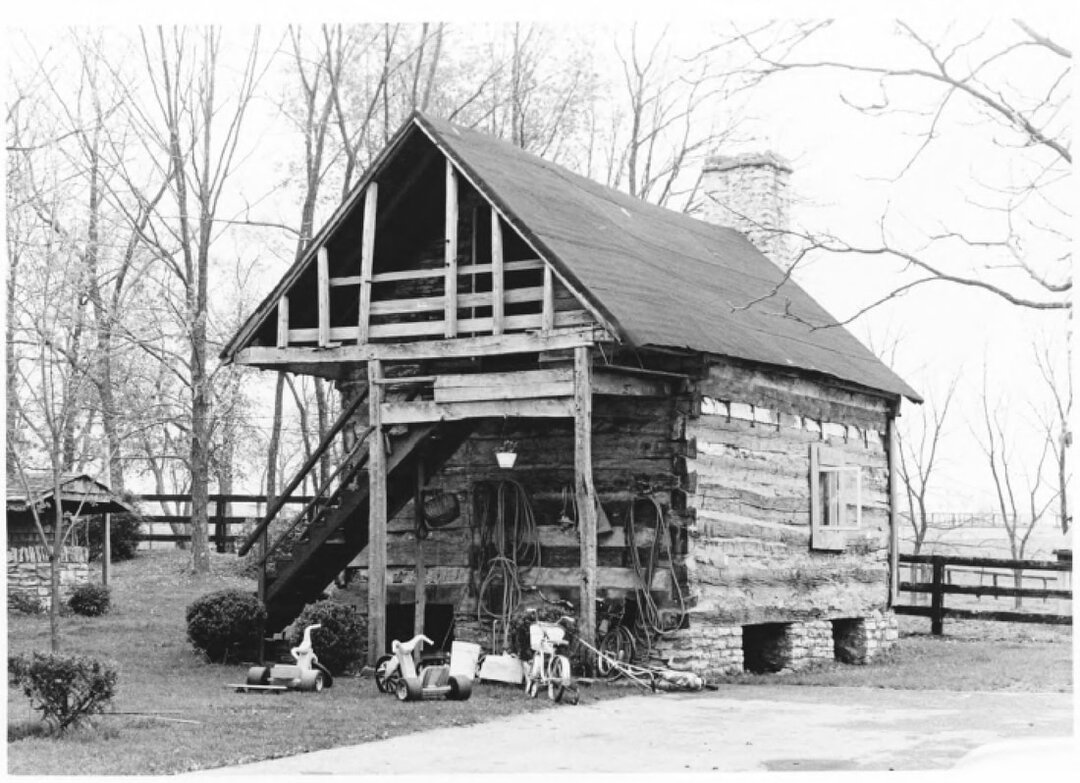
    The unique cabin, which features a basement and an exterior staircase to a second floor, has never looked better. The most notable change from the restoration is the reorientation of the exterior stairs, presumably to their original position and providing more headroom over the basement stairs.
    Picture

    The Cabin circa 1979 (Courtesy of the National Park Service)
    Picture

    Side view of the cabin.

    Picture

    Rear view of the cabin.
  • Published on

    Colonel Bowman's Post-War Log Cabin

    Image description
    Near Lexington, Kentucky, there is a Greek revival house, built in the early 1800s called “Helm Place.” Originally called “Cedar Hall,” the house was built either by 8th Virginia Colonel Abraham Bowman or his son. In documentation submitted to add it to the National Register of Historic Places, the building is described as “impressive." It “sits on a hill overlooking the South Elkhorn and gives one the impression of a Greek Temple.”
     
    The Bowman family prospered in Kentucky. They began as pioneers, however, and lived originally in pioneer fashion. Colonel Bowman’s first Kentucky home, a log cabin, survives just a quarter mile from Helm Place. “The cabin,” says the National Register paperwork from 1979, “a single-pen log structure with half-dovetail notching…faces southeast. There is a step-shouldered stone chimney on the south side and the exterior stair to the loft on the opposite end. The significant details of half-dovetail joinings of the logs and the outside staircase date this building to the late 1780s. The half-dovetail joining was characteristic of other log houses in this part of the state. The log house is also unique in that it contained a stone basement, which, in effect, created a three-story building.”

    A log cabin is not the sort of structure one might expect to survive for more than two centuries. Nonetheless, stone foundations and clapboard coverings have protected many of these pioneer dwellings into the 21st century. Here is an earlier post about 8th Virginia Captain Robert Higgin's cabin in Moorefield, West Virginia.
    Picture

    A photograph of the Bowman cabin submitted to the National Park Service in 1979 with an application to add the structure to the National Register of Historic Places. (National Park Service)

  • Published on

    The 8th Virginia at Fort Lee, NJ, September 1776

    Image description
    ​On September 22, 1776, William Croghan’s detachment of men from the 8th Virginia arrived at Fort Constitution, high on a cliff looking over the Hudson River and the island of Manhattan. Very soon, they would be part of the most famous campaign of the war.
     
    Months earlier, when the 8th Virginia first formed, its ten companies were ordered to rendezvous at Suffolk, Virginia—south and across the James River from the provincial capital at Williamsburg. Those from the far frontier were the last to arrive. Captain James Knox’s company from Fincastle County (now the state of Kentucky and parts of far southwest Virginia) arrived just in time to join the Regiment as it headed south to with General Charles Lee to defend Charleston.
     
    Captain William Croghan’s company from Pittsburgh came too late. His company and several dozen stragglers from other companies were attached for the season to the 1st Virginia and sent north to reinforce Washington at New York. After a march that took more than a month, the 1st Virginia arrived at a fort overlooking the Hudson.  It was called Fort Constitution, but was soon renamed Fort Lee after General Charles Lee got (only partially deserved) credit for the glorious June 28 victory at Sullivan's Island in South Carolina. Fort Lee was commanded by Gen. Nathanael Greene and, with Fort Washington across the river, was charged with maintaining patriot control of the strategically critical waterway.
    Image description
    Sergeant William McCarty recorded their arrival. After ferrying across the Passaic River they “marched to the fort, which we came by several camping places and camps on top of a high hill by the North [Hudson] River.” They “halted in sight of the fort and river till Colonel [James] Read [of the 1st Virginia] went to speak to General Greene.” He “returned shortly” and “ordered us to march back up the hill a piece, where it was late when we pitched camp.”
     
    For the next few days, the roughly 140 8th Virginia men under Captain Croghan rested and celebrated after their long march. They were issued flour, beef and rum. They got paid for the first time. On the third day there, McCarty wrote “We lay there and our men drunk very hard as they had plenty of money.”
    Image description
    Things soon turned serious, however. The day after their arrival, soldiers across the river were assembled to witness the execution of a man—bound, blind-folded, and kneeling—for cowardice (Washington gave him a last-minute reprieve). In addition to that news, Croghan’s men also learned that the Hessians and Scottish Highlanders had given no quarter at the Battle of Long Island the month before and had shot as many as seventeen Americans in the head after they had surrendered at Kip’s Bay. If they did not already know it, they now understood that there was no romance in war.
     
    Four days after their arrival, still at Fort Lee atop the Jersey Palisades, they watched British maneuvers in the river below. McCarty wrote, “The force heard the cannon fire very brisk from the shipping of the English, and we could see them land. We could easy see their camps and every turn they would make.”
    Image description
    Their stay at the fort was brief. Private Jonathan Grant later attested that they traveled through the Jerseys “to fort Lee on the North River & thence crossed the River to Fort Washington. The enemy at that time was in New York.” Similarly, Private Henry Gaddis recalled that they traveled “to Fort Lee, then we crossed over the North river to Fort Washington.” They joined the 3rd Virginia to form a small, temporary brigade commanded by Col. George Weedon. Now part of the main arm, they were thrust into battle—first at White Plains and later at Trenton. In January, only a handful of them were still well enough to participate in the critical victory at Princeton.
     
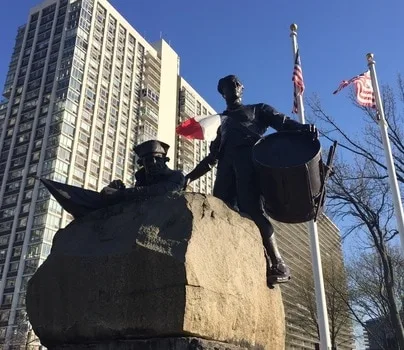
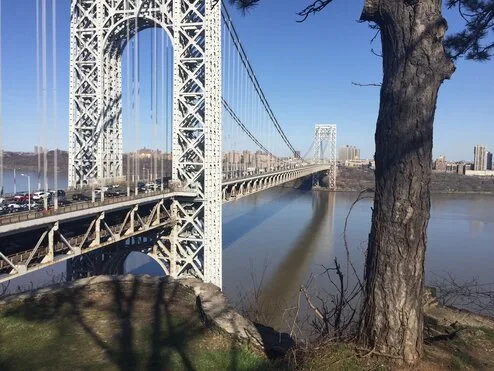
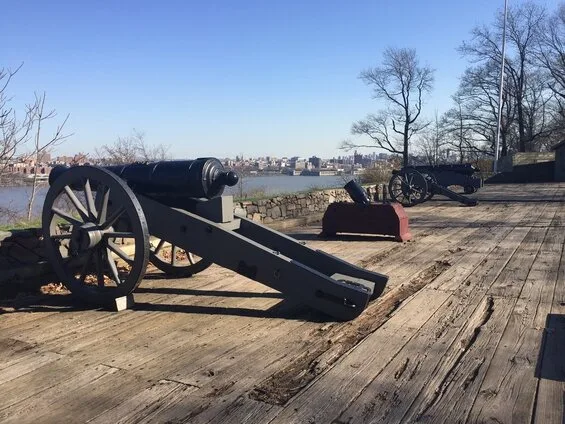
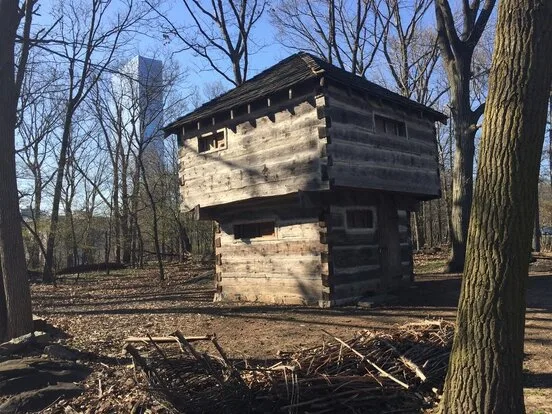
    The site of Fort Lee and its surrounding camps and artillery emplacements have been partially preserved. Judging purely from McCarty’s account it appears that much of the camping area has been blasted away to make room for the George Washington Bridge. Some of what remains has been preserved as Fort Lee Historic Park. The visitor center and its displays date from the 1976 Bicentennial and, though a bit worn down, still tell the story well. Reconstructed buildings and artillery batteries illustrate the site’s purpose despite the massive bridge and surrounding skyscrapers that make the area look very different from they way it was in the fall of 1776. The position of the actual fort is in the middle of the town of Fort Lee and called Monument Park. An artistic monument records the presence of the fort and the events that occurred there.
     
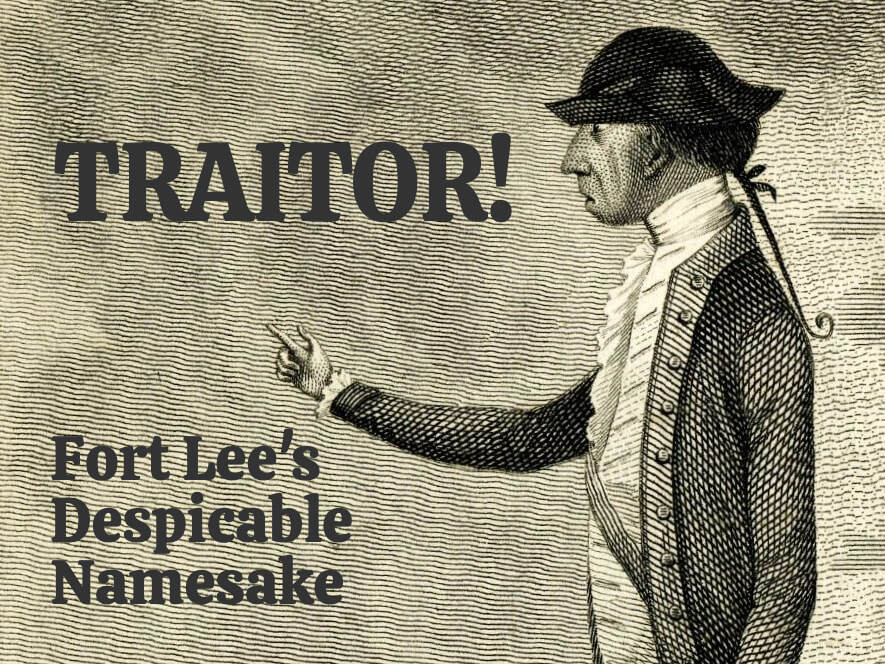
    Fort Lee was abandoned during the retreat through New Jersey, a retreat the fort’s namesake pointedly did nothing to assist with. Lee was in fact captured by the enemy and began to advise them on how to defeat the Continentals—a story told in this earlier post. One has to wonder how many people who live in Fort Lee today have any idea that their town is named for a traitor.

    Read More: Fort Lee's Despicable Namesake

    More from The 8th Virginia Regiment

  • Published on

    The Face of Peter Muhlenberg

    Picture

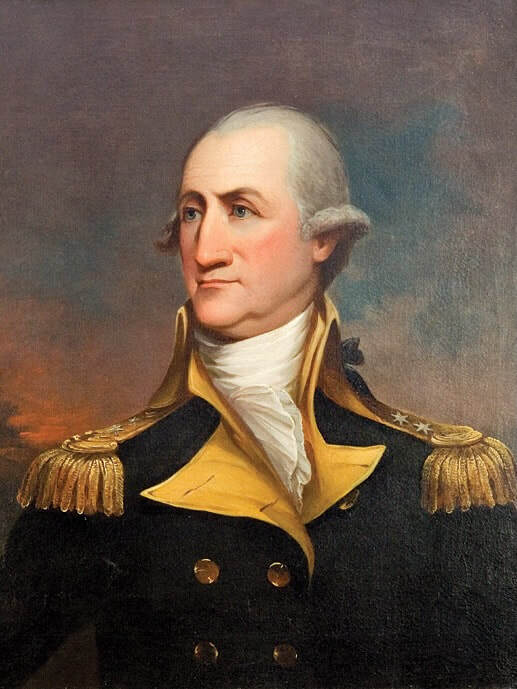
    Peter Muhlenberg did not look like this.

    ​What did Peter Muhlenberg look like? The celebrated "fighting parson" has been depicted in stained glass, marble, bronze, and oil. The most frequently-seen image of the general might be the oil-on-canvas portrait in the collection of the Martin Art Gallery at Muhlenberg College in Allentown, Pennsylvania. The gallery, however, identifies this portrait as the work of an anonymous artist, created on an unknown date “circa 1800-1900.” It appears, in fact, to be a copy of another portrait believed to be the work of noted founding era portrait artist John Trumbull. This portrait is in a private collection.
    As with many portraits of Revolutionary War figures, Muhlenberg appears in both paintings in uniform but as an older man. This is actually a good indicator that the general sat for the portrait. Former officers often had portraits made later in life, but wished to be depicted in uniform. An artist painting from his imagination would probably not have paired the older Muhlenberg's face with the younger man's uniform. Muhlenberg was just twenty-nine years old when he took command of the 8th Virginia. He was promoted to general in 1777 and breveted a major general when the army disbanded in 1783. By then, he was thirty-seven. The man in the Trumbull portrait and its copy appears to be in his late forties or fifties. Muhlenberg died on his sixty-first birthday in 1807. He wears two stars on his epaulets to indicate he is a major general, a practice begun during the war in 1780.
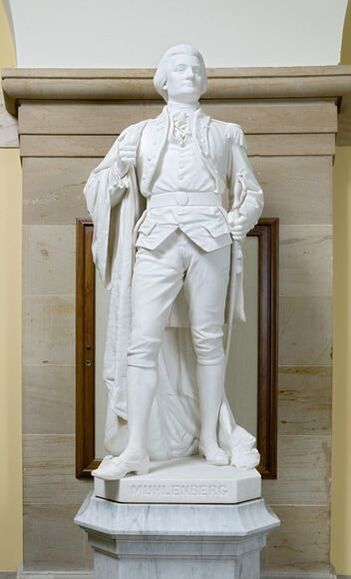
    The second-most commonly-seen image is probably the statue that stands in the United States Capitol, one of two statues representing the Commonwealth of Pennsylvania. This statue, which was created in 1889 by Blanche Nevin, hardly resembles the Trumbull portrait. It depicts Muhlenberg as the new colonel of the 8th Virginia Regiment, removing his pastor’s robe to reveal a military uniform. It appears to be a Continental Army uniform, which would be incorrect--the 8th Virginia was a Provincial Virginia regiment at thetime Muhlenberg gave his famous sermon. He may, in fact, have worn the same hunting shirt that his junior officers and enlisted men wore. This statue is the prototype for countless other images of Muhlenberg as a dashing young pastor surprising his congregation by revealing a uniform under his cloak. In fact, neither his commission nor his uniform a surprise to his congregation. There is no reason to doubt the sermon itself.

    Portraits from life or personal knowledge

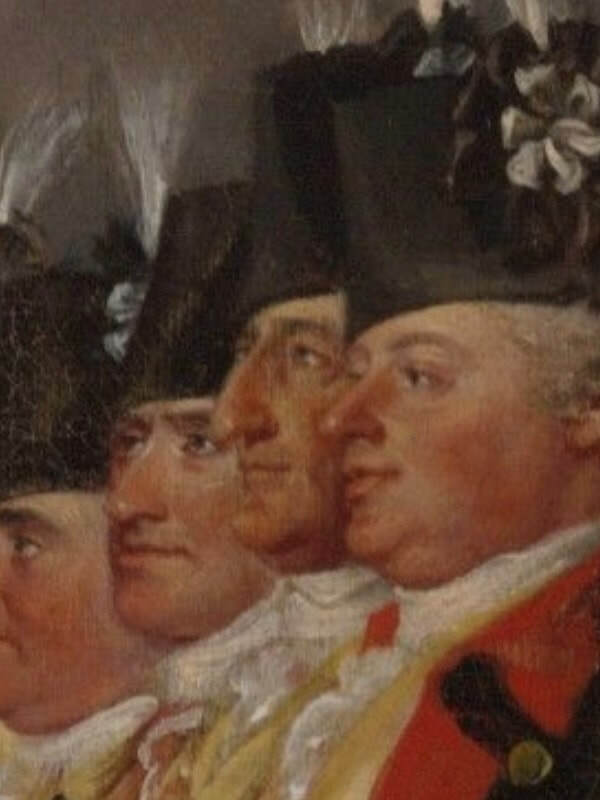
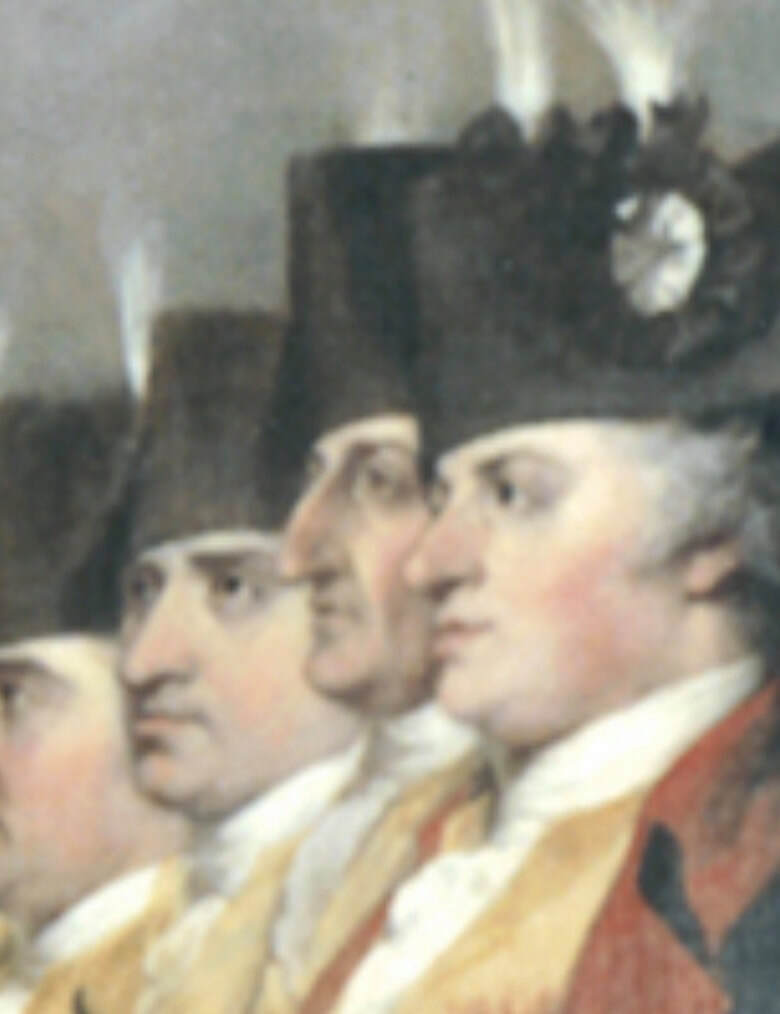
    Directly upstairs from that statue, in the Capitol rotunda, there is another image of Muhlenberg which may be the most reliable depiction of him as a soldier. It is a partially-obscured side image of the general in Trumbull’s grand depiction of The Surrender of Lord Cornwallis. According to the Architect of the Capitol, Trumbull created this giant painting “between 1819 and 1820, basing it upon a small painting … that he had first envisioned in 1785….  In 1787 he made preliminary drawings for the small painting. Although he struggled for a time with the arrangement of the figures, he had settled upon a composition by 1788.”

    “To create portraits from life of the people depicted in this and other paintings," the Capitol architect's website says, "Trumbull traveled extensively. He obtained sittings with numerous individuals in Paris (including French officers at Thomas Jefferson’s house) and in New York. In 1791 he was at Yorktown and sketched the site of the British surrender. He continued to work on the small painting during the following years but did not [immediately] complete it; nevertheless, in January 1817 he showed it and other works in Washington, D.C., and was given a commission to create four monumental history paintings for the Capitol. Surrender of Lord Cornwallis was the second of these large paintings that he completed. He exhibited it in New York City, Boston, and Baltimore before delivering it to the United States Capitol in late 1820. He completed the small painting around 1828; it is now part of the collection of the Yale University Art Gallery.”
    Trumbull worked hard to make his depiction of the people in his history paintings as accurate as possible. He wrote that “to transmit to their descendants, the personal resemblance of those who have been the great actors in those illustrious scenes” was one of the goals of his patriotic painting. A war veteran from a prominent Connecticut family, Trumbull knew many of his subjects personally.
    Picture

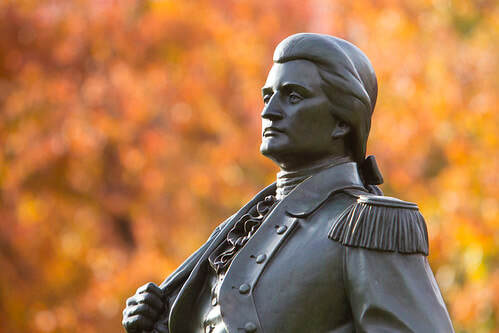
    The 1889 statue by Blanche Nevin in the U.S. Capitol is a work of the artist's imagination.

    If he even needed a sitting, Muhlenberg would not have been a hard man for Trumbull to find. The retired general served in Congress and as vice president and de-facto governor of Pennsylvania during the earlier years of Trumbull’s project. In the Yorktown painting, Muhlenberg stands between Henry Knox and Edward Hand. All of them were in their thirties in 1781 and appear so under Trumbull's brush.

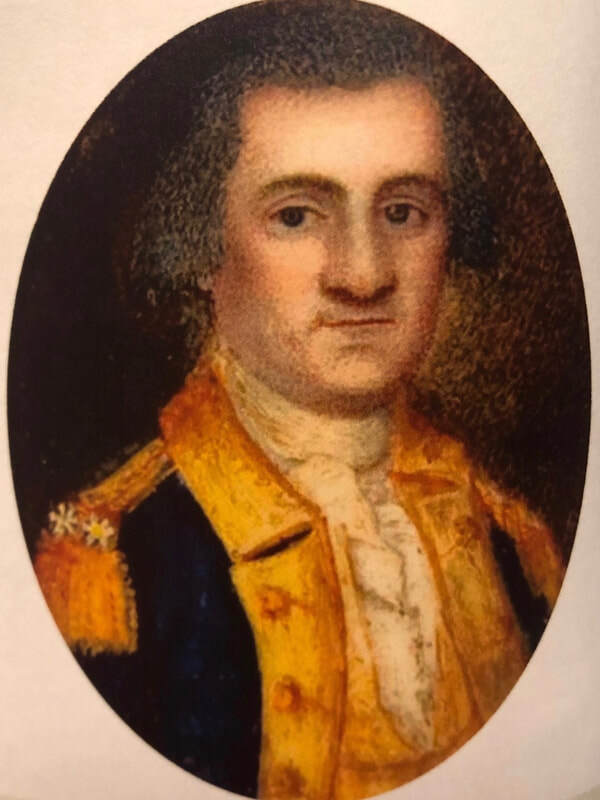
    A miniature portrait of the general from about 1784 also survives in a private collection. Here, he is facing the viewer directly and noticeably younger than he appears in the other paintings.

    The images were painted at different times and depict him at different ages, but at least one feature shows they are clearly the same man. The three-quarters portrait shows he has a long nose, slightly angled eyes, and jowly cheeks.  The Yorktown paintings show a side view and reveal a large and birdlike nose. Even the miniature, which might most easily have disguised the size of his nose, reveals its prominence.
    (Updated 9/17/21 and 8/20/25)

    More from The 8th Virginia Regiment

  • Published on

    Locals Remember the Battle of Cooch's Bridge

    Image description
    ​At the start of September, 1777, Washington was doing all he could to block the British advance on Philadelphia. He had four natural barriers to work with: the Christina River/White Clay Creek, the Red Clay Creek, the Brandywine River, and the Schuylkill River. Washington tried to use each of these barriers to block General Howe’s Army.
     
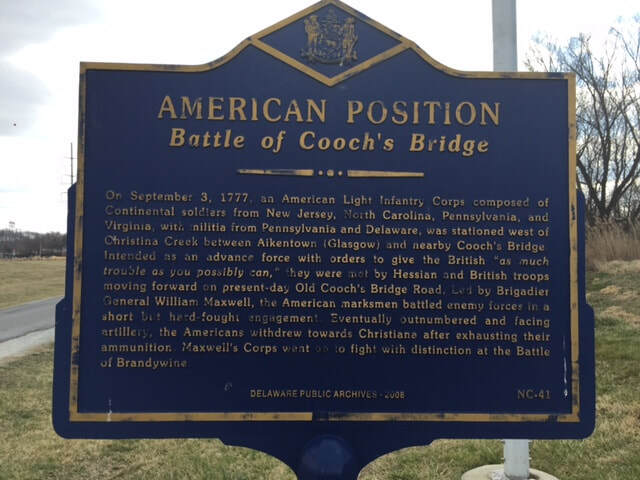
    The first effort was at the Battle of Cooch’s Bridge, where William Maxwell’s light infantry (an elite, but temporary unit) engaged a much larger Hessian and and British advance guard. The 8th Virginia’s Captain William Darke led a contingent of men from General Charles Scott’s Brigade (including 28 men from the 8th Virginia). One of his men, William Walker, later complained that “no historian” had noticed the “very bloody conflict,” and declared, “For myself I can say that this detachment on that day deserved well of their country.”
     
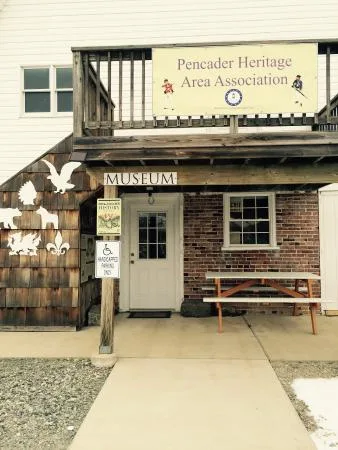
    Cooch’s Bridge is still not well remembered. But for those who are interested, the site is well-marked and reasonably intact. The Cooch family has preserved much of the surrounding land for more than two centuries. The folks at the Pencader Heritage Are Association are doing a great job making sure the story is remembered and told. Their ten-year old museum, the Pencader Heritage Museum, has excellent displays and is staffed by volunteers who are eager to tell the story of the September 3, 1777 battle and other events in local history.
     
    Admission is free, but the museum is only open on the first and third Saturdays of each month. It is a very easy stop off of I-95 if you ever happen to be traveling that way on the right Saturday. Outdoor markers by the museum and battle site are worth the visit even if the museum is closed. The museum gets absolutely no government support—so think about lending it some of yours!
    Picture
  • Published on

    George Washington Took a Left at Hardee's

    Image description
    As I research the career of the 8th Virginia Regiment, I am frequently reminded of the close historic relationship the Shenandoah Valley has with southeastern Pennsylvania. I have lived in Virginia for many years, but I grew up in Chester County, Pennsylvania and later lived just to the west in Lancaster. The vast majority of the Shenandoah Valley’s early settlers traveled from Philadelphia and nearby ports through both of these counties along the Great Philadelphia Wagon Road, which is now U.S. Route 30 in Pennsylvania and U.S. Route 11 in Virginia. The ten companies of the 8th Virginia were raised in the Shenandoah Valley and other parts of the Virginia frontier. Many of the men were born in Pennsylvania or raised by parents who had lived in or traveled through it. There remain many ethnic, religious, and even architectural ties between the two regions.

    My interest in the Revolutionary War was probably first sparked by a tiny cemetery near my childhood home. It was the final resting place of twenty-two soldiers who died during the encampment at Valley Forge, a few miles to the east. The church across Ridge Road from the cemetery, used as a hospital for those men, is where I received my first Bible when I was about six years old. It has always felt like hallowed ground for me.

    In my studies I’ve looked at the French and Indian War and at Dunmore’s War, the conflicts in which many 8th Virginia men first experienced combat. I’ve looked at Peter Muhlenberg’s famous 1776 sermon in Woodstock, Virginia, to see if I can figure out what is fact and what is legend. I’ve followed the regiment’s travels south to Williamsburg, the Carolinas, and Georgia. (Their planned invasion of Florida was called off.) I’ve followed them north into Delaware, Pennsylvania, New Jersey and New York where the regiment (or a large detachment from it) fought at White Plains, Trenton, Princeton, Brandywine and the “Battle of the Clouds.” Brandywine and the “Battle of the Clouds” were both fought in Chester County, but not the part I come from.

    From the Battle of the Clouds, it took the Continentals fourteen hours to retreat just six miles to the village of Yellow Springs in a torrential downpour. One soldier (not from the 8th) declared the nighttime trek to be “one of the Hardest Marches known by any Soldiers in our army.” (I worked in Yellow Springs as a landscaper one summer when I was in college, knowing little of its history.) From there, seeking the only bridge across French Creek (which I used to swim in) the soldiers marched north on what is now Kimberton Road. (I graduated from the Kimberton Farms School.)  The army (after passing my old Little League fields) reached what is now State Route 23 and took a left across the creek. (For nearly two centuries, the General Pike Inn stood on the left at that intersection, built in 1808. I bought a beer there shorlty after turning 21. It was torn down in 1994 to make way for a Rite Aid pharmacy. For a somewhat briefer time there was a Hardee’s on the far side of that intersection. It has also been replaced—by a McDonald’s.)

    After crossing the creek, Washington took the army farther west (past the little cemetery and the church where I received my first Bible) and on into the northwest Chester County iron country. Iron extraction, furnacing, and forging were big business there as early as 1717 at places like Coventry and Warwick. (For three years I rented a converted outbuilding at the Coventry Forge iron master’s house).

    The exhausted and sometimes barefoot patriots’ long march of more than thirty miles from Yellow Springs to Reading Furnace occurred on September 18, 1777. The next day, they retraced their steps and crossing the Schuylkill river at Parker's Ford (where I once had a post office box).

    The 8th Virginia and the Continental Army went on to bitter defeat at Germantown, a cold winter at Valley Forge, and (for new and re-enlistees) an encouraging standoff at Monmouth Courthouse. For me, however, the two days they spent trudging along the roads of northern Chester County will always be the most personally relevant and meaningful part of the war. 

    More from The 8th Virginia Regiment