• Published on

    The Regiment's Eight Counties

    Image description
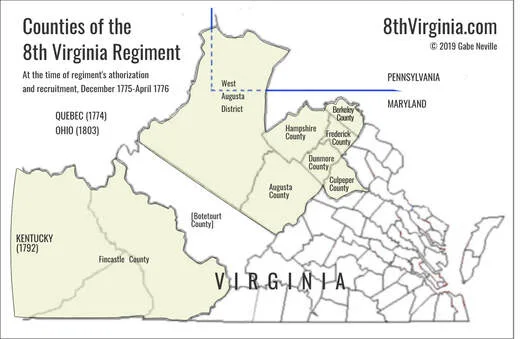
    A newly-created map of the 8th Virginia's recruiting counties shows that the regiment was largely composed of frontiersmen and pioneers. It is helpful to visualize how the regiment raised its ten companies in the westernmost settled areas of the province (Virginia wasn't a state, yet). This made the regiment unique in several ways. They were ethnically and religiously different from the rest of Virginia. Soldiers, some of whom were subsistence hunters, were typically better marksmen than the average soldier. Their motives for fighting were less focused on taxes and trade and more focused on their desires to head west--something the King had forbidden. 

    Political geography has changed. All of these counties have been divided, some within months of the regiment's formation. West Virginia, which is not shown, was created in 1863 and would occupy the left-center of the map. The disputed northeast part of the Augusta District is now southwest Pennsylvania, including Pittsburgh. Western Fincastle County became Kentucky County in 1776 and the Commonwealth of Kentucky in 1792. Most Americans are unaware that beginning in 1774, Ohio and lands west of it were part of the Province of Quebec. This, technically at least, extended holdover French civil institutions to the border of settled Virginia. Quebec had no elected legislature and had been allowed to keep its Catholic institutions. Both facts were seen by Virginians as sure signs of creeping tyranny.

    The Soldiers Page lists the various companies and the counties from which they came. In brief: the West Augusta District and Dunmore County each raised two companies. Augusta, Berkeley, Culpeper, Fincastle, Frederick, and Hampshire counties each contributed one. Initially called the "German Regiment" and long remembered that way, the map also shows how wide-ranging and diverse the zone of recruitment was. The lower (northern) Shenandoah Valley counties of Berkeley, Frederick, and Dunmore had significant populations and all three field officers were from that area. Culpeper, the only Piedmont county, had a smaller German population that descended from the Germanna Colony. The other counties were predominantly Scotch-Irish and English.
    Picture
  • Published on

    Off to War

    All ten companies of the 8th Virginia hadn’t even arrived yet when Maj. Gen. Charles Lee took the regiment south to face the enemy. Suffolk, Virginia was the designated place of rendezvous. The ten companies came from all but one of the counties along Virginia’s 350-mile frontier, stretching from the Cumberland Gap to Pittsburgh. They traveled to the rendezvous on foot, stopping in Williamsburg to collect company officers’ commissions. Col. Peter Muhlenberg and the early-arrived companies were posted at Kemp’s Landing, near Norfolk.

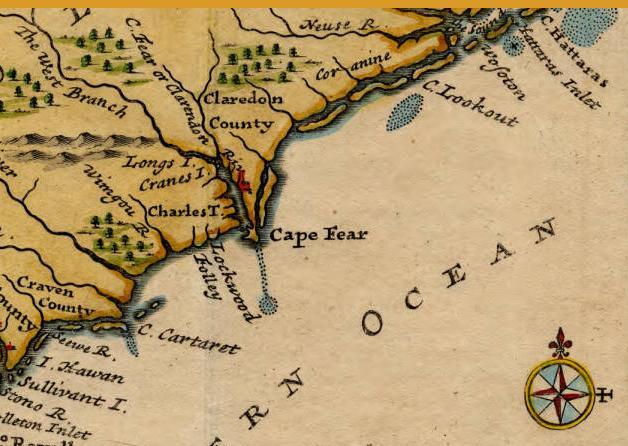
    British Gen. Henry Clinton was sailing south with a significant force to meet with Gen. Charles Cornwallis, who was sailing from Britain with a fleet of warships and still more men. North Carolina was their target and a Tory uprising was their goal. On May 11, Lee impatiently wrote to the post commander at Kemp’s landing, inquiring, “[H]ave you order’d Muhlenberg’s Regiment to march to Halifax? I hope to God you have, for no time is to be lost, as we have certain news of the Enemy’s arrival in the River Cape Fear.”
    Picture

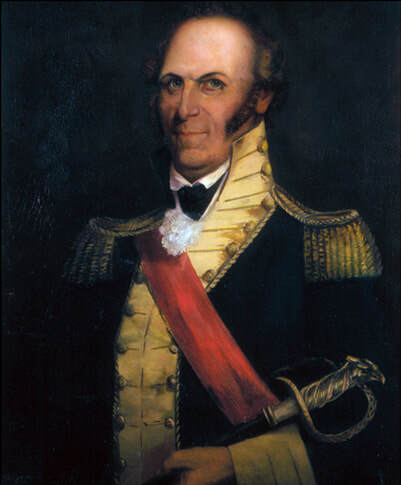
    Maj. Gen. Charles Lee was a veteran (former) British officer and junior only to George Washington in the Continental army. He was a strange and notably ugly man. He lost both his career and his mind before dying of natural causes in 1782.

    This was evidently true despite the absence of two complete companies. Lee may have extrapolated to account for the absent companies. Alternately, at least one of the present companies (Captain Jonathan Clark’s) appears to have enlisted numbers beyond its quota. When Muhlenberg set off on May 13, Capt. James Knox’s southwest (Fincastle County) company had not yet arrived. It was close, though—probably at Williamsburg. Or perhaps it had just arrived and needed to rest. Lee wrote, “Capt[ai]n Knox will follow the Regiment, so the Colonel must not wait for him.” Capt. William Croghan’s Pittsburgh (West August District) company, however, was even farther behind. Lee took the regiment anyway. There was no time to spare. Consequently, it would be an entire year until Croghan’s men joined the regiment.

    ​Lee wrote to John Hancock, “As the Enemy’s advanced Guard…is actually arrived—I must, I cannot avoid detaching the strongest Battalion we have to [North Carolina’s] assistance; but I own, I tremble at the same time, at the thoughts of stripping this Province of any part of its inadequate force.” Battalions and regiments were essentially synonymous at this time. Lee was, in fact, calling the 8th Virginia the “strongest” of the province’s nine regiments. He would later confirm this assessment when he wrote to Muhlenberg, “You were ordered not because I was better acquainted with your Regiment than the rest
    --but because you were the most compleat, the best armd, and in all respects the best furnish’d for service.” To Congress he reported, “Muhlenberg’ s regiment wanted only forty at most. It was the strength and good condition of the regiment that induced me to order it out of its own Province in preference to any other.”
    Picture

    Cape Fear, North Carolina, was the expected point of invasion, but the Battle of Moore's Creek Bridge had quelled Loyalist support in the area.

    The other nine companies marched for Cape Fear via Halifax, North Carolina, joined by a North Carolina Regiment that had come north to Virginia’s aid. Unlike every other Virginia regiment, the 8th Virginia men all carried rifles. No muskets also meant no bayonets, which were—at the end of the day—often the real implements of war. Lee compensated for this by issuing pikes (he called them “spears”) to some of the men. “I have formed two companies of grenadiers to each regiment; and with spears of thirteen feet long, their rifles (for they are all riflemen) slung over their shoulders, their appearance is formidable, and the men are conciliated to the weapon.” 
    Meanwhile, the British commanders were learning that the Patriot victory at Battle of Moore’s Creek Bridge had quelled their hoped-for Tory uprising. They opted, therefore, for an alternate target. Just as the 8th Virginia arrived at Cape Fear, the enemy was sailing off for Charleston, South Carolina. Muhlenberg’s men continued the chase, now at a forced-march pace. A very difficult and deadly summer lay ahead of them.

    More from The 8th Virginia Regiment

  • Published on

    Monmouth and the End of the 8th Virginia

    Image description
    The Battle of Monmouth Courthouse (June 28, 1778), was the last engagement for the 8th Virginia Regiment in the war. It was fought exactly two years after the 8th Virginia's first real battle at Sullivan's Island, South Carolina.

    Very few of the original enlistees were still in the regiment at Monmouth. Aside from deaths from disease and battle, all of the original enlistments from 1776 expired during the Valley Forge Encampment. Some of the original officers still remained, however. Some of the original recruits had also reenlisted.  Still, the numbers were not enough for a regiment. This was true to varying extents for all the Virginia regiments. Shortly before Monmouth, the 4th, 8th, and 12th Virginia regiments were merged into a unit referred to as the "4th-8th-12th Regiment" under the command of Col. James Wood of the 12th. The three regiments had served together for more than a year in Gen. Charles Scott's brigade, and continued under him. (Grayson's and Patton's "additional" regiments were also in the brigade.) 8th Virginia Colonel Abraham Bowman, who had less seniority than Wood, continued serving for the time being.

    On the approach to Monmouth, General Scott was put in charge of a detachment annoying the British flank, so Colonel William Grayson took command of the brigade. They led the approach and were in the center of the line during the morning engagement under Maj. Gen. Charles Lee. They were attached to Gen. Anthony Wayne in the afternoon.

    The was the last battle for the storied 8th Virginia, a unit that first began as a Virginia provincial regiment led by a pastor and loyal (technically, at least) to the King. The Virginia legislature had intended it to be a German (or German-led) unit and commissioned German field officers for it (Col. Muhlenberg, Lt. Col. Bowman, and Maj. Helphinstine). It recruited men of other ethnicities, however, and was never as German as originally envisioned.

    Some of the men, commissioned and enlisted, continued to fight on to the end of the war. In September, the regiment merged with the 4th Virginia under the latter's number. Colonel Wood's 12th Virginia became the "new" 8th Virginia. Col. John Neville of the 4th remained in command. 8th Virginia Col. Abraham Bowman, who was junior in seniority to both Wood and Neville, was released as a "supernumerary" officer. (After reporting to Gov. Patrick Henry he returned home and then moved to Kentucky.) In 1779, the consolidated 4th was provisionally merged with the 3rd Virginia and known for a time as the "3rd and 4th Virginia Regiment." Lastly, the handful who remained were included in the 2nd Virginia "brigade" sent to reinforce General Benjamin Lincoln at Charleston, South Carolina, in 1780. Some of them were under the command of Captain Abraham Kirkpatrick, who had begun the war as a lieutenant in William Croghan's Pittsburgh company of the 8th Virginia. Croghan, now a major, was also at Charleston. All of them were taken prisoner when Lincoln surrendered on May 12, 1780. 

    Brigadier General Peter Muhlenberg (the regiment's original colonel) and Lt. Colonel William Darke (one of the regiment's original captains) were both at Yorktown. They may be the only men of the original 8th Virginia who served at Yorktown as members of the Continental Army. Private Bean Smallwood, an original 8th Virginia recruit in Captain Berry's company, was at Yorktown as a militiaman. 

    Here is an excellent overview of the Battle of Monmouth

    (Updated 12/12/19)
  • Published on

    The 8th Virginia's Generals

    Picture

    Brigadier General Charles Scott (shown here in a 19th century uniform) commanded the 8th longer than any other brigade commander. He was later elected Governor of Kentucky and was active alongside many other veterans in the Northwest Indian War.

    A dozen different generals commanded the 8th Virginia at various times and levels during its roughly 30-month existence.  The Continental Army grades of general officers were: general (Washington), major general (typically division commanders), and brigadier generals (brigade commanders). The army was organized into departments: Canadian, northern, Highlands, eastern, main, southern, and western. Washington was the de facto commander of the middle (or "main") department for most of the war.

    Major General Charles Lee (junior only to Washington in the entire army) was commander of the Southern Department during the 8th Virginia's 1776 service in that theater. At the same time, a large number of 8th Virginia men were detached to the 1st Virginia under the command of Pittsburgh’s Captain William Croghan. While the rest of the regiment went south from Virginia to serve in South Carolina and Georgia under Lee, Croghan’s detachment went north to serve in New York, New Jersey, and Pennsylvania with Washington.
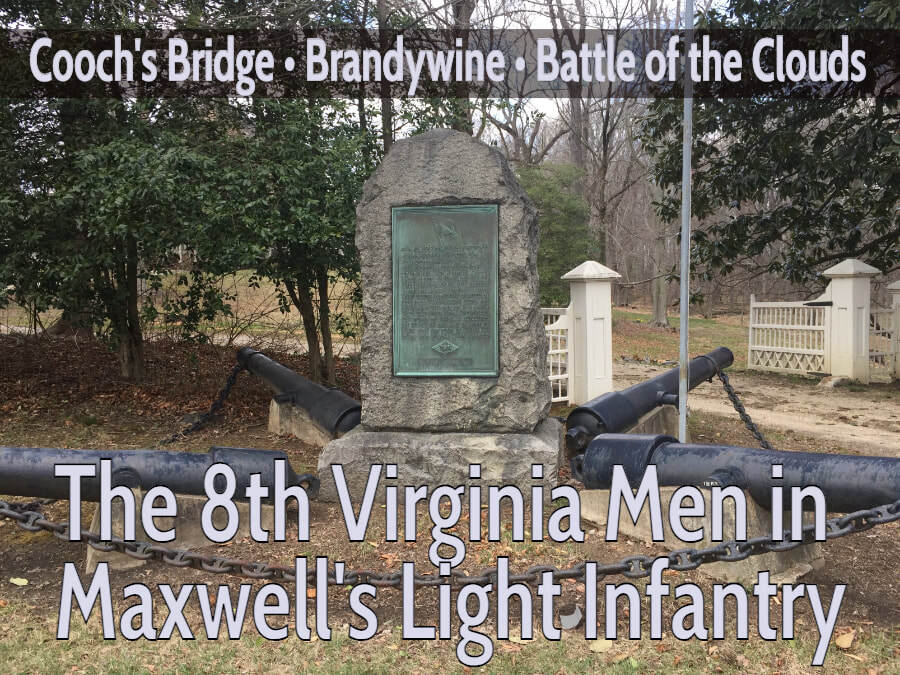
    In 1777, the main body of the regiment served in Maj. Gen. Adam Stephen's division at Brandywine and Germantown. A small group of riflemen from the 8th were detached to Daniel Morgan’s Rifle Battalion under the command of Captain James Knox and participated in the Saratoga campaign. A few dozen were detached for a month to William Maxwell's Light Infantry in August and September of 1777 under the command of Captain (later and retroactively Major) William Darke, at Cooch's Bridge and Brandywine. Stephen was replaced by the Marquis de Lafayette late in the year.

    In 1778, with its ranks severely depleted by disease, casualties, and expired enlistments, the 8th was folded into the 4th Virginia after the Battle of Monmouth.
     
    1776 Southern Campaign (Sullivan’s Island, Savannah, Sunbury):
     
    Gen. George Washington, Commander in Chief (not present)
    Maj. Gen. Charles Lee, Commander of the Southern District
    Brig. Gen. Andrew Lewis (Tidewater service)
    Brig. Gen. Robert Howe (Cape Fear, Charleston, Savannah, Sunbury)
     
    Captain Croghan Detachment attached to 1st Virginia (White Plains, Trenton, Assunpink Creek, Princeton):
     
    Maj. Gen. Joseph Spencer (White Plains)
    Maj. Gen. Nathanael Greene (Trenton and Princeton)
    Col. George Weedon (temporary brigade at Fort Washington)
    Brig. Gen. William Alexander, Earl of Stirling (White Plains through Trenton)
    Brig. Gen. Hugh Mercer (Princeton)
     
    1777 Philadelphia Campaign (Brandywine, Germantown, Valley Forge)
     
    Gen. George Washington, Commander in Chief
    Maj. Gen. Benjamin Lincoln (New Jersey rendezvous)
    Maj. Gen. Adam Stephen (Brandywine, Germantown)
    Maj. Gen. Gilbert du Motier, Marquis de Lafayette (Valley Forge)
    Brig. Gen. Charles Scott
     
    Captain Knox Detachment under Colonel Daniel Morgan (Saratoga)
     
    Maj. Gen. Horatio Gates
    Maj. Gen. Benjamin Lincoln
     
    Captain Darke Detachment in Maxwell's Light Infantry (Cooch's Bridge, Brandywine)

    Brig. Gen. William Maxwell

    1778 Campaign (Valley Forge, Monmouth):
     
    Gen. George Washington, Commander in Chief
    Maj. Gen. Gilbert du Motier, Marquis de Lafayette
    Maj. Gen. Charles Lee (at Monmouth)
    Brig. Gen. Charles Scott
    ​Col. William Grayson (temporary brigade commander at Monmouth)

    More from The 8th Virginia Regiment

  • Published on

    The soldiers of the 8th Virginia

    Image description
    The 8th Virginia was composed of ten companies. Each one was supposed to have 68 enlisted men  led by four officers (captain, 1st lieutenant, 2nd lieutenant, and ensign). At least one overenlisted and one underenlisted. The overall regiment was commanded by three field officers (colonel, lieutenant colonel, and major) assisted by several staff officers (chaplain, adjutant, surgeon, surgeon's mate, paymaster, and quartermaster). One inherited company was composed men on 1-year enlistments that began in December of 1775. The other nine companies served 2-year enlistments, beginning in the spring of 1776 and ending at Valley Forge in the spring of 1778. An 11th company was raised to replace the 1-year men in 1777. Replacements recruited in 1777 served 3-year enlistments.

    ​The 8th existed from December 13, 1775 when it was authorized by the Virginia Convention, to September 14, 1778 when it merged with the 4th Virginia and took that number.

    I have posted an outline of the regiment's structure, listing officers and some enlisted men (when I have written about them or heard from descendants). This is not intended to be a full "roster" of the regiment, but rather a look at its structure, origins, and organization. The names of known descendants are in brackets after a soldier's name. An alphabetical lift of descendants is available on The Family Page. If you would like to be identified with your ancestor, please send an email over the web form. Your email address will be linked from your name only if you specifically request it.
  • Published on

    Three Surviving Virginia Regimental Flags from 1776

    See “The Grand Division Standard” (June 20, 2022) for a corrected and updated version of this post.

    Picture
    Picture
    Picture
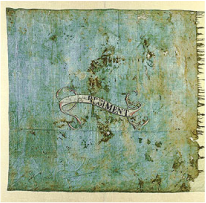
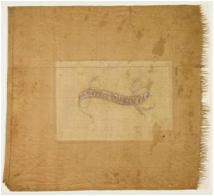
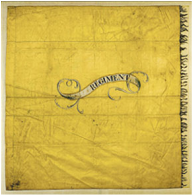
    Here are images of all three known Virginia regimental standards, shown together apparently for the first time. All three flags are in anonymous private collections but have been exhibited publicly. The flag in the middle belonged to the 8th Virginia. One of the other flags reportedly belonged to the 3rd Virginia. The faded rectangle in the center of the 8th Virginia flag is a consequence of light damage resulting from the way in which it was displayed for many years--it was originally one consistent (salmon) color. The flags follow an apparently standard design, but in varying colors. The color was the most important distinguishing characteristic of the flags, which were used to help troops stay organized in the smoke and confusion of battle.

    The scrolls on the blue and yellow flags contain only the word "regiment." This suggests that they were made at the same time, with the intention that regiment numbers would be added when the colors had been assigned to the respective units. (The word "regiment" is not centered in the scrolls; space was retained to the left of the word on both flags.) The writing in the 8th Virginia's scroll is illegible because of light damage. The writing was retouched on the reverse side of the flag to say "VIII Virg Regt." An 1847 account in the Richmond Whig says the scroll contained the words "VIII Virga Regt." This sets it apart from the other two flags. This can be explained by the history of Virginia's Continental regiments.

    ​The 1st and 2nd regiments were authorized by the Virginia convention in 1775 for one-year enlistments. Seven more regiments were authorized in December of 1775 to be formed in 1776 for two-year enlistments, with the expectation that the 1st and 2nd would also continue with new or reenlisted men. Virginia expected all of these regiments to be taken into the Continental Army. Congress, however, initially only authorized seven Virginia Continental regiments. Despite being the first regiment to leave the Commonwealth in Continental service, the 8th drew the short straw and was not recognized immediately as anything other than a provincial (after July 4, "state") regiment. (The same was true of the small 9th regiment, which was created only for Eastern Shore defense.) At the urging of General Charles Lee, Congress later increased the number of authorized Virginia Continental regiments. One consequence of this complicated history may be that the 8th Virginia's regimental standard was not made at the same time as the other banners.